
If you are planning to become a Sterile Processing Technician, the first thing you need to understand is that this career is much more important than many people realize. Sterile processing professionals work behind the scenes in hospitals, surgical centers, dental clinics, and healthcare facilities to make sure every surgical instrument is properly cleaned, disinfected, sterilized, and ready for patient care. A single mistake in sterilization can place patients at serious risk, which is why employers value certified technicians.
The Certified Board for Sterile Processing and Distribution (CBSPD) exam is designed to test whether you have the knowledge and practical understanding needed to safely perform these responsibilities. The exam usually covers infection control, microbiology, decontamination, sterilization methods, surgical instruments, storage procedures, packaging systems, quality assurance, and workplace safety.
Many students make the mistake of thinking this exam is only about memorization. In reality, the CBSPD exam tests how well you understand real hospital situations. Questions often focus on what should happen in an actual sterile processing department rather than simply asking for textbook definitions.
For example, imagine a surgical tray arrives from the operating room with dried blood on hinged instruments. A question may ask what the technician should do first before sterilization. If you truly understand the process, you know cleaning and decontamination must happen before sterilization can even begin.
One real-world example comes from a hospital in Texas where a newly hired technician failed an internal competency review because they rushed the cleaning stage to save time. Instruments later showed bioburden residue during inspection testing. The facility immediately retrained the technician because hospitals cannot risk contamination errors. Stories like this show why certification matters so much in this field.
The CBSPD exam is not impossible, but it does require focused preparation. Students who pass usually follow a structured study plan instead of trying to cram everything in one week. The good news is that most exam topics are practical and directly connected to real healthcare work. Once you understand the “why” behind each process, studying becomes much easier.
Another important thing to remember is that sterile processing terminology may feel overwhelming at first. Words like “bioburden,” “ethylene oxide,” “high-level disinfection,” and “mechanical monitoring” can confuse beginners. However, repeated exposure and practical examples help these concepts become familiar very quickly.
Successful candidates often approach the exam like learning a healthcare workflow rather than memorizing isolated facts. They study how instruments move from contaminated use to safe reuse. When you visualize the process step by step, exam questions start making sense naturally.
Passing the CBSPD exam can also open better job opportunities and salary growth. Many hospitals now prefer certified technicians because certification demonstrates professionalism, safety awareness, and industry-standard knowledge. In competitive healthcare markets, certification can make a major difference during hiring.
Most importantly, remember that every experienced sterile processing professional once started exactly where you are today. Feeling nervous is completely normal. The key is building consistency, using reliable practice questions, and studying with purpose every single day.
Many candidates perform better when they focus on consistent review sessions and active learning methods instead of studying for long hours without a clear plan.
Create a Study Plan Instead of Random Studying
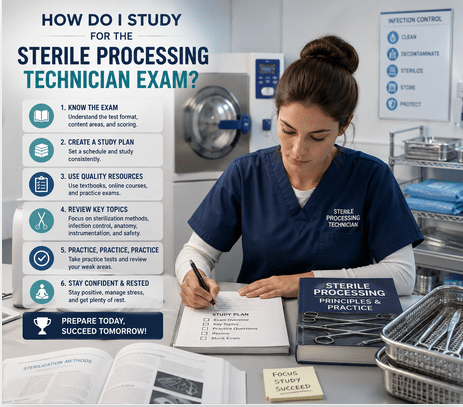
One of the biggest reasons students fail the Sterile Processing Technician exam is because they study without a clear system. They jump between YouTube videos, flashcards, random PDFs, and practice questions without truly mastering the material. A smart study plan creates structure and reduces stress.
The CBSPD exam includes multiple knowledge areas, so your goal should be dividing the content into manageable sections. Instead of studying everything at once, focus on one topic at a time. For example, spend one day learning decontamination procedures, another day on sterilization methods, and another on microbiology basics.
A realistic study schedule works far better than extreme cramming sessions. Many students work full-time jobs or attend classes while preparing for the exam. Trying to study six straight hours every day usually leads to burnout. A better strategy is consistent daily study sessions of 1–2 focused hours.
One highly effective method is the “active recall” technique. Instead of reading the same chapter repeatedly, close the book and test yourself. Ask questions like:
- What are the steps of steam sterilization?
- What does biological monitoring measure?
- Why are hinged instruments opened during sterilization?
This forces your brain to retrieve information, which improves long-term memory.
Another powerful strategy is spaced repetition. Review older topics regularly while learning new material. For example, if you studied infection control on Monday, review it briefly again on Thursday and Sunday. This prevents forgetting important details.
A real-world example comes from a student named Maria who worked evening shifts at a surgical center while preparing for certification. Instead of overwhelming herself, she created a 10-week study schedule. Every morning she reviewed one topic for 90 minutes before work. She also completed 20 practice questions daily. By exam day, she felt confident because she had slowly built strong understanding over time. She passed on her first attempt.
Your study environment also matters more than people realize. Many students attempt to study while scrolling social media or watching television. This reduces concentration dramatically. Find a quiet place where you can focus completely, even if it is only for one hour.
Using practice exams is another essential part of your study plan. Practice questions train your brain to recognize exam patterns and improve time management. However, do not simply memorize answers. Always read the explanation behind every question, especially incorrect ones.
One mistake students often make is avoiding difficult subjects. For example, many learners struggle with microbiology and chemical sterilization methods. Instead of skipping these topics, spend extra time understanding them. Weak areas usually become the deciding factor between passing and failing.
You should also track your progress weekly. Ask yourself:
- Which topics still confuse me?
- Which practice questions do I consistently miss?
- Am I improving my test scores?
Keeping a notebook of mistakes can be extremely helpful. Over time, you will notice patterns in the areas needing improvement.
Finally, remember that studying smarter is more important than studying longer. Some students study for months but remain unprepared because their learning methods are ineffective. Others study strategically for a shorter period and pass successfully.
Consistency always beats panic studying. Small daily progress eventually creates big results.
Learn the Core Topics That Appear Most on the Exam
Many students become overwhelmed because they think they must memorize every page of every textbook. The truth is that some topics appear far more frequently on the CBSPD exam than others. Understanding these core subjects can improve your score significantly.
One major exam area is infection prevention and microbiology. You need to understand how microorganisms spread, how contamination occurs, and how sterilization destroys harmful pathogens. Questions often test whether you understand the difference between cleaning, disinfection, and sterilization.
For example:
- Cleaning removes visible soil.
- Disinfection reduces microorganisms.
- Sterilization destroys all microbial life.
These distinctions are extremely important in sterile processing work.
Another heavily tested topic is decontamination procedures. You must know the correct handling of contaminated instruments, proper PPE use, transportation procedures, and cleaning methods. Expect questions about enzymatic cleaners, ultrasonic washers, and manual cleaning processes.
Real hospital scenarios are commonly used in the exam. Imagine a technician discovers dried debris inside a surgical instrument after cleaning. The correct response is not sterilizing the item immediately. The instrument must be re-cleaned because sterilization cannot penetrate heavy organic material effectively.
Sterilization methods are another major focus area. You should clearly understand:
- Steam sterilization
- Ethylene oxide (ETO)
- Hydrogen peroxide gas plasma
- Low-temperature sterilization methods
Students often confuse when each method should be used. Heat-sensitive instruments, for example, may require low-temperature sterilization instead of steam.
Packaging and storage also appear frequently on the exam. You must understand event-related sterility, package inspection, shelf storage conditions, and handling procedures. Many questions test whether you know how sterile integrity can be compromised during storage or transportation.
Instrument identification is another area where many students struggle. Surgical instruments can look very similar, especially for beginners. Flashcards and labeled images can help you recognize common instruments faster.
Quality assurance and monitoring systems are equally important. You should understand:
- Biological indicators
- Chemical indicators
- Mechanical monitoring
- Bowie-Dick testing
A real-world example occurred in a Florida surgical center where a sterilizer malfunction was detected because technicians correctly reviewed biological indicator results before releasing surgical trays. Their attention prevented unsafe instruments from reaching operating rooms. This shows how quality monitoring directly impacts patient safety.
Finally, workplace communication and professionalism are also part of the sterile processing field. Hospitals value technicians who follow procedures carefully, communicate effectively, and prioritize patient safety over speed.
The best way to master these topics is by connecting them to real-life workflow situations. Instead of memorizing isolated facts, imagine yourself working in an actual sterile processing department. When you understand how everything connects together, the exam becomes far less intimidating.
Master Sterilization Methods Instead of Memorizing Definitions
One of the most important sections of the CBSPD exam is sterilization. Many students struggle here because they try to memorize technical definitions without truly understanding how sterilization works in real healthcare settings. The best approach is learning why each sterilization method is used and when hospitals choose one process over another.
Steam sterilization is the most commonly used method in healthcare facilities. It uses high-pressure saturated steam to destroy microorganisms. This method is effective, fast, reliable, and widely used for heat-resistant surgical instruments. However, not every instrument can tolerate high heat and moisture. That is where low-temperature sterilization methods become important.
For example, delicate scopes, plastic equipment, and heat-sensitive devices may require hydrogen peroxide gas plasma or ethylene oxide sterilization. Students often confuse these systems during the exam because they focus only on terminology instead of practical usage.
A good way to study sterilization is by comparing methods side by side:
- What temperature is used?
- Which instruments are compatible?
- How long does the process take?
- Are aeration steps required?
- What are the safety concerns?
This comparison-based learning helps your brain organize information much faster.
One real-world example happened in a California outpatient surgical center where technicians accidentally placed heat-sensitive equipment into a steam sterilizer. The instruments became damaged and unusable, delaying patient procedures. The incident led to retraining because understanding sterilization compatibility is critical in real medical environments.
Another major topic is sterilization monitoring. Many exam questions focus on biological indicators, chemical indicators, and mechanical monitoring. Students must understand that sterilization is not assumed — it must be verified.
For instance:
- Mechanical monitoring checks cycle time, pressure, and temperature.
- Chemical indicators react to sterilization conditions.
- Biological indicators confirm microbial destruction.
A common exam mistake is assuming chemical indicators alone prove sterility. In reality, biological monitoring provides the highest level of sterilization assurance.
You should also understand packaging principles before sterilization. Instruments must be arranged properly so steam or sterilant can contact all surfaces effectively. Overloaded trays or improperly wrapped sets can prevent successful sterilization.
Many experienced sterile processing technicians recommend visual learning for this topic. Watching sterilizer cycles, instrument preparation videos, or workflow demonstrations can help concepts feel more practical and easier to remember.
Instead of asking yourself, “Can I memorize this?” ask:
“Can I explain why this process matters in a hospital?”
That mindset transforms difficult topics into understandable systems.
Practice Questions Are the Secret Weapon for Passing the Exam
Many students spend weeks reading textbooks but avoid practice questions because they feel unprepared. Ironically, practice questions are one of the fastest ways to improve exam performance.
The CBSPD exam is not just testing knowledge — it also tests decision-making under pressure. Practice exams train your brain to think like the real test environment. They help you identify weak areas, improve timing, and understand how questions are structured.
One effective method is completing small sets of practice questions daily instead of saving them all for the end. Even answering 15–20 questions per day can dramatically improve retention over time.
However, the real value comes from reviewing explanations carefully.
For example, if you answer a question incorrectly about biological indicators, do not simply memorize the correct answer. Ask:
- Why was my choice wrong?
- What detail did I miss?
- What concept confused me?
This deeper review process builds understanding instead of short-term memory.
A real example comes from a student named Jordan who repeatedly failed practice tests on sterilization monitoring. Instead of getting discouraged, he created a notebook specifically for incorrect answers. Every mistake became a learning opportunity. After several weeks, he recognized patterns in his weaknesses and improved dramatically. He eventually passed the certification exam confidently.
Timed practice sessions are also extremely valuable. Many students know the material but panic during timed testing. Simulating real exam conditions helps reduce anxiety and improves focus.
Another helpful technique is studying scenario-based questions. Real sterile processing work involves critical thinking, not simple memorization. For example:
A surgical tray passes through sterilization, but the chemical indicator does not change color correctly. What should the technician do?
Questions like this test judgment, safety awareness, and understanding of protocols.
Students should also avoid depending entirely on free random internet questions. Low-quality practice material can contain outdated information or incorrect explanations. Reliable practice sources with detailed rationales are far more useful because they teach reasoning, not guessing.
Group study sessions can also help when reviewing practice questions. Explaining answers to another person forces deeper understanding. Many students discover they know less than they thought when trying to teach a topic aloud.
Most importantly, do not fear wrong answers during preparation. Mistakes during practice are valuable because they expose weaknesses before the actual exam. Every missed question is an opportunity to improve.
Students who consistently practice questions usually enter exam day with far more confidence because the testing style already feels familiar.
Build Real Understanding of Infection Control and Safety
Infection control is one of the foundations of sterile processing work. Hospitals depend on sterile processing technicians to stop harmful microorganisms from spreading between patients. Because of this, infection prevention is heavily emphasized throughout the CBSPD exam.
Many students underestimate this section because they think it is common sense. In reality, infection control involves detailed procedures, safety protocols, and scientific principles that healthcare facilities take very seriously.
You need to understand how microorganisms spread and how contamination occurs inside healthcare environments. Questions often focus on cross-contamination risks, proper hand hygiene, PPE usage, transportation of contaminated instruments, and cleaning procedures.
For example, technicians must know the difference between:
- Sterilization
- Disinfection
- Sanitization
- Decontamination
These terms are not interchangeable, and the exam frequently tests their distinctions.
A real-world example occurred in a New York hospital when contaminated instruments were accidentally transported through a clean preparation area instead of the designated dirty workflow section. Although no patients were harmed, the incident triggered an internal investigation and staff retraining because workflow separation is essential for infection prevention.
Another major area is personal protective equipment (PPE). Sterile processing staff handle contaminated surgical instruments daily, meaning exposure risks are real. Gloves, gowns, face shields, and proper handling procedures protect both workers and patients.
The CBSPD exam may also include questions about bloodborne pathogens, OSHA safety standards, and exposure response procedures. Understanding workplace safety is just as important as instrument sterilization itself.
One effective way to study infection control is by visualizing the movement of instruments throughout the sterile processing department:
- Used instruments arrive contaminated.
- Decontamination removes visible soil.
- Inspection checks cleanliness and function.
- Packaging prepares instruments for sterilization.
- Sterilization destroys microorganisms.
- Storage protects sterility until use.
When students understand this workflow completely, many exam questions become easier because they can mentally follow the process step by step.
Another helpful study method is connecting infection control concepts to real patient outcomes. Behind every sterile tray is a patient trusting the healthcare system. Proper processing helps prevent surgical site infections, which can become life-threatening.
The strongest sterile processing technicians are not just people who memorize procedures. They understand the responsibility behind every step of the workflow.
Improve Your Memory Retention with Smarter Study Techniques
One of the biggest frustrations students face while preparing for the CBSPD exam is forgetting information they studied only a few days earlier. Many people spend hours reading textbooks but later struggle to recall important details during practice exams. The problem usually is not intelligence — it is ineffective study methods.
The human brain remembers information better when learning is active instead of passive. Simply rereading chapters over and over creates temporary familiarity, but it does not build long-term retention. This is why successful sterile processing students use smarter learning techniques designed to strengthen memory over time.
One of the most effective strategies is active recall. Instead of staring at notes repeatedly, challenge yourself to retrieve information from memory. After studying a section on sterilization monitoring, close the book and explain the process out loud in your own words. If you struggle to explain it clearly, you know exactly where more review is needed.
Another highly effective method is spaced repetition. Rather than studying a topic once and forgetting it, revisit it multiple times over several days or weeks. This repeated exposure trains your brain to store information more permanently.
For example:
- Day 1: Learn biological indicators
- Day 3: Review biological indicators briefly
- Day 7: Test yourself again
- Day 14: Practice related exam questions
This technique is used in medical schools because it significantly improves retention.
A real-world example comes from a sterile processing student named Kevin who initially struggled with microbiology terminology. He constantly forgot definitions and processes after studying. Instead of continuing to reread chapters, he started using flashcards and daily recall exercises during lunch breaks at work. After several weeks, difficult concepts became second nature because he repeatedly forced his brain to retrieve information actively.
Visual learning can also help tremendously. Many sterile processing processes involve workflows, equipment setups, packaging systems, and instrument handling procedures. Watching demonstrations or using labeled diagrams makes complex topics easier to understand than text alone.
Some students benefit from teaching concepts to another person. Explaining sterilization cycles to a friend or coworker often reveals whether you truly understand the material. If you can teach it clearly, your understanding is becoming solid.
Another useful strategy is connecting technical concepts to real hospital situations. For example, instead of memorizing that wet packs compromise sterility, imagine a surgical tray arriving wet in an operating room before a procedure. Visualizing the real consequences makes information more meaningful and easier to remember.
Sleep also plays a major role in memory formation. Students who stay awake all night cramming often perform worse than those who study consistently and rest properly. The brain organizes and strengthens memories during sleep, which is why regular rest improves exam performance.
Many successful CBSPD candidates also create quick review sheets containing:
- Important sterilization temperatures
- Monitoring systems
- Infection control procedures
- Instrument handling reminders
- Common exam mistakes
Reviewing these condensed notes regularly can strengthen confidence before test day.
Most importantly, understand that memory improves gradually. Do not panic if difficult topics feel confusing at first. Repetition, active practice, and consistency eventually build strong understanding over time.
Prepare Mentally for Exam Day and Avoid Common Mistakes
Many students focus entirely on studying information but ignore the mental side of exam preparation. Surprisingly, anxiety and poor test-day habits cause many capable students to underperform on the CBSPD exam. Learning how to manage stress and avoid common mistakes can significantly improve your final score.
One of the most common mistakes is last-minute cramming. Students sometimes panic the night before the exam and try to review hundreds of pages quickly. This often increases stress and reduces confidence instead of helping. A better strategy is light review combined with proper rest before the test.
Your brain performs best when it is calm, rested, and focused.
Another major issue is rushing through questions. Many exam questions contain small details that completely change the correct answer. Students who read too quickly may miss critical information related to sterilization methods, packaging errors, or workflow procedures.
For example, a question may describe a heat-sensitive instrument. If you overlook that detail, you may incorrectly choose steam sterilization instead of a low-temperature method.
One real-world example involved a sterile processing trainee named Angela who consistently scored poorly on practice exams despite understanding the material well. Her instructor discovered she was answering too quickly without fully reading scenarios. Once she slowed down and carefully analyzed each question, her scores improved dramatically.
Time management is also important. Do not spend excessive time on one difficult question. If you become stuck, mark it mentally, move forward, and return later if needed. Sometimes later questions even trigger memory that helps answer earlier ones.
Another helpful strategy is positive mental preparation. Many students walk into the exam already convinced they will fail. This mindset increases panic and reduces concentration. Instead, remind yourself that preparation matters more than perfection. No candidate knows every single answer.
Confidence grows from consistent preparation, not from eliminating all nervousness.
Physical preparation matters too. Arrive early, bring required identification, and avoid unnecessary stress before entering the testing center. Even small preparation steps can improve focus and reduce anxiety.
Students should also avoid comparing themselves to others during preparation. Some people claim they studied for only one week and passed easily, while others may need months of review. Everyone learns differently, and comparing progress often creates unnecessary pressure.
One valuable approach is practicing realistic mock exams before test day. Simulating the real testing experience helps your brain become comfortable with timed conditions and exam pressure. The more familiar the environment feels, the less intimidating the real exam becomes.
Remember that the CBSPD exam is designed to measure competency, not perfection. The goal is proving you understand safe sterile processing practices well enough to work responsibly in healthcare environments.
Every question ultimately connects back to patient safety. Keeping that perspective can help you think more clearly during difficult scenarios. Even well-prepared students can struggle on exam day if they do not manage stress, timing, and preparation properly before arriving at the testing center.
Reading a detailed CBSPD certification review can also help students better understand exam expectations, study resources, and preparation challenges before test day.
Use Reliable Study Resources and Continue Learning After Certification
Choosing the right study resources can make a huge difference in your exam preparation. Many students waste time using outdated notes, incorrect online answers, or random practice questions that do not reflect the real CBSPD exam style. Reliable materials help you study more efficiently and build confidence through accurate information.
One of the best ways to prepare is combining textbooks, structured review materials, and realistic practice questions. Reading alone is usually not enough because the exam tests application and decision-making skills. Practice-based learning helps students understand how knowledge is used in real sterile processing situations.
Students preparing for certification often benefit from using professional exam-focused resources that explain both correct and incorrect answers in detail. Quality explanations teach reasoning, not just memorization.
If you are looking for structured preparation material, many sterile processing students use Exam Prep for CBSPD practice resources to strengthen their understanding of sterilization procedures, infection control, decontamination workflows, and real exam-style scenarios. Using focused practice materials can help students become more comfortable with the format and expectations of the certification exam.
A real-world example comes from a technician named Robert who struggled during his first certification attempt because he relied mostly on random free internet notes. For his second attempt, he switched to structured practice exams with detailed rationales and created a weekly review schedule. The difference in preparation quality helped him pass successfully and improve his confidence significantly.
Another important thing to remember is that learning does not stop after certification. Sterile processing technology continues to evolve as healthcare facilities adopt new sterilization systems, infection prevention protocols, and instrument technologies. Strong technicians continue improving their skills throughout their careers.
Hospitals value professionals who stay updated, follow safety standards carefully, and take patient protection seriously. Certification is not only about passing an exam — it is about building a professional mindset centered around accuracy, responsibility, and consistency.
Networking with experienced technicians can also help new professionals grow faster. Many beginners learn valuable practical tips from coworkers who have years of sterile processing experience. Real hospital workflows often teach lessons that textbooks alone cannot fully explain.
As your career develops, certification can also open opportunities for advancement into leadership, training, quality assurance, or specialized instrument processing roles. Many healthcare facilities prefer certified technicians for promotions because certification demonstrates commitment to professional standards.
Most importantly, remember why this career matters. Every properly sterilized instrument helps protect patients during surgeries and medical procedures. Behind every tray is a real person depending on healthcare workers to maintain safe environments.
The CBSPD exam may feel challenging at first, but with consistency, practice, and the right study approach, passing becomes absolutely achievable. Thousands of technicians have successfully earned certification before you, and with focused preparation, you can do the same.