
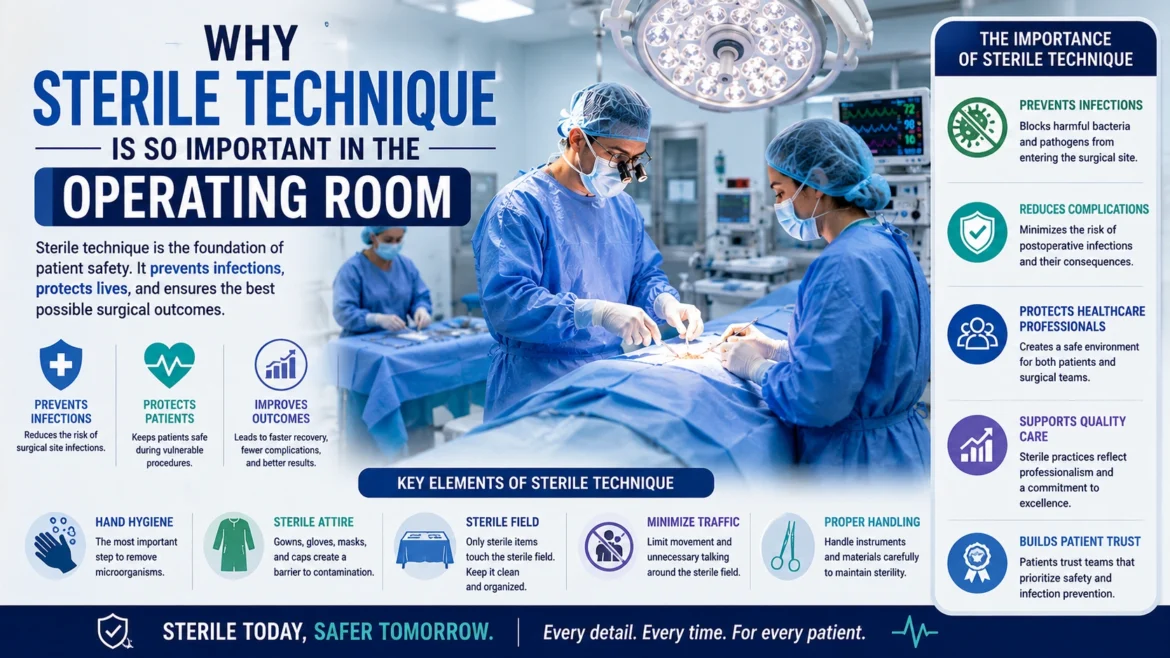

Inside the Operating Room
A surgical team prepares carefully before a procedure begins. Sterile gowns are secured, gloves are checked, instruments are organized, and the sterile field is monitored continuously throughout the operation.
In surgical environments, even small breaks in sterile technique can create major patient-safety concerns. Because of this, sterile awareness remains one of the most important foundations of perioperative care.
Why Sterile Technique Matters
Sterile technique helps reduce contamination risks during surgical procedures and supports safer patient-care environments inside the operating room.
Surgical teams rely on sterile practices to help maintain organized procedural workflows while protecting patients throughout perioperative care.
Sterile Field Protection
Helps maintain controlled surgical environments during procedures.
Patient Safety Support
Reduces unnecessary contamination risks during perioperative care.
Workflow Organization
Helps surgical teams coordinate procedures more consistently.
Before Surgery: Why Preparation Is Critical
Sterile technique begins long before the first surgical incision.
Operating-room professionals often prepare by:
- Organizing sterile instruments
- Preparing surgical supplies
- Monitoring sterile boundaries
- Following gowning and gloving procedures
- Confirming operating-room readiness
Careful preparation helps reduce workflow confusion once surgery begins.
Small Mistake → Big Impact
In surgical environments, small lapses in sterile awareness can quickly affect procedural safety, workflow organization, and operating-room coordination.
During Surgery: Why Continuous Sterile Awareness Matters
Sterile technique is not a one-time setup process. Surgical teams must continuously monitor the sterile environment throughout procedures.
Step 1 — Monitoring the Sterile Field
Surgical professionals remain aware of instrument placement, movement, and sterile boundaries throughout procedures.
Step 2 — Instrument Handling
Instruments are transferred carefully to help maintain procedural organization and sterile conditions.
Step 3 — Team Communication
Clear communication helps surgical teams respond quickly if sterile concerns arise during surgery.
Why Surgical Team Awareness Is So Important
Maintaining sterile technique requires coordination from the entire surgical team.
Operating-room professionals often work together to:
- Protect sterile areas
- Monitor procedural movement
- Track surgical supplies
- Respond to contamination concerns
- Maintain patient-safety standards
Consistent awareness helps surgical procedures remain organized and controlled even during high-pressure situations.
Operating Room Workflow Snapshot
| Operating Room Focus | Why It Matters |
|---|---|
| Sterile Setup | Supports safer surgical preparation |
| Instrument Coordination | Helps maintain procedural organization |
| Continuous Monitoring | Supports ongoing sterile awareness |
| Communication | Helps surgical teams respond efficiently |
Source: General perioperative nursing principles and operating-room sterile workflow practices.
Why CNOR Preparation Focuses on Sterile Technique
CNOR preparation often includes operating-room workflow concepts involving:
- Sterile technique awareness
- Patient safety responsibilities
- Perioperative coordination
- Surgical communication
- Workflow organization
Many perioperative nursing students improve confidence using CNOR practice test and operating-room workflow scenarios because repeated exposure to surgical-care situations helps sterile technique concepts feel more practical and clinically organized.
Final Thoughts
Sterile technique is so important in the operating room because surgical environments depend heavily on patient safety, workflow coordination, team awareness, and controlled procedural organization.
Maintaining sterile conditions requires preparation, communication, consistency, and continuous awareness from the entire surgical team throughout procedures.
As perioperative care continues emphasizing patient safety and surgical precision, sterile technique remains one of the most important foundations supporting safer operating-room environments.
Inside the Sterile Zone
Surgical teams constantly monitor movement, instrument handling, and procedural flow to help protect sterile conditions during operations.
Continuous Attention
Sterile awareness requires ongoing focus throughout surgery rather than a single preparation step before procedures begin.
Why Operating Room Movement Must Be Controlled
Surgical environments require careful movement and positioning throughout procedures.
Unnecessary movement inside the operating room may increase:
- Workflow disruption
- Communication confusion
- Sterile-field risks
- Equipment coordination problems
- Procedural distractions
Organized operating-room movement helps surgical teams maintain safer and more controlled procedural environments.
Clinical Workflow Reminder
In perioperative care, maintaining sterile awareness often depends on small routine habits repeated consistently throughout every surgical procedure.
How Surgical Teams Respond to Sterile Concerns
Even highly organized surgical teams may occasionally encounter situations requiring immediate sterile-response actions.
Recognize the Concern
Surgical professionals monitor the environment carefully to identify possible sterile issues quickly.
Communicate Clearly
Teams coordinate immediate communication to maintain organized workflow responses.
Restore Safe Workflow
Surgical teams work together to maintain procedural organization and patient-safety standards.
Why Communication and Sterile Technique Work Together
Sterile workflow and communication are closely connected inside the operating room.
Surgical teams rely on communication to:
- Coordinate procedural movement
- Confirm sterile awareness
- Track surgical supplies
- Respond to workflow concerns
- Maintain patient-safety focus
Professionals who understand why surgical communication is essential during operating-room procedures often recognize how teamwork and sterile awareness support safer perioperative environments together.
Small Workflow Errors Can Escalate Quickly
Surgical environments depend heavily on consistency. Small communication or sterile-awareness mistakes can affect workflow coordination much faster in the operating room than in many other healthcare settings.
Why Sterile Technique Requires Team Consistency
Maintaining sterile technique is rarely the responsibility of one individual alone.
Safe perioperative environments depend on coordinated teamwork involving:
- Perioperative nurses
- Surgical technologists
- Surgeons
- Anesthesia professionals
- Operating-room support staff
Every team member contributes to maintaining organized procedural flow and sterile awareness throughout surgery.
Operating Room Sterile Workflow Overview
Preparation
Organizing sterile supplies and procedural readiness before surgery begins.
Monitoring
Continuous awareness of movement, instruments, and sterile boundaries.
Communication
Coordinating workflow updates and procedural awareness during surgery.
Patient Safety
Supporting safer operating-room environments throughout perioperative care.
Source: General perioperative nursing workflow principles and sterile operating-room coordination practices.
Why Sterile Awareness Requires Constant Focus
Operating-room environments can change quickly during procedures, which means sterile awareness must remain continuous from beginning to end.
Surgical professionals often monitor:
Instrument Placement
Helps maintain organized sterile workflow throughout procedures.
Team Movement
Supports safer coordination inside the operating room.
Supply Handling
Helps reduce unnecessary sterile workflow interruptions.
Consistent awareness helps operating-room teams maintain safer procedural organization under demanding surgical conditions.
Inside the OR Environment
Perioperative professionals often rely on routines, communication habits, and workflow consistency to maintain sterile awareness during complex procedures.
Why Surgical Workflow Depends on Organization
Organized workflow helps surgical teams maintain efficiency and reduce unnecessary procedural confusion.
Surgical organization may involve:
- Coordinated instrument preparation
- Structured procedural steps
- Sterile-field monitoring
- Supply management
- Communication coordination
Workflow organization helps operating-room professionals focus more effectively during procedures where timing and precision are extremely important.
Why Consistency Matters
Sterile technique often depends on small repeated actions performed correctly and consistently throughout every stage of perioperative care.
What Perioperative Nurses Monitor During Procedures
Perioperative nurses frequently help support:
Patient-Safety Awareness
Monitoring workflow conditions that may affect safer perioperative care.
Sterile Workflow Coordination
Helping maintain organized operating-room procedures and sterile awareness.
Team Communication Support
Coordinating information clearly during changing procedural situations.
Why CNOR Preparation Focuses on Surgical Workflow
CNOR preparation often includes workflow-based perioperative concepts involving:
- Sterile technique awareness
- Patient-safety procedures
- Operating-room coordination
- Communication during surgery
- Structured perioperative workflow
Many perioperative nursing students improve confidence using realistic CNOR practice questions and surgical workflow scenarios because repeated exposure to operating-room concepts helps perioperative responsibilities feel more practical and clinically organized.
Perioperative Learning Perspective
Strong sterile technique habits are usually built through repetition, workflow awareness, team coordination, and consistent operating-room practice over time.
Final Thoughts
Sterile technique is extremely important in the operating room because perioperative care depends heavily on patient safety, procedural organization, communication, and controlled surgical workflow.
Maintaining sterile awareness requires preparation, coordination, consistency, and teamwork throughout every stage of surgery.
As surgical environments continue emphasizing patient safety and operating-room precision, sterile technique remains one of the most important foundations supporting safer perioperative care.
For perioperative professionals, sterile technique is not simply a checklist process — it is an ongoing responsibility connected directly to organized workflow, team coordination, and patient protection throughout surgical procedures.