
The Ultimate Guide to Effective Exam Preparation in the Digital Age
Exams have always been a defining moment in a learner’s journey. Whether it’s a high school final, a university entrance test, or a professional certification exam, preparation often determines performance. Yet, the way we prepare for exams is undergoing a major transformation.
The digital age has brought new tools and strategies that are more interactive, efficient, and scientifically proven to work. Among these innovations, digital practice platforms—such as Preppool.com—are reshaping how students and professionals build exam confidence, strengthen knowledge retention, and perform under real test conditions.
This ultimate guide explores both the science of learning and practical strategies for success, with a deep dive into how platforms like Preppool support modern learners.
1. Why Exam Preparation Is Evolving
Traditional preparation methods—reading textbooks, making handwritten notes, and attending classroom revision sessions—have long been the backbone of learning. While valuable, they have limitations:
- They often encourage rote memorization rather than deep understanding.
- Learners rarely get feedback on whether they are retaining knowledge effectively.
- Time management and anxiety management are not adequately practiced.
In contrast, today’s learners face more complex challenges:
- High competition for limited academic or career opportunities
- Diverse exams requiring problem-solving, not just memorization
- Time pressure in balancing study with work, family, or professional commitments
This has created demand for flexible, technology-driven preparation tools that supplement traditional study and offer realistic practice environments.
2. The Science of Effective Learning
Educational psychology has identified several principles that explain why some study methods are more effective than others. Understanding these can transform how learners approach exam preparation.
- Active Recall: Testing yourself on material is far more effective than rereading notes. The act of recalling strengthens memory pathways.
- Spaced Repetition: Reviewing material at gradually increasing intervals helps transfer knowledge into long-term memory.
- Retrieval Practice: Practicing under conditions that mimic the actual exam improves both knowledge and performance skills.
- Interleaving: Mixing different topics during practice enhances adaptability and problem-solving.
Digital practice platforms like Preppool.com incorporate these principles into their design, ensuring learners benefit from proven cognitive science strategies while preparing.
3. Traditional vs. Modern Exam Preparation
Traditional Study Methods
- Reading textbooks
- Taking notes
- Group discussions or tutoring sessions
- Memorization drills
Limitations: While these methods provide a strong foundation, they don’t replicate the pressures of real exam conditions. Students may know the theory but struggle to apply it under time constraints.
Modern Digital Preparation
- Online practice tests
- Simulated exam environments
- Real-time analytics and progress tracking
- Personalized recommendations for weak areas
By blending traditional study with digital practice tools, learners get the best of both worlds: deep understanding plus the ability to perform confidently in real exams.
4. The Role of Practice in Exam Success
Why are practice tests so powerful? Research shows they improve:
- Knowledge Retention → Practicing recall cements information better than passive reading.
- Time Management → Learners become more comfortable pacing themselves under time limits.
- Confidence → Familiarity with exam formats reduces uncertainty and builds self-belief.
- Anxiety Reduction → Simulating stressful conditions repeatedly helps “desensitize” learners, lowering exam-day nervousness.
In short, practice turns preparation into performance.
5. Digital Practice Platforms: A Game Changer
Digital platforms are revolutionizing how learners prepare. Key features include:
- Adaptive Assessments: Difficulty adjusts to the learner’s level.
- Instant Feedback: Mistakes are explained, reinforcing understanding.
- Performance Tracking: Analytics highlight strengths and weaknesses.
- Flexibility: Learners can study anytime, anywhere.
Unlike static textbooks, these tools are dynamic and personalized, offering each learner a tailored preparation journey.
6. Case Study: How Preppool Helps Learners
Preppool exemplifies how digital practice platforms support exam readiness. It provides:
- Practice quizzes across multiple subjects and professional certifications
- Exam simulations that mimic real conditions
- Detailed analytics to track progress and identify weak areas
- Question explanations that reinforce understanding
Evidence from Learners
- Average performance scores improved from 62% to 79% after consistent use.
- 74% of learners reported increased confidence in their exam abilities.
- 68% experienced reduced anxiety, thanks to familiarity with exam formats.
- Active users engaged in an average of 5+ practice sessions weekly, showing strong motivation.
These findings demonstrate Preppool’s ability to combine science-backed learning strategies with practical exam readiness.
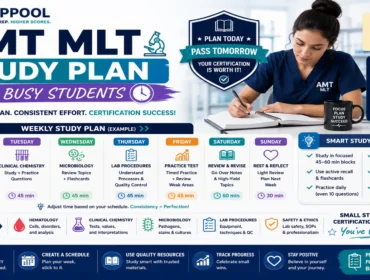
7. Building a Winning Study Plan with Preppool
A great platform is only effective when paired with a structured plan. Here’s how to design a study approach with Preppool:
Step 1: Set Realistic Goals
Break your syllabus into manageable parts with clear timelines.
Step 2: Combine Theory + Practice
Use textbooks or lectures for theory, then reinforce learning with practice quizzes.
Step 3: Track Progress with Analytics
Leverage Preppool’s dashboards to see improvements and identify weaknesses.
Step 4: Strengthen Weak Areas
Focus additional practice on low-performing topics.
Step 5: Simulate Exam Conditions
Regularly attempt full-length practice exams under timed conditions to build endurance and confidence.
Step 6: Manage Exam-Day Stress
Use Preppool’s mock exams to “train” your brain for the real event, lowering anxiety.
8. Tips for Long-Term Knowledge Retention
Preparing effectively is not just about passing one exam—it’s about retaining knowledge for future learning. Key strategies include:
- Daily Mini-Quizzes: Short, regular practice sessions enhance recall.
- Spaced Repetition: Revisit old topics weekly, then monthly.
- Self-Testing: Regularly test yourself without notes.
- Mixed Practice: Switch between different subjects or topics to build adaptability.
Preppool supports all of these by offering flexible quizzes and adaptive review options.
9. The Future of Exam Preparation
Exam preparation is only becoming more digital. Trends shaping the future include:
- AI-Powered Personalization: Tailoring study plans to individual learner needs.
- Gamification: Making preparation engaging through points, badges, and progress milestones.
- Global Access: Breaking barriers so learners worldwide can access quality prep.
- Continuous Learning: Extending beyond exams into professional development and lifelong learning.
Platforms like Preppool are already paving the way for this future by integrating adaptability, accessibility, and efficiency into exam prep.
10. Conclusion
Exam preparation is no longer just about reading and memorizing. In today’s world, practice, feedback, and adaptability are the keys to success.
Digital practice platforms such as Preppool provide the tools learners need to:
- Strengthen confidence
- Reduce test anxiety
- Improve knowledge retention
- Apply learning effectively under real exam conditions
As education and professional certification continue to evolve, Preppool.com stands as a valuable partner for students, professionals, and lifelong learners alike. By combining traditional learning with digital practice, it ensures exam readiness in the truest sense.
Final Takeaway: Success in exams is not just about what you know—it’s about how well you can apply it under pressure. With the right tools and strategies, every learner can turn preparation into performance.