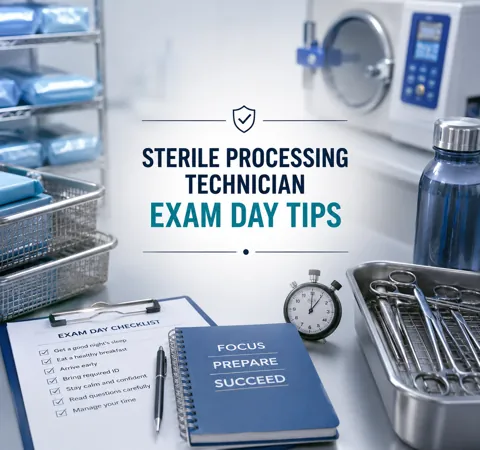

Preparing for the Sterile Processing Technician certification exam is not only about memorizing sterilization methods, surgical instruments, or infection prevention guidelines. The real challenge often begins on exam day itself. Many students study for weeks or even months, yet anxiety, poor preparation, or simple mistakes on the day of the test can affect their performance.
The good news is that success is not only based on knowledge. Confidence, preparation, and smart habits can make a major difference.
If you are planning to take the CRCST, CBSPD, or another Sterile Processing Technician certification exam, understanding how to handle exam day properly can help you stay focused and calm. This guide covers practical, real-world tips that experienced test takers often wish they knew earlier. Candidates who review updated CBSPD exam resources before test day often feel more comfortable with the structure and difficulty level of the certification exam.
Start Preparing the Night Before the Exam
One of the biggest mistakes students make is treating exam day preparation casually. Some candidates stay awake late reviewing notes, scrolling through social media, or trying to memorize everything at the last minute. That usually increases stress instead of improving results.
The evening before your exam should be calm and organized.
Lay out everything you need ahead of time. This may include:
- Government-issued ID
- Exam authorization email
- Water bottle
- Comfortable clothes
- Directions to the testing center
- Snacks for after the exam
Having these items ready reduces panic the next morning.
A former sterile processing student from Texas shared in an online healthcare career forum that she almost missed her exam because she could not find her identification card in the morning. She spent nearly 40 minutes searching for it and arrived at the test center emotionally exhausted. Even though she passed, she later admitted that the stress affected her concentration during the first half of the exam.
Small preparation steps truly matter.
Get Proper Sleep Instead of “Cramming”
Many healthcare students believe they should study until midnight before the exam. In reality, your brain performs better when it is rested.
Sterile processing exams require concentration, reading accuracy, and critical thinking. Sleep plays a direct role in memory recall and focus. A tired mind can overlook important words in questions such as:
- “first”
- “best”
- “most appropriate”
- “immediate”
- “priority”
Missing a single keyword can lead to selecting the wrong answer even when you know the material.
Try to get at least 7 to 8 hours of sleep before exam day. Avoid energy drinks late at night because they can interrupt your sleep cycle and increase nervousness.
If you feel anxious, spend 15 minutes reviewing light notes or flashcards and then stop studying. Your goal is to relax your brain, not overload it.
Eat a Balanced Breakfast Before Leaving
Skipping breakfast may seem harmless, but long exams can drain your energy quickly. Hunger can reduce concentration and make you feel distracted halfway through the test.
Choose foods that provide stable energy instead of sugar spikes. Good options include:
- Eggs
- Oatmeal
- Whole grain toast
- Yogurt
- Fruit
- Peanut butter
Avoid eating very heavy or greasy foods before the exam because they can make you feel sluggish.
A sterile processing trainee from Ohio once explained during a study group discussion that she entered her exam after drinking only coffee. Within an hour, she developed a headache and struggled to focus on the instrument identification questions. She later retook the exam and passed after changing her exam-day routine completely.
Your physical condition affects your mental performance more than many people realize.
Arrive Early and Avoid Last-Minute Stress
Getting to the testing center early can instantly reduce anxiety.
Aim to arrive at least 30 to 45 minutes before your scheduled time. Unexpected traffic, parking issues, or building confusion can happen anywhere. Rushing into the exam room at the last minute puts your brain into stress mode before the test even begins.
When you arrive early, you have time to:
- Use the restroom
- Relax mentally
- Review basic notes
- Adjust to the environment
- Take deep breaths
Many successful test takers say the quiet waiting period before the exam helped them settle their nerves.
If your exam is online from home, log in early and test your internet connection, webcam, and microphone ahead of time. Technical problems during check-in can increase panic unnecessarily.
Wear Comfortable Clothing
This tip sounds simple, but it matters during long certification exams.
Testing rooms may feel colder or warmer than expected. Wear comfortable layered clothing so you can adjust easily. Tight clothes, uncomfortable shoes, or heavy jackets can become distracting after sitting for several hours.
You want your attention focused on the exam questions — not on physical discomfort.
Healthcare workers are already familiar with long shifts and physical demands, but exam environments are different. Comfort supports concentration.
Do Not Compare Yourself to Other Test Takers
One common source of stress comes from observing other people in the testing room.
Some students finish quickly. Others appear extremely confident. A few may begin typing rapidly or turning pages fast. None of this reflects your own performance.
Every candidate has different strengths, experiences, and test-taking styles.
A candidate who finished early may have rushed through the exam carelessly. Another person may simply read faster. Focusing on others only increases pressure.
Stay mentally centered on your own pace and strategy.
One instructor from a sterile processing training program in California once told students something valuable:
“The exam is not a competition inside the room. It is a personal test of preparation.”
That mindset helps reduce unnecessary fear.
Take a Few Deep Breaths Before Starting
Right before beginning the exam, pause for a moment.
Take slow, deep breaths and remind yourself that you prepared for this opportunity. Your goal is not perfection. Your goal is to stay calm enough to think clearly.
Even experienced healthcare professionals feel nervous before important exams. That feeling is normal.
Confidence does not mean having zero anxiety. Confidence means continuing despite the anxiety.
The first few questions may feel difficult, and that is completely normal. Certification exams are designed to challenge you. Do not panic if the beginning seems harder than expected.
Stay steady, trust your preparation, and focus one question at a time.
Once the Sterile Processing Technician exam begins, your mindset becomes just as important as your knowledge. Many students walk into the testing center fully prepared but lose points because of panic, rushing, or poor focus during the actual exam.
The truth is that certification exams are designed to test more than memory. They measure how well you think under pressure, analyze situations, and apply sterile processing principles correctly.
Knowing how to manage yourself during the exam can improve your performance significantly.
Read Every Question Carefully
One of the most common reasons students miss questions is simple: they read too quickly.
Sterile processing exams often include questions that contain small details capable of changing the entire meaning. Words like:
- FIRST
- BEST
- MOST appropriate
- PRIORITY
- INITIAL
- EXCEPT
are extremely important.
Missing one keyword can easily lead to the wrong answer.
For example, a question may ask:
“What is the FIRST action a technician should take after discovering a wet pack?”
A student who rushes may choose a technically correct answer but not the first step required according to sterile processing standards.
Slow down enough to fully understand what the question is asking before looking at the answer choices.
Many experienced test takers recommend reading the question twice before answering difficult items. This small habit can prevent careless mistakes.
Do Not Panic Over Difficult Questions
Almost every student encounters questions they do not recognize immediately. That moment can feel intimidating, especially during professional certification exams.
The key is understanding that difficult questions are normal.
Sometimes the exam intentionally includes advanced or scenario-based questions to measure critical thinking. Getting one difficult question does not mean you are failing.
A former CBSPD candidate from Florida once shared that she became anxious after seeing several unfamiliar instrument questions early in the exam. She started doubting herself and rushed through the next section. Later, she realized many of the questions she missed were topics she actually knew well.
Fear often causes more damage than lack of knowledge.
If you encounter a hard question:
- Stay calm
- Read it slowly
- Eliminate obviously incorrect answers
- Choose the best remaining option
- Move forward confidently
Do not let one question affect the next ten questions.
Use the Process of Elimination
Even if you are unsure of an answer, you can often improve your chances by removing incorrect options first.
Most multiple-choice questions include at least one or two answers that clearly do not fit the situation. Eliminating weak choices helps narrow your focus.
For example, if a question discusses steam sterilization parameters and two answers involve unrelated chemical disinfection methods, those options can likely be removed immediately.
This strategy helps reduce guessing and increases accuracy.
Students sometimes believe they must know every answer instantly. In reality, strong test-taking skills often separate passing scores from failing scores.
Watch Your Time Without Obsessing Over It
Time management is critical during certification exams.
Some students spend too long on difficult questions and later rush through easier sections. Others panic about the clock constantly and lose focus.
A balanced approach works best.
Here is a simple strategy many successful candidates use:
- Answer easy questions first
- Mark difficult questions for review
- Keep moving steadily
- Return to challenging questions later
This prevents you from wasting valuable time early in the exam.
If your testing system allows flagged questions, use that feature wisely. Sometimes later questions can trigger your memory and help you answer earlier ones correctly.
A sterile processing graduate from Arizona explained in a career discussion group that she nearly failed her first attempt because she spent almost 10 minutes on a single question about biological monitoring procedures. On her second attempt, she moved past difficult questions faster and completed the exam with enough time to review flagged items calmly. Pacing matters more than perfection.
Effective time management and study habits often help students feel more prepared without relying on exhausting last-minute cramming sessions.
Trust Your Preparation
During exams, many students begin doubting themselves unnecessarily.
They change correct answers because of anxiety or overthinking. In many cases, the original choice was actually right.
While reviewing answers is helpful, avoid constantly second-guessing yourself unless you notice a clear mistake.
Sterile processing training involves repetition, hands-on learning, instrument recognition, sterilization principles, and infection prevention standards. Your preparation has already built knowledge into your memory.
Trust that preparation.
One instructor who trained hospital sterile processing staff for over 15 years once told students:
“Your first educated answer is often based on what you truly know. Panic usually creates confusion afterward.”
That advice has helped many candidates avoid changing correct answers unnecessarily.
Stay Mentally Focused Question by Question
Long exams can become mentally exhausting.
After an hour or two, your attention may start drifting. You may begin thinking about your score, your job future, or whether you passed. Those thoughts can interrupt concentration.
Instead, keep your attention on one question at a time.
Do not think about the final result while taking the exam. Focus only on solving the current question correctly.
Simple mental resets can help during stressful moments:
- Stretch your shoulders slightly
- Relax your jaw
- Take one slow breath
- Refocus your eyes
Small resets can improve concentration surprisingly well.
Healthcare professionals often work in environments requiring calm thinking under pressure. Exam day is no different.
Be Careful With “Absolute” Answer Choices
Certification exams sometimes include answers using words like:
- ALWAYS
- NEVER
- ONLY
- ALL
In healthcare-related exams, these absolute statements are often incorrect because procedures may vary depending on the situation.
That does not mean absolute answers are never correct, but they should make you pause and evaluate carefully.
Sterile processing procedures rely heavily on standards, safety protocols, and situational judgment. Questions are often designed to test your understanding rather than simple memorization.
Read carefully before selecting extreme answer choices.
Do Not Rush Through the Final Questions
As the exam nears the end, many students become eager to finish quickly. Fatigue can cause careless mistakes during the final section.
Stay disciplined until the very last question.
Some candidates lose easy points simply because they mentally “checked out” too early.
If time allows, review flagged questions calmly before submitting the exam. Double-check for:
- Misread wording
- Skipped questions
- Accidental clicks
- Obvious errors
A few extra minutes of careful review can make a major difference.
Remember That Anxiety Is Temporary
Feeling nervous during the exam is completely normal. Even experienced nurses, surgical technologists, and healthcare professionals experience testing anxiety.
What matters is not eliminating anxiety completely — it is learning to continue despite it.
You do not need a perfect exam experience to pass.
Many successful sterile processing technicians walked out of their exams feeling uncertain and still achieved passing scores.
Stay steady, stay focused, and trust your preparation.
Finishing the Sterile Processing Technician certification exam can feel like stepping off an emotional roller coaster. After spending weeks or months studying sterilization procedures, infection prevention standards, instrument identification, and workflow processes, many candidates expect to feel immediate relief once the exam ends.
Instead, many people walk out feeling uncertain.
Some believe they failed because a few difficult questions stayed in their minds. Others replay answers repeatedly while driving home. This reaction is extremely common among healthcare certification candidates.
The important thing to remember is that your feelings after the exam are not always an accurate reflection of your actual performance.
Many successful sterile processing technicians have left the testing center convinced they failed — only to discover later that they passed comfortably.
Do Not Over-analyze Every Question After the Exam
One of the biggest mistakes candidates make after finishing the exam is mentally reviewing every answer.
This habit usually creates unnecessary stress.
You may remember a difficult question and suddenly think of a different answer hours later. That does not mean your original answer was wrong. Your brain continues processing information even after the exam ends.
A sterile processing student from Illinois once shared that she spent an entire evening searching online for answers to questions she remembered from her exam. The more she searched, the more anxious she became. Two days later, she received her passing result and realized the stress accomplished nothing except exhaustion.
Once the exam is over, your focus should shift toward recovery and self-care rather than self-criticism.
You already completed the hard part.
Give Yourself Credit for the Work You Put In
Healthcare certification exams are not easy. Sterile processing professionals play a major role in patient safety, infection prevention, and surgical support. The certification process exists because hospitals and healthcare facilities depend on technicians who understand proper sterilization standards and procedures.
Simply reaching exam day is an accomplishment.
Many candidates balance studying with:
- Full-time jobs
- Family responsibilities
- Clinical hours
- Financial pressure
- Long commutes
- Personal stress
That effort deserves recognition. Sometimes people focus so much on passing that they forget how much discipline it took just to prepare consistently. Take a moment to appreciate the work you invested in your future career.
Avoid Comparing Your Experience to Others
After the exam, candidates often discuss questions with classmates or online study groups. While this may seem harmless, it can actually increase anxiety.
One person may say the exam felt easy. Another may claim certain topics appeared repeatedly. Someone else may insist they answered a question differently than you did.
This comparison rarely helps.
Certification exams often generate different question combinations for different candidates. Even when questions are similar, wording may vary.
What matters most is your own performance — not someone else’s opinion about the exam.
Experienced instructors frequently advise students to avoid post-exam discussions altogether until results are released.
Protect your peace of mind.
Celebrate Small Wins Regardless of the Outcome
Even before receiving your results, finishing the exam itself is a meaningful step forward.
You faced the challenge directly. That matters.
Healthcare careers require resilience. Sterile processing departments are fast-paced environments where technicians must stay focused, organized, and calm under pressure. The certification journey helps develop those same qualities.
Whether you pass immediately or need another attempt later, the knowledge and experience gained during preparation remain valuable.
A former hospital sterile processing manager once explained during a training seminar that some of the strongest technicians she hired did not pass on their first attempt. What separated successful people from unsuccessful ones was persistence.
Failure is not final unless someone decides to quit completely.
Continue Learning Beyond the Exam
Passing the certification exam is important, but real growth continues long after certification day.
Sterile processing constantly evolves as healthcare technology advances. New surgical instruments, sterilization equipment, tracking systems, and infection prevention protocols continue entering hospitals every year.
Strong technicians stay curious and continue learning throughout their careers.
One effective way students prepare before the exam is by practicing realistic scenario-based questions instead of relying only on memorization. Many candidates use resources that include instrument handling situations, sterilization workflow problems, and department-based practice questions. Reviewing materials like All CBSPD Domain Questions can help candidates understand how real certification topics are structured while building confidence across multiple exam categories.
Practical learning often creates stronger long-term understanding than memorizing isolated facts.
Focus on the Bigger Career Goal
Sometimes students become so focused on passing the exam that they forget why they started this career path in the first place.
Sterile processing technicians help protect patients every single day.
Every properly sterilized instrument contributes to safer surgeries and reduced infection risks. Behind every successful operation is a team that includes skilled sterile processing professionals working carefully behind the scenes.
This career may not always receive public attention, but hospitals depend heavily on it.
A technician in a busy trauma center once described sterile processing as “the silent backbone of surgery.” That statement reflects the importance of the profession perfectly.
Your certification journey represents more than just an exam score. It represents preparation for real responsibility in healthcare.
If You Need to Retake the Exam, Do Not Lose Confidence
Not everyone passes on the first attempt. That reality does not define your intelligence or future success.
Many excellent healthcare professionals needed multiple attempts before earning certification.
What matters is learning from the experience.
If retesting becomes necessary:
- Identify weak subject areas
- Improve time management
- Practice more scenario-based questions
- Build a better study schedule
- Focus on understanding concepts deeply
Often, candidates perform far better on a second attempt because they already understand the exam environment and expectations. Confidence grows through experience.
Build Healthy Exam Habits for Your Future Career
The habits you develop during certification preparation can also help throughout your healthcare career.
Skills like:
- Staying calm under pressure
- Managing time effectively
- Reading carefully
- Following procedures accurately
- Maintaining focus during stress
Certification preparation is not only about passing a test. It is also helping shape professional discipline and critical thinking. Those habits continue benefiting technicians long after the exam ends.
Many candidates improve their confidence faster when they follow a structured study routine several weeks before exam day instead of relying on last-minute memorization.
Final Thoughts
Exam day can feel overwhelming, but preparation, calm thinking, and confidence make a major difference.
You do not need to answer every question perfectly to succeed. You simply need to stay focused, manage stress effectively, and trust the knowledge you built through consistent study.
Remember that every experienced sterile processing technician was once a nervous student sitting in the same testing chair.
Success rarely comes from perfection. More often, it comes from preparation, persistence, and the willingness to keep moving forward even under pressure.
No matter how nervous you feel before the exam, believe in the work you have already done. That preparation matters more than fear.