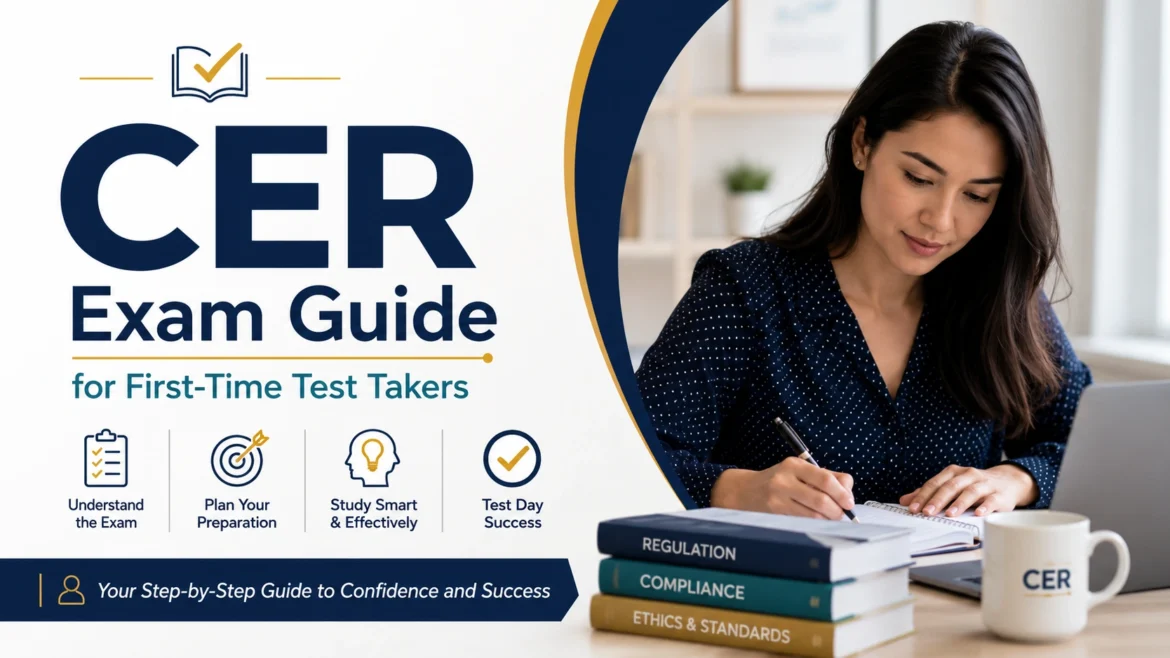

The good news is that strong preparation strategies, realistic practice, and understanding the structure of the exam can make the certification process much more manageable.
First-time candidates who prepare consistently often build stronger confidence, reduce exam anxiety, and improve their chances of passing successfully on the first attempt.
- What the CER certification is
- Why professionals pursue certification
- What to expect on the exam
- Study and preparation strategies
- Common mistakes to avoid
- Career and industry benefits
What Is the CER Certification?
The CER certification is designed to validate professional knowledge, technical understanding, and industry competency in specialized operational and regulatory areas. Employers often view certification as proof that a candidate understands industry procedures, safety standards, and practical responsibilities required in professional environments.
Many organizations value certified professionals because certification demonstrates:
- Commitment to professional development
- Industry knowledge and competency
- Understanding of regulations and procedures
- Preparation for real-world responsibilities
- Professional credibility
Certification can also help professionals strengthen career opportunities in industries where operational accuracy, compliance, and technical knowledge are highly important.
Why Many Professionals Pursue CER Certification
Professionals pursue CER certification for different reasons depending on their career goals and industry background. Some candidates need certification to qualify for specific positions, while others pursue certification to improve advancement opportunities or strengthen professional credibility.
| Reason for Certification | Potential Benefit |
|---|---|
| Career advancement | Improved professional opportunities |
| Industry compliance | Meeting workplace requirements |
| Professional credibility | Stronger employer confidence |
| Knowledge improvement | Better technical understanding |
| Competitive job market | Improved candidate positioning |
Certification often becomes especially valuable for professionals working in technical, operational, regulatory, or compliance-focused environments where standardized knowledge is important.
Is the CER Exam Difficult?
The difficulty of the CER exam often depends on a candidate’s prior industry experience, familiarity with technical concepts, and preparation habits. Some candidates find the exam manageable because of strong workplace experience, while others need more structured review and practice before feeling fully prepared.
Many first-time test takers underestimate the importance of:
- Consistent review sessions
- Practice questions
- Technical terminology
- Scenario-based reasoning
- Time management during the exam
Candidates who begin preparing early usually feel significantly more confident before exam day.
What Topics Are Usually Covered on the CER Exam?
While exact exam topics may vary depending on certification updates and industry standards, many CER exams focus on operational procedures, compliance expectations, technical knowledge, safety practices, and practical decision-making scenarios.
Candidates are often expected to understand:
- Industry procedures and regulations
- Operational best practices
- Safety and compliance requirements
- Technical terminology
- Professional responsibilities
- Scenario-based problem solving
The exam may also include questions designed to evaluate practical judgment and professional reasoning rather than simple memorization alone.
Why Practice Questions Matter for CER Preparation
One of the most effective ways candidates improve exam readiness is through realistic practice questions that simulate the style and difficulty of actual certification exams.
Structured CER practice test questions & answers with explanations can help candidates strengthen technical understanding, identify weaker knowledge areas, and become more comfortable with exam-style wording before test day.
Practice questions help candidates:
- Improve confidence under pressure
- Strengthen technical reasoning
- Recognize common question patterns
- Improve pacing during the exam
- Identify weak knowledge areas early
How First-Time Test Takers Should Build a Study Plan
Many first-time candidates make the mistake of studying inconsistently or waiting until the last minute before beginning exam preparation. However, steady preparation usually produces much stronger results than short periods of intense cramming.
Strong CER study plans often include:
- Weekly review sessions
- Regular practice questions
- Reviewing technical terminology
- Scenario-based learning
- Timed practice sessions
Candidates who follow structured study schedules often feel more organized and less stressed during the certification process.
Common Mistakes First-Time CER Candidates Make
Many first-time CER candidates underestimate how much preparation is needed for certification exams. Some professionals rely only on workplace experience and skip structured studying completely, while others spend too much time memorizing information without understanding practical applications.
These mistakes can reduce confidence and create unnecessary stress during the actual exam.
| Common Mistake | Why It Causes Problems |
|---|---|
| Waiting too long to study | Creates unnecessary exam pressure |
| Ignoring practice questions | Weakens exam familiarity |
| Memorizing without understanding | Hurts scenario-based reasoning |
| Poor time management | Causes rushed answers |
| Skipping weak topics | Leaves knowledge gaps |
Candidates who review mistakes consistently during preparation often improve much faster than candidates who only focus on correct answers.
Why Time Management Matters During the CER Exam
Many certification candidates struggle with pacing during exams because they spend too much time on difficult questions early in the test. This can create stress later when easier questions must be rushed unnecessarily.
Strong time management helps candidates:
- Maintain focus during difficult sections
- Reduce exam anxiety
- Improve answer accuracy
- Complete all questions more comfortably
- Stay calm under pressure
Timed practice sessions are often one of the best ways to improve pacing before exam day.
How Scenario-Based Questions Appear on the CER Exam
Many CER exams include scenario-based questions that test how candidates apply technical knowledge in realistic workplace situations. These questions are designed to evaluate professional judgment rather than memorization alone.
Scenario-based questions may require candidates to:
- Analyze operational situations
- Identify compliance concerns
- Apply safety procedures
- Interpret technical information
- Choose appropriate professional actions
Candidates who practice real-world problem solving often feel more prepared for these types of questions during the exam.
Why Consistent Practice Improves CER Scores
Consistency usually matters far more than occasional long study sessions. Candidates who review material regularly often retain information more effectively and feel more confident approaching technical questions.
Regular preparation helps candidates:
- Improve long-term knowledge retention
- Strengthen technical understanding
- Build exam confidence gradually
- Recognize question patterns faster
- Reduce stress before the exam
Even shorter weekly review sessions can create major improvement over several months of preparation.
How Working Professionals Can Prepare Efficiently
Many CER candidates are working professionals balancing jobs, family responsibilities, and certification preparation simultaneously. Because of this, efficient study strategies become especially important.
Professionals often improve preparation efficiency by:
- Using shorter focused study sessions
- Reviewing practice questions consistently
- Studying during scheduled weekly blocks
- Focusing on weaker topics first
- Using realistic timed practice sessions
Candidates who maintain structured preparation schedules often avoid burnout while improving exam readiness steadily over time.
Why CER Certification Can Improve Career Opportunities
Certification can strengthen professional credibility and demonstrate industry competency to employers. Many organizations value certified professionals because certification reflects commitment to professional standards and ongoing development.
Depending on the industry, CER certification may support:
- Career advancement opportunities
- Professional credibility
- Improved job competitiveness
- Expanded workplace responsibilities
- Industry recognition
Certification may also help professionals feel more confident handling technical responsibilities and operational procedures within their roles.
How Confidence Improves During CER Preparation
Many candidates feel nervous before certification exams, especially first-time test takers unfamiliar with professional testing environments. However, confidence usually improves gradually through consistent preparation and repeated exposure to exam-style questions.
Candidates who practice regularly often notice:
- Improved technical understanding
- Faster question analysis
- Better pacing during practice sessions
- Reduced test anxiety
- Stronger professional confidence
Confidence becomes especially important during exams because stress and panic can increase avoidable mistakes under pressure.
What to Expect on CER Exam Day
Many first-time CER candidates feel anxious before exam day because they are unsure what the testing experience will feel like. However, candidates who prepare consistently and practice under realistic conditions usually feel much more comfortable during the actual exam.
Before the exam, candidates should:
- Review important technical concepts
- Avoid last-minute cramming
- Get proper rest the night before
- Arrive early if testing in person
- Stay calm and focused during the exam
Many candidates perform better when they treat exam day as an opportunity to apply knowledge they have already practiced rather than viewing the test as unpredictable or intimidating.
How to Handle Difficult Questions During the CER Exam
Almost every certification candidate encounters difficult questions during the exam. Strong test-taking strategies help candidates avoid panic and maintain steady pacing under pressure.
Helpful strategies often include:
- Reading questions carefully before answering
- Eliminating clearly incorrect choices first
- Avoiding excessive second-guessing
- Moving forward temporarily if stuck
- Managing time consistently throughout the test
Candidates who remain calm during difficult sections often avoid unnecessary mistakes and maintain stronger overall performance.
Why Technical Understanding Matters More Than Memorization
Many certification exams are designed to test professional judgment and applied knowledge rather than memorization alone. Candidates who understand how concepts apply in realistic workplace situations usually perform much better during scenario-based questions.
Strong technical understanding helps candidates:
- Interpret workplace situations accurately
- Apply compliance procedures correctly
- Recognize operational risks
- Analyze technical scenarios logically
- Make stronger professional decisions
This is why active practice and realistic preparation are often much more effective than passive memorization methods alone.
How Practice Exams Improve Certification Readiness
Practice exams are one of the best ways to prepare for professional certification tests because they expose candidates to realistic timing conditions, question structures, and technical wording before exam day.
Practice exams help candidates:
- Improve pacing under pressure
- Strengthen technical reasoning
- Build confidence gradually
- Identify weak areas early
- Reduce exam anxiety
Candidates who consistently review realistic practice questions often feel significantly more prepared approaching the actual certification exam.
| Weak Preparation Habit | Stronger Certification Strategy |
|---|---|
| Studying only occasionally | Following consistent weekly review plans |
| Ignoring practice questions | Using realistic exam simulations |
| Memorizing information passively | Applying concepts actively |
| Avoiding difficult topics | Reviewing weaker areas regularly |
Why Certification Matters in Professional Industries
Professional certification continues to become more important across many technical and compliance-focused industries. Employers often prefer certified candidates because certification demonstrates accountability, competency, and commitment to professional standards.
Certification can also support:
- Professional growth
- Industry credibility
- Operational confidence
- Career advancement
- Long-term professional development
In competitive industries, certification may help professionals stand out when pursuing new opportunities or increased workplace responsibilities.
How Long-Term Preparation Creates Better Results
Many candidates improve dramatically when they begin preparation earlier instead of waiting until the final weeks before the exam. Long-term preparation allows candidates to strengthen weaker areas gradually while reducing unnecessary stress.
Candidates preparing over longer periods often:
- Retain technical knowledge more effectively
- Improve pacing naturally
- Strengthen scenario-based reasoning
- Build confidence steadily
- Reduce last-minute exam anxiety
Even moderate weekly review sessions can create major improvement when maintained consistently over time.
Final Thoughts on the CER Exam for First-Time Test Takers
Preparing for the CER exam for the first time may initially feel challenging, but structured preparation, realistic practice, and consistent review habits can significantly improve confidence and exam readiness.
Candidates who focus on understanding practical applications instead of memorization alone often perform much better during scenario-based certification questions.
Strong preparation not only improves passing chances but also helps professionals strengthen technical confidence, workplace competency, and long-term career opportunities within their industry.
Frequently Asked Questions
Is the CER exam difficult for first-time candidates?
The exam can feel challenging for first-time candidates, especially without structured preparation, but consistent practice and realistic study plans often improve confidence significantly.
What is the best way to prepare for the CER exam?
Strong preparation usually includes realistic practice questions, regular review sessions, technical concept study, and timed practice exams.
Why are practice tests important for CER certification?
Practice tests help candidates improve pacing, strengthen technical reasoning, reduce exam anxiety, and become familiar with realistic question formats.
Can CER certification improve career opportunities?
Yes, certification may strengthen professional credibility, improve job competitiveness, and support career advancement opportunities in many industries.
How early should candidates begin preparing for the CER exam?
Candidates who begin preparing earlier often feel less stressed and have more time to strengthen weak knowledge areas before exam day.