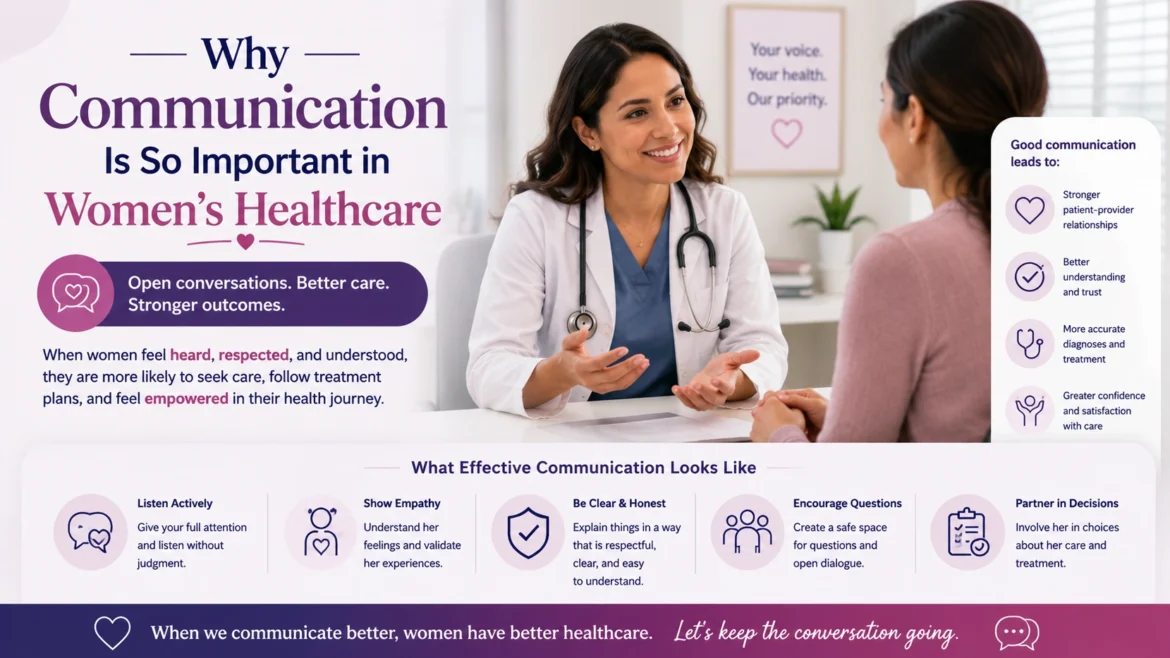

However, the healthcare provider listens carefully, explains information respectfully, and creates a supportive environment where the patient feels more comfortable communicating honestly.
Situations like this are one reason communication plays such an important role in women’s healthcare.
Women’s healthcare often involves more than medical procedures or routine appointments alone. Communication, trust, education, and emotional support all influence how comfortable patients feel during healthcare experiences.
Why Communication Matters in Women’s Healthcare
- Helps patients discuss concerns more openly
- Improves healthcare understanding and education
- Supports long-term wellness relationships
- Reduces confusion and anxiety during appointments
- Encourages patient participation in healthcare decisions
- Builds trust between patients and providers
Why Some Patients Hesitate to Discuss Health Concerns
Many women’s health concerns involve sensitive, emotional, or deeply personal discussions.
Patients may feel uncomfortable talking about:
- Symptoms or wellness concerns
- Reproductive health questions
- Pregnancy-related concerns
- Emotional stress or anxiety
- Long-term healthcare decisions
Supportive communication helps create healthcare environments where patients feel more respected, heard, and comfortable asking important questions.
Healthcare Perspective:
Patients are often more likely to stay engaged with healthcare when they feel listened to and supported during medical conversations.
Why Trust Matters in Women’s Healthcare
Trust plays a major role in helping patients communicate openly with healthcare providers.
Patients often feel more comfortable discussing healthcare concerns when providers:
- Listen carefully without judgment
- Explain healthcare information clearly
- Encourage patient questions
- Communicate respectfully and professionally
- Create supportive healthcare environments
Strong communication helps patients feel more confident participating in healthcare decisions and long-term wellness planning.
| Communication Area | Why It Supports Better Healthcare |
|---|---|
| Patient Education | Helps patients understand healthcare decisions more clearly |
| Supportive Conversations | Encourages patients to discuss concerns openly |
| Clear Explanations | Reduces confusion and healthcare-related anxiety |
| Long-Term Communication | Supports ongoing healthcare relationships and wellness monitoring |
Source: General women’s healthcare principles and patient-centered healthcare communication practices.
Why Patient Education Is Connected to Communication
Healthcare information can sometimes feel confusing or overwhelming for patients.
Clear communication helps patients better understand:
- Preventive-care recommendations
- Wellness concerns
- Healthcare options
- Follow-up care instructions
- Long-term health management
When patients understand healthcare information more clearly, they often feel more confident making informed healthcare decisions.
Why Communication Helps Reduce Healthcare Anxiety
Many patients experience stress or anxiety during healthcare appointments, especially when discussions involve sensitive symptoms or uncertain health concerns.
Supportive communication may help patients feel:
- More comfortable asking questions
- Less overwhelmed during appointments
- More informed about healthcare decisions
- More supported emotionally
- More engaged with long-term wellness care
Many students interested in advanced nursing and women’s healthcare improve confidence using realistic Test Prep for WHNP because exposure to supportive healthcare interactions helps communication and women’s-health concepts feel more practical in clinical settings.
Why Compassionate Communication Improves Patient Experiences
Women’s healthcare appointments sometimes involve emotional conversations, uncertainty, or concerns patients may have delayed discussing for long periods of time.
Compassionate communication helps patients feel:
- Respected during healthcare discussions
- More comfortable asking questions
- Less anxious during appointments
- Supported emotionally and professionally
- More involved in healthcare decisions
Even small communication habits — such as listening carefully or explaining information patiently — can significantly affect how patients experience healthcare.
Important Healthcare Insight:
Patients often remember how healthcare providers communicated with them long after the appointment itself has ended.
Why Communication Barriers Can Affect Healthcare
Some patients struggle to discuss healthcare concerns openly because of fear, embarrassment, confusion, cultural differences, or previous negative healthcare experiences.
Communication barriers may cause patients to:
- Delay asking healthcare questions
- Avoid discussing symptoms honestly
- Misunderstand medical instructions
- Feel disconnected from healthcare decisions
- Delay preventive-care visits
Supportive healthcare communication helps reduce these barriers and encourages stronger patient participation in long-term wellness care.
| Communication Approach | How It Helps Patients |
|---|---|
| Clear Explanations | Improves healthcare understanding and reduces confusion |
| Respectful Listening | Encourages patients to communicate concerns more openly |
| Patient Education | Supports informed healthcare decisions and wellness awareness |
| Supportive Conversations | Helps reduce healthcare-related stress and anxiety |
Source: General women’s healthcare principles and patient-centered communication practices.
Why Long-Term Communication Builds Better Healthcare Relationships
Women’s healthcare often involves ongoing wellness discussions and long-term healthcare monitoring rather than isolated short-term treatment alone.
Strong communication helps providers:
- Understand patient concerns more clearly
- Support long-term wellness planning
- Encourage preventive-care participation
- Improve patient comfort during appointments
- Build stronger healthcare trust over time
Patients are often more likely to stay engaged with preventive healthcare when communication feels supportive, respectful, and consistent.
Healthcare Reality:
Strong communication often improves not only patient comfort, but also healthcare understanding, wellness engagement, and long-term provider relationships.
Why Women’s Health Providers Play Important Communication Roles
Professionals who understand the value of supportive communication and patient-centered women’s healthcare often help patients feel more informed and comfortable discussing long-term wellness concerns.
Women’s healthcare providers frequently support patients through:
- Preventive wellness education
- Long-term healthcare guidance
- Patient advocacy and support
- Compassionate communication
- Healthcare decision-making discussions
Why Communication Continues Growing in Importance
Modern healthcare systems increasingly recognize that patient communication plays a major role in healthcare understanding, wellness participation, and long-term patient engagement.
As healthcare environments continue emphasizing patient-centered care, communication remains one of the most important skills supporting women’s healthcare experiences and long-term wellness relationships.
Why Communication Helps Patients Participate in Their Healthcare
Patients often make better-informed healthcare decisions when they clearly understand wellness information, preventive-care recommendations, and follow-up guidance.
Supportive communication encourages patients to:
- Ask healthcare questions openly
- Discuss symptoms honestly
- Participate in wellness planning
- Stay engaged with preventive care
- Feel more confident about healthcare decisions
When communication feels respectful and patient-centered, individuals are often more comfortable staying involved in long-term healthcare management.
Healthcare Perspective:
Strong communication helps transform healthcare visits from rushed appointments into more supportive and educational patient-care experiences.
Why Communication Supports Preventive Healthcare
Preventive healthcare depends heavily on patient understanding, long-term wellness awareness, and consistent healthcare participation.
Patients are often more likely to maintain preventive-care habits when healthcare providers:
- Explain recommendations clearly
- Encourage patient questions
- Provide supportive wellness education
- Discuss healthcare concerns respectfully
- Create comfortable healthcare environments
Supportive communication helps patients feel more informed about routine wellness visits, screenings, and long-term healthcare planning.
| Communication Benefit | Why It Matters in Women’s Healthcare |
|---|---|
| Patient Understanding | Helps patients make informed healthcare decisions |
| Supportive Conversations | Encourages open discussion of wellness concerns |
| Preventive-Care Education | Improves long-term wellness awareness and participation |
| Long-Term Healthcare Trust | Supports stronger provider-patient relationships |
Source: General women’s healthcare principles and patient-centered healthcare communication practices.
Why Emotional Support Matters During Healthcare Conversations
Some healthcare situations can feel stressful, emotional, or overwhelming for patients.
Supportive communication may help reduce:
- Healthcare anxiety
- Fear of asking questions
- Confusion about healthcare information
- Stress related to wellness concerns
- Discomfort discussing sensitive topics
Healthcare providers who communicate calmly and respectfully often help patients feel more emotionally supported during difficult healthcare discussions.
Healthcare Reality:
Patients are often more likely to continue preventive healthcare and wellness monitoring when they feel emotionally supported and respected during healthcare interactions.
Why Communication and Preventive Care Work Together
Preventive healthcare becomes much more effective when patients understand wellness recommendations clearly and feel comfortable participating actively in healthcare planning.
Patients who understand why preventive women’s healthcare supports long-term wellness and early healthcare awareness are often more likely to remain engaged with routine healthcare visits and wellness monitoring over time.
Why Communication Will Remain Essential in Women’s Healthcare
Modern healthcare systems increasingly emphasize:
- Patient-centered care
- Healthcare education
- Preventive wellness
- Long-term healthcare relationships
- Supportive provider-patient communication
As healthcare continues evolving, communication remains one of the most important tools supporting trust, wellness education, patient comfort, and long-term healthcare participation.
Final Thoughts
Communication is so important in women’s healthcare because patients often need supportive, respectful, and educational healthcare environments where they feel comfortable discussing concerns openly.
Strong communication helps improve healthcare understanding, preventive-care participation, emotional support, and long-term provider-patient relationships throughout women’s healthcare experiences.
As healthcare systems continue emphasizing patient-centered wellness and preventive care, communication remains deeply connected to better healthcare experiences and stronger long-term wellness engagement.
For many patients, supportive healthcare communication provides more than information alone — it helps create trust, confidence, understanding, and a stronger connection to long-term wellness care.