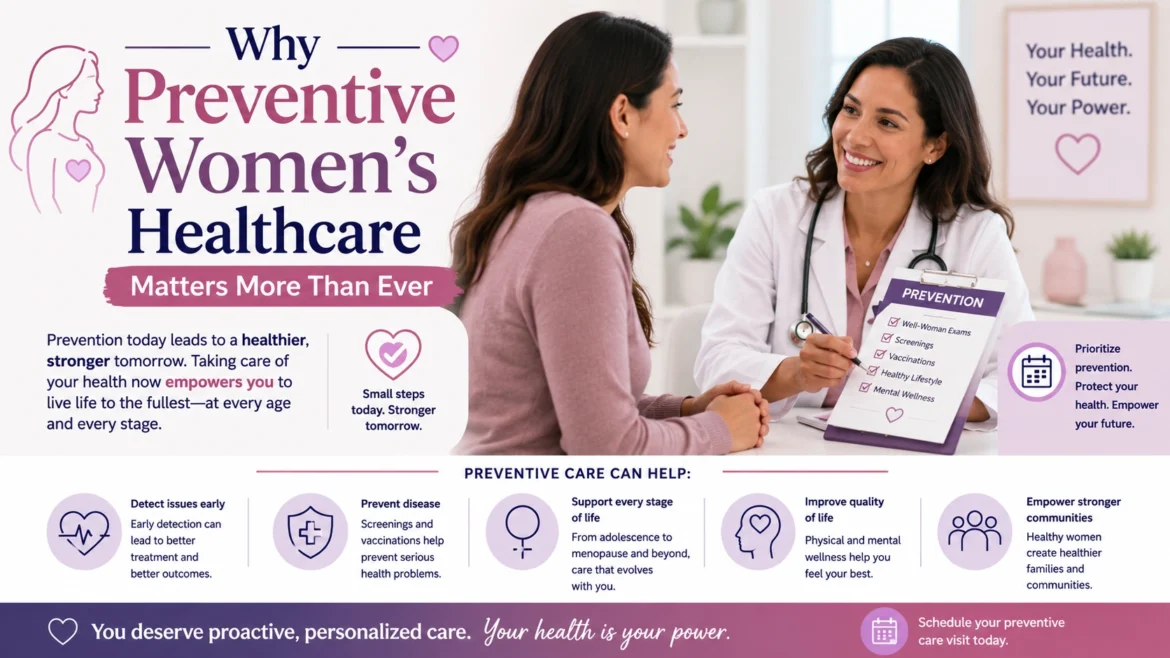

Situations like this demonstrate why preventive healthcare plays such an important role in women’s wellness.
Preventive women’s healthcare focuses on supporting long-term wellness, patient education, early awareness, and consistent healthcare monitoring throughout different stages of life.
Rather than waiting until health problems become severe, preventive care encourages earlier attention to healthcare needs and ongoing wellness support.
What Preventive Women’s Healthcare Often Includes
- Routine wellness visits
- Preventive health screenings
- Patient education and communication
- Long-term wellness monitoring
- Reproductive and maternal health discussions
- Lifestyle and wellness guidance
Why Preventive Healthcare Is So Important
Many health concerns become easier to manage when recognized earlier through routine healthcare monitoring and consistent patient follow-up.
Preventive healthcare helps support:
- Early awareness of potential concerns
- Long-term wellness planning
- Patient education and understanding
- Ongoing healthcare communication
- Healthier lifestyle awareness
Regular healthcare visits also give patients opportunities to ask questions, discuss symptoms, and better understand their personal wellness needs.
Healthcare Perspective:
Preventive healthcare often works best when patients feel comfortable discussing concerns openly and staying engaged with long-term wellness support.
Why Communication Matters in Preventive Care
Many women’s health concerns involve personal, sensitive, or long-term healthcare discussions.
Patients may have questions involving:
- Wellness changes
- Preventive screenings
- Lifestyle-related concerns
- Reproductive health
- Long-term healthcare planning
Supportive communication helps patients feel more comfortable discussing healthcare concerns honestly and asking important questions during appointments.
| Preventive Healthcare Area | Why It Supports Women’s Wellness |
|---|---|
| Routine Screenings | Support earlier awareness of healthcare concerns |
| Patient Education | Helps patients make informed healthcare decisions |
| Wellness Monitoring | Supports long-term healthcare management and follow-up care |
| Communication Support | Improves patient comfort and healthcare understanding |
Source: General women’s healthcare principles and preventive healthcare practices.
Why Long-Term Wellness Monitoring Matters
Women’s healthcare needs can change over time depending on age, lifestyle, reproductive health, family history, and overall wellness patterns.
Consistent preventive care helps healthcare providers:
- Monitor changes over time
- Support ongoing wellness discussions
- Encourage healthier habits
- Provide patient education
- Coordinate follow-up care when necessary
Long-term healthcare relationships often help patients feel more comfortable staying engaged with preventive wellness care.
Why Some Patients Delay Preventive Care
Many patients postpone preventive healthcare visits for different reasons, including:
- Busy schedules
- Healthcare anxiety
- Fear of possible results
- Communication discomfort
- Difficulty prioritizing personal wellness
Supportive healthcare communication and patient education can help encourage more consistent long-term wellness participation.
Many students interested in advanced nursing and women’s healthcare improve confidence using WHNP prep questions and patient-centered women’s health scenarios because exposure to preventive-care situations helps healthcare communication and wellness concepts feel more practical in clinical settings.
Why Early Awareness Supports Better Healthcare Outcomes
Preventive healthcare often focuses on identifying powhy-preventive-womens-healthcare-matterstential concerns before they become more serious or more difficult to manage.
Routine wellness care may help patients:
- Recognize health changes earlier
- Understand personal risk factors
- Stay informed about preventive screenings
- Maintain ongoing healthcare communication
- Develop healthier long-term wellness habits
Early awareness gives patients and healthcare providers more opportunities to monitor concerns carefully and support long-term wellness planning.
Important Healthcare Insight:
Preventive care is not only about identifying problems. It also helps patients stay informed, supported, and engaged with long-term wellness and healthcare decision-making.
Why Patient Education Matters in Preventive Healthcare
Many women’s healthcare decisions involve understanding complex health information, lifestyle factors, screening recommendations, and long-term wellness planning.
Patient education helps individuals:
- Understand preventive-care options
- Ask informed healthcare questions
- Recognize changes in wellness patterns
- Participate more actively in healthcare decisions
- Build healthier long-term habits
When patients understand healthcare information more clearly, they often feel more confident participating in wellness planning and follow-up care.
| Preventive Care Benefit | Why It Matters Long-Term |
|---|---|
| Routine Wellness Monitoring | Supports ongoing healthcare awareness and follow-up care |
| Preventive Education | Helps patients make informed healthcare decisions |
| Supportive Communication | Encourages patient comfort and healthcare engagement |
| Long-Term Healthcare Relationships | Improves continuity of care and wellness planning |
Source: General women’s healthcare principles and preventive wellness practices.
Why Women’s Healthcare Often Requires Specialized Support
Women’s healthcare may involve unique wellness needs, preventive screenings, reproductive-health discussions, and long-term healthcare planning across different stages of life.
Because of this, women’s healthcare professionals often provide support involving:
- Preventive wellness guidance
- Patient education
- Communication-focused care
- Long-term health monitoring
- Patient-centered healthcare discussions
Patients often benefit from healthcare environments where communication feels supportive, respectful, and focused on long-term wellness.
Healthcare Reality:
Preventive healthcare becomes more effective when patients feel comfortable asking questions, discussing concerns openly, and participating actively in healthcare decisions.
Why Women’s Health Professionals Continue Playing Important Roles
Modern healthcare systems increasingly emphasize prevention, wellness education, long-term patient relationships, and healthcare accessibility.
Professionals who understand the importance of communication, education, and patient-centered women’s healthcare continue playing valuable roles throughout preventive-care environments.
Women’s healthcare providers often help patients navigate healthcare concerns through education, wellness monitoring, supportive communication, and ongoing healthcare guidance.
Why Preventive Healthcare Continues Evolving
Healthcare systems continue expanding their focus on:
- Patient education
- Preventive wellness
- Early intervention
- Healthcare communication
- Long-term healthcare engagement
As healthcare environments continue emphasizing prevention and patient-centered care, preventive women’s healthcare remains increasingly important throughout modern healthcare systems.
Why Preventive Healthcare Supports Long-Term Wellness
Preventive healthcare is not only focused on short-term medical visits. It also supports long-term wellness awareness and ongoing healthcare engagement throughout different stages of life.
Consistent preventive care can help patients:
- Monitor overall wellness changes
- Stay informed about healthcare recommendations
- Maintain healthier lifestyle habits
- Build stronger healthcare communication
- Feel more confident managing long-term wellness
When patients remain connected to preventive healthcare, they are often more prepared to address concerns earlier and make informed healthcare decisions over time.
Healthcare Perspective:
Preventive care often works best when patients feel supported, informed, and comfortable participating actively in long-term healthcare and wellness planning.
Why Healthcare Access and Communication Matter
Some patients delay preventive healthcare because of scheduling difficulties, healthcare anxiety, communication discomfort, or uncertainty about when routine care is necessary.
Supportive healthcare communication helps patients:
- Understand preventive-care importance
- Feel more comfortable discussing concerns
- Ask healthcare questions openly
- Participate more actively in wellness planning
- Stay engaged with follow-up care
Accessible communication and patient-centered care often play important roles in encouraging long-term wellness participation.
| Preventive Healthcare Focus | Why It Helps Patients |
|---|---|
| Routine Wellness Visits | Support ongoing healthcare monitoring and communication |
| Patient Education | Improves healthcare understanding and wellness awareness |
| Preventive Screenings | Encourage earlier awareness of possible healthcare concerns |
| Supportive Communication | Helps patients feel more comfortable discussing wellness concerns |
Source: General preventive healthcare principles and women’s wellness practices.
Why Preventive Women’s Healthcare Continues Growing
Modern healthcare systems increasingly recognize the importance of prevention, wellness education, early awareness, and patient-centered communication.
Because of this, preventive women’s healthcare continues expanding through:
- Wellness-focused healthcare models
- Patient education initiatives
- Long-term healthcare monitoring
- Communication-centered care approaches
- Preventive screening programs
Healthcare environments now place greater emphasis on helping patients stay informed and engaged with long-term wellness support instead of focusing only on treatment after problems become severe.
Important Reminder:
Preventive healthcare is often most effective when patients maintain consistent communication with healthcare providers and remain actively involved in long-term wellness planning.
Why Preventive Care Benefits Both Patients and Healthcare Systems
Preventive healthcare not only supports individual wellness but also helps healthcare systems encourage healthier long-term patient outcomes and more organized healthcare management.
Preventive approaches often help support:
- Earlier healthcare awareness
- Improved patient education
- Long-term wellness monitoring
- Healthcare communication and coordination
- Patient engagement with routine care
As healthcare systems continue emphasizing prevention and wellness education, preventive women’s healthcare remains increasingly valuable throughout modern healthcare environments.
Final Thoughts
Preventive women’s healthcare matters more than ever because long-term wellness often depends on communication, education, early awareness, routine monitoring, and ongoing healthcare engagement.
Supportive preventive care helps patients feel more informed, comfortable, and connected to their long-term healthcare decisions throughout different stages of life.
As healthcare systems continue focusing more on wellness, prevention, and patient-centered communication, preventive women’s healthcare remains an important part of modern healthcare support.
For many patients, preventive healthcare provides more than routine appointments — it helps create long-term healthcare relationships built on communication, education, wellness awareness, and ongoing support.