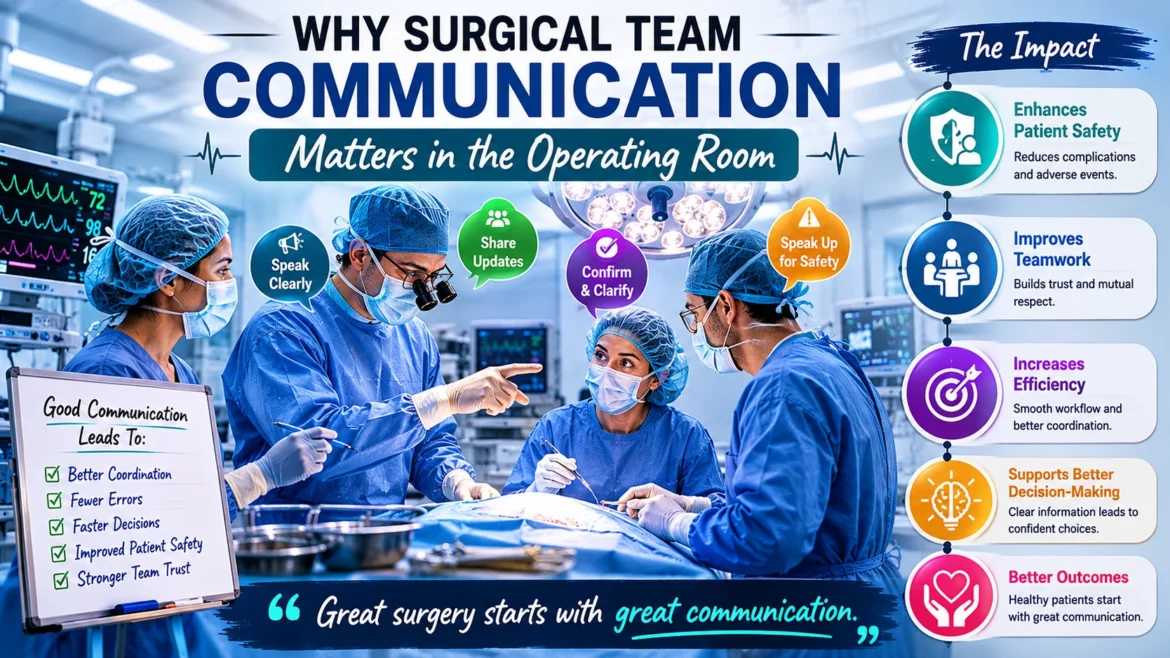

Even small communication misunderstandings inside the operating room can create workflow problems, delays, confusion, or patient-safety concerns.
Because of this, strong surgical team communication remains one of the most important parts of safe perioperative care.
Why Communication Matters in the Operating Room
- Supports patient safety during procedures
- Helps surgical teams coordinate efficiently
- Reduces confusion during high-pressure situations
- Supports sterile workflow organization
- Improves teamwork and task coordination
- Helps operating-room procedures run more smoothly
Why Operating Room Communication Is Different
Communication inside the operating room often needs to be:
- Clear
- Accurate
- Efficient
- Professional
- Focused under pressure
Unlike many routine healthcare environments, surgical settings may involve rapidly changing situations where timing, coordination, and attention to detail become extremely important.
Strong communication helps surgical teams remain organized while maintaining patient safety and procedural efficiency.
Operating Room Perspective:
Effective surgical communication often depends on teamwork, clarity, preparation, and consistent attention to patient safety throughout procedures.
Why Team Coordination Matters During Surgery
Surgical procedures often involve many coordinated responsibilities happening simultaneously.
Healthcare professionals may need to:
- Prepare sterile instruments
- Monitor patient conditions
- Track surgical supplies
- Communicate procedural updates
- Respond quickly to changing situations
Strong coordination helps surgical teams maintain organized workflows while reducing unnecessary confusion during procedures.
| Operating Room Communication Area | Why It Supports Safer Surgical Care |
|---|---|
| Clear Instructions | Reduces confusion during procedures |
| Team Coordination | Supports organized surgical workflow |
| Patient Updates | Helps teams respond appropriately during surgery |
| Sterile Workflow Communication | Supports safer procedural environments |
Source: General perioperative nursing principles and operating-room patient-safety practices.
Why Patient Safety Depends on Communication
Operating-room communication plays a major role in helping surgical teams maintain patient safety before, during, and after procedures.
Communication may involve:
- Procedure verification
- Instrument tracking
- Patient-condition updates
- Workflow coordination
- Safety checks and confirmations
Careful communication helps surgical teams reduce errors and maintain organized perioperative care processes.
Why Pressure Can Affect Communication
Operating rooms can become high-pressure environments, especially during complex or time-sensitive procedures.
Healthcare professionals may need to communicate effectively while managing:
- Time-sensitive tasks
- Multiple simultaneous responsibilities
- Patient monitoring
- Equipment coordination
- Unexpected procedural changes
Strong communication habits help surgical teams remain focused and coordinated even during stressful situations.
Many perioperative nursing students improve confidence using realistic CNOR practice questions and operating-room workflow scenarios because repeated exposure to surgical communication and patient-safety situations helps perioperative concepts feel more organized and practical.
Why Sterile Workflow Communication Is So Important
Operating-room environments depend heavily on organized sterile procedures and careful surgical coordination.
Communication helps surgical teams maintain awareness of:
- Sterile field boundaries
- Instrument handling procedures
- Supply availability
- Workflow changes during surgery
- Patient-safety responsibilities
Clear communication helps reduce confusion and supports safer procedural organization throughout surgical care.
Important Operating Room Insight:
Surgical communication often involves much more than conversation alone. It also supports workflow organization, sterile awareness, teamwork, and patient safety throughout procedures.
Why Communication Helps Prevent Mistakes
Operating rooms involve many coordinated steps where accuracy and attention to detail are extremely important.
Strong communication helps teams:
- Confirm important information clearly
- Coordinate procedural tasks efficiently
- Identify workflow concerns earlier
- Reduce misunderstandings
- Maintain organized surgical processes
Consistent communication habits support safer perioperative environments and more efficient surgical teamwork.
| Surgical Communication Skill | Why It Matters in the OR |
|---|---|
| Clear Team Updates | Supports better coordination during procedures |
| Sterile Workflow Awareness | Helps maintain safer surgical environments |
| Patient-Safety Verification | Reduces risk of procedural confusion |
| Procedure Coordination | Improves efficiency and organization in surgery |
Source: General perioperative nursing principles and operating-room teamwork practices.
Why Perioperative Nurses Play Important Communication Roles
Perioperative nurses often help coordinate communication between different surgical team members before, during, and after procedures.
Responsibilities may involve:
- Patient-care coordination
- Surgical preparation support
- Instrument and supply awareness
- Safety verification processes
- Procedure-related communication
Strong communication skills help perioperative nurses support smoother workflow organization and patient-centered surgical care.
Operating Room Reality:
Surgical teamwork depends heavily on communication consistency, preparation, coordination, and shared awareness throughout procedures.
Why Communication Under Pressure Matters
Operating-room professionals often communicate in environments requiring intense focus and rapid coordination.
During surgery, healthcare teams may need to:
- Adjust quickly to procedural changes
- Coordinate supplies efficiently
- Respond to patient-condition updates
- Maintain sterile workflow standards
- Communicate clearly under stress
Structured communication helps reduce confusion and supports organized teamwork during demanding surgical situations.
Why Surgical Communication Continues Evolving
Modern surgical environments increasingly emphasize patient safety, workflow organization, sterile technique, and interdisciplinary teamwork.
Because of this, communication remains one of the most important skills supporting efficient operating-room care and safer perioperative outcomes.
Why Operating Room Preparation Supports Better Communication
Strong surgical communication often begins long before a procedure actually starts.
Preparation helps surgical teams organize:
- Procedure expectations
- Equipment readiness
- Instrument availability
- Patient-care coordination
- Workflow responsibilities
When healthcare professionals enter procedures with clear preparation and shared awareness, communication during surgery often becomes more organized and efficient.
Perioperative Perspective:
Strong operating-room communication is often built through preparation, consistency, teamwork, and careful attention to workflow details before procedures even begin.
Why Teamwork and Communication Work Together
Operating-room environments rely heavily on coordinated teamwork between multiple healthcare professionals.
Successful surgical teamwork often involves:
- Clear communication
- Professional coordination
- Shared situational awareness
- Respectful collaboration
- Patient-safety focus
Communication helps healthcare teams stay aligned during procedures where organization and timing are extremely important.
| Operating Room Communication Focus | How It Supports Surgical Care |
|---|---|
| Procedure Preparation | Helps teams organize workflow before surgery |
| Clear Surgical Updates | Supports better team coordination during procedures |
| Sterile Workflow Awareness | Maintains safer procedural environments |
| Patient-Safety Communication | Helps reduce procedural misunderstandings and workflow errors |
Source: General perioperative nursing principles and operating-room workflow coordination practices.
Why Communication Helps Build Confidence in the Operating Room
Clear communication not only supports patient safety but also helps healthcare professionals feel more organized and confident during procedures.
Structured communication often helps surgical teams:
- Respond more calmly during pressure situations
- Coordinate tasks more efficiently
- Maintain procedural focus
- Reduce workflow confusion
- Support smoother teamwork interactions
Consistent communication habits help operating-room professionals navigate complex surgical environments more effectively.
Operating Room Reality:
Communication in surgery often affects not only workflow organization, but also teamwork confidence, procedural efficiency, and patient-safety awareness.
Why CNOR Preparation Often Includes Workflow Thinking
CNOR preparation frequently involves understanding surgical workflows, perioperative responsibilities, sterile procedures, patient safety, and communication coordination within operating-room environments.
Students preparing for perioperative nursing roles often benefit from repeated exposure to:
- Operating-room scenarios
- Workflow coordination concepts
- Patient-safety procedures
- Sterile technique awareness
- Surgical communication situations
Consistent practice helps perioperative concepts feel more practical and organized within real surgical-care environments.
Final Thoughts
Surgical team communication matters in the operating room because safe perioperative care depends heavily on teamwork, coordination, sterile workflow awareness, and organized patient-safety practices.
Clear communication helps surgical teams reduce confusion, coordinate responsibilities efficiently, and maintain safer procedural environments during demanding operating-room situations.
As surgical environments continue emphasizing patient safety and interdisciplinary teamwork, communication remains one of the most important foundations supporting effective perioperative care.
For many operating-room professionals, strong communication is not simply a workplace skill — it is an essential part of organized teamwork, workflow coordination, and safer surgical patient care.