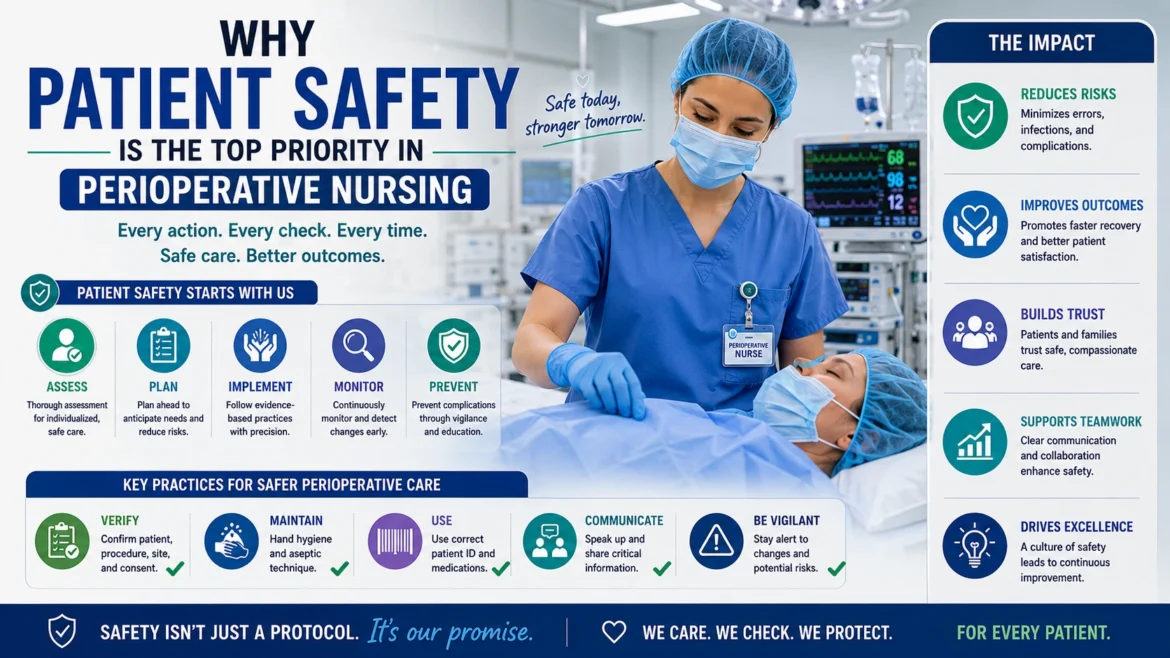

Inside Perioperative Care
Perioperative nursing involves much more than assisting during surgery. Operating-room professionals constantly monitor workflow organization, sterile awareness, communication, preparation, and patient-care coordination throughout surgical procedures.
In surgical environments, patient safety remains the foundation connecting every responsibility performed before, during, and after surgery.
Why Patient Safety Matters So Much in Perioperative Nursing
Surgical procedures involve complex workflows where organization, coordination, and attention to detail are extremely important.
Perioperative teams help support safer surgical environments by focusing on:
Procedure Preparation
Supporting organized surgical readiness before procedures begin.
Sterile Awareness
Helping maintain controlled operating-room environments.
Workflow Coordination
Supporting efficient teamwork during surgery.
Communication
Helping surgical teams stay organized under pressure.
Before Surgery: Patient Safety Starts Early
Patient safety preparation often begins long before the procedure itself.
Preoperative Safety Focus
- Procedure verification
- Equipment preparation
- Instrument organization
- Patient-care coordination
- Sterile setup preparation
Organized preparation helps surgical teams maintain smoother workflow coordination once procedures begin.
Safety Reminder
In perioperative care, small workflow issues can become larger patient-safety concerns if preparation and communication are not carefully maintained.
During Surgery: Why Continuous Monitoring Matters
Patient safety requires continuous awareness throughout surgical procedures.
Perioperative teams may monitor:
Operating-Room Workflow
Helping maintain organized procedural coordination throughout surgery.
Sterile Conditions
Supporting safer procedural environments during operations.
Team Communication
Helping surgical professionals coordinate clearly during procedures.
Why Perioperative Teamwork Supports Safer Care
Patient safety in surgery depends heavily on coordinated teamwork between:
- Perioperative nurses
- Surgeons
- Surgical technologists
- Anesthesia professionals
- Operating-room support staff
Consistent teamwork helps operating-room professionals respond more effectively during complex surgical situations.
Perioperative Patient-Safety Snapshot
| Perioperative Responsibility | Patient-Safety Purpose |
|---|---|
| Procedure Preparation | Supports organized surgical readiness |
| Sterile Monitoring | Helps maintain controlled surgical environments |
| Team Communication | Supports coordinated workflow during surgery |
| Workflow Awareness | Reduces unnecessary procedural confusion |
Source: General perioperative nursing principles and operating-room patient-safety practices.
Many perioperative nursing students improve confidence using CNOR practice questions and perioperative workflow scenarios because repeated exposure to surgical patient-safety situations helps operating-room responsibilities feel more clinically organized and practical.
Why Communication Supports Patient Safety
In perioperative environments, patient safety depends heavily on clear and organized communication between surgical team members.
Communication helps operating-room professionals:
Coordinate Workflow
Keeps surgical procedures organized and structured.
Respond to Changes
Helps teams react efficiently during unexpected situations.
Maintain Awareness
Supports continuous procedural and patient-safety monitoring.
Professionals who understand why operating-room communication is essential during surgery often recognize how teamwork and coordinated communication directly support safer perioperative care.
Inside the Surgical Workflow
Operating-room professionals frequently rely on structured communication habits to help maintain workflow organization during high-focus surgical procedures.
After Surgery: Why Patient Safety Continues
Patient safety responsibilities continue even after surgical procedures are completed.
Postoperative perioperative responsibilities may involve:
- Procedure documentation
- Patient monitoring coordination
- Instrument and supply management
- Workflow communication
- Recovery-care support
Organized postoperative coordination helps support smoother transitions throughout perioperative care processes.
Patient-Safety Perspective
Perioperative safety is rarely dependent on one individual action. Safer surgical environments are usually supported through repeated teamwork, workflow consistency, communication, and careful attention to detail.
Why Workflow Awareness Matters in Surgery
Surgical procedures involve many moving parts happening simultaneously.
Perioperative teams often monitor:
Procedure Coordination
Supporting smoother surgical progression during procedures.
Equipment Organization
Helping maintain efficient operating-room workflow.
Sterile Awareness
Supporting controlled procedural environments throughout surgery.
Structured workflow awareness helps surgical teams stay organized while maintaining patient-safety priorities under pressure.
Perioperative Safety Focus Areas
Preparation
Organizing procedural readiness before surgery begins.
Monitoring
Maintaining continuous awareness during procedures.
Coordination
Supporting organized teamwork and workflow communication.
Recovery Support
Helping maintain patient-care continuity after surgery.
Source: General perioperative nursing workflow and patient-safety principles.
Why Consistency Is So Important in Perioperative Nursing
Perioperative patient safety often depends on small responsibilities being performed carefully and consistently throughout every stage of surgical care.
Surgical teams frequently rely on:
- Structured operating-room routines
- Clear communication habits
- Sterile workflow awareness
- Coordinated teamwork
- Continuous procedural monitoring
Consistency helps operating-room professionals maintain safer and more organized surgical environments during demanding procedures.
Perioperative Safety Mindset
Strong patient-safety practices are usually built through preparation, teamwork, workflow awareness, and repeated attention to detail throughout perioperative care.
Why Sterile Technique Supports Patient Safety
Sterile technique remains closely connected to safer operating-room environments and organized perioperative workflow.
Surgical teams often focus on:
Sterile Field Protection
Helping maintain controlled procedural environments.
Instrument Awareness
Supporting organized surgical workflow during operations.
Procedural Coordination
Helping teams maintain efficient workflow and patient focus.
Professionals who understand why sterile technique is essential in operating-room environments often recognize how sterile awareness directly supports patient safety and perioperative workflow organization together.
Why Attention to Detail Matters
Operating-room environments depend heavily on organized workflow and careful observation. Small lapses in attention may quickly affect communication, sterile awareness, or procedural coordination.
Why Perioperative Nursing Requires Strong Team Coordination
Perioperative care depends heavily on coordinated teamwork between multiple healthcare professionals working together during surgical procedures.
Surgical coordination may involve:
Procedure Preparation
Supporting organized operating-room readiness before surgery begins.
Workflow Communication
Helping maintain coordination during changing procedural situations.
Patient-Care Awareness
Supporting continuous safety monitoring throughout perioperative care.
Why CNOR Preparation Emphasizes Patient Safety
CNOR preparation often focuses heavily on:
- Perioperative workflow
- Patient-safety procedures
- Sterile technique awareness
- Operating-room communication
- Surgical coordination principles
Many perioperative nursing students improve confidence using realistic CNOR practice questions and operating-room safety scenarios because repeated exposure to perioperative responsibilities helps surgical workflow concepts feel more clinically organized and practical.
Operating Room Perspective
Patient safety in perioperative nursing is rarely based on one single action. Safer surgical care is usually supported through preparation, teamwork, sterile awareness, communication, and workflow consistency working together continuously.
Final Thoughts
Patient safety is the top priority in perioperative nursing because surgical environments depend heavily on preparation, sterile technique, communication, teamwork, workflow coordination, and continuous procedural awareness.
Perioperative professionals help support safer operating-room environments by maintaining organized surgical workflow and responding carefully to changing procedural situations throughout patient care.
As operating-room environments continue emphasizing teamwork and surgical precision, patient safety remains the central foundation guiding perioperative nursing responsibilities before, during, and after surgery.
For many perioperative professionals, patient safety is not simply one part of surgical care — it is the responsibility connecting every operating-room decision, workflow process, and coordinated team action together.