
Although the ACSM-CEP exam covers complex material, a focused and organized study strategy can make the preparation process much more manageable. Building strong routines early, reviewing concepts consistently, and practicing application-based questions regularly can help candidates approach exam day with greater confidence and stronger clinical understanding.
Focusing on High-Yield ACSM-CEP Exam Topics
One of the most effective ways to prepare for the ACSM-CEP exam is identifying high-yield topics early in the study process. Many candidates waste valuable time reviewing minor details while overlooking the major clinical concepts that appear repeatedly throughout exercise physiology and patient assessment scenarios.
Although every content area matters, certain subjects consistently play a larger role in clinical exercise physiology practice. Understanding these core topics thoroughly can improve both exam performance and clinical confidence.
| High-Yield Topic | Why It Matters | Common Areas Tested |
|---|---|---|
| Exercise Physiology | Foundation of clinical exercise science | Cardiovascular, pulmonary, and metabolic responses |
| ECG Interpretation | Essential for patient monitoring and safety | Arrhythmias, ischemic changes, heart rate responses |
| Exercise Prescription | Core clinical competency | FITT principle, intensity calculation, progression |
| Risk Stratification | Supports patient safety decisions | Contraindications, symptoms, screening guidelines |
| Exercise Testing | Critical for clinical assessment | Termination criteria, BP responses, VO2 measurements |
How to Study Exercise Physiology More Efficiently
Exercise physiology often becomes one of the most challenging sections for candidates because it involves both scientific understanding and practical application. Instead of memorizing isolated definitions, candidates should focus on understanding how physiological systems respond during exercise and recovery.
For example, rather than simply memorizing that cardiac output increases during exercise, candidates should understand why it increases, how stroke volume and heart rate contribute, and how these changes affect oxygen delivery throughout the body. Connecting concepts together makes retention much easier and improves application during clinical scenarios.
Clinical Learning Reminder
When reviewing physiology concepts, always ask yourself how the information applies during exercise testing, patient monitoring, or exercise prescription. This approach improves clinical reasoning and long-term retention.
Improving ECG Interpretation Skills During Preparation
Many ACSM-CEP candidates feel anxious about ECG interpretation because it requires both pattern recognition and clinical understanding. However, ECG skills usually improve significantly through repeated exposure and consistent practice rather than memorization alone.
A helpful strategy is starting with normal cardiac conduction before moving into arrhythmias and abnormal findings. Candidates should become comfortable identifying heart rate, rhythm regularity, P waves, QRS complexes, and common abnormalities associated with exercise testing.
| ECG Study Focus | Why It Is Important |
|---|---|
| Normal sinus rhythm | Foundation for recognizing abnormalities |
| Heart rate calculation | Essential during exercise monitoring |
| Arrhythmia recognition | Supports patient safety decisions |
| ST-segment changes | Important during exercise testing |
| Exercise-related ECG responses | Improves clinical interpretation skills |
Using Practice Questions the Right Way
Many students complete large numbers of practice questions without reviewing explanations carefully. While repetition can help, true improvement usually happens when candidates analyze why answers are correct or incorrect. This process strengthens understanding and helps identify weak areas more effectively.
After completing practice questions, candidates should spend time reviewing:
- Why the correct answer was appropriate
- Why the incorrect options were less accurate
- Which concept was being tested
- Whether the mistake came from content gaps or misreading the question
- How the scenario applies clinically
Candidates preparing for certification often use structured ACSM-CEP practice questions resources to improve pacing, identify weak areas, and gain experience with realistic clinical-style questions before exam day.
Why Clinical Application Matters More Than Memorization
One of the biggest differences between successful and unsuccessful candidates is the ability to apply information clinically. Memorization may help with simple recall questions, but the ACSM-CEP exam frequently requires candidates to interpret patient data, recognize abnormal responses, and prioritize safety during exercise testing and training sessions.
For example, candidates may need to evaluate blood pressure responses during exercise, recognize contraindications for testing, or determine safe exercise intensity levels for individuals with chronic conditions. These situations require understanding rather than simple memorization.
Strong clinical reasoning skills often develop through repeated exposure to realistic patient scenarios and application-based practice questions.
Avoiding Burnout During Long-Term Preparation
Because the ACSM-CEP exam covers extensive material, many candidates experience burnout during preparation. Long hours of studying without breaks can reduce concentration, motivation, and retention over time. Building sustainable routines is usually far more effective than relying on intense short-term cramming sessions.
Candidates often benefit from:
- Studying in shorter focused sessions
- Rotating topics throughout the week
- Scheduling regular review days
- Taking short mental breaks during long sessions
- Tracking progress gradually instead of focusing only on exam day
Maintaining balance during preparation can improve consistency and make the learning process far more manageable over several weeks or months of study.
Building Long-Term Retention Before the Exam
Retention becomes much stronger when candidates review material repeatedly over time rather than trying to learn everything at once. Revisiting major topics regularly helps move information into long-term memory and improves recall under exam pressure.
Combining active recall, spaced repetition, realistic practice questions, and clinical application strategies can significantly improve understanding throughout ACSM-CEP preparation. Candidates who approach studying systematically often feel more prepared because they build deeper understanding instead of relying only on memorization.
Developing Better Test-Taking Strategies for the ACSM-CEP Exam
Strong content knowledge is extremely important during ACSM-CEP exam preparation, but test-taking strategy also plays a major role in overall performance. Many candidates understand the material yet struggle because they rush through questions, misinterpret clinical details, or second-guess themselves under pressure.
Learning how to approach complex clinical questions calmly and systematically can improve both accuracy and confidence during the exam. Candidates should focus on identifying key patient information, recognizing safety concerns, and eliminating clearly incorrect answer choices before selecting a final response.
| Effective Exam Strategy | Why It Helps |
|---|---|
| Read the full scenario carefully | Prevents missing critical patient details |
| Identify safety-related clues first | Supports clinical reasoning during questions |
| Eliminate clearly incorrect options | Improves decision-making accuracy |
| Manage time consistently | Reduces panic near the end of the exam |
| Review explanations after practice tests | Strengthens long-term understanding |
Why Understanding Patient Safety Is Essential
Patient safety is one of the most important themes throughout clinical exercise physiology. The ACSM-CEP exam frequently evaluates whether candidates can recognize unsafe exercise conditions, identify abnormal physiological responses, and respond appropriately during exercise testing or exercise prescription.
Candidates should become comfortable recognizing warning signs such as abnormal blood pressure responses, concerning ECG changes, unusual symptoms during exercise, and contraindications for testing. Understanding when exercise should be modified or stopped entirely is just as important as understanding exercise programming itself.
Clinical Safety Reminder
During many ACSM-CEP exam questions, the safest answer is often the correct answer. Pay close attention to symptoms, contraindications, abnormal responses, and patient risk factors within clinical scenarios.
Improving Exercise Prescription Confidence
Exercise prescription is another major focus area for ACSM-CEP candidates. Successful preparation requires understanding how to safely design exercise programs for individuals with varying fitness levels, medical conditions, and clinical limitations.
Rather than memorizing isolated formulas, candidates should focus on understanding how intensity, frequency, duration, and progression work together clinically. They should also understand how exercise recommendations change based on patient health status and exercise tolerance.
| Exercise Prescription Component | Key Focus During Preparation |
|---|---|
| Frequency | Understanding appropriate training schedules |
| Intensity | Learning safe exercise intensity guidelines |
| Time | Adjusting exercise duration appropriately |
| Type | Selecting suitable exercise modalities |
| Progression | Modifying programs safely over time |
The Value of Simulated Practice Exams
Full-length practice exams can help candidates become more comfortable with pacing, concentration, and mental endurance before the actual exam day. Simulated testing conditions also help reduce anxiety because candidates gain familiarity with question structure and timing expectations.
When using practice exams, candidates should avoid focusing only on final scores. Reviewing explanations carefully often provides greater long-term value because it strengthens understanding and highlights weak areas requiring additional review.
Many candidates preparing for certification exams use realistic ACSM-CEP practice test resources to strengthen clinical reasoning skills, improve confidence, and prepare for application-based testing scenarios before the official exam.
Common Study Mistakes That Can Slow Progress
Even motivated candidates sometimes develop study habits that reduce efficiency during preparation. Recognizing these mistakes early can help improve retention and reduce frustration throughout the study process.
- Studying only familiar topics while avoiding weaker areas
- Memorizing facts without understanding clinical application
- Taking practice tests without reviewing explanations
- Relying entirely on passive reading and highlighting
- Cramming large amounts of information in short periods
- Ignoring patient safety concepts during clinical scenarios
Candidates who focus on balanced preparation and consistent review often develop stronger long-term understanding and greater confidence during testing.
Maintaining Confidence During the Final Weeks of Preparation
The final weeks before the ACSM-CEP exam can feel stressful, especially when candidates realize how much information the certification covers. However, constantly changing study strategies or trying to relearn every topic at the last minute often creates unnecessary anxiety.
Instead, the final phase of preparation should focus on reinforcing major concepts, reviewing weaker areas gradually, and maintaining consistency. Confidence usually improves when candidates recognize how much progress they have already made throughout the preparation process.
Final Preparation Tip
Avoid comparing your progress to other students. Consistent preparation, repeated practice, and strong clinical understanding are far more important than rushing through large amounts of material quickly.
Frequently Asked Questions
How long does it usually take to prepare for the ACSM-CEP exam?
Preparation time varies depending on a candidate’s academic background, clinical experience, and study schedule. Many candidates spend several weeks to several months reviewing major topics consistently before taking the exam.
What subjects are most important for ACSM-CEP preparation?
Major focus areas often include exercise physiology, ECG interpretation, exercise prescription, risk stratification, patient assessment, exercise testing procedures, and clinical safety guidelines.
Why are practice questions important during preparation?
Practice questions help candidates apply concepts in realistic scenarios, improve pacing, identify weak areas, and strengthen clinical reasoning skills under exam-style conditions.
Is memorization enough for the ACSM-CEP exam?
No. While memorization can help with basic recall, the exam often requires clinical application, patient safety evaluation, and interpretation of exercise-related information.
Final Thoughts on Preparing More Effectively for the ACSM-CEP Exam
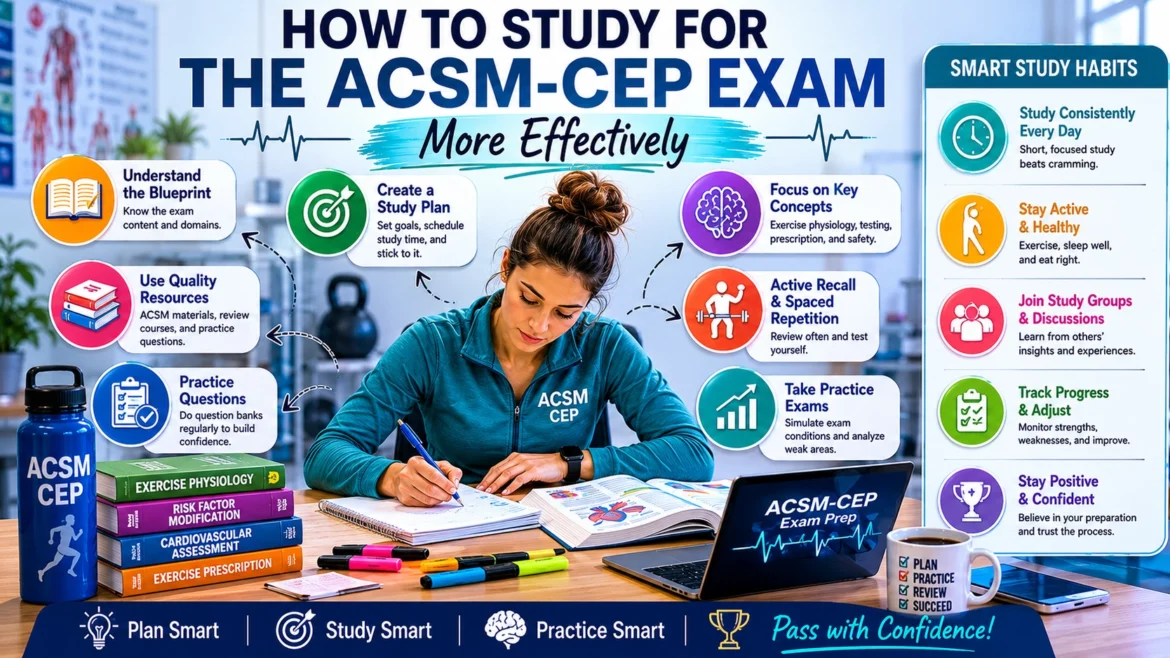
Preparing for the ACSM-CEP exam requires patience, consistency, and a strong understanding of clinical exercise physiology concepts. Candidates who focus on active learning, patient safety, realistic practice scenarios, and long-term retention strategies often feel more confident and prepared as exam day approaches.
Building a structured study routine, strengthening weak areas gradually, and practicing clinical reasoning regularly can make the preparation process far more effective. With consistent effort and realistic preparation methods, candidates can improve both their confidence and their overall understanding of clinical exercise physiology concepts before taking the exam.
Preparing for the ACSM Clinical Exercise Physiologist (ACSM-CEP) certification exam requires more than simply reading textbooks or memorizing terminology. The exam evaluates how well candidates understand exercise physiology, patient assessment, cardiovascular responses, ECG interpretation, exercise prescription, and clinical decision-making in realistic healthcare settings. Because the certification is designed for professionals working with clinical populations, successful preparation usually involves structured study habits, critical thinking, and repeated practice with applied concepts.
Many students feel overwhelmed when they first begin preparing because the exam covers multiple scientific and clinical topics at once. However, building a realistic study strategy early can make preparation far more manageable. Instead of trying to memorize every detail at once, candidates benefit most from understanding core concepts gradually and reviewing them consistently over time.
Why the ACSM-CEP Exam Requires a Smarter Study Strategy
Unlike basic certification exams that focus primarily on memorization, the ACSM-CEP exam emphasizes clinical application and patient safety. Candidates are expected to analyze patient information, understand exercise responses, recognize abnormal findings, and apply exercise recommendations safely for individuals with cardiovascular, pulmonary, metabolic, and other chronic conditions.
Because of this, passive study habits often become ineffective. Simply rereading notes may create familiarity with the material, but true exam readiness comes from applying concepts in realistic scenarios and understanding why specific decisions are correct.
| Less Effective Study Habits | More Effective ACSM-CEP Preparation Methods |
|---|---|
| Passive textbook reading | Active recall and self-testing |
| Memorizing isolated facts | Understanding clinical application |
| Studying inconsistently | Maintaining a structured weekly routine |
| Avoiding difficult subjects | Reviewing weak areas repeatedly |
| Reviewing notes without practice | Using realistic clinical practice questions |
Understanding What the Exam Actually Measures
One of the best ways to prepare effectively is by understanding the purpose of the ACSM-CEP certification itself. The exam is designed to assess whether candidates can safely work with patients and clients in clinical exercise settings. This includes understanding physiological responses to exercise, monitoring patient safety, interpreting exercise testing data, and designing appropriate exercise prescriptions.
Many exam questions are scenario-based, meaning candidates may need to analyze exercise responses, identify abnormal physiological changes, or determine safe exercise recommendations based on patient history and clinical findings. Candidates who focus only on memorization often struggle with these application-based questions.
Students who understand how exercise physiology concepts apply in real clinical situations often feel more confident when answering complex exam questions.
Creating a Realistic Weekly Study Schedule
Consistency is one of the most important factors during ACSM-CEP exam preparation. Many candidates attempt long study sessions once or twice per week, but shorter and more consistent review sessions are usually far more effective for long-term retention. A structured study schedule also reduces stress and helps candidates balance preparation alongside work, school, or clinical responsibilities.
Instead of trying to study every topic at once, successful candidates often divide content into smaller categories and rotate topics throughout the week. This approach improves focus while preventing mental fatigue.
| Study Area | Primary Focus | Example Study Activities |
|---|---|---|
| Exercise Physiology | Physiological responses and adaptations | Review cardiovascular and metabolic responses to exercise |
| ECG Interpretation | Rhythm recognition and monitoring | Practice identifying common ECG abnormalities |
| Exercise Prescription | Program design and intensity guidelines | Create FITT-based exercise plans |
| Risk Stratification | Patient safety evaluation | Analyze patient case scenarios |
| Practice Questions | Application and retention | Complete timed quizzes and review explanations |
Why Active Recall Is More Effective Than Passive Reading
Many candidates spend hours highlighting textbooks or rereading notes, yet still struggle to retain information during exams. Passive reading may feel productive because the material becomes familiar, but familiarity alone does not guarantee understanding. Active recall is far more effective because it forces the brain to retrieve information directly from memory.
For ACSM-CEP preparation, active recall techniques may include answering practice questions, teaching concepts aloud, creating flashcards, or writing summaries from memory. These methods strengthen retention and improve the ability to apply concepts under exam conditions.
Quick Study Tip
After reviewing a topic like cardiovascular responses to exercise, close your notes and explain the concept aloud in your own words. If you struggle to explain it clearly, spend additional time reviewing before moving to the next topic.
The Importance of Practice Questions During Preparation
Practice questions are one of the most valuable tools during ACSM-CEP exam preparation because they help candidates apply concepts in realistic exam-style scenarios. They also reveal weak areas that may not become obvious through reading alone.
Strong practice questions test more than memorization. They challenge candidates to interpret patient information, identify safety concerns, and apply exercise science principles appropriately. Reviewing answer explanations carefully is equally important because understanding why an answer is correct improves long-term clinical reasoning skills.
Many candidates preparing for certification exams use realistic ACSM-CEP practice exam resources to become more comfortable with question structure, pacing, and application-based clinical scenarios before test day.
Building Confidence Through Consistent Preparation
Confidence during exam preparation usually develops gradually through repeated exposure to concepts, consistent review, and ongoing practice. Candidates who establish structured study habits often feel more prepared because they understand how major topics connect together clinically rather than viewing them as isolated facts.
Although the ACSM-CEP exam covers complex material, a focused and organized study strategy can make the preparation process much more manageable. Building strong routines early, reviewing concepts consistently, and practicing application-based questions regularly can help candidates approach exam day with greater confidence and stronger clinical understanding.
Focusing on High-Yield ACSM-CEP Exam Topics
One of the most effective ways to prepare for the ACSM-CEP exam is identifying high-yield topics early in the study process. Many candidates waste valuable time reviewing minor details while overlooking the major clinical concepts that appear repeatedly throughout exercise physiology and patient assessment scenarios.
Although every content area matters, certain subjects consistently play a larger role in clinical exercise physiology practice. Understanding these core topics thoroughly can improve both exam performance and clinical confidence.
| High-Yield Topic | Why It Matters | Common Areas Tested |
|---|---|---|
| Exercise Physiology | Foundation of clinical exercise science | Cardiovascular, pulmonary, and metabolic responses |
| ECG Interpretation | Essential for patient monitoring and safety | Arrhythmias, ischemic changes, heart rate responses |
| Exercise Prescription | Core clinical competency | FITT principle, intensity calculation, progression |
| Risk Stratification | Supports patient safety decisions | Contraindications, symptoms, screening guidelines |
| Exercise Testing | Critical for clinical assessment | Termination criteria, BP responses, VO2 measurements |
How to Study Exercise Physiology More Efficiently
Exercise physiology often becomes one of the most challenging sections for candidates because it involves both scientific understanding and practical application. Instead of memorizing isolated definitions, candidates should focus on understanding how physiological systems respond during exercise and recovery.
For example, rather than simply memorizing that cardiac output increases during exercise, candidates should understand why it increases, how stroke volume and heart rate contribute, and how these changes affect oxygen delivery throughout the body. Connecting concepts together makes retention much easier and improves application during clinical scenarios.
Clinical Learning Reminder
When reviewing physiology concepts, always ask yourself how the information applies during exercise testing, patient monitoring, or exercise prescription. This approach improves clinical reasoning and long-term retention.
Improving ECG Interpretation Skills During Preparation
Many ACSM-CEP candidates feel anxious about ECG interpretation because it requires both pattern recognition and clinical understanding. However, ECG skills usually improve significantly through repeated exposure and consistent practice rather than memorization alone.
A helpful strategy is starting with normal cardiac conduction before moving into arrhythmias and abnormal findings. Candidates should become comfortable identifying heart rate, rhythm regularity, P waves, QRS complexes, and common abnormalities associated with exercise testing.
| ECG Study Focus | Why It Is Important |
|---|---|
| Normal sinus rhythm | Foundation for recognizing abnormalities |
| Heart rate calculation | Essential during exercise monitoring |
| Arrhythmia recognition | Supports patient safety decisions |
| ST-segment changes | Important during exercise testing |
| Exercise-related ECG responses | Improves clinical interpretation skills |
Using Practice Questions the Right Way
Many students complete large numbers of practice questions without reviewing explanations carefully. While repetition can help, true improvement usually happens when candidates analyze why answers are correct or incorrect. This process strengthens understanding and helps identify weak areas more effectively.
After completing practice questions, candidates should spend time reviewing:
- Why the correct answer was appropriate
- Why the incorrect options were less accurate
- Which concept was being tested
- Whether the mistake came from content gaps or misreading the question
- How the scenario applies clinically
Candidates preparing for certification often use structured ACSM-CEP practice questions resources to improve pacing, identify weak areas, and gain experience with realistic clinical-style questions before exam day.
Why Clinical Application Matters More Than Memorization
One of the biggest differences between successful and unsuccessful candidates is the ability to apply information clinically. Memorization may help with simple recall questions, but the ACSM-CEP exam frequently requires candidates to interpret patient data, recognize abnormal responses, and prioritize safety during exercise testing and training sessions.
For example, candidates may need to evaluate blood pressure responses during exercise, recognize contraindications for testing, or determine safe exercise intensity levels for individuals with chronic conditions. These situations require understanding rather than simple memorization.
Strong clinical reasoning skills often develop through repeated exposure to realistic patient scenarios and application-based practice questions.
Avoiding Burnout During Long-Term Preparation
Because the ACSM-CEP exam covers extensive material, many candidates experience burnout during preparation. Long hours of studying without breaks can reduce concentration, motivation, and retention over time. Building sustainable routines is usually far more effective than relying on intense short-term cramming sessions.
Candidates often benefit from:
- Studying in shorter focused sessions
- Rotating topics throughout the week
- Scheduling regular review days
- Taking short mental breaks during long sessions
- Tracking progress gradually instead of focusing only on exam day
Maintaining balance during preparation can improve consistency and make the learning process far more manageable over several weeks or months of study.
Building Long-Term Retention Before the Exam
Retention becomes much stronger when candidates review material repeatedly over time rather than trying to learn everything at once. Revisiting major topics regularly helps move information into long-term memory and improves recall under exam pressure.
Combining active recall, spaced repetition, realistic practice questions, and clinical application strategies can significantly improve understanding throughout ACSM-CEP preparation. Candidates who approach studying systematically often feel more prepared because they build deeper understanding instead of relying only on memorization.
Developing Better Test-Taking Strategies for the ACSM-CEP Exam
Strong content knowledge is extremely important during ACSM-CEP exam preparation, but test-taking strategy also plays a major role in overall performance. Many candidates understand the material yet struggle because they rush through questions, misinterpret clinical details, or second-guess themselves under pressure.
Learning how to approach complex clinical questions calmly and systematically can improve both accuracy and confidence during the exam. Candidates should focus on identifying key patient information, recognizing safety concerns, and eliminating clearly incorrect answer choices before selecting a final response.
| Effective Exam Strategy | Why It Helps |
|---|---|
| Read the full scenario carefully | Prevents missing critical patient details |
| Identify safety-related clues first | Supports clinical reasoning during questions |
| Eliminate clearly incorrect options | Improves decision-making accuracy |
| Manage time consistently | Reduces panic near the end of the exam |
| Review explanations after practice tests | Strengthens long-term understanding |
Why Understanding Patient Safety Is Essential
Patient safety is one of the most important themes throughout clinical exercise physiology. The ACSM-CEP exam frequently evaluates whether candidates can recognize unsafe exercise conditions, identify abnormal physiological responses, and respond appropriately during exercise testing or exercise prescription.
Candidates should become comfortable recognizing warning signs such as abnormal blood pressure responses, concerning ECG changes, unusual symptoms during exercise, and contraindications for testing. Understanding when exercise should be modified or stopped entirely is just as important as understanding exercise programming itself.
Clinical Safety Reminder
During many ACSM-CEP exam questions, the safest answer is often the correct answer. Pay close attention to symptoms, contraindications, abnormal responses, and patient risk factors within clinical scenarios.
Improving Exercise Prescription Confidence
Exercise prescription is another major focus area for ACSM-CEP candidates. Successful preparation requires understanding how to safely design exercise programs for individuals with varying fitness levels, medical conditions, and clinical limitations.
Rather than memorizing isolated formulas, candidates should focus on understanding how intensity, frequency, duration, and progression work together clinically. They should also understand how exercise recommendations change based on patient health status and exercise tolerance.
| Exercise Prescription Component | Key Focus During Preparation |
|---|---|
| Frequency | Understanding appropriate training schedules |
| Intensity | Learning safe exercise intensity guidelines |
| Time | Adjusting exercise duration appropriately |
| Type | Selecting suitable exercise modalities |
| Progression | Modifying programs safely over time |
The Value of Simulated Practice Exams
Full-length practice exams can help candidates become more comfortable with pacing, concentration, and mental endurance before the actual exam day. Simulated testing conditions also help reduce anxiety because candidates gain familiarity with question structure and timing expectations.
When using practice exams, candidates should avoid focusing only on final scores. Reviewing explanations carefully often provides greater long-term value because it strengthens understanding and highlights weak areas requiring additional review.
Many candidates preparing for certification exams use realistic ACSM-CEP practice test resources to strengthen clinical reasoning skills, improve confidence, and prepare for application-based testing scenarios before the official exam.
Common Study Mistakes That Can Slow Progress
Even motivated candidates sometimes develop study habits that reduce efficiency during preparation. Recognizing these mistakes early can help improve retention and reduce frustration throughout the study process.
- Studying only familiar topics while avoiding weaker areas
- Memorizing facts without understanding clinical application
- Taking practice tests without reviewing explanations
- Relying entirely on passive reading and highlighting
- Cramming large amounts of information in short periods
- Ignoring patient safety concepts during clinical scenarios
Candidates who focus on balanced preparation and consistent review often develop stronger long-term understanding and greater confidence during testing.
Maintaining Confidence During the Final Weeks of Preparation
The final weeks before the ACSM-CEP exam can feel stressful, especially when candidates realize how much information the certification covers. However, constantly changing study strategies or trying to relearn every topic at the last minute often creates unnecessary anxiety.
Instead, the final phase of preparation should focus on reinforcing major concepts, reviewing weaker areas gradually, and maintaining consistency. Confidence usually improves when candidates recognize how much progress they have already made throughout the preparation process.
Final Preparation Tip
Avoid comparing your progress to other students. Consistent preparation, repeated practice, and strong clinical understanding are far more important than rushing through large amounts of material quickly.
Frequently Asked Questions
How long does it usually take to prepare for the ACSM-CEP exam?
Preparation time varies depending on a candidate’s academic background, clinical experience, and study schedule. Many candidates spend several weeks to several months reviewing major topics consistently before taking the exam.
What subjects are most important for ACSM-CEP preparation?
Major focus areas often include exercise physiology, ECG interpretation, exercise prescription, risk stratification, patient assessment, exercise testing procedures, and clinical safety guidelines.
Why are practice questions important during preparation?
Practice questions help candidates apply concepts in realistic scenarios, improve pacing, identify weak areas, and strengthen clinical reasoning skills under exam-style conditions.
Is memorization enough for the ACSM-CEP exam?
No. While memorization can help with basic recall, the exam often requires clinical application, patient safety evaluation, and interpretation of exercise-related information.
Final Thoughts on Preparing More Effectively for the ACSM-CEP Exam
Preparing for the ACSM-CEP exam requires patience, consistency, and a strong understanding of clinical exercise physiology concepts. Candidates who focus on active learning, patient safety, realistic practice scenarios, and long-term retention strategies often feel more confident and prepared as exam day approaches.
Building a structured study routine, strengthening weak areas gradually, and practicing clinical reasoning regularly can make the preparation process far more effective. With consistent effort and realistic preparation methods, candidates can improve both their confidence and their overall understanding of clinical exercise physiology concepts before taking the exam.