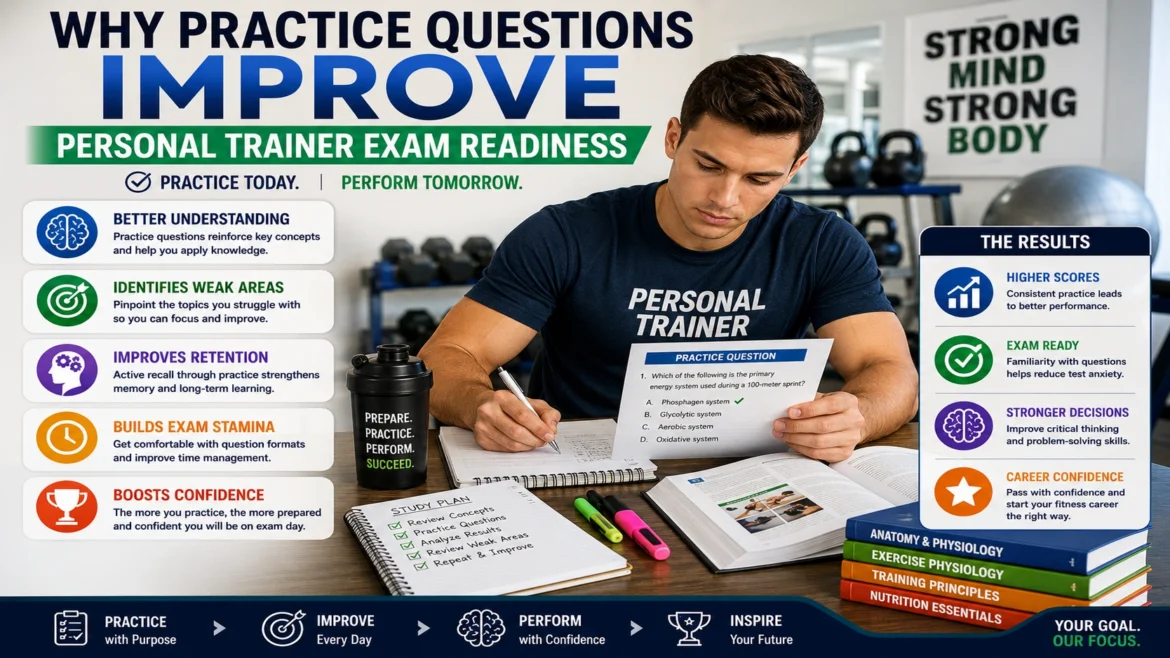

This is one reason practice questions often become one of the most valuable tools during personal trainer exam preparation.
Why Many Candidates Struggle During Certification Exams
Many candidates understand fitness concepts while studying at home but feel overwhelmed once they face timed certification-style questions requiring quick reasoning and decision-making.
Practice questions help bridge the gap between learning information and applying that information under realistic testing conditions.
Why Passive Studying Often Has Limits
Passive studying usually involves rereading notes, reviewing textbooks repeatedly, or watching educational videos without actively applying the information.
Although passive review may feel productive, it can sometimes create a false sense of confidence because recognizing information is much easier than recalling and applying it independently during an exam.
Personal training certification exams often require candidates to:
- Interpret realistic fitness scenarios
- Apply exercise-science concepts logically
- Identify safer client recommendations
- Recognize movement concerns
- Analyze program-design situations
- Make decisions under time pressure
Practice questions help candidates actively engage with these types of situations instead of simply reviewing information passively.
How Practice Questions Strengthen Learning Retention
One of the biggest advantages of practice questions is active recall. Instead of seeing information repeatedly, candidates must retrieve knowledge from memory and apply it directly while answering questions.
This process often strengthens long-term retention much more effectively than passive rereading alone.
Concept Recognition
Repeated exposure helps important exercise-science concepts become easier to identify during exams.
Applied Thinking
Candidates improve their ability to apply fitness principles logically within realistic situations.
Memory Retention
Active recall helps strengthen long-term understanding of certification material.
Many candidates notice that concepts become much easier to remember after repeatedly applying them through practice questions rather than only reviewing notes.
Why Scenario-Based Questions Are Especially Valuable
Personal training is highly practical and client-focused. Trainers often work with individuals who have different goals, limitations, fitness levels, and movement concerns.
Because of this, certification exams frequently test practical reasoning rather than memorization alone.
Scenario-based questions may involve:
- Exercise modifications
- Client-assessment decisions
- Movement-analysis situations
- Safety-awareness considerations
- Program-design adjustments
- Exercise progression reasoning
Practice questions expose candidates to these applied situations repeatedly, helping exercise concepts feel more realistic and easier to understand.
Exam Preparation Perspective
Many future trainers improve confidence more quickly when they repeatedly practice realistic client-based fitness scenarios instead of relying only on textbook memorization.
Why Familiarity With Question Structure Matters
Certification exams often use wording styles and question formats that feel unfamiliar to first-time test takers.
Even candidates who understand exercise-science concepts may struggle if they are not comfortable interpreting certification-style questions under time pressure.
Practice questions help candidates become more familiar with:
- Question structure
- Scenario wording
- Fitness terminology usage
- Decision-making expectations
- Timed testing environments
Over time, repeated exposure often helps candidates feel calmer and more organized during exam situations because the testing format becomes more familiar and predictable.
Why Practice Questions Help Build Exam Confidence
Many personal training certification candidates experience anxiety before exams because they are unsure how well they can apply information under pressure.
Even candidates who study consistently sometimes feel uncertain when facing:
- Timed testing conditions
- Scenario-based questions
- Applied exercise-science concepts
- Client-safety situations
- Detailed movement-analysis questions
Practice questions often help reduce this uncertainty because candidates become more familiar with the reasoning process required during certification exams.
Instead of encountering difficult question styles for the first time during the actual test, candidates gradually build confidence through repeated exposure before exam day arrives.
Confidence Often Comes From Repetition
Many future trainers notice that exam stress decreases significantly once they begin consistently practicing realistic fitness and client-based certification questions.
Familiarity with the testing process often helps candidates feel more prepared and organized during actual exam situations.
How Practice Questions Reveal Knowledge Gaps
One major advantage of practice questions is their ability to expose weaker areas that may otherwise go unnoticed during passive studying.
Candidates sometimes believe they fully understand a topic until they attempt to apply it within realistic scenarios.
Practice exams may reveal weaknesses involving:
Exercise Programming
Understanding how to structure safe and effective training plans.
Movement Mechanics
Recognizing exercise form and movement-related concerns.
Client Safety
Applying safer exercise recommendations in practical situations.
Identifying these weaker areas earlier allows candidates to adjust study strategies before the actual certification exam.
Why Practice Questions Improve Critical Thinking
Personal training involves much more than memorizing definitions or exercise names. Trainers often need to evaluate situations carefully and make decisions that support both safety and effectiveness.
Practice questions help candidates strengthen:
- Problem-solving ability
- Client-analysis reasoning
- Exercise-selection decisions
- Movement-evaluation skills
- Program-adjustment thinking
This type of applied reasoning is especially important because certification exams frequently focus on real-world fitness situations rather than isolated memorization.
Why Memorization Alone Often Fails
Candidates who rely entirely on memorization may struggle when certification questions present unfamiliar client scenarios requiring logical exercise-science reasoning instead of direct recall.
Why Timed Practice Matters
Time management can become a major challenge during certification exams, especially when candidates spend too long analyzing difficult questions.
Timed practice questions help candidates:
- Interpret questions more efficiently
- Recognize key concepts faster
- Improve pacing awareness
- Reduce hesitation during testing
- Build focus under pressure
Over time, repeated exposure to timed question sets often helps candidates become more comfortable managing exam pressure while maintaining accuracy.
How Consistency Improves Exam Readiness
Many candidates benefit more from consistent question practice over several weeks than from last-minute cramming sessions immediately before the exam.
Smaller and repeated study sessions often help reinforce:
- Exercise-science understanding
- Scenario-analysis skills
- Client-safety awareness
- Long-term concept retention
- Overall exam confidence
Consistency allows candidates to gradually strengthen both knowledge and applied reasoning skills throughout the preparation process instead of trying to absorb large amounts of information all at once.
Why Realistic Practice Makes Fitness Concepts Easier to Apply
Many exercise-science concepts initially feel highly technical when students first begin studying for personal training certifications.
Topics involving anatomy, biomechanics, exercise progression, movement analysis, and client safety can sometimes seem overwhelming when viewed only through textbooks and written definitions.
Practice questions often help simplify these concepts by placing them into practical situations that resemble real-world fitness scenarios.
Instead of memorizing isolated information, candidates begin learning how concepts connect together within realistic training environments.
Applied Learning Often Improves Understanding
Many future trainers understand exercise-science concepts more clearly after applying them repeatedly through realistic fitness and client-based practice situations.
Practical application often makes technical material feel more organized and easier to remember over time.
Why Practice Questions Support Long-Term Learning
Strong certification preparation is not only about passing an exam. Personal trainers also need to retain important knowledge that supports safer and more effective client interactions later in professional settings.
Practice questions often encourage deeper learning because candidates repeatedly analyze:
- Movement-related situations
- Client-training considerations
- Exercise-program decisions
- Safety-focused recommendations
- Applied exercise-science concepts
Repeated application helps many candidates build stronger long-term understanding rather than short-term memorization that fades quickly after the exam.
Exercise Understanding
Strengthening comprehension of movement and training concepts through repeated application.
Client-Focused Thinking
Encouraging safer and more practical fitness decision-making habits.
Practical Reasoning
Helping candidates connect textbook knowledge to realistic training situations.
Why Certification Readiness Involves Mental Preparation Too
Exam readiness is not based only on knowledge. Mental preparation also plays an important role during certification testing.
Many candidates struggle during exams because of:
- Testing anxiety
- Time pressure
- Overthinking questions
- Unfamiliar question wording
- Lack of confidence under pressure
Practice questions often help reduce these challenges because repeated exposure makes testing environments feel less intimidating and more familiar.
Over time, many candidates become more comfortable analyzing questions calmly and applying concepts more confidently during timed situations.
Confidence Usually Develops Gradually
Many successful certification candidates build confidence through repeated realistic practice rather than relying on last-minute memorization or cramming sessions.
Why Practice Questions Help Future Trainers Think More Professionally
Personal trainers frequently work with individuals who have unique goals, movement abilities, fitness levels, and safety considerations.
Practice questions often encourage candidates to think beyond memorization and begin approaching situations more like professionals evaluating real clients.
Candidates may improve their ability to:
- Analyze movement situations carefully
- Recognize safer exercise approaches
- Evaluate client needs logically
- Apply exercise-science principles appropriately
- Make more organized fitness decisions
Many future trainers improve confidence using realistic ACSM-CPT practice questions and certification-style fitness scenarios because repeated exposure to applied exercise situations helps certification material feel more practical, professional, and easier to understand.
Final Thoughts
Practice questions improve personal trainer exam readiness because they help candidates actively apply exercise-science knowledge instead of relying entirely on passive memorization.
Repeated exposure to realistic fitness scenarios often strengthens problem-solving ability, improves confidence, supports long-term retention, and helps future trainers become more comfortable handling certification-style decision-making situations.
As personal training certifications continue emphasizing practical reasoning and client-focused thinking, realistic practice questions remain one of the most valuable tools supporting stronger exam preparation and professional fitness understanding.
For many future trainers, practice questions help transform technical exercise-science information into practical knowledge that feels easier to apply confidently during certification exams and real-world client interactions.