
Preparing for an Anatomy and Physiology exam can feel overwhelming. The subject covers everything from the microscopic details of cells to the complex interactions of body systems. However, with the right strategies, resources, and mindset, you can not only pass but excel in your exam.
This comprehensive guide will walk you through everything you need to know — what Anatomy and Physiology are, why they matter, who studies them, how to prepare effectively, study tips, career benefits, and proven techniques for exam day success.
What Is Anatomy and Physiology?
Before we dive into preparation strategies, let’s first clarify the subject.
- Anatomy: The study of the structure of the body — bones, muscles, organs, tissues, and how everything is arranged.
- Physiology: The study of how the body functions — how the heart pumps blood, how the lungs exchange oxygen, how the nervous system transmits signals, and more.
When combined, Anatomy and Physiology provide a complete understanding of the human body. Think of Anatomy as the “map” and Physiology as the “instructions” on how the body works.
Why Anatomy and Physiology Matter
Anatomy and Physiology are not just academic subjects; they form the foundation of healthcare, biology, and sports sciences. They matter because:
- Healthcare Foundation: Doctors, nurses, paramedics, and therapists rely on this knowledge daily.
- Scientific Understanding: Provides insight into how life functions at multiple levels.
- Problem-Solving Skills: Helps in identifying symptoms and understanding causes.
- Career Opportunities: Opens doors to medical, allied health, fitness, and research careers.
Who Studies Anatomy and Physiology?
This subject is studied by a wide range of learners:
- Medical Students: Doctors, surgeons, and specialists in training.
- Nursing Students: Nurses need a solid grasp of body systems to provide care.
- Allied Health Students: Including physical therapy, radiology, and occupational therapy.
- Sports Science & Fitness Trainers: To design safe and effective workout programs.
- Biology & Pre-Med Students: Building foundational knowledge for advanced study.
Even massage therapists, nutritionists, and biomedical researchers use Anatomy and Physiology knowledge in their fields.
The Challenges of Studying Anatomy and Physiology
Many students find Anatomy and Physiology difficult because:
- The volume of information is huge (bones, muscles, organs, systems).
- The subject demands memorization and understanding simultaneously.
- It uses complex terminology, often derived from Latin and Greek.
- Exams test not just recall but also application of knowledge.
The good news? With the right strategies, you can overcome these challenges.
Benefits of Mastering Anatomy and Physiology
Learning Anatomy and Physiology isn’t just about passing exams — it has lifelong benefits:
- Confidence in Healthcare Settings: You’ll feel more comfortable discussing medical terms.
- Improved Critical Thinking: Understanding “why” things happen in the body.
- Career Edge: Employers value strong foundational knowledge.
- Better Personal Health Awareness: You understand your own body and can make informed health decisions.
How to Prepare for an Anatomy and Physiology Exam
Let’s break down a step-by-step plan to prepare effectively.
- Understand the Exam Format
- Multiple Choice Questions (MCQs): Test recall of facts and concepts.
- Short Answer Questions: Require explanation of processes.
- Labeling Diagrams: Identify bones, muscles, or organs.
- Essay Questions: Demonstrate deep understanding of systems.
- Practical Exams: In labs, identifying structures on cadavers or models.
Knowing the exam type helps you target your study strategy.
- Organize Your Study Materials
- Textbooks: Recommended Anatomy & Physiology texts (Marieb, Martini, Tortora).
- Lecture Notes: Organize notes by system (skeletal, muscular, cardiovascular, etc.).
- Flashcards: Perfect for memorizing terms and definitions.
- Study Apps: Tools like Quizlet, Complete Anatomy, or Visible Body.
- Practice Tests: Tool Like Preppool
- Use Active Learning Techniques
Passive reading isn’t enough. Instead:
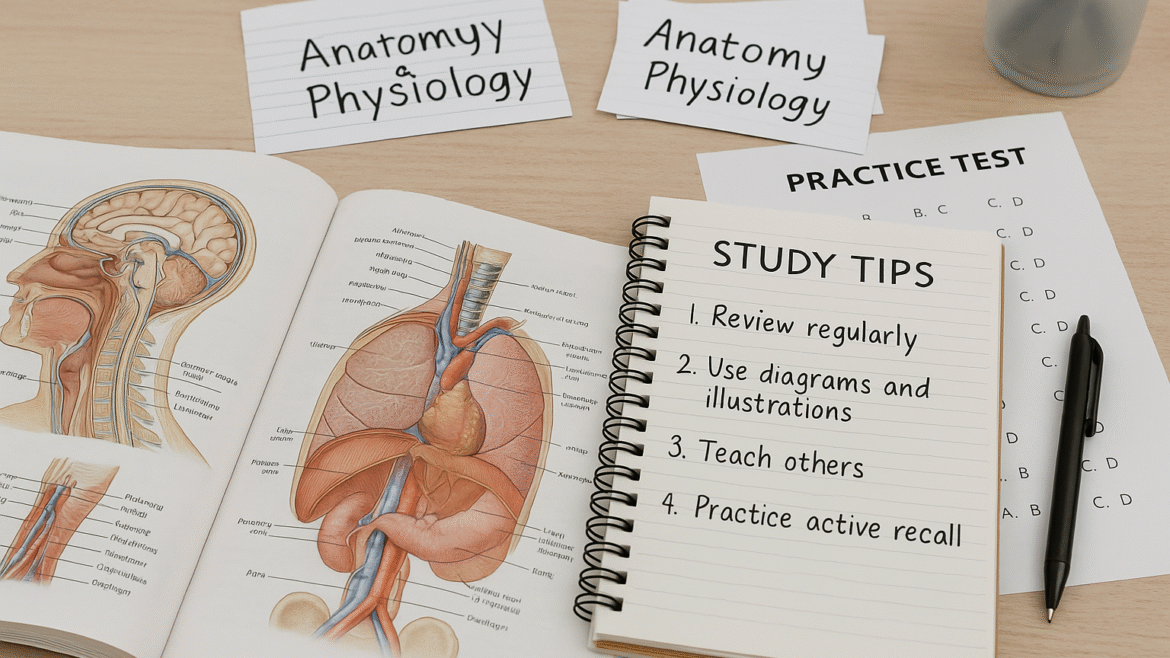
- Draw and Label Diagrams: Helps reinforce visual memory.
- Teach Back: Explain concepts to a peer or yourself.
- Create Acronyms & Mnemonics: Example: “Oh Oh Oh To Touch And Feel Very Green Vegetables, AH!” for cranial nerves.
- Chunk Information: Study in small, manageable sections.
- Focus on Major Systems
Some systems are tested more heavily than others. Prioritize:
- Skeletal System: Bones, joints, and movements.
- Muscular System: Major muscles and their functions.
- Cardiovascular System: Heart anatomy and blood circulation.
- Respiratory System: Gas exchange and lung structure.
- Nervous System: Brain, spinal cord, nerves, and reflexes.
- Digestive System: Food breakdown and nutrient absorption.
- Urinary System: Kidneys, urine formation, fluid balance.
- Reproductive System: Male and female anatomy.
- Create a Study Schedule
- Daily Reviews: 1–2 hours of consistent review.
- Weekly Deep Dives: Focus on one or two systems in detail.
- Spaced Repetition: Review older material regularly to reinforce memory.
- Active Recall: Test yourself, don’t just re-read.
- Practice with Real Exam Questions
- Use practice exams from PrepPool.com to simulate real test conditions.
- Focus on weak areas rather than repeating what you already know.
- Track your progress and adjust study plans accordingly.
- Master Time Management
On exam day:
- Scan the exam first: Identify easier and harder questions.
- Budget your time: Don’t get stuck on one question.
- Answer labeling questions first: They are often quicker.
- Return to complex essays last: With leftover time.
Proven Study Tips for Anatomy and Physiology
Here are expert-backed tips that actually work:
- Use Visual Learning: Anatomy is highly visual — diagrams, videos, and 3D models are essential.
- Study in Groups: Explaining concepts to peers boosts understanding.
- Record Lectures: Replay them for reinforcement.
- Stay Healthy: Proper sleep, hydration, and nutrition improve focus.
- Active Recall Over Rote Learning: Force your brain to retrieve information.
- Connect Concepts: Link anatomy with physiology (e.g., heart structure with how it pumps).
- Practice Labeling Blank Diagrams: Perfect for practical exams.
How to Pass Anatomy and Physiology Exams: Practical Strategies
- Start Early: Don’t cram. Begin weeks ahead.
- Mix Study Methods: Flashcards + practice questions + diagrams.
- Focus on High-Yield Topics: Systems most often tested.
- Simulate Exam Conditions: Timed practice tests build confidence.
- Stay Calm: Anxiety reduces recall ability. Practice mindfulness or breathing exercises.
Common Mistakes Students Make
Avoid these pitfalls:
- Cramming the night before — information won’t stick.
- Ignoring diagrams — exams often test labeling.
- Skipping practice questions — you must test knowledge actively.
- Not reviewing past mistakes — they are your biggest learning opportunities.
- Neglecting physiology — many students focus only on anatomy terms.
Resources for Anatomy and Physiology Students
- Books: “Human Anatomy & Physiology” by Marieb & Hoehn, “Principles of Anatomy and Physiology” by Tortora & Derrickson.
- Apps: Complete Anatomy, Visible Body, Kenhub.
- Websites: Preppool.com, Khan Academy, InnerBody.com, OpenStax Anatomy & Physiology.
- YouTube Channels: AnatomyZone, Ninja Nerd Science.
Career Opportunities After Mastering Anatomy and Physiology
Once you excel in Anatomy and Physiology, you’re prepared for careers in:
- Medicine (Doctor, Surgeon)
- Nursing
- Physical Therapy
- Sports Science & Athletic Training
- Biomedical Research
- Radiology & Imaging
- Pharmacy
- Occupational Therapy
- Education (Teaching Biology/Health Sciences)
Future of Anatomy and Physiology Studies
With advancements in technology:
- Virtual Dissections: Replacing cadavers in many institutions.
- AI & Simulation Tools: Offering realistic practice environments.
- Integration with Genetics & Molecular Biology: More holistic learning.
Anatomy and Physiology will remain at the core of medical education, but tools for studying are evolving rapidly.
Final Exam Day Checklist
- Get 7–8 hours of sleep the night before.
- Eat a balanced breakfast (avoid heavy, greasy food).
- Arrive early to reduce stress.
- Bring all required materials: pens, ID, calculator (if allowed).
- Stay hydrated but don’t overdo caffeine.
- Manage your time wisely and keep calm.
👉 As you are here, you may want to check out the following Anatomy & Physiology Prep material:
Anatomy & Physiology Urinary System Exam Practice Test
Skeletal System Practice Exam Questions and Answers
Respiratory System Practice Exam Questions and Answers
Endocrine System Exam Practice Questions and Answers
Conclusion
Anatomy and Physiology exams are challenging, but with structured preparation, the right resources, and consistent practice, you can achieve top results. Remember that success isn’t about memorizing every single detail but about understanding how systems work together and being able to recall and apply that knowledge under exam conditions.
By following the strategies in this guide — from mastering core concepts, practicing with active recall, using visual tools, and staying healthy — you’ll build both knowledge and confidence.
Your journey in Anatomy and Physiology doesn’t stop at passing an exam. This subject equips you with lifelong skills, whether you pursue healthcare, science, sports, or simply want to understand the amazing human body better.