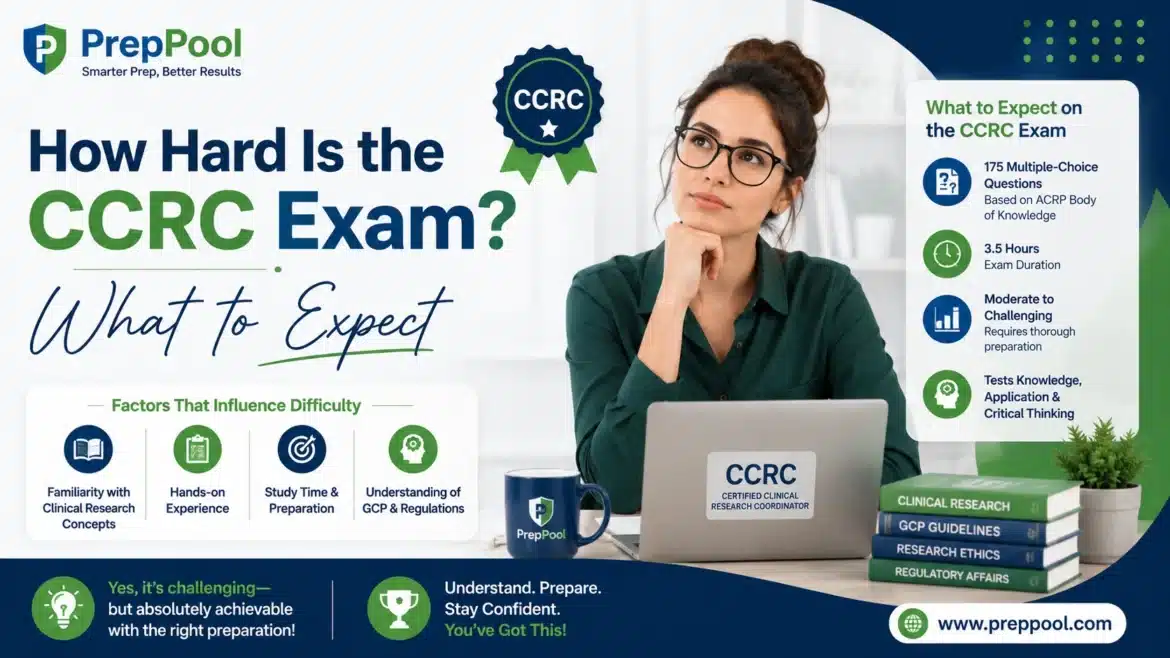

One of the most common questions aspiring Certified Clinical Research Coordinators ask is whether the CCRC® examination is difficult. The honest answer is that the exam can be challenging, but much of that challenge comes from the breadth of knowledge it covers and the ability to apply clinical research principles in practical situations rather than simply recalling facts from memory.
Candidates who have solid clinical research experience often recognize many of the concepts presented on the exam. However, familiarity with day-to-day responsibilities does not always guarantee success. The examination evaluates your understanding of regulations, ethics, participant safety, Good Clinical Practice (GCP), study coordination, documentation, and research operations across a variety of scenarios.
If you’re considering certification and wondering whether the effort is worthwhile, understanding the professional advantages of earning CCRC certification can help you see how the credential supports long-term career development in clinical research.
- Why many candidates consider the CCRC exam challenging.
- The skills and knowledge tested during the examination.
- Common reasons candidates struggle.
- What you can do to improve your preparation.
- How to approach the exam with greater confidence.
Is the CCRC Exam Difficult?
The difficulty of the CCRC examination depends largely on your professional background and preparation. Individuals with several years of hands-on clinical research experience often find the topics familiar, but they may still encounter questions that require careful analysis and application of regulatory principles rather than straightforward recall.
For candidates who are newer to research coordination or who have worked within a limited range of study responsibilities, the exam may require additional preparation to build a broader understanding of clinical trial operations.
Rather than asking obscure questions, the examination is designed to evaluate whether you can make sound decisions in situations that clinical research professionals regularly encounter.
The Exam Measures More Than Memorization
Unlike exams that reward memorizing definitions or regulations word for word, the CCRC examination emphasizes practical judgment. Questions often require you to interpret information, identify the most appropriate course of action, and apply established clinical research principles to realistic situations.
You may be asked to evaluate scenarios involving:
- Participant safety and welfare.
- Informed consent procedures.
- Protocol compliance.
- Regulatory documentation.
- Study coordination responsibilities.
- Communication with investigators, sponsors, and monitors.
- Good Clinical Practice (GCP) requirements.
This approach reflects the responsibilities Clinical Research Coordinators face throughout the conduct of clinical trials.
Why Experienced Professionals Still Find It Challenging
Even experienced Clinical Research Coordinators sometimes underestimate the examination because they rely heavily on their daily work experience. In practice, many coordinators specialize in particular therapeutic areas or perform specific responsibilities within a research team. The CCRC exam, however, covers a much broader range of clinical research knowledge.
Candidates may encounter topics that they don’t address regularly in their current position, making a comprehensive review an important part of successful preparation.
Understanding the Scope of the Examination
The examination brings together many aspects of clinical research into a single assessment. Instead of focusing on one specific task, it evaluates your understanding of the complete research process—from participant recruitment and informed consent to documentation, regulatory compliance, investigational product management, safety reporting, and study closeout.
This broad scope is one reason candidates often describe the CCRC exam as demanding, even when they have years of professional experience.
| What the Exam Evaluates | Why It Can Be Challenging |
|---|---|
| Clinical Research Ethics | Requires applying ethical principles to real situations. |
| Good Clinical Practice (GCP) | Focuses on practical compliance rather than memorization. |
| Study Coordination | Evaluates decision-making throughout the clinical trial process. |
| Regulatory Requirements | Tests understanding of documentation and compliance responsibilities. |
| Participant Safety | Requires selecting appropriate actions in realistic scenarios. |
Preparation Makes a Significant Difference
The encouraging news is that most candidates can improve their confidence through structured preparation. Reviewing core clinical research concepts, identifying weaker subject areas, and practicing exam-style questions can make the examination feel much more manageable.
Before beginning your study plan, it’s also important to ensure that you meet the CCRC certification eligibility criteria, as confirming your qualifications allows you to focus fully on preparing for exam day.
Why Some Candidates Struggle on the CCRC Exam
Many candidates begin studying with confidence because they work in clinical research every day. However, practical experience alone doesn’t always prepare someone for a comprehensive certification examination. The CCRC exam evaluates knowledge across multiple areas of clinical research, including topics that may not be part of your daily responsibilities.
Success depends on understanding how different aspects of clinical research work together rather than relying solely on experience gained within a single role or therapeutic area.
| Common Challenge | How to Overcome It |
|---|---|
| Limited exposure to certain research activities | Review topics outside your daily responsibilities. |
| Inconsistent study schedule | Create realistic weekly study goals. |
| Relying only on work experience | Combine experience with structured exam preparation. |
| Skipping practice questions | Use exam-style questions to reinforce learning. |
| Exam anxiety | Practice regularly under timed conditions to build confidence. |
Clinical Reasoning Is More Important Than Memorization
One characteristic that makes the CCRC exam different from many professional examinations is its emphasis on decision-making. Rather than asking candidates to recall isolated facts, questions often require evaluating a situation, considering applicable regulations or ethical principles, and selecting the most appropriate response.
This means candidates should understand not only what a regulation or procedure requires but also why it exists and how it should be applied during the conduct of a clinical trial.
Time Management Can Influence Your Performance
Knowledge alone isn’t the only factor that affects exam performance. Candidates also need to manage their time effectively throughout the examination. Spending too much time on one difficult question can reduce the time available for the remaining questions.
During your preparation, practice answering questions at a steady pace. Developing a consistent approach before exam day can help reduce pressure and improve overall performance.
Confidence Comes from Consistent Preparation
It’s common to feel nervous before a professional certification exam, especially one that represents an important career milestone. Fortunately, confidence usually develops through repeated exposure to the material rather than last-minute studying.
Reviewing content regularly, revisiting difficult topics, and completing practice questions over several weeks often leads to much stronger results than trying to learn everything in a short period.
Focus on Understanding Instead of Memorizing
Clinical research is built on principles that work together throughout every stage of a study. Candidates who understand the relationships between participant safety, regulatory compliance, protocol adherence, informed consent, documentation, and quality management are generally better prepared than those who memorize individual facts without understanding the broader context.
Whenever possible, connect new information to real situations you’ve experienced during clinical research. This approach makes concepts easier to remember and improves your ability to answer application-based questions.
Most Candidates Can Succeed with the Right Strategy
The CCRC examination is designed to challenge candidates, but it is also designed to reward thorough preparation and practical understanding. By studying consistently, reviewing concepts from multiple perspectives, and practicing how to apply your knowledge in realistic situations, you’ll place yourself in a much stronger position to perform confidently on exam day.
Remember that certification is not intended to identify perfect candidates. Instead, it recognizes professionals who have developed the knowledge, judgment, and skills needed to coordinate clinical research studies according to established ethical and regulatory standards.
How to Improve Your Chances of Passing the CCRC Exam
Although the CCRC examination is comprehensive, it is entirely manageable with consistent preparation and a structured approach. Instead of trying to master every topic in a short period, develop a study routine that allows you to review material gradually while reinforcing what you’ve already learned.
Successful candidates often combine reading, note-taking, and practice questions throughout their preparation rather than relying on a single study method. This balanced approach helps improve both knowledge retention and clinical reasoning.
| Preparation Strategy | Benefit |
|---|---|
| Create a Weekly Study Plan | Builds consistent progress without becoming overwhelming. |
| Review Core Clinical Research Concepts | Strengthens your overall understanding of the exam content. |
| Practice with Exam-Style Questions | Improves confidence and identifies weaker areas. |
| Study Answer Explanations | Develops stronger clinical reasoning skills. |
| Revisit Difficult Topics | Reinforces long-term retention before exam day. |
Why Practice Questions Are So Valuable
Practice questions help bridge the gap between knowing information and applying it correctly. They expose you to different question styles, strengthen analytical thinking, and prepare you for the decision-making process required during the examination.
Rather than focusing only on your final score, pay close attention to every answer explanation. Even questions you answer correctly can provide valuable insight into regulations, research ethics, participant protection, protocol compliance, and study management.
Prepare with Confidence Using PrepPool
If you’re ready to begin preparing for the examination, PrepPool offers CCRC exam practice questions with explanations designed to reinforce key clinical research concepts while helping you develop confidence before exam day.
The practice materials cover important topics commonly encountered on the certification exam, including Good Clinical Practice (GCP), informed consent, regulatory compliance, participant safety, study documentation, investigational product accountability, and clinical trial operations. Detailed explanations help you understand the reasoning behind each answer instead of simply memorizing facts.
Explore Additional Healthcare Certification Resources
If you’re planning to pursue other professional credentials or broaden your knowledge across healthcare disciplines, PrepPool also offers a comprehensive collection of Healthcare Certification Exam Preparation resources. These study materials support professionals preparing for a wide variety of healthcare certification exams.
- Realistic exam-style practice questions.
- Detailed answer explanations that support deeper learning.
- Coverage of major clinical research concepts tested on the exam.
- Flexible self-paced preparation for busy professionals.
- Resources designed to identify strengths and improve weaker subject areas.
- Practical study support from the beginning of preparation through exam day.
Final Thoughts
The CCRC examination is designed to evaluate the knowledge and judgment expected of experienced Clinical Research Coordinators. While the exam can be challenging, its difficulty comes from requiring candidates to apply clinical research principles thoughtfully rather than simply recalling information from memory.
With consistent study, practical review, and regular practice using exam-style questions, most candidates can significantly improve their confidence and readiness. A well-planned preparation strategy not only increases your chances of success on exam day but also strengthens the professional skills you’ll continue to use throughout your clinical research career.
FAQs
Is the CCRC exam considered difficult?
Many candidates consider the CCRC exam challenging because it evaluates practical application of clinical research principles across a broad range of topics. Thorough preparation and relevant professional experience can make the exam much more manageable.
What makes the CCRC exam challenging?
The exam emphasizes clinical reasoning, regulatory compliance, research ethics, participant safety, and study coordination rather than simple memorization. Candidates are expected to apply knowledge to realistic situations encountered during clinical trials.
How long should I study for the CCRC exam?
Preparation time varies depending on your experience and familiarity with clinical research concepts. Many candidates benefit from following a structured study schedule over several weeks or months instead of relying on intensive last-minute review.
Can work experience alone prepare me for the CCRC exam?
Professional experience provides a strong foundation, but most candidates also benefit from reviewing core concepts, practicing exam-style questions, and studying areas that may fall outside their everyday responsibilities.
Are practice tests helpful for passing the CCRC exam?
Yes. High-quality practice questions help reinforce key concepts, improve critical thinking, identify knowledge gaps, and familiarize candidates with the style of questions commonly encountered on the certification examination.