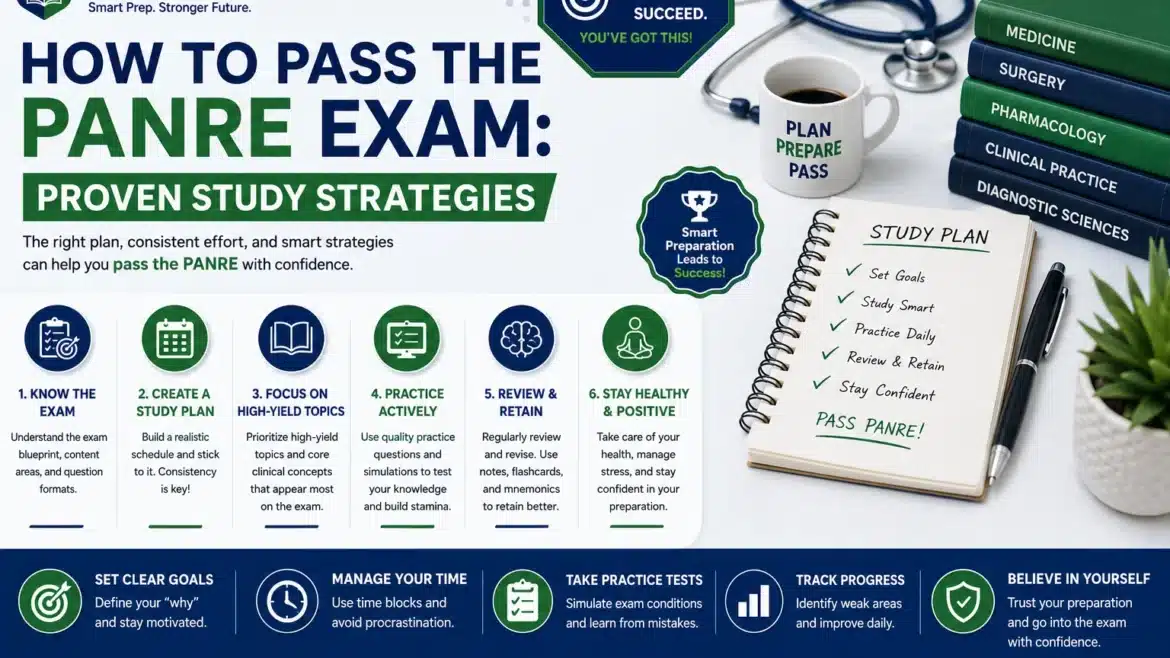

Passing the Physician Assistant National Recertifying Examination (PANRE®) requires more than simply reviewing medical facts. The exam evaluates your ability to apply clinical knowledge, interpret patient information, and make sound evidence-based decisions across a broad range of medical specialties. A well-planned preparation strategy can help you approach the examination with confidence while making the most of your study time.
Whether you’re preparing months in advance or beginning your review closer to your testing window, developing effective study habits is one of the best ways to improve your readiness. Consistent preparation, regular self-assessment, and realistic practice questions all play an important role in building confidence before exam day.
- How to build an effective PANRE preparation strategy.
- Study techniques that improve long-term retention.
- Common habits shared by successful candidates.
- Ways to identify and strengthen weaker subjects.
- How practice questions can improve exam readiness.
Start Preparing Early
One of the most effective ways to reduce stress is to begin your preparation well before your planned examination date. Starting early allows you to review every major body system, revisit difficult topics, and build confidence gradually instead of relying on last-minute cramming.
Before creating your study schedule, make sure you understand the requirements for PANRE recertification so you can plan your preparation around your available testing timeline.
Create a Realistic Study Schedule
A successful study plan should fit your daily routine rather than compete with it. Many physician assistants balance demanding clinical responsibilities, making shorter, consistent study sessions more practical than occasional marathon review days.
Schedule dedicated study time each week, assign specific body systems to each session, and leave time for reviewing weaker subjects and completing practice questions.
| Study Activity | Recommended Focus |
|---|---|
| Weekly topic review | Cover one or two medical specialties at a time. |
| Practice questions | Apply knowledge using realistic clinical scenarios. |
| Review sessions | Revisit weaker topics and difficult concepts. |
| Final revision | Summarize key concepts before the examination. |
Study the Full Scope of the Exam
Focusing only on the conditions you encounter in everyday practice can leave important knowledge gaps. The PANRE covers multiple body systems and medical specialties, so your preparation should include both familiar and less-familiar clinical topics.
Our guide to the major subjects covered on the PANRE explains the key content areas you should include in your review.
Practice Clinical Decision-Making
Many PANRE questions require more than recalling a definition or guideline. You’ll often need to evaluate patient histories, interpret clinical findings, choose appropriate diagnostic tests, and determine the most appropriate management plan.
Developing these decision-making skills through regular practice is one of the most effective ways to prepare for exam-style questions.
Measure Your Progress Regularly
Successful candidates continually assess their progress throughout the preparation process. Tracking your performance helps identify weaker specialties, guides future study sessions, and provides motivation as you improve over time.
In the next section, we’ll discuss practical study techniques, time-management strategies, and common habits that can help you prepare more efficiently while balancing a busy clinical schedule.
Study Consistently Instead of Cramming
One of the biggest differences between successful candidates and those who struggle is consistency. Studying a little each week allows you to reinforce concepts over time, while last-minute cramming often leads to unnecessary stress and lower retention. Even if your schedule is busy, regular review sessions are usually more productive than trying to learn large amounts of material in a single weekend.
Create a routine that fits your lifestyle and protect that study time just as you would any professional commitment.
Focus on Your Weakest Subjects
It’s natural to spend more time reviewing topics you already know well, but meaningful improvement often comes from strengthening weaker areas. Use quizzes, self-assessments, and practice questions to identify specialties that need additional attention, then schedule extra review sessions for those subjects.
Improving weaker topics creates a more balanced understanding of the material and reduces the likelihood of being surprised by unfamiliar questions on the examination.
| Preparation Strategy | Purpose |
|---|---|
| Review weak specialties first | Addresses knowledge gaps early. |
| Alternate reading with practice questions | Reinforces learning through application. |
| Keep a study journal | Tracks difficult concepts and progress. |
| Schedule weekly review sessions | Improves long-term retention. |
| Reassess your progress regularly | Helps adjust your study plan when needed. |
Learn from Every Practice Question
Practice questions are most valuable when you review every explanation carefully. Even questions you answer correctly may introduce a better diagnostic approach, reinforce treatment guidelines, or clarify why another option was less appropriate.
Think of each question as a learning opportunity rather than simply a score. Over time, this approach strengthens clinical reasoning and builds confidence across a wide range of patient scenarios.
Manage Your Time Effectively
Busy physician assistants often have limited study time, making effective time management essential. Break your preparation into smaller sessions that focus on one body system or specialty at a time. Short, focused review periods are generally easier to maintain than lengthy study sessions that compete with work and personal responsibilities.
If you’re looking for ideas on organizing your review, our guide to a structured PANRE study plan provides practical strategies for building a realistic preparation schedule.
Choose the Study Approach That Fits You
Every physician assistant has a unique learning style. Some people prefer reading review materials, while others retain information more effectively through flashcards, clinical cases, group discussions, or practice questions. Combining multiple learning methods often leads to better understanding and improved long-term retention.
The most effective preparation strategy is one that keeps you engaged and allows you to consistently review the full range of material covered on the examination.
Stay Confident Throughout Your Preparation
It’s normal to encounter difficult topics or feel uncertain during your review. Rather than becoming discouraged, focus on steady improvement. Every study session, every practice question, and every review of a challenging concept moves you one step closer to being fully prepared.
In the final section, we’ll discuss common mistakes to avoid, explain how realistic practice questions can strengthen your preparation, and summarize the habits that contribute to success on the PANRE.
Avoid Common Preparation Mistakes
Even experienced physician assistants can make mistakes that reduce the effectiveness of their preparation. Recognizing these habits early allows you to make better use of your study time and approach the examination with greater confidence.
- Waiting until the last few weeks before beginning your review.
- Studying only the medical specialties encountered in daily practice.
- Skipping answer explanations after completing practice questions.
- Focusing on memorization instead of clinical reasoning.
- Neglecting weaker subjects because they feel more challenging.
Small adjustments to your study routine can make a meaningful difference over the course of your preparation.
| Successful Habit | How It Helps |
|---|---|
| Study consistently | Builds knowledge gradually and improves long-term retention. |
| Review every body system | Creates balanced preparation across the exam content. |
| Practice clinical reasoning | Develops decision-making skills for patient scenarios. |
| Analyze incorrect answers | Turns mistakes into valuable learning opportunities. |
| Track your progress | Helps identify strengths and areas needing additional review. |
Build Confidence with Realistic Practice Questions
One of the best ways to prepare for the PANRE is by practicing with questions that reflect the style and complexity of the actual examination. Working through realistic clinical scenarios helps improve critical thinking, reinforces important medical concepts, and highlights areas where additional review may be beneficial.
PrepPool offers comprehensive PANRE practice questions with detailed explanations to help physician assistants strengthen clinical reasoning, evaluate their progress, and prepare confidently for recertification.
Continue Strengthening Your Clinical Knowledge
Preparing for the PANRE is also an opportunity to refresh knowledge that supports everyday patient care. Whether you’re reviewing common medical conditions or less frequently encountered disorders, consistent learning contributes to both exam success and professional development.
PrepPool’s collection of medical board exam practice resources provides additional study materials for healthcare professionals preparing for certification and licensure examinations across multiple specialties.
Key Takeaways
- Start preparing early and follow a realistic study schedule.
- Review all major medical specialties instead of focusing only on familiar subjects.
- Practice clinical reasoning with exam-style questions.
- Study answer explanations to reinforce evidence-based decision-making.
- Monitor your progress and revisit weaker topics regularly.
Final Thoughts
Passing the PANRE isn’t about memorizing every detail—it’s about building a solid understanding of medicine, applying sound clinical reasoning, and preparing consistently over time. A structured study plan, balanced review of all major body systems, and regular practice with realistic questions can help you approach the examination with confidence.
Every physician assistant has a different study style, but the most successful candidates share one habit: they prepare consistently. By staying organized, focusing on continuous improvement, and using quality study resources, you’ll be well positioned for success on the PANRE.
FAQs
What’s the best way to pass the PANRE?
Create a structured study schedule, review all major medical specialties, complete practice questions regularly, and carefully study answer explanations to strengthen your clinical reasoning.
How long should I study before taking the PANRE?
The ideal preparation period varies from one candidate to another. Many physician assistants begin studying well in advance so they have enough time to review every body system and revisit challenging topics.
Are practice questions enough to prepare for the PANRE?
Practice questions are an important part of preparation, but they work best when combined with a comprehensive review of medical concepts, clinical guidelines, and evidence-based patient management.
Should I focus more on weak subjects?
Yes. Continue reviewing all major topics while dedicating extra time to specialties where practice questions reveal knowledge gaps or lower confidence.
How can I stay motivated during PANRE preparation?
Set realistic weekly goals, track your progress, celebrate small improvements, and maintain a consistent study routine. Steady progress over time is more effective than trying to accomplish everything at once.