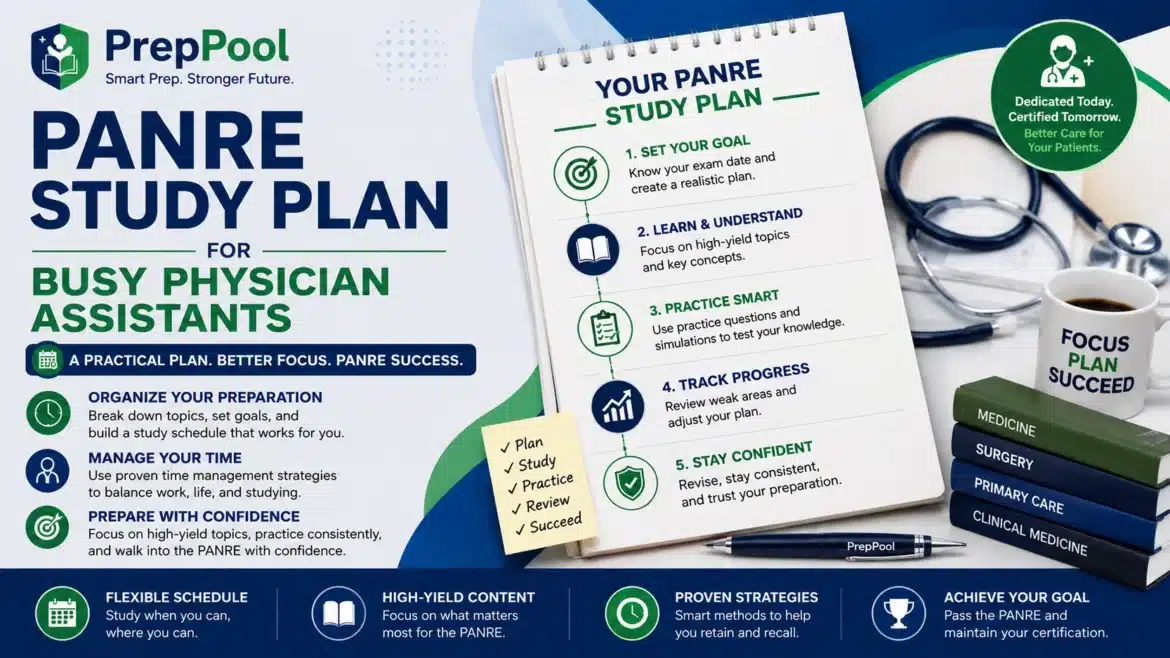

Preparing for the Physician Assistant National Recertifying Examination (PANRE®) while managing patient care, administrative responsibilities, and personal commitments can feel overwhelming. Many physician assistants have demanding schedules, making it difficult to dedicate long hours to studying. Fortunately, success on the PANRE isn’t about studying nonstop—it’s about following a structured, realistic plan that fits your routine.
A well-organized study plan allows you to review high-yield medical topics consistently, strengthen weaker subject areas, and build confidence before exam day. Even if you only have a limited amount of study time each week, steady progress over several weeks or months can make a significant difference in your preparation.
- How to create a realistic PANRE study schedule.
- Ways to balance studying with a busy clinical workload.
- How to prioritize high-yield medical topics.
- Strategies for improving long-term retention.
- How practice questions can strengthen exam readiness.
Why You Need a Structured Study Plan
The PANRE covers a broad range of medical knowledge across multiple specialties. Trying to review everything at the last minute often leads to unnecessary stress and uneven preparation. A structured study plan breaks the workload into manageable sections, allowing you to review one topic at a time while steadily building confidence.
Consistent study sessions are generally more effective than occasional marathon review days. Even 30 to 60 minutes of focused study several times each week can produce meaningful progress over time.
Start Preparing Earlier Than You Think
Many physician assistants underestimate the amount of material covered on the PANRE. Beginning your preparation early gives you enough time to revisit specialties that may not be part of your daily practice while leaving room for review before the examination.
If you’re still deciding when to begin preparing, it’s helpful to first understand the PANRE recertification eligibility requirements so you can plan your study schedule around your testing window.
Create Weekly Study Goals
Rather than approaching your preparation as one large project, divide it into smaller weekly objectives. Assign specific medical specialties or body systems to each week and schedule regular review sessions throughout the month. This approach keeps preparation organized and helps prevent important topics from being overlooked.
| Weekly Goal | Example Focus |
|---|---|
| Week 1 | Cardiovascular and Pulmonary Medicine |
| Week 2 | Gastroenterology and Endocrinology |
| Week 3 | Musculoskeletal and Neurology |
| Week 4 | Review weak areas and complete practice questions. |
Prioritize High-Yield Topics
Not every subject requires the same amount of review. Focus additional time on specialties you encounter less frequently in clinical practice or topics where previous practice questions reveal knowledge gaps. Reviewing your weaker areas consistently often provides greater improvement than repeatedly studying subjects you’re already comfortable with.
Study Smarter, Not Longer
Busy physician assistants rarely have hours of uninterrupted study time. Instead of waiting for the perfect opportunity, make use of shorter sessions throughout the week. Reviewing a focused topic during lunch breaks, after clinic, or on weekends can add up to significant preparation over time.
In the next section, we’ll explore practical study techniques, time-management strategies, and ways to maximize every study session while balancing a full professional schedule.
Create a Weekly Routine You Can Maintain
The best study plan is one you can follow consistently. Instead of setting unrealistic goals that are difficult to maintain, establish a weekly routine that fits around your clinical schedule, family responsibilities, and personal commitments. Even a few focused study sessions each week can lead to steady progress over time.
Choose regular study times whenever possible. Building preparation into your weekly routine reduces the likelihood of postponing study sessions as work becomes busier.
Break Large Topics into Smaller Sections
The PANRE covers a wide range of medical specialties, making it easier to stay organized if you divide each specialty into manageable sections. For example, instead of studying all of cardiology in one sitting, review cardiovascular disorders, diagnostic testing, treatment guidelines, and pharmacology separately.
Completing smaller learning objectives creates a sense of progress while making it easier to retain complex medical information.
| Study Session | Suggested Focus |
|---|---|
| 30–45 minutes | Review one body system or medical specialty. |
| 15–20 minutes | Complete a set of practice questions. |
| 10–15 minutes | Review missed questions and explanations. |
| Weekend review | Revisit weaker topics and summarize key concepts. |
Use Active Learning Techniques
Reading textbooks or notes alone is rarely enough to prepare for a comprehensive recertification exam. Active learning methods encourage you to apply information, improving both understanding and long-term retention.
Consider explaining difficult concepts aloud, creating summary notes, reviewing clinical guidelines, or working through patient scenarios. These techniques reinforce clinical reasoning while helping you recognize gaps in your knowledge.
Monitor Your Progress Regularly
Checking your progress throughout your preparation helps ensure you’re moving in the right direction. Keep track of completed topics, review weaker areas regularly, and adjust your schedule if certain specialties require additional attention.
Monitoring your performance also prevents you from spending too much time on subjects you’ve already mastered while neglecting those that need further review.
Understand the Exam Before You Study
A successful preparation strategy begins with understanding what the examination is designed to assess. Knowing the overall scope of the exam allows you to organize your study plan more effectively and avoid spending excessive time on less important material.
If you’re still evaluating the level of preparation required, our guide on understanding the difficulty of the PANRE exam explains the challenges candidates commonly face and how proper preparation can improve confidence.
Balance Study Time with Clinical Practice
Many physician assistants naturally reinforce their knowledge through patient care. Whenever possible, connect your study topics with real clinical experiences. Applying concepts encountered during daily practice makes information more meaningful and easier to remember.
At the same time, be sure to review specialties that you don’t encounter frequently. A balanced study plan should cover the full range of medical knowledge assessed on the examination, not just your primary area of practice.
Stay Flexible Throughout Your Preparation
Your work schedule may change from week to week, especially if you’re managing call responsibilities or unexpected clinical demands. Rather than abandoning your study plan when life gets busy, adjust it as needed and continue making gradual progress. Consistency over time is far more valuable than trying to follow a perfect schedule.
In the final section, we’ll discuss how practice questions can strengthen your preparation, common mistakes to avoid, and practical strategies for approaching the PANRE with confidence.
Use Practice Questions to Measure Your Progress
Practice questions are one of the most effective ways to evaluate how well your study plan is working. They allow you to apply clinical knowledge, identify weak areas, and become more comfortable answering questions under exam-style conditions.
Instead of focusing only on your overall score, pay close attention to the explanations provided for each question. Understanding why an answer is correct—or why another option is incorrect—helps strengthen clinical reasoning and improves long-term retention.
| Study Habit | Why It Helps |
|---|---|
| Complete practice questions weekly | Measures your progress and reinforces key concepts. |
| Review detailed explanations | Improves clinical reasoning and decision-making. |
| Track missed topics | Highlights areas that need additional review. |
| Repeat challenging questions | Builds confidence and strengthens retention. |
| Finish with a comprehensive review | Brings together everything you’ve studied before exam day. |
Avoid Common Study Mistakes
Even experienced physician assistants can lose valuable preparation time by following ineffective study habits. Recognizing these common mistakes early allows you to make better use of every study session.
- Waiting until the final weeks before beginning your review.
- Studying only the specialties you see most often in practice.
- Reading notes without testing your knowledge.
- Skipping answer explanations after practice questions.
- Ignoring weaker subjects instead of reviewing them regularly.
Prepare with Realistic PANRE Practice Questions
Once you’ve built a consistent study routine, the next step is testing your knowledge with realistic exam-style questions. Working through a variety of clinical scenarios helps you become familiar with the pace, format, and decision-making skills required for the examination.
PrepPool offers realistic PANRE practice exam questions with detailed explanations to help physician assistants strengthen clinical reasoning, identify knowledge gaps, and prepare with greater confidence for recertification.
Continue Building Your Medical Knowledge
If you’re preparing for additional healthcare certifications or professional examinations, explore PrepPool’s collection of Medical Practice Exams resources. These study materials are designed to help healthcare professionals review essential concepts and practice with high-quality exam-style questions across a wide range of specialties.
Key Takeaways
- Create a study schedule that fits your professional and personal commitments.
- Break large medical topics into manageable weekly goals.
- Use active learning techniques instead of passive reading alone.
- Review weaker subjects regularly and monitor your progress.
- Practice consistently with realistic exam-style questions before test day.
Final Thoughts
Preparing for the PANRE while working full time can seem challenging, but a structured study plan makes the process far more manageable. By starting early, setting realistic goals, reviewing each medical specialty systematically, and using practice questions to reinforce your knowledge, you can make steady progress without disrupting your daily responsibilities.
Remember that consistency is more important than studying for long hours. Small, focused study sessions completed regularly over time will help build confidence and ensure you’re well prepared when it’s time to take the PANRE.
FAQs
When should I start studying for the PANRE?
It’s generally best to begin preparing several weeks or months before your planned exam date. Starting early allows enough time to review all major medical specialties, revisit challenging topics, and complete practice questions without feeling rushed.
How many hours should I study each week?
The ideal study schedule depends on your experience, available time, and familiarity with the exam content. Many physician assistants find that several shorter study sessions each week are easier to maintain than occasional long study days.
What subjects should I prioritize?
Focus on reviewing all major body systems while giving extra attention to specialties you encounter less frequently in your clinical practice or topics where practice questions reveal knowledge gaps.
Are practice questions an important part of PANRE preparation?
Yes. Practice questions help reinforce medical knowledge, improve clinical reasoning, identify weaker areas, and increase familiarity with the style of questions used on the examination.
Can I prepare for the PANRE while working full time?
Absolutely. A realistic study plan built around shorter, consistent study sessions allows many busy physician assistants to prepare effectively while continuing to manage their professional responsibilities.