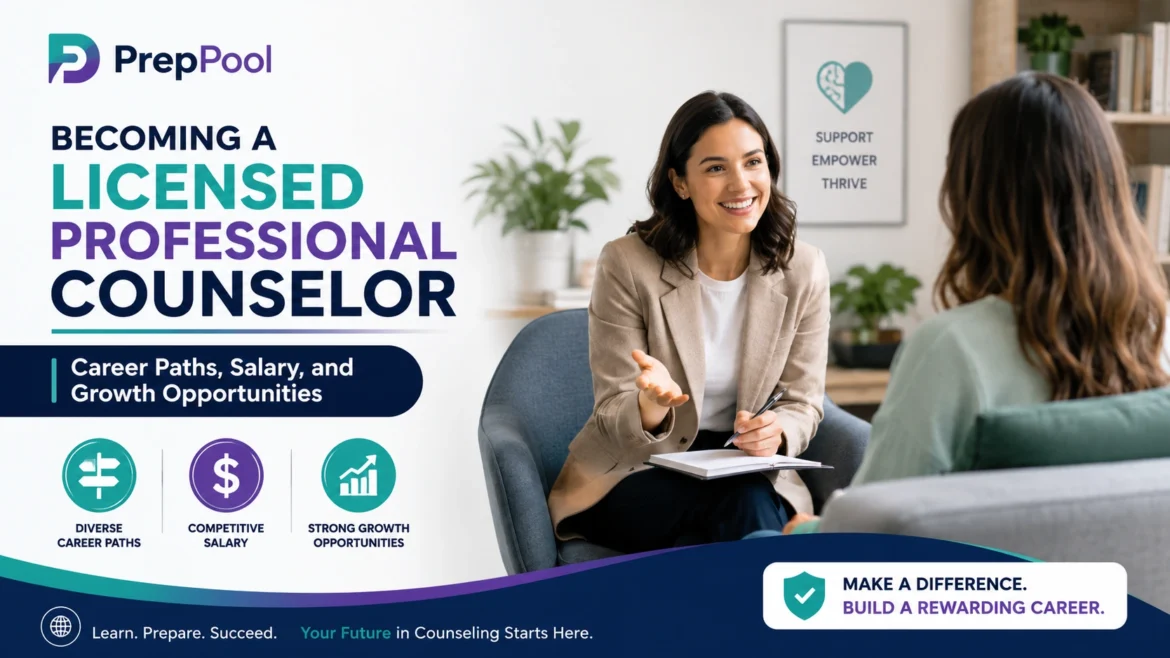

For individuals who are passionate about helping others navigate life’s challenges, a career in counseling can be both professionally rewarding and personally meaningful. Licensed Professional Counselors (LPCs) work with people facing a wide range of concerns, including anxiety, depression, relationship difficulties, trauma, grief, stress management, and life transitions.
As awareness of mental health continues to grow throughout the United States, the demand for qualified counseling professionals has expanded across healthcare systems, schools, community organizations, private practices, and government agencies.
For many aspiring counselors, earning professional licensure represents an important milestone that opens the door to advanced career opportunities, increased professional credibility, and the ability to provide independent counseling services.
This guide explores what Licensed Professional Counselors do, how the licensure process works, career opportunities available within the field, salary considerations, and why counseling remains one of the most impactful helping professions today.
- What Licensed Professional Counselors do
- Common counseling specialties
- Career paths available after licensure
- Work environments for counselors
- Professional skills required for success
- Salary factors and growth opportunities
- Steps toward professional counseling licensure
What Is a Licensed Professional Counselor?
A Licensed Professional Counselor is a trained mental health professional who provides counseling services designed to help individuals, couples, families, and groups improve emotional well-being and address personal challenges.
Counselors use evidence-based approaches to support clients in developing coping skills, improving relationships, managing stress, processing difficult experiences, and achieving personal goals.
Depending on their specialization, counselors may work with:
- Children and adolescents
- Adults
- Couples
- Families
- Students
- Veterans
- Individuals recovering from substance use disorders
The profession combines psychological knowledge, communication skills, empathy, ethical practice, and clinical decision-making.
Why Counseling Matters More Than Ever
Mental health plays a critical role in overall well-being, relationships, educational success, workplace performance, and quality of life.
Individuals today face a variety of challenges, including:
- Stress and burnout
- Anxiety disorders
- Depression
- Trauma and grief
- Family conflicts
- Substance use concerns
- Life transitions
Counselors provide support, guidance, and therapeutic interventions that help people manage these challenges more effectively.
As communities increasingly recognize the importance of mental health care, counseling professionals continue to play a vital role in supporting individuals across all stages of life.
A Day in the Life of a Licensed Professional Counselor
No two counseling days are exactly alike.
Daily responsibilities vary depending on work setting, specialty area, and client needs.
Typical activities may include:
- Conducting counseling sessions
- Completing assessments
- Developing treatment plans
- Maintaining clinical documentation
- Collaborating with healthcare professionals
- Providing crisis intervention
- Supporting client goal development
Counselors often balance clinical responsibilities with administrative tasks while maintaining a strong focus on client care.
Popular Counseling Specialties
One of the strengths of the counseling profession is the variety of specialty areas available.
Professionals can often pursue career paths aligned with their interests, strengths, and professional goals.
| Specialty | Primary Focus |
|---|---|
| Mental Health Counseling | Emotional and psychological well-being |
| School Counseling | Academic, social, and career development |
| Marriage and Family Counseling | Relationship and family dynamics |
| Substance Abuse Counseling | Addiction recovery and support |
| Career Counseling | Educational and occupational planning |
| Trauma Counseling | Trauma recovery and resilience |
Each specialty requires unique knowledge and clinical skills while sharing a common foundation in counseling principles and ethical practice.
Where Licensed Professional Counselors Work
Licensed counselors work in a wide variety of professional environments.
Some settings focus primarily on mental health treatment, while others emphasize education, rehabilitation, prevention, or community support services.
Common employment settings include:
- Private practices
- Hospitals and healthcare systems
- Community mental health centers
- School systems
- Universities and colleges
- Government agencies
- Nonprofit organizations
- Employee assistance programs
This flexibility allows counseling professionals to pursue careers that match their interests and preferred work environments.
Skills That Successful Counselors Develop
Effective counselors rely on more than academic knowledge alone.
Success often depends on developing a broad set of professional and interpersonal skills.
Important competencies include:
- Active listening
- Empathy
- Communication skills
- Critical thinking
- Ethical decision-making
- Cultural competence
- Problem-solving abilities
- Professional boundaries
These skills help counselors build trust, support clients effectively, and navigate complex professional situations.
The Importance of Professional Licensure
Professional licensure helps ensure that counselors possess the knowledge, training, and competency necessary to provide services responsibly.
Licensure also supports:
- Professional accountability
- Public protection
- Ethical standards
- Clinical competence
- Career advancement opportunities
For many counseling professionals, licensure serves as a key step toward long-term career growth and expanded practice opportunities.
Understanding the Licensure Journey
Becoming a Licensed Professional Counselor requires a combination of education, supervised experience, examination requirements, and ongoing professional development.
Many future counselors begin preparing early by understanding the overall counseling licensure pathway and certification process associated with professional counseling credentials. Having a clear understanding of the steps involved can make long-term career planning significantly easier.
Real-World Example: Supporting Clients Through Life Challenges
Imagine a counselor working with a young professional experiencing anxiety related to career transitions and workplace stress.
Through assessment, goal setting, evidence-based interventions, and ongoing support, the counselor helps the client develop coping strategies and improve overall well-being.
Situations like this demonstrate how counseling professionals help individuals create meaningful and lasting change in their lives.
Licensed Professional Counselor Salary Factors
One of the most common questions future counselors ask is how much they can earn after becoming licensed.
While compensation varies significantly across locations, specialties, and work settings, professional counseling offers opportunities for both personal fulfillment and long-term career growth.
Several factors can influence earning potential, including:
- Geographic location
- Years of professional experience
- Licensure status
- Clinical specialization
- Employment setting
- Leadership responsibilities
- Private practice opportunities
As counselors gain experience and develop specialized expertise, career advancement opportunities often expand.
How Experience Influences Career Growth
Like many professions, counseling careers often evolve over time.
Early-career counselors typically focus on building clinical skills, gaining supervised experience, and developing confidence working with diverse client populations.
As experience grows, professionals may pursue:
- Specialized certifications
- Leadership positions
- Clinical supervision roles
- Private practice ownership
- Training and education opportunities
- Program management positions
These pathways can contribute to both professional development and expanded career options.
Private Practice vs Agency-Based Counseling
Many Licensed Professional Counselors eventually consider whether they prefer agency-based employment or private practice.
Each path offers unique benefits and challenges.
| Private Practice | Agency or Organizational Setting |
|---|---|
| Greater schedule flexibility | More structured work environment |
| Potential for independent business growth | Administrative support systems |
| Greater control over services offered | Access to multidisciplinary teams |
| Business management responsibilities | Often more predictable workflows |
The best choice often depends on individual career goals, professional interests, and preferred work environments.
The Growing Need for Mental Health Professionals
Mental health awareness has increased substantially across the United States.
Organizations, healthcare providers, schools, and communities increasingly recognize the importance of behavioral health services.
Counselors help address concerns such as:
- Anxiety
- Depression
- Trauma
- Relationship difficulties
- Stress management
- Substance use challenges
- Life transitions
This growing recognition of mental health needs continues to highlight the importance of qualified counseling professionals.
School Counseling Careers
Some counseling professionals choose to work within educational environments.
School counselors support students by addressing academic, social, emotional, and career-related concerns.
Responsibilities may include:
- Academic planning
- College and career guidance
- Student support services
- Crisis intervention
- Family collaboration
School counseling allows professionals to make a positive impact during critical stages of student development.
Community Mental Health Opportunities
Community mental health organizations serve diverse populations with a wide range of counseling needs.
Professionals working in these environments often gain experience with:
- Crisis intervention
- Case management
- Individual counseling
- Group counseling
- Community outreach programs
These settings provide valuable opportunities to work with individuals facing complex life circumstances.
Healthcare and Integrated Care Settings
Counselors increasingly work alongside physicians, nurses, psychologists, social workers, and other healthcare professionals.
Integrated care environments often focus on improving both mental and physical well-being.
Examples include:
- Hospitals
- Primary care clinics
- Behavioral health centers
- Rehabilitation facilities
- Veterans’ healthcare programs
Collaboration within multidisciplinary teams has become increasingly common throughout modern healthcare systems.
Specialization Can Create New Opportunities
Many counselors eventually choose to develop expertise within specific areas of practice.
Examples of specialized focus areas include:
- Trauma-informed counseling
- Addiction counseling
- Child and adolescent counseling
- Marriage and family counseling
- Career counseling
- Grief counseling
Specialization can help professionals align their careers with their interests while expanding service capabilities.
Why Professional Development Never Stops
Counseling is a profession built on lifelong learning.
New research, treatment approaches, ethical standards, and best practices continue to shape the field.
Many counselors participate in:
- Continuing education programs
- Professional conferences
- Advanced training workshops
- Clinical supervision opportunities
- Specialized certification programs
Ongoing learning helps professionals maintain competence and improve client outcomes.
Preparing for Counseling Licensure Success
Long before entering independent practice, future counselors must build strong foundations in ethics, assessment, counseling theory, treatment planning, and professional standards.
Many candidates organize their preparation using a structured National Counselor Examination study schedule that helps balance content review, practice questions, and long-term learning goals. Consistent preparation often reduces stress while improving overall readiness.
The Versatility of Counseling Careers
One of the greatest strengths of the counseling profession is flexibility.
Professionals may work with different populations, explore new specialties, move into leadership roles, or even transition into education and training positions throughout their careers.
This adaptability helps make counseling an attractive long-term profession for individuals who enjoy continuous growth and meaningful work.
“`html
The Future Outlook for Licensed Professional Counselors
The counseling profession continues to evolve as mental health becomes an increasingly important component of overall healthcare and community well-being.
Individuals, families, schools, healthcare systems, employers, and government organizations increasingly recognize the value of accessible mental health services.
As awareness grows, counselors are playing larger roles in prevention, intervention, education, and long-term support programs.
This growing recognition creates opportunities for qualified professionals who possess strong clinical skills, ethical judgment, and a commitment to helping others.
Technology and the Modern Counseling Profession
Technology has expanded the ways counseling services can be delivered and accessed.
Many professionals now incorporate:
- Telehealth counseling services
- Electronic health records
- Virtual client communication tools
- Online psychoeducational resources
- Digital documentation systems
While technology has improved accessibility and convenience, the core principles of counseling remain unchanged. Effective counselors continue to rely on empathy, active listening, professional ethics, and evidence-based interventions.
Career Advancement Opportunities
Many counselors choose to pursue additional responsibilities as their careers progress.
Potential advancement opportunities include:
- Clinical Supervisor
- Program Director
- Behavioral Health Manager
- Private Practice Owner
- Counselor Educator
- Training and Development Specialist
These roles often allow professionals to expand their influence while mentoring future counselors and contributing to the advancement of the profession.
Why Ethical Practice Remains Essential
Counselors frequently work with individuals facing sensitive and complex life situations.
As a result, ethical decision-making remains one of the most important aspects of professional practice.
Licensed Professional Counselors are expected to:
- Protect client confidentiality
- Maintain professional competence
- Respect client autonomy
- Practice within their scope of expertise
- Follow applicable ethical standards
Strong ethical foundations help build trust and support positive outcomes for clients.
Applying Counseling Knowledge in Real-World Settings
Academic knowledge provides the foundation for professional practice, but real-world application is what ultimately prepares counselors for success.
Many future counselors strengthen their readiness by working through comprehensive counselor licensure practice questions and exam preparation resources that reinforce assessment concepts, counseling theories, ethics, and professional decision-making. Applying knowledge through realistic scenarios often helps bridge the gap between classroom learning and professional practice.
Building a Sustainable Counseling Career
Counseling can be highly rewarding, but it also requires resilience, self-awareness, and ongoing professional growth.
Successful counselors often prioritize:
- Continuing education
- Professional supervision
- Self-care practices
- Peer collaboration
- Evidence-based learning
These habits support long-term effectiveness while helping professionals maintain high standards of care.
Real-World Example: The Impact of Counseling
Imagine a counselor working with a college student struggling with anxiety, academic pressure, and uncertainty about the future.
Through supportive counseling, goal setting, coping strategies, and skill development, the counselor helps the student build confidence and navigate challenges more effectively.
Years later, that same individual may reflect on counseling as a turning point that helped improve both personal well-being and life direction.
Stories like these illustrate the meaningful impact counseling professionals can have on the lives of others.
Why Counseling Remains a Meaningful Profession
Few careers provide the opportunity to combine scientific knowledge, human connection, and meaningful service in the way counseling does.
Licensed Professional Counselors help individuals overcome challenges, strengthen relationships, improve mental health, and achieve personal goals.
For professionals who value helping others while continuously learning and growing, counseling offers a rewarding and impactful career path.
Final Thoughts
The path to becoming a Licensed Professional Counselor involves education, supervised experience, examination requirements, and a dedication to ethical practice.
Along the way, counselors develop valuable skills that allow them to support others through some of life’s most challenging situations.
Whether working in private practice, healthcare, education, community services, or specialized counseling settings, Licensed Professional Counselors play an important role in promoting mental health and improving quality of life.
For individuals seeking a profession that combines purpose, growth, and meaningful impact, counseling continues to offer exceptional opportunities.
Frequently Asked Questions (FAQs)
What does a Licensed Professional Counselor do?
Licensed Professional Counselors provide mental health counseling, assessments, treatment planning, and support services that help clients address emotional, behavioral, and life challenges.
How do I become a Licensed Professional Counselor?
Requirements vary by state but generally include graduate education, supervised clinical experience, successful completion of licensing examinations, and fulfillment of professional licensure requirements.
Where do Licensed Professional Counselors work?
Counselors work in private practices, hospitals, schools, universities, community mental health centers, government agencies, and nonprofit organizations.
Is counseling a growing profession?
Mental health awareness and demand for behavioral health services continue to increase, creating opportunities for qualified counseling professionals.
What skills are most important for counselors?
Communication, empathy, ethical decision-making, active listening, critical thinking, cultural competence, and professional judgment are among the most important skills for counseling success.