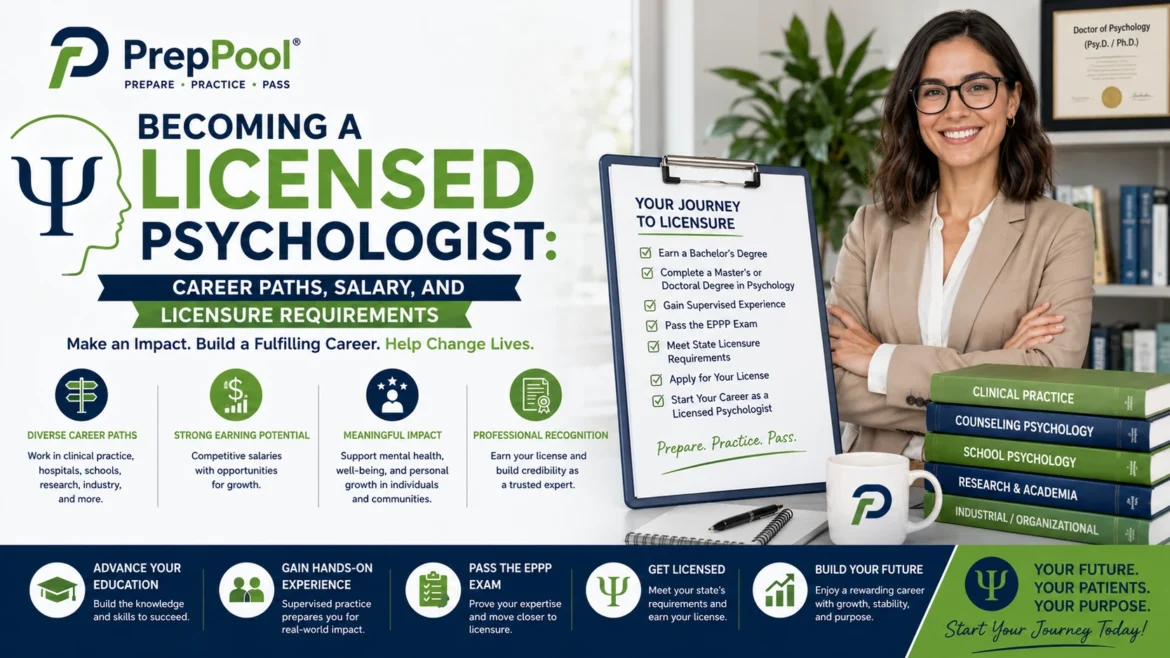

Psychology is one of the most diverse and rewarding professional fields in healthcare, education, research, and human services. Licensed psychologists help individuals, families, organizations, and communities address challenges related to mental health, behavior, learning, relationships, and overall well-being.
For many students and psychology graduates, becoming a licensed psychologist represents the culmination of years of education, supervised training, and professional development. While the path requires dedication and commitment, it also offers opportunities to make a meaningful impact on people’s lives while pursuing a wide range of career specialties.
Whether your goal is to work in private practice, healthcare, schools, government agencies, research institutions, or organizational settings, understanding the licensure process and career opportunities can help you make informed decisions about your professional future.
This guide explores what psychologists do, how licensure works, salary considerations, specialty areas, and the long-term opportunities available within the profession.
- What licensed psychologists do
- How to become a licensed psychologist
- Educational and training requirements
- Psychology specialty areas
- Career opportunities and work settings
- Salary factors and professional growth
- Why psychology licensure matters
What Does a Licensed Psychologist Do?
Licensed psychologists apply scientific knowledge and professional expertise to understand human behavior, emotions, cognition, development, and mental health.
Their responsibilities vary depending on specialty area and work setting, but common duties often include:
- Conducting psychological assessments
- Providing therapy and counseling
- Diagnosing mental health conditions
- Developing treatment plans
- Conducting research
- Consulting with organizations and institutions
- Providing educational and behavioral interventions
Because psychology encompasses many areas of practice, professionals often specialize in fields that align with their interests and career goals.
Why Licensure Is Important in Psychology
Licensure serves as a professional safeguard that helps ensure psychologists possess the education, training, ethical awareness, and competency necessary to provide services responsibly.
Licensing requirements protect both the public and the profession by establishing standards for professional practice.
Benefits of licensure include:
- Professional credibility
- Expanded employment opportunities
- Legal authority to provide certain services
- Greater public trust
- Career advancement potential
For most psychology professionals seeking independent practice or advanced clinical roles, licensure is a critical career milestone.
The Typical Path to Becoming a Licensed Psychologist
Although requirements vary somewhat by jurisdiction, most candidates follow a similar progression toward licensure.
| Stage | Description |
|---|---|
| Undergraduate Education | Complete a bachelor’s degree |
| Graduate Training | Earn an advanced psychology degree |
| Supervised Experience | Complete required training hours |
| Licensure Examination | Meet examination requirements |
| Professional Licensure | Satisfy state or jurisdiction requirements |
Understanding these stages can help future psychologists prepare for the journey ahead.
Educational Requirements for Psychology Licensure
Psychology is a highly specialized profession that requires extensive education and training.
Most licensed psychologists complete advanced graduate education focused on psychological theory, assessment, intervention, ethics, research, and professional practice.
Graduate training often includes:
- Psychological assessment
- Research methods
- Clinical intervention
- Developmental psychology
- Cognitive psychology
- Ethics and professional standards
These educational experiences provide the foundation necessary for competent professional practice.
What Is the EPPP and Why Does It Matter?
The Examination for Professional Practice in Psychology (EPPP) is one of the most important components of the psychology licensure process.
The examination helps evaluate whether candidates possess the knowledge necessary for entry-level professional practice.
Major content areas commonly include:
- Assessment and diagnosis
- Biological bases of behavior
- Cognitive-affective psychology
- Research methods
- Ethics and legal standards
- Treatment and intervention
- Social and multicultural psychology
Because the EPPP covers such a broad range of psychology content, many candidates spend considerable time developing a comprehensive understanding of these domains before pursuing licensure.
Major Psychology Career Specialties
One of the strengths of psychology is the variety of professional pathways available after licensure.
Psychologists may choose to specialize in several areas depending on their interests and career goals.
| Specialty Area | Primary Focus |
|---|---|
| Clinical Psychology | Mental health assessment and treatment |
| Counseling Psychology | Personal development and life challenges |
| School Psychology | Educational and developmental support |
| Neuropsychology | Brain-behavior relationships |
| Forensic Psychology | Psychology and legal systems |
| Industrial-Organizational Psychology | Workplace behavior and performance |
Each specialty offers unique opportunities to apply psychological knowledge within different professional settings.
Where Licensed Psychologists Work
Psychologists are employed across a wide range of industries and organizations.
Common work settings include:
- Private practice
- Hospitals and healthcare systems
- Mental health clinics
- Universities and colleges
- School systems
- Government agencies
- Research institutions
- Corporate organizations
This diversity allows professionals to pursue careers that align with their personal interests and long-term objectives.
Building Knowledge Before Entering Professional Practice
Successful psychologists typically develop strong foundations in assessment, ethics, intervention, research, and evidence-based practice long before they begin independent professional work.
Many future psychologists strengthen their understanding through structured professional psychology exam preparation resources that provide exposure to realistic scenarios, licensing concepts, and core psychology knowledge areas commonly encountered during the licensure process.
Developing this foundation early can support both examination success and long-term professional growth.
Real-World Example: Choosing a Psychology Career Path
Consider two psychology graduates with similar educational backgrounds.
One chooses clinical psychology and works directly with clients experiencing mental health challenges. The other pursues industrial-organizational psychology and helps organizations improve workplace performance and employee well-being.
Although their daily responsibilities differ significantly, both rely on the same foundational psychology principles developed throughout their education and training.
This flexibility is one reason psychology remains an attractive career choice for many professionals.
Psychologist Salary: What Influences Earnings?
One of the most common questions psychology students ask is whether becoming a licensed psychologist is financially rewarding. While salary levels vary considerably, psychology offers opportunities across multiple specialties, industries, and professional settings.
Income is often influenced by factors such as:
- Level of education and training
- Professional experience
- Specialization area
- Geographic location
- Employment setting
- Licensure status
- Leadership responsibilities
As professionals gain expertise, develop specialized skills, and build strong reputations, earning potential often increases.
How Specialization Can Impact Career Opportunities
Psychology is a broad field with numerous specialty areas. Choosing a specialization can significantly influence daily responsibilities, work environments, and long-term career growth.
Some psychologists focus primarily on mental health treatment, while others work in education, healthcare administration, research, business consulting, or public policy.
Popular specialty areas include:
- Clinical psychology
- Counseling psychology
- School psychology
- Health psychology
- Forensic psychology
- Neuropsychology
- Industrial-organizational psychology
Each specialty requires a unique combination of knowledge, training, and professional experience.
Clinical Psychology Careers
Clinical psychology remains one of the most recognized areas of professional psychology.
Clinical psychologists often work with individuals experiencing emotional, behavioral, cognitive, or psychological challenges.
Responsibilities may include:
- Conducting assessments
- Diagnosing mental health conditions
- Providing psychotherapy
- Developing treatment plans
- Collaborating with healthcare professionals
Because mental health services continue to play an important role in healthcare systems, clinical psychology remains a significant area of professional practice.
Counseling Psychology and Human Development
Counseling psychologists often focus on helping individuals navigate life transitions, personal challenges, career decisions, and emotional concerns.
Their work may involve:
- Career counseling
- Relationship support
- Stress management
- Personal development
- Adjustment-related concerns
Many counseling psychologists work in educational institutions, healthcare settings, community organizations, or private practice environments.
School Psychology Opportunities
School psychologists play an important role in supporting students, educators, and families.
Responsibilities often include:
- Educational assessments
- Behavioral interventions
- Learning support services
- Consultation with educators
- Crisis response planning
School psychology combines psychological knowledge with educational expertise to support student success and well-being.
Industrial-Organizational Psychology Careers
Not all psychologists work within healthcare environments.
Industrial-organizational psychologists apply psychological principles to workplace settings.
Common areas of focus include:
- Employee performance
- Leadership development
- Workplace motivation
- Talent assessment
- Organizational effectiveness
This specialty demonstrates how psychology can be applied to business and organizational challenges.
The Growing Importance of Mental Health Services
Public awareness of mental health has increased significantly over the past decade.
As organizations, schools, healthcare systems, and communities place greater emphasis on psychological well-being, demand for qualified professionals continues to evolve.
Psychologists contribute by:
- Providing mental health services
- Supporting prevention efforts
- Conducting research
- Improving organizational outcomes
- Promoting psychological wellness
This broad impact helps explain why psychology remains an influential profession.
Why Continuing Education Matters
Psychology is constantly evolving as new research expands our understanding of human behavior, mental health, cognition, and intervention strategies.
Many psychologists participate in ongoing professional development activities such as:
- Continuing education programs
- Professional conferences
- Research review
- Advanced certifications
- Specialized training programs
Continuous learning helps professionals maintain competence while adapting to new developments within the field.
Professional Skills Employers Value Most
Successful psychologists often develop a combination of technical expertise and interpersonal abilities.
| Skill | Professional Benefit |
|---|---|
| Communication | Improves client and team interactions |
| Critical Thinking | Supports assessment and decision-making |
| Ethical Reasoning | Promotes responsible professional practice |
| Research Literacy | Supports evidence-based decision making |
| Cultural Competence | Improves effectiveness with diverse populations |
These skills remain valuable across virtually every psychology specialty.
Building a Strong Foundation for Licensure and Career Success
Before entering professional practice, psychologists must develop a comprehensive understanding of assessment, ethics, diagnosis, intervention, research methods, and evidence-based care.
Many candidates begin strengthening these competencies by studying a detailed psychology licensure content resource that explains the major domains commonly encountered during licensing preparation and professional practice. A strong conceptual foundation often supports both examination success and long-term career effectiveness.
The Versatility of a Psychology Career
Few professions offer the same range of career pathways as psychology.
Whether working with individuals, families, schools, healthcare systems, businesses, or research organizations, psychologists have opportunities to apply scientific knowledge in ways that improve lives and strengthen communities.
This versatility continues to attract individuals seeking meaningful and intellectually engaging careers.
The Long-Term Outlook for Licensed Psychologists
Psychology continues to evolve as researchers, healthcare providers, educators, and policymakers gain deeper insights into human behavior, mental health, and well-being.
As society becomes increasingly aware of the importance of psychological health, licensed psychologists are expected to remain valuable contributors across numerous professional settings.
Psychologists support individuals and organizations through:
- Mental health treatment
- Behavioral assessment
- Crisis intervention
- Educational support
- Research and innovation
- Workplace consulting
- Community outreach initiatives
This broad scope of practice helps create diverse opportunities throughout a psychologist’s career.
Technology Is Changing the Psychology Profession
Modern technology has transformed many aspects of psychological practice.
Digital tools now support assessment, communication, education, research, and service delivery.
Examples include:
- Telepsychology services
- Electronic health records
- Online assessment platforms
- Virtual consultation tools
- Research data analysis software
While technology has improved accessibility and efficiency, the need for professional judgment, ethical decision-making, and human connection remains essential.
Why Ethical Practice Remains Critical
Regardless of specialty area, psychologists are entrusted with significant professional responsibilities.
Clients, organizations, schools, and healthcare systems rely on psychologists to provide competent, ethical, and evidence-based services.
Professional responsibilities often include:
- Protecting confidentiality
- Maintaining professional competence
- Following ethical standards
- Using evidence-based practices
- Respecting cultural diversity
Ethical decision-making remains one of the defining characteristics of successful psychology professionals.
How Psychologists Continue Growing Professionally
Professional development does not end after licensure.
Many psychologists continue expanding their expertise throughout their careers.
Examples of professional growth opportunities include:
- Advanced specialty training
- Professional certifications
- Leadership positions
- Academic teaching roles
- Research contributions
- Clinical supervision responsibilities
These opportunities allow psychologists to deepen expertise while contributing to the advancement of the profession.
Career Satisfaction in Psychology
Many psychologists report that helping others improve their quality of life is one of the most rewarding aspects of the profession.
Whether supporting a child struggling in school, helping a family navigate a difficult situation, assisting an individual managing anxiety, or improving workplace performance, psychologists often have opportunities to make meaningful contributions.
For many professionals, this sense of purpose becomes a significant source of long-term career satisfaction.
Professional Networking and Community Involvement
Building relationships with other professionals can play an important role in career development.
Networking opportunities may include:
- Professional psychology associations
- Continuing education events
- Research collaborations
- Industry conferences
- Community outreach programs
Professional connections often support learning, mentorship, collaboration, and career advancement.
Preparing for Licensure Success
The path to becoming a licensed psychologist involves significant preparation and commitment.
Candidates who approach licensure strategically often benefit from developing strong study habits, understanding major psychology domains, and practicing professional reasoning skills.
Many future psychologists improve readiness by following structured EPPP preparation and test-taking strategies that focus on content review, time management, practice techniques, and effective exam preparation methods.
Applying Psychology Knowledge Through Practice
Psychological knowledge becomes far more valuable when applied to realistic situations.
Assessment interpretation, ethical decision-making, intervention planning, and evidence-based reasoning all require practical application.
Many candidates strengthen these skills through realistic professional psychology licensing practice materials that present exam-style scenarios and help reinforce core psychology concepts before licensure.
| Career Stage | Primary Focus |
|---|---|
| Student | Building foundational psychology knowledge |
| Graduate Training | Developing professional competencies |
| Licensure Preparation | Mastering psychology domains and professional standards |
| Early Career | Applying knowledge in professional settings |
| Experienced Professional | Specialization, leadership, and continued growth |
Real-World Example: Different Paths, Same Foundation
Consider three licensed psychologists who completed similar educational and licensure requirements.
One works in private practice helping clients manage anxiety and depression. Another works within a school system supporting students and educators. A third serves as an organizational consultant helping businesses improve employee performance and workplace culture.
Although their careers differ significantly, all three rely on the same core foundations in assessment, ethics, research, intervention, and professional practice that were developed throughout their psychology education and licensure journey.
Why Psychology Remains a Valuable Profession
Human behavior influences virtually every aspect of life, including education, healthcare, relationships, work, leadership, and community well-being.
As a result, psychology remains relevant across a wide range of professional environments.
Licensed psychologists contribute valuable expertise that helps individuals and organizations make informed decisions, improve outcomes, and address complex challenges.
Final Thoughts
Becoming a licensed psychologist requires dedication, education, supervised experience, and successful completion of licensure requirements. However, the rewards can include meaningful work, professional growth, intellectual challenge, and opportunities to positively impact the lives of others.
Whether your interests lie in clinical practice, counseling, education, research, healthcare, or organizational consulting, psychology offers a diverse range of career pathways.
By developing strong professional skills, maintaining ethical standards, embracing lifelong learning, and building a solid foundation in psychological science, aspiring psychologists can position themselves for long-term success within this dynamic and influential profession.
FAQs
What is required to become a licensed psychologist?
Requirements vary by jurisdiction but generally include advanced education, supervised professional experience, successful completion of licensing examinations, and fulfillment of regulatory requirements.
What career options are available for licensed psychologists?
Licensed psychologists may work in clinical practice, counseling, schools, healthcare systems, research institutions, government agencies, and organizational consulting environments.
Why is the EPPP important?
The EPPP helps evaluate whether psychology candidates possess the knowledge necessary for entry-level professional practice and is commonly used as part of the licensure process.
Do psychologists continue learning after licensure?
Yes. Continuing education, professional development, research review, and specialty training are important parts of maintaining competence throughout a psychology career.
Is psychology a flexible career field?
Yes. Psychology offers diverse specialties and work settings, allowing professionals to pursue career paths aligned with their interests, strengths, and long-term goals.