
Quick Highlights:
- Growing demand for certified medical assistants in the USA
- Opportunities in clinics, hospitals, urgent care, and specialty practices
- Balanced role combining patient care and office responsibilities
- Certification improves credibility and hiring potential
- CCMA certification recognized by many healthcare employers
What Exactly Is the CCMA Certification?
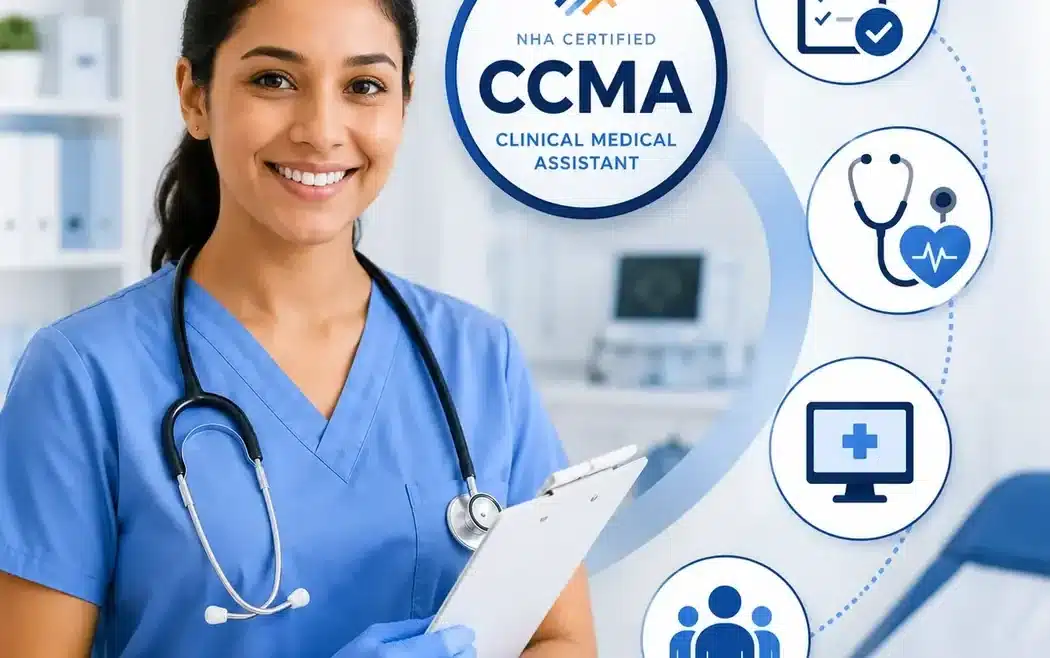
The Certified Clinical Medical Assistant (CCMA) certification validates that a candidate understands essential clinical and administrative skills used in modern healthcare settings. The credential is commonly pursued by individuals who want to work directly with patients while supporting physicians, nurses, and healthcare teams.
A CCMA professional may perform tasks such as taking vital signs, preparing patients for examinations, collecting medical histories, handling laboratory specimens, scheduling appointments, and assisting during medical procedures. Because medical assistants often work at the center of patient flow, employers look for individuals who can remain organized, communicate professionally, and follow healthcare regulations carefully.
The certification exam itself evaluates whether candidates understand clinical procedures, infection control, patient communication, medical terminology, pharmacology basics, and administrative responsibilities used daily in healthcare environments.
Why So Many People Want to Become Certified
There are several reasons why the CCMA credential continues to grow in popularity across the United States. Some students are recent graduates searching for an entry point into healthcare. Others are adults changing careers after working in retail, customer service, or office administration.
One major advantage is flexibility. Certified medical assistants can work in family medicine clinics, pediatric offices, cardiology centers, orthopedic practices, dermatology clinics, urgent care facilities, and hospitals. That variety allows professionals to explore different medical specialties throughout their careers.
Another important factor is job security. Healthcare services remain essential regardless of economic conditions. As the population ages and medical services expand, qualified healthcare support professionals continue to be needed.
| Reason | Why It Matters |
|---|---|
| Fast Career Entry | Allows students to enter healthcare without spending many years in school |
| Job Stability | Healthcare remains one of the most reliable industries in the USA |
| Career Growth | Experience can lead to advanced healthcare opportunities later |
| Patient Interaction | Provides meaningful daily work helping patients directly |
Real Story: How One Career Change Led to a Healthcare Future
Maria worked in retail management for nearly eight years before deciding she wanted a more meaningful profession. She enjoyed helping customers, but she wanted a career where she could contribute to patient care and long-term wellness.
After researching healthcare careers, she discovered the CCMA path. The training program fit her schedule, and within months she was learning medical terminology, patient intake procedures, and infection control practices.
At first, she struggled with memorizing clinical procedures and balancing study time with work responsibilities. However, consistent practice and exam preparation helped her improve. Today, Maria works in a busy family medicine clinic where she assists physicians, prepares patients for examinations, and helps coordinate follow-up care.
Stories like Maria’s are increasingly common. Many certified medical assistants come from completely different industries before transitioning into healthcare careers.
What Medical Assistants Actually Do Every Day
One reason the CCMA role is respected is because medical assistants handle multiple responsibilities throughout the day. Their work often combines technical healthcare duties with administrative coordination.
In a typical clinic environment, a medical assistant may begin the morning by preparing patient rooms and reviewing appointment schedules. Throughout the day, they may record vital signs, assist providers during procedures, update electronic health records, explain treatment instructions, and communicate with insurance providers.
Strong communication skills are especially important because medical assistants frequently serve as the connection between patients and healthcare teams.
Daily CCMA Responsibilities May Include:
- Recording blood pressure, pulse, and temperature
- Preparing examination rooms
- Scheduling patient appointments
- Collecting laboratory samples
- Updating patient medical records
- Assisting physicians during exams
- Following infection prevention protocols
Why Certification Matters More Than Ever
Many healthcare employers prefer certified candidates because certification demonstrates professionalism, preparation, and commitment to industry standards. Clinics and hospitals want reassurance that applicants understand patient safety procedures, confidentiality rules, and healthcare workflows.
Certification can also help candidates stand out in competitive hiring markets. Two applicants may have similar education backgrounds, but the certified candidate often appears more prepared for real clinical environments.
In addition, certification may improve opportunities for higher wages, expanded responsibilities, and career advancement within healthcare systems.
Students preparing for the exam often use structured learning resources and realistic practice materials to strengthen weak areas before test day. Many candidates rely on comprehensive CCMA practice Exam to become more comfortable with the exam format and clinical concepts commonly tested.
How to Become a Certified Clinical Medical Assistant
The process of becoming a Certified Clinical Medical Assistant may look different depending on a student’s background, but most candidates follow a similar path. The journey usually starts with education and ends with certification testing and job placement.
Many aspiring medical assistants enroll in accredited training programs offered through vocational schools, community colleges, technical institutes, or online healthcare education providers. These programs often combine classroom instruction with hands-on clinical practice.
Students typically study topics such as:
- Medical terminology
- Anatomy and physiology
- Patient care techniques
- Pharmacology basics
- Infection control procedures
- Medical office administration
- Electronic health records
- Safety and compliance standards
After completing training requirements, candidates prepare for the certification exam. Successful completion demonstrates readiness for real-world healthcare environments.
Top Skills Every Successful CCMA Candidate Needs
Passing the CCMA exam requires more than memorization. Strong candidates develop both technical knowledge and workplace skills that prepare them for patient care responsibilities.
| Skill | Why It Is Important |
|---|---|
| Communication | Helps explain procedures and support patients professionally |
| Attention to Detail | Essential for patient records, medications, and safety procedures |
| Time Management | Busy healthcare settings require strong organization skills |
| Clinical Knowledge | Supports patient care responsibilities and exam success |
| Professionalism | Builds trust with patients and healthcare employers |
CCMA Exam Topics Students Often Find Challenging
Many students underestimate how broad the certification exam can be. While some sections focus heavily on patient care, others test administrative knowledge, compliance procedures, and medical office operations.
Several topics consistently challenge test-takers because they require both memorization and practical understanding.
Frequently Difficult Exam Areas:
- Medical terminology and abbreviations
- Pharmacology concepts
- EKG and specimen collection procedures
- Patient confidentiality regulations
- Infection control standards
- Insurance and billing basics
- Clinical patient documentation
Students who focus only on memorization sometimes struggle when questions present real clinical scenarios. That is why many instructors recommend practicing with situational questions rather than relying exclusively on textbook reading.
Common Mistakes That Cause Candidates to Fail
Every year, capable students fail the CCMA exam because of preventable mistakes. In many cases, the issue is not intelligence or lack of effort. Instead, poor preparation strategies create unnecessary problems.
One of the biggest mistakes is waiting too long to begin studying. Some candidates assume their classroom knowledge alone will be enough. However, certification exams often test how well candidates apply information under pressure.
Another common problem is ignoring weak subjects. Students sometimes focus only on topics they already understand while avoiding difficult material like pharmacology or laboratory procedures. Unfortunately, the exam covers multiple domains, so balanced preparation matters.
Major Preparation Mistakes to Avoid
- Cramming during the final week before the exam
- Skipping practice questions
- Ignoring time management during mock exams
- Failing to review medical terminology regularly
- Overlooking infection control guidelines
- Studying passively without testing retention
Experienced instructors often recommend short daily study sessions rather than long, exhausting weekend cramming sessions. Consistency usually produces better long-term memory retention.
Best Study Strategies for Long-Term Retention
Students preparing for healthcare certification exams benefit most from active learning strategies. Instead of reading the same notes repeatedly, successful candidates interact with the material in multiple ways.
For example, many students create flashcards for medical terminology and pharmacology terms. Others use timed quizzes to improve recall speed and reduce exam anxiety.
One particularly effective method is teaching concepts aloud. Explaining clinical procedures to another person often reveals knowledge gaps that students may not notice while silently reading.
Helpful Study Tips:
- Create a weekly study schedule
- Practice answering timed questions
- Review anatomy and physiology regularly
- Focus extra time on weak subjects
- Use realistic practice exams
- Study in shorter but consistent sessions
- Review rationales for incorrect answers
How the CCMA Certification Helps Career Growth
One reason the CCMA credential is valuable is because it opens doors to long-term healthcare career development. Some medical assistants remain in the profession for years and build stable careers in specialty clinics or hospital systems.
Others use the role as a stepping stone into advanced healthcare careers such as nursing, healthcare administration, laboratory technology, or radiologic sciences.
Working directly with patients also gives medical assistants valuable real-world healthcare experience. That experience can strengthen future college applications and improve confidence in clinical settings.
Many employers also provide opportunities for continuing education, specialty training, and leadership advancement for experienced certified staff members.
Healthcare Employers Value Certified Candidates
Certification matters because healthcare employers operate in highly regulated environments. Patient safety, privacy compliance, and accurate documentation are critical responsibilities.
When employers hire certified medical assistants, they gain confidence that applicants understand professional healthcare standards and clinical best practices.
In busy healthcare facilities, properly trained staff members help improve workflow efficiency and patient satisfaction. Certified professionals often adapt faster during onboarding because they already understand many core responsibilities.
This is especially important in fast-paced environments such as urgent care clinics, internal medicine offices, and specialty practices where patient volumes remain consistently high.
The Growing Demand for Medical Assistants in the United States
The healthcare industry continues expanding across the United States due to population growth, aging adults, and increased access to healthcare services. As clinics grow larger and patient demand rises, healthcare organizations need more trained support professionals.
Medical assistants now play a major role in helping providers manage patient flow efficiently while maintaining quality care standards.
Smaller private clinics especially depend on versatile staff members who can handle both clinical and administrative duties throughout the day.
That combination of flexibility, patient interaction, and career stability is one reason why so many people now choose the CCMA path as their entry into healthcare.
Where Certified Medical Assistants Work in the USA
One of the biggest advantages of earning the CCMA certification is the variety of workplaces available across the healthcare industry. Certified medical assistants are not limited to one environment or specialty. This flexibility allows professionals to explore different areas of medicine and discover what fits their interests and long-term goals.
Some medical assistants enjoy fast-paced urgent care clinics where every day feels different. Others prefer specialty practices such as cardiology, dermatology, pediatrics, or orthopedics where they can develop deeper knowledge within a specific field.
Hospitals also hire medical assistants to support outpatient departments and specialty clinics. In many healthcare systems, certified staff members become an important part of patient care coordination.
| Workplace | Typical Responsibilities |
|---|---|
| Family Medicine Clinics | Patient intake, vital signs, scheduling, assisting physicians |
| Urgent Care Centers | Fast patient processing, specimen collection, EKG support |
| Pediatric Offices | Child patient care, vaccinations, growth tracking |
| Specialty Practices | Procedure preparation and specialty-focused patient support |
| Hospitals | Outpatient assistance, documentation, patient coordination |
How CCMA Certification Builds Confidence
Many students entering healthcare feel nervous at first because medical environments can seem overwhelming. There are medical terms to memorize, procedures to understand, and patient safety rules to follow carefully.
Certification preparation helps build confidence step by step. As students practice clinical scenarios and review exam content, they become more comfortable using healthcare terminology and understanding patient care procedures.
Confidence matters because patients often feel anxious during medical visits. Calm, professional medical assistants help create a better patient experience. Small actions such as clear communication, kindness, and organization can make patients feel more comfortable during appointments.
Why Confidence Matters in Healthcare:
- Improves patient communication
- Reduces workplace stress
- Supports accurate clinical procedures
- Creates stronger teamwork with providers
- Helps medical assistants handle busy environments effectively
What Makes the CCMA Credential Valuable in Modern Healthcare?
The healthcare industry continues changing rapidly. Clinics now rely heavily on electronic health records, updated infection prevention standards, and efficient patient management systems. Employers need professionals who can adapt to evolving healthcare environments.
The CCMA credential demonstrates that a candidate understands foundational healthcare practices that remain important in modern medical settings. Certification also signals dedication to professional standards and continued learning.
In competitive hiring situations, employers may receive applications from multiple candidates with similar education backgrounds. Certification can become the deciding factor that helps one applicant stand out.
Healthcare organizations also appreciate employees who already understand compliance expectations, patient confidentiality requirements, and clinical safety procedures because these areas directly affect patient outcomes and workplace quality standards.
Salary Expectations and Career Advancement Opportunities
While salaries vary by state, employer type, and experience level, certified medical assistants often have stronger earning potential compared to non-certified candidates. Larger healthcare systems and specialty practices may offer additional benefits, career development programs, and advancement opportunities.
Experience also plays a major role in long-term growth. Medical assistants who develop strong clinical and organizational skills may eventually move into leadership positions, training roles, or healthcare office management.
Some professionals later continue their education and transition into nursing, healthcare administration, or other advanced medical careers.
The Importance of Patient Care Skills
Technical knowledge alone does not create an outstanding medical assistant. Patient care skills are equally important. Patients often remember how healthcare professionals treated them emotionally just as much as they remember the clinical experience itself.
A skilled CCMA professional understands how to communicate respectfully, remain calm under pressure, and support patients who may feel nervous or uncomfortable.
For example, elderly patients may require extra patience during intake procedures. Children visiting pediatric clinics may feel anxious before vaccinations or examinations. Strong communication and empathy help create trust during these situations.
Healthcare employers highly value staff members who combine professionalism with compassion because patient satisfaction plays an important role in modern healthcare systems.
How Technology Is Changing the Medical Assistant Role
Technology now affects nearly every area of healthcare. Medical assistants frequently work with electronic health record systems, digital scheduling tools, online patient portals, and computerized billing systems.
Because of these changes, employers increasingly seek candidates who are comfortable learning new systems and adapting to updated workflows.
Modern medical assistants may also assist with telehealth appointments, digital documentation, and electronic communication between providers and patients.
This combination of clinical care and technology skills makes the profession more dynamic than many students initially expect.
Why Practice Exams Make a Huge Difference
Many students understand healthcare concepts while studying but still struggle during timed certification exams. Pressure, anxiety, and unfamiliar question styles can affect performance even when candidates know the material.
Practice exams help solve this problem by preparing students for realistic testing conditions. They improve pacing, strengthen confidence, and reveal weak areas before the actual exam date.
Reviewing answer explanations is especially important because it helps students understand why certain responses are correct instead of relying only on memorization.
Candidates who consistently practice mixed-topic questions often perform better because they become comfortable switching between clinical, administrative, and compliance-related topics quickly.
Final Thoughts on Building a Successful CCMA Career
The Certified Clinical Medical Assistant credential continues becoming more valuable as healthcare systems expand across the United States. Employers need dependable professionals who understand patient care, clinical safety, communication, and healthcare operations.
For students searching for a stable healthcare career with growth opportunities, the CCMA path offers a practical and rewarding option. The profession combines human interaction, clinical learning, and real opportunities for long-term advancement.
Success on the certification exam usually comes from consistent preparation, realistic practice, and understanding how healthcare concepts apply in real clinical situations.
Whether someone is beginning their first healthcare journey or changing careers later in life, earning the CCMA certification can open doors to meaningful work that positively impacts patients every day.
Frequently Asked Questions
Is the CCMA certification worth it?
Yes. Many healthcare employers prefer certified candidates because certification demonstrates professional preparation, clinical knowledge, and commitment to patient care standards.
How long does it take to become a CCMA?
Training timelines vary by program, but many students complete medical assistant education within several months to two years depending on the school and schedule.
Can certified medical assistants work in hospitals?
Yes. Many hospitals hire certified medical assistants for outpatient departments, specialty clinics, and patient care support roles.