
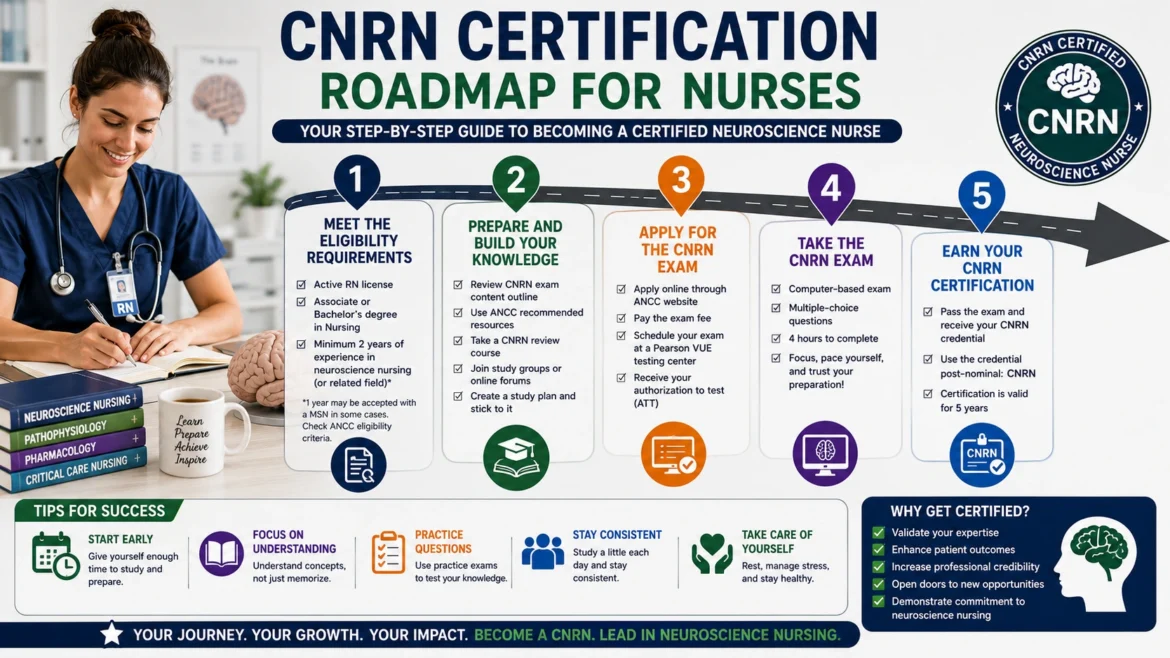

The demand for specialized nursing professionals continues to grow across the United States, especially in high-pressure neurological care environments where patient outcomes depend on advanced clinical decision-making. Among the most respected credentials in this field is the Certified Neuroscience Registered Nurse (CNRN) certification. This professional designation validates advanced neuroscience nursing knowledge and demonstrates commitment to patient safety, neurological care excellence, and career advancement.
Hospitals, trauma centers, stroke units, neuro ICUs, and rehabilitation facilities increasingly seek nurses who possess specialized neuroscience expertise. The CNRN credential helps nurses stand out in a competitive healthcare market while building trust with employers, patients, and healthcare teams.
For many registered nurses, earning the CNRN certification becomes a major career milestone because it reflects years of experience, dedication, and specialized education in neurological patient care. Whether working with stroke patients, traumatic brain injuries, spinal cord disorders, seizure conditions, or neurodegenerative diseases, neuroscience nurses play a critical role in modern healthcare systems.
- Certification Name: Certified Neuroscience Registered Nurse (CNRN)
- Credential Focus: Neuroscience and neurological patient care
- Industry: Healthcare & Nursing
- Ideal Candidates: Registered Nurses in neuro-focused settings
- Career Benefit: Higher credibility, specialization, and advancement opportunities
What Exactly Is the CNRN Certification?
The CNRN certification is a nationally recognized nursing credential designed for registered nurses specializing in neuroscience and neurological patient care. The certification evaluates a nurse’s understanding of complex neurological disorders, neuroanatomy, stroke management, trauma response, rehabilitation practices, patient monitoring, and evidence-based neurological interventions.
Unlike general nursing credentials, this certification specifically focuses on the care of patients with neurological conditions. Nurses who pursue this credential often work in specialized departments where rapid assessments and precise interventions can significantly affect patient survival and recovery.
Neuroscience nursing combines critical thinking, advanced clinical knowledge, and compassionate patient support. Certified neuroscience nurses frequently manage patients experiencing:
- Stroke and transient ischemic attacks
- Traumatic brain injuries
- Epilepsy and seizure disorders
- Spinal cord injuries
- Brain tumors
- Parkinson’s disease
- Multiple sclerosis
- Neurocritical care emergencies
- Degenerative neurological disorders
The certification serves as proof that a nurse possesses specialized competency beyond standard RN requirements.
Why Nurses Pursue CNRN Certification in the United States
Across the United States, healthcare employers increasingly prioritize specialty-certified nurses because they contribute to stronger patient outcomes, reduced medical errors, and improved clinical performance. Neurological cases often involve life-threatening complications that require advanced expertise, making neuroscience-certified nurses especially valuable.
Many nurses pursue the CNRN credential to gain professional recognition and increase confidence in handling high-acuity neurological patients. Hospitals also view specialty certifications as indicators of commitment, discipline, and continuing education.
Several motivations drive nurses toward neuroscience certification:
| Reason | Why It Matters |
|---|---|
| Career Advancement | Certification can strengthen promotion opportunities and leadership potential. |
| Professional Credibility | Employers trust nurses with verified neuroscience expertise. |
| Higher Confidence | Nurses gain stronger clinical decision-making abilities. |
| Specialized Knowledge | Helps nurses improve patient care in neurological settings. |
| Competitive Resume | Certification differentiates candidates in competitive job markets. |
In many healthcare organizations, specialty certification is encouraged as part of professional development programs. Some hospitals even provide reimbursement support or incentive bonuses for nurses who earn advanced credentials.
The Growing Importance of Neuroscience Nursing
Neurological disorders continue to rise throughout the United States due to aging populations, stroke prevalence, traumatic injuries, and chronic neurological conditions. As patient volumes increase, hospitals need skilled neuroscience nurses capable of managing complex neurological care pathways.
Stroke treatment alone has evolved dramatically over the past decade. Rapid intervention windows, neuroimaging technologies, and thrombectomy procedures require nurses who understand neurological monitoring and emergency response protocols.
In busy neurocritical care units, nurses frequently monitor:
- Intracranial pressure changes
- Neurological deterioration
- Seizure activity
- Ventilator management
- Hemodynamic stability
- Brain injury progression
- Post-operative neurosurgical recovery
Healthcare facilities depend heavily on neuroscience nurses during emergencies because neurological deterioration can happen within minutes. Quick recognition of symptoms often determines whether patients experience recovery, permanent disability, or fatal complications.
Real-World Example: How Specialized Knowledge Saves Lives
A neuroscience nurse working in a Level I trauma center noticed subtle changes in a patient recovering from a severe head injury. While routine monitoring appeared stable, the nurse recognized early signs of increased intracranial pressure based on minor pupil response changes and altered neurological status.
The care team responded immediately, and emergency imaging confirmed worsening brain swelling. Surgeons intervened before irreversible damage occurred.
Situations like this demonstrate why neuroscience specialization matters. The ability to detect neurological decline early can dramatically improve patient survival and long-term recovery.
These real-world clinical situations often inspire nurses to pursue advanced neuroscience education and certification.
Who Should Consider the CNRN Certification?
The CNRN credential is ideal for registered nurses who regularly care for neurological patients or wish to specialize in neuroscience nursing. Nurses from multiple healthcare environments can benefit from certification.
Common roles include:
- Stroke unit nurses
- Neuro ICU nurses
- Emergency department nurses
- Trauma nurses
- Neurosurgical nurses
- Rehabilitation nurses
- Progressive care nurses
- Telemetry nurses
- Acute care nurses
Even nurses outside dedicated neuro units may pursue certification if they encounter neurological patients frequently in clinical practice.
Job Opportunities After Earning the CNRN Credential
Neuroscience-certified nurses often qualify for broader career opportunities within specialized healthcare systems. As hospitals continue expanding stroke programs and neurocritical services, certified neuroscience professionals remain in strong demand.
Career opportunities may include:
- Neurocritical Care Nurse
- Stroke Program Coordinator
- Clinical Nurse Specialist
- Neurosurgical Recovery Nurse
- Neuro Rehabilitation Nurse
- Trauma ICU Nurse
- Nurse Educator
- Advanced Practice Nursing Pathways
Many employers view specialty certification as a leadership indicator, making certified nurses strong candidates for educator, supervisor, and program development roles.
Additionally, neuroscience-certified nurses often participate in:
- Hospital stroke committees
- Patient education initiatives
- Clinical quality improvement projects
- Neurological research programs
- Interdisciplinary care coordination
Because neuroscience care continues evolving with new technologies and treatment protocols, specialized nurses remain valuable assets within modern healthcare organizations.
Many candidates preparing for certification strengthen their readiness by using structured neuroscience-focused study resources and realistic practice testing. Comprehensive CNRN practice exam questions can help nurses identify weak areas, improve critical thinking skills, and become more comfortable with exam-style scenarios before test day.
How to Become CNRN Certified Successfully
Becoming a Certified Neuroscience Registered Nurse requires preparation, clinical experience, and a strong understanding of neurological patient care principles. While the certification journey may feel challenging initially, nurses who approach the process strategically often build confidence and improve their chances of success.
The first step involves gaining hands-on experience with neurological patients in clinical settings. Practical exposure helps nurses connect textbook concepts with real-world patient care situations. Daily interaction with stroke patients, seizure management, neuro assessments, and post-operative neurological care significantly strengthens exam readiness.
Most successful candidates follow a structured preparation approach that includes:
- Reviewing core neuroscience nursing concepts
- Practicing neurological assessment techniques
- Studying neuroanatomy and physiology
- Completing realistic practice questions
- Analyzing rationales behind correct answers
- Strengthening weak clinical knowledge areas
- Improving test-taking strategies
Preparation becomes easier when candidates create a realistic study schedule instead of relying on last-minute cramming. Consistent weekly study sessions often produce better retention than long, exhausting study marathons.
Core Topics Covered in the CNRN Exam
The certification exam evaluates both foundational neuroscience knowledge and advanced clinical reasoning skills. Candidates should expect scenario-based questions that assess decision-making abilities in realistic neurological care situations.
Some of the major content areas include:
| Focus Area | What Candidates Should Understand |
|---|---|
| Neuroanatomy | Brain structures, spinal pathways, cranial nerves, and neurological function. |
| Stroke Care | Ischemic stroke, hemorrhagic stroke, interventions, and monitoring. |
| Seizure Disorders | Types of seizures, emergency interventions, and medication management. |
| Traumatic Brain Injury | Assessment, intracranial pressure monitoring, and neurological deterioration. |
| Neuro Diagnostics | EEG, CT scans, MRI interpretation basics, and neurological testing. |
| Rehabilitation | Recovery planning, mobility support, and long-term neurological care. |
| Neurosurgical Care | Post-operative complications and patient monitoring. |
Understanding the “why” behind neurological interventions is essential because the exam often tests clinical judgment rather than memorization alone.
Common Mistakes Nurses Make During CNRN Preparation
Many intelligent and experienced nurses struggle with certification preparation because of avoidable study mistakes. Recognizing these common issues early can significantly improve performance.
1. Relying Only on Memorization
Neuroscience nursing requires critical thinking and clinical reasoning. Candidates who memorize facts without understanding patient care application often struggle with scenario-based questions.
2. Ignoring Weak Areas
Some nurses repeatedly study comfortable topics while avoiding difficult neurological concepts. This creates dangerous knowledge gaps during the exam.
3. Skipping Practice Questions
Practice exams help candidates develop familiarity with question structure, pacing, and clinical reasoning. Nurses who avoid practice testing may experience difficulty adapting to the exam format.
4. Studying Without a Plan
Random studying often leads to poor retention and inconsistent progress. A structured study calendar improves organization and accountability.
5. Neglecting Test-Taking Skills
Even knowledgeable nurses can lose points because of anxiety, time management problems, or poor question interpretation.
Best Study Habits for Neuroscience Nursing Success
Top-performing candidates usually develop disciplined but realistic study habits that support long-term retention and clinical understanding.
Some highly effective preparation techniques include:
- Studying consistently throughout the week
- Using active recall methods instead of passive reading
- Reviewing neurological case studies
- Creating visual diagrams for neuroanatomy
- Joining neuroscience nursing study groups
- Practicing timed exam sessions
- Tracking weak topics regularly
Visual learning methods are especially useful in neuroscience education because many neurological processes involve complex anatomical pathways and brain structures.
For example, some candidates create color-coded brain maps to better understand stroke localization patterns or cranial nerve functions. Others use real patient cases from clinical experiences to reinforce neurological assessment principles.
Why Neuroscience Certification Improves Patient Care
Specialty-certified nurses often contribute directly to improved patient outcomes because advanced education strengthens assessment accuracy, communication skills, and intervention timing.
In neurological emergencies, early intervention can drastically influence recovery. Certified neuroscience nurses are trained to recognize subtle neurological changes before conditions become critical.
Improved patient care benefits may include:
- Earlier recognition of neurological deterioration
- Faster stroke intervention response
- Improved seizure management
- Better interdisciplinary communication
- Stronger patient education support
- Safer medication administration
- Enhanced rehabilitation coordination
Healthcare organizations increasingly emphasize specialty certification because patient safety standards continue rising nationwide.
The Emotional Side of Neuroscience Nursing
Neuroscience nursing extends far beyond technical clinical skills. Nurses frequently support patients and families through life-changing diagnoses, traumatic injuries, and emotional recovery journeys.
Patients recovering from strokes or traumatic brain injuries often experience fear, confusion, frustration, and uncertainty about their future. Certified neuroscience nurses frequently become emotional anchors during these difficult periods.
One rehabilitation nurse described helping a young stroke patient relearn basic speech functions after months of therapy. Watching the patient finally speak complete sentences again reminded the nurse why specialized neurological care matters deeply.
These experiences create strong emotional connections between neuroscience nurses and their patients.
Specialized certification not only improves clinical expertise but also strengthens nurses’ ability to advocate for neurological patients during vulnerable moments.
How the CNRN Credential Builds Long-Term Career Stability
The healthcare industry continues evolving rapidly, but specialized nursing credentials remain highly respected across hospitals and healthcare systems. Nurses with advanced certifications often maintain stronger job security because specialized skills remain difficult to replace.
As neurological patient populations continue growing nationwide, certified neuroscience nurses are expected to remain in demand across multiple healthcare environments.
Certification also demonstrates adaptability and commitment to continuing education. Employers often prefer nurses who actively invest in professional growth because they contribute to stronger clinical standards and improved patient outcomes.
Long-term career benefits may include:
- Greater professional recognition
- Expanded leadership opportunities
- Improved salary potential
- Specialized unit eligibility
- Educational advancement pathways
- Clinical teaching opportunities
- Participation in advanced neurological programs
For many nurses, the certification journey becomes more than a credential. It becomes a symbol of expertise, resilience, and dedication to one of healthcare’s most demanding specialties.
Why the CNRN Certification Matters More Than Ever in the USA
Neurological conditions remain one of the leading healthcare challenges across the United States. From strokes and traumatic brain injuries to epilepsy and degenerative neurological diseases, hospitals continue seeing rising numbers of patients requiring advanced neurological care.
This growing demand has increased the importance of highly trained neuroscience nurses who can deliver specialized, evidence-based treatment in fast-paced clinical environments.
Healthcare systems throughout the country are expanding:
- Stroke centers
- Neurocritical care units
- Neurosurgical programs
- Rehabilitation services
- Emergency neurological response teams
As these programs grow, employers increasingly value nurses who demonstrate validated neuroscience expertise through professional certification.
The CNRN credential reflects advanced competency in neurological nursing care and shows employers that a nurse has invested significant effort into mastering complex patient management skills.
How Certification Builds Confidence in High-Pressure Situations
Neuroscience nurses often work in environments where seconds matter. Stroke alerts, seizure emergencies, neurological deterioration, and traumatic injuries demand calm decision-making under pressure.
One of the biggest advantages of structured certification preparation is increased clinical confidence. Nurses who deeply understand neurological assessment patterns and emergency interventions often respond faster and more effectively during critical situations.
Confidence becomes especially important when:
- Recognizing subtle neurological decline
- Communicating with physicians during emergencies
- Interpreting patient symptoms
- Managing neurocritical care equipment
- Prioritizing urgent interventions
- Supporting anxious families
Experienced neuroscience nurses frequently describe certification preparation as a turning point that improved both their clinical judgment and professional self-confidence.
The Role of Critical Thinking in the CNRN Exam
Many candidates initially underestimate the importance of critical thinking during neuroscience certification preparation. The exam is not designed to reward memorization alone. Instead, it evaluates how nurses apply neurological knowledge in realistic patient care scenarios.
Questions often challenge candidates to:
- Identify early warning signs
- Prioritize patient interventions
- Analyze neurological symptoms
- Select appropriate monitoring actions
- Recognize emergency complications
- Apply evidence-based nursing judgment
This is why successful preparation usually includes both theory review and realistic scenario-based practice testing.
For example, understanding stroke symptoms conceptually is important, but applying that knowledge during a rapidly changing clinical scenario requires stronger critical thinking abilities.
Real-World Story: A Nurse’s Journey Into Neuroscience Specialization
A registered nurse working in a busy emergency department initially had little interest in neurological nursing. However, after caring for a young patient experiencing a severe hemorrhagic stroke, the nurse became fascinated by neuroscience care.
The patient required rapid neurological assessments, emergency interventions, and coordinated multidisciplinary treatment. Watching the neuro team respond with precision inspired the nurse to pursue neuroscience specialization.
Over time, the nurse transitioned into a dedicated neuro ICU role and eventually earned the CNRN credential.
Later, the nurse became a stroke education coordinator helping train other nurses on neurological emergency response protocols.
Stories like this are common in neuroscience nursing because the specialty combines advanced science, emotional resilience, and meaningful patient impact.
How to Stay Motivated While Studying
Certification preparation can feel overwhelming at times, especially for nurses balancing demanding schedules, family responsibilities, and long clinical shifts. Staying motivated throughout the study process requires realistic expectations and consistent habits.
Many successful candidates use practical motivation strategies such as:
- Setting weekly study goals
- Tracking improvement scores
- Studying with accountability partners
- Using short focused study sessions
- Celebrating small milestones
- Reviewing real patient success stories
Instead of focusing only on passing the exam, many nurses stay motivated by remembering the larger purpose behind certification: becoming better prepared to care for neurological patients during vulnerable moments.
Key Focus Areas Candidates Should Never Ignore
Although neuroscience nursing covers a wide range of topics, some content areas consistently challenge candidates because they involve detailed clinical reasoning and rapid intervention priorities.
High-priority focus areas often include:
| Topic | Why It Is Important |
|---|---|
| Stroke Management | Critical for emergency intervention timing and neurological preservation. |
| Intracranial Pressure | Essential for recognizing dangerous neurological deterioration. |
| Neuro Assessment Skills | Foundational for detecting subtle patient changes. |
| Seizure Emergencies | Important for rapid stabilization and patient safety. |
| Neuro Pharmacology | Supports safe medication administration and treatment planning. |
| Spinal Cord Injuries | Requires specialized mobility and neurological management knowledge. |
Strong candidates usually spend extra time strengthening these major clinical areas because they appear frequently in both practice scenarios and real neurological care environments.
The Future of Neuroscience Nursing
Neuroscience nursing continues evolving alongside advancements in technology, research, and neurological treatment methods. New stroke therapies, robotic rehabilitation systems, neuro-monitoring tools, and brain injury management techniques are transforming patient care nationwide.
As innovation accelerates, nurses with specialized neuroscience expertise will remain essential within modern healthcare systems.
Future trends in neuroscience nursing may include:
- Expanded tele-neurology programs
- Advanced stroke intervention systems
- AI-assisted neurological monitoring
- Enhanced rehabilitation technologies
- Greater interdisciplinary neurological care models
- Improved neurocritical care protocols
Certified neuroscience nurses will likely continue playing leadership roles in implementing these advancements within hospitals and specialty care centers.
Final Thoughts on the CNRN Certification Journey
The path toward earning the CNRN credential requires discipline, preparation, and commitment, but the long-term rewards can be significant both professionally and personally.
For nurses passionate about neurological patient care, certification represents far more than a resume enhancement. It reflects advanced clinical knowledge, dedication to patient safety, and commitment to excellence in one of healthcare’s most specialized fields.
Whether working in stroke units, trauma centers, neuro ICUs, rehabilitation facilities, or emergency departments, certified neuroscience nurses help improve lives during some of the most critical moments patients and families may ever experience.
As neuroscience healthcare continues growing across the United States, nurses with specialized neurological expertise will remain valuable contributors to modern patient care systems.
For many professionals, the journey toward certification becomes a transformational experience that strengthens confidence, expands opportunities, and deepens their impact as healthcare providers.
Frequently Asked Questions (FAQs)
What does the CNRN certification stand for?
CNRN stands for Certified Neuroscience Registered Nurse. It is a specialty nursing credential focused on neurological and neuroscience patient care.
Is the CNRN certification difficult?
The exam can be challenging because it tests advanced neurological nursing knowledge and clinical reasoning skills. Consistent preparation and practice testing can significantly improve success rates.
Who should take the CNRN exam?
Registered nurses who work with neurological patients in stroke units, neuro ICUs, trauma centers, rehabilitation settings, or neurosurgical departments often pursue this certification.
Why is neuroscience nursing important?
Neuroscience nursing plays a critical role in managing patients with strokes, brain injuries, spinal disorders, seizures, and other neurological conditions where rapid assessment and intervention are essential.
How can nurses prepare effectively for the CNRN exam?
Successful preparation usually includes structured study plans, neuroscience content review, active recall methods, and realistic practice questions that strengthen clinical decision-making skills.