
Healthcare continues to evolve, and nurses working in progressive care environments are expected to manage increasingly complex patient conditions. As patient acuity rises and healthcare systems place greater emphasis on specialized clinical expertise, many registered nurses are pursuing professional certifications to demonstrate advanced knowledge and strengthen their careers.
One of the most respected credentials for nurses working with acutely ill adult patients is the Progressive Care Certified Nurse (PCCN) certification. This credential validates clinical competence, reinforces evidence-based practice, and demonstrates a commitment to professional excellence.
For many nurses, earning the PCCN certification represents more than passing an exam. It is an opportunity to gain confidence, expand career opportunities, and distinguish themselves in a competitive healthcare environment.
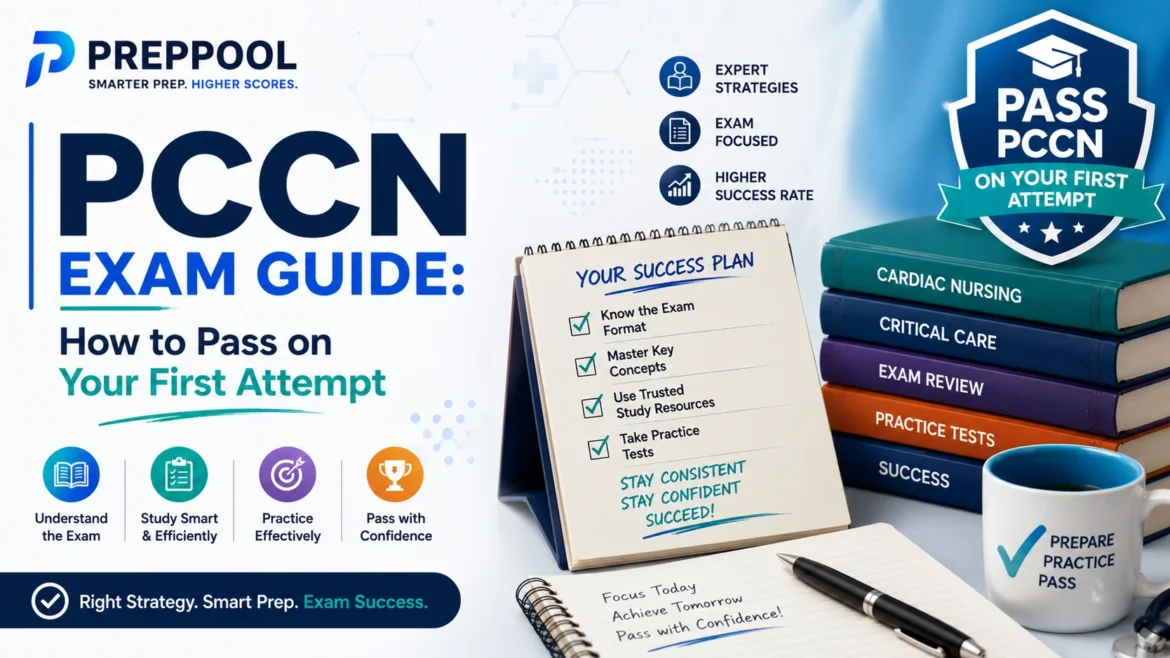
The good news is that passing the PCCN exam on your first attempt is absolutely achievable with the right preparation strategy, study resources, and understanding of the exam structure.
- Recognized credential for progressive care nurses.
- Validates specialized clinical knowledge.
- Supports professional growth and career advancement.
- Demonstrates commitment to high-quality patient care.
- Can increase confidence in clinical decision-making.
What Is the PCCN Certification?
The Progressive Care Certified Nurse (PCCN) credential is designed for registered nurses who provide direct care to acutely ill adult patients in progressive care settings. These patients often require a higher level of monitoring and intervention than those in general medical-surgical units but may not require intensive care services.
The certification focuses on the specialized knowledge and clinical judgment needed to care for patients with complex physiological conditions. Nurses who earn the credential demonstrate proficiency in applying evidence-based practices and making sound clinical decisions in progressive care environments.
PCCN certification is widely respected because it reflects both experience and dedication to maintaining high standards of patient care.
Who Should Take the PCCN Exam?
The PCCN certification is ideal for registered nurses who work with critically ill or acutely ill adult patients in progressive care environments. These settings may include step-down units, telemetry units, cardiac care units, intermediate care units, and other specialized patient care areas.
Nurses often pursue certification after gaining hands-on experience caring for patients who require advanced assessment, monitoring, and intervention skills.
Many nurses choose PCCN certification because they want to validate their expertise, increase professional credibility, and continue advancing within their nursing careers.
Why PCCN Certification Matters in Today’s Healthcare Environment
Modern healthcare systems depend on highly skilled nurses who can recognize subtle patient changes, respond quickly to complications, and collaborate effectively with interdisciplinary care teams.
Progressive care nurses frequently manage patients with complex cardiovascular, respiratory, neurological, endocrine, and multisystem conditions. The ability to assess clinical situations accurately and intervene appropriately can have a direct impact on patient outcomes.
PCCN certification demonstrates that a nurse possesses specialized knowledge in these areas and has invested time in professional development beyond basic licensure requirements.
Employers often value certified nurses because certification reflects initiative, dedication, and a commitment to lifelong learning.
Benefits of Earning PCCN Certification
While passing the exam requires effort and preparation, the benefits often extend far beyond the certification itself.
| Benefit | Impact |
|---|---|
| Professional Recognition | Demonstrates specialized expertise. |
| Career Advancement | May strengthen promotion opportunities. |
| Clinical Confidence | Improves decision-making skills. |
| Professional Credibility | Enhances reputation among peers. |
| Commitment to Excellence | Shows dedication to patient care. |
For many nurses, certification also creates a sense of personal achievement that reflects years of clinical experience and professional growth.
Understanding the PCCN Exam Structure
One of the most important steps in preparing for the PCCN exam is understanding how the exam is structured. Many candidates feel overwhelmed because they begin studying without fully understanding what will be tested.
The PCCN examination evaluates clinical knowledge, critical thinking, and nursing judgment related to progressive care nursing practice. Questions are designed to assess not only factual knowledge but also the ability to apply that knowledge in realistic patient-care scenarios.
Successful candidates understand that memorization alone is not enough. The exam rewards nurses who can interpret patient information, recognize clinical priorities, and make appropriate decisions based on evidence-based nursing principles.
Major Clinical Areas Covered on the PCCN Exam
The PCCN exam covers a broad range of patient care topics that reflect the realities of progressive care nursing. Candidates should expect questions involving assessment, interventions, pathophysiology, patient management, and clinical decision-making.
Common areas of focus include:
- Cardiovascular disorders.
- Respiratory conditions.
- Neurological disorders.
- Endocrine and metabolic conditions.
- Gastrointestinal disorders.
- Renal complications.
- Hematology and immunology.
- Multisystem patient management.
- Professional caring practices.
Understanding how these systems interact is particularly important because many progressive care patients present with multiple coexisting conditions.
What Makes the PCCN Exam Challenging?
The PCCN exam is not considered difficult because of obscure medical facts. Instead, many candidates find it challenging because questions often require clinical reasoning and application of knowledge.
Rather than asking for simple definitions, the exam frequently presents patient scenarios that require assessment, prioritization, interpretation of findings, and selection of the most appropriate nursing action.
These questions mirror real-world nursing practice, where clinicians must continuously evaluate changing patient conditions and respond appropriately.
As a result, candidates who understand concepts deeply often perform better than those who rely solely on memorization.
How Successful Nurses Approach PCCN Preparation
Nurses who pass the PCCN exam on their first attempt typically follow a structured study plan rather than studying randomly. They identify their strengths and weaknesses, create realistic schedules, and focus on understanding core clinical concepts.
Many successful candidates divide their preparation into phases, beginning with content review before transitioning into practice questions and exam simulations.
This approach allows them to strengthen knowledge while becoming familiar with the style and complexity of certification exam questions.
One of the most effective preparation methods is working through realistic exam-style questions that reinforce clinical reasoning and highlight knowledge gaps. Many candidates improve confidence and readiness by regularly practicing with a comprehensive PCCN question bank designed for certification preparation that mirrors actual exam scenarios.
A Real-World Example of PCCN Success
Jessica, a telemetry nurse with several years of experience, initially felt intimidated by the PCCN exam because she had been out of school for a long time. She worried that she had forgotten important concepts and struggled to know where to begin.
Instead of attempting to study everything at once, she created a structured review schedule focused on one body system at a time. She combined content review with practice questions and regularly analyzed mistakes to identify weak areas.
Over several months, her confidence steadily improved. By exam day, she felt prepared because she understood not only the content but also how the exam asked questions. She successfully earned her PCCN certification on her first attempt and later described preparation as one of the most valuable professional development experiences of her nursing career.
Creating a PCCN Study Plan That Works
One of the biggest mistakes PCCN candidates make is studying without a clear strategy. Because the exam covers multiple body systems and patient care concepts, random studying often leads to knowledge gaps and unnecessary stress.
A structured study plan helps candidates break the material into manageable sections while ensuring that every major topic receives adequate attention.
Many successful nurses begin preparation several weeks or months before their scheduled exam date. This approach allows time for content review, practice questions, and reinforcement of weaker areas.
| Study Phase | Primary Objective |
|---|---|
| Phase 1 | Review core clinical concepts. |
| Phase 2 | Complete targeted practice questions. |
| Phase 3 | Identify and strengthen weak areas. |
| Phase 4 | Take practice exams and refine test-taking skills. |
Following a structured progression often improves retention and reduces the feeling of being overwhelmed by the volume of material.
Understanding Clinical Reasoning Versus Memorization
Many first-time candidates assume that memorizing facts is the fastest path to success. While foundational knowledge is important, PCCN questions frequently assess clinical reasoning rather than simple recall.
For example, candidates may encounter scenarios involving abnormal patient findings, hemodynamic changes, laboratory results, or worsening clinical conditions. Instead of asking for definitions, the exam often requires nurses to determine priorities and select the most appropriate response.
This emphasis on critical thinking reflects real-world nursing practice, where clinical decisions must be based on patient assessment and evidence-based care principles.
As a result, understanding why interventions are performed is usually more valuable than simply memorizing isolated details.
Mastering Cardiovascular Nursing Concepts
Cardiovascular disorders represent one of the most heavily tested areas on the PCCN exam. Progressive care nurses frequently care for patients experiencing acute cardiac conditions that require continuous monitoring and timely intervention.
Successful candidates develop a strong understanding of:
- Cardiac anatomy and physiology.
- Acute coronary syndromes.
- Heart failure management.
- Cardiac rhythm interpretation.
- Hemodynamic monitoring.
- Shock states.
- Cardiovascular medications.
Rather than focusing solely on memorization, candidates should understand how cardiovascular conditions affect overall patient status and influence nursing priorities.
- Focus on patient assessment trends.
- Understand why interventions are performed.
- Recognize early signs of deterioration.
- Connect laboratory findings to clinical conditions.
- Practice prioritization regularly.
Preparing for Respiratory System Questions
Respiratory disorders are another major component of progressive care nursing. Patients with respiratory compromise often require careful monitoring because even small changes can rapidly become serious.
Candidates should understand oxygenation, ventilation, respiratory assessment findings, arterial blood gas interpretation, and common pulmonary conditions.
Many exam questions involve identifying early warning signs of respiratory distress and selecting interventions that promote optimal patient outcomes.
Strong respiratory knowledge also supports success in multisystem patient scenarios, where pulmonary complications may interact with cardiovascular or neurological conditions.
How to Approach Neurological Nursing Topics
Neurological questions frequently require careful assessment and prioritization. Progressive care nurses must recognize subtle neurological changes and understand how these findings influence patient management.
Areas commonly reviewed include:
- Stroke recognition and management.
- Neurological assessment.
- Intracranial pressure considerations.
- Seizure management.
- Neurological deterioration indicators.
Successful candidates focus on understanding clinical significance rather than memorizing isolated findings. Recognizing trends and identifying urgent situations often plays a key role in answering neurological questions correctly.
Understanding Endocrine and Metabolic Disorders
Endocrine and metabolic conditions can affect nearly every body system. PCCN candidates should be comfortable recognizing common endocrine emergencies and understanding how metabolic imbalances influence patient care.
Topics may include diabetes management, electrolyte disturbances, hormonal disorders, and metabolic complications.
Questions frequently emphasize patient assessment, interpretation of findings, and prioritization of nursing interventions.
Understanding the physiological effects of these disorders often makes it easier to answer complex scenario-based questions.
The Importance of Multisystem Thinking
Many progressive care patients have more than one active health problem. A patient admitted for cardiac issues may also have diabetes, kidney disease, respiratory complications, or neurological concerns.
This reality is reflected on the PCCN exam. Candidates are often expected to evaluate multiple factors simultaneously and determine which findings require immediate attention.
Developing a multisystem perspective helps nurses think more like the exam expects and better reflects actual clinical practice.
The strongest candidates learn to connect patient symptoms, laboratory results, assessment findings, and treatment plans into a complete clinical picture.
How Practice Questions Improve Exam Performance
Reading textbooks and reviewing notes are valuable, but practice questions provide something that passive studying cannot. They reveal how information is tested and help candidates become comfortable with certification-style thinking.
Practice questions also expose weak areas that may not be obvious during content review. Many nurses discover that topics they believed they understood actually require additional study.
More importantly, practice questions strengthen clinical reasoning skills by forcing candidates to evaluate patient scenarios and make decisions under exam-like conditions.
This active learning process often accelerates improvement compared to reading alone.
Developing Strong Test-Taking Habits
Success on the PCCN exam depends on more than content knowledge. Effective test-taking habits can help candidates avoid unnecessary mistakes and maximize performance.
Some useful habits include:
- Reading every question carefully.
- Identifying key clinical clues.
- Avoiding assumptions.
- Eliminating clearly incorrect options.
- Focusing on patient priorities.
- Managing time effectively.
These strategies become increasingly valuable when answering complex scenario-based questions that involve multiple clinical considerations.
Why Reviewing Mistakes Is Essential
One of the most effective preparation strategies is reviewing incorrect answers thoroughly. Many candidates answer questions, check scores, and immediately move on. This approach misses valuable learning opportunities.
Instead, candidates should analyze why an answer was incorrect and identify the underlying concept involved. This process strengthens understanding and reduces the likelihood of repeating the same mistake.
Over time, systematic mistake analysis helps build confidence while improving clinical reasoning and knowledge retention.
Every incorrect answer represents an opportunity to improve. Candidates who consistently analyze mistakes often make faster progress than those who simply complete more questions.
Balancing Work, Family, and PCCN Preparation
Many PCCN candidates are working nurses with demanding schedules. Finding time to study can feel challenging, especially when balancing shift work, family responsibilities, and personal commitments.
The key is consistency rather than perfection. Even short study sessions completed regularly can produce significant progress over time.
Many successful candidates schedule specific study periods each week and treat those appointments as seriously as work commitments. Small, focused sessions often lead to better retention than occasional marathon study days.
By maintaining a realistic schedule and staying consistent, nurses can prepare effectively without becoming overwhelmed.
Your Final 30-Day PCCN Preparation Plan
The final month before the PCCN exam should focus on reinforcement, confidence building, and exam readiness. At this stage, candidates should spend less time learning entirely new material and more time strengthening clinical reasoning skills.
A structured 30-day approach can help ensure that all major content areas are reviewed while providing sufficient time for practice questions and exam simulation.
| Week | Primary Focus |
|---|---|
| Week 1 | Review cardiovascular and respiratory concepts. |
| Week 2 | Review neurological, endocrine, and renal topics. |
| Week 3 | Complete targeted practice questions and identify weak areas. |
| Week 4 | Take practice exams and focus on confidence building. |
This structure helps candidates maintain balance while ensuring that critical content areas remain fresh before test day.
How Hard Is the PCCN Exam Really?
One of the most frequently asked questions among candidates is whether the PCCN exam is difficult. The answer depends largely on preparation and clinical experience.
Most nurses do not struggle because the material is impossible to understand. Instead, challenges typically arise when candidates underestimate the exam, delay preparation, or rely entirely on memorization.
The exam is designed to evaluate the knowledge and judgment expected of progressive care nurses. Questions often require candidates to interpret patient information, prioritize interventions, and apply evidence-based nursing principles.
Nurses who understand underlying concepts and consistently practice clinical reasoning generally find the exam manageable and fair.
- Scenario-based questions.
- Clinical prioritization requirements.
- Application of knowledge rather than recall.
- Multiple body systems in a single scenario.
- Need for strong assessment skills.
Common PCCN Exam Mistakes to Avoid
Even highly experienced nurses can make preparation mistakes that negatively affect performance. Recognizing these issues early can help candidates avoid unnecessary setbacks.
- Waiting too long to begin studying.
- Relying only on memorization.
- Ignoring weaker content areas.
- Skipping practice questions.
- Failing to review incorrect answers.
- Studying inconsistently.
- Neglecting professional caring and ethical concepts.
Candidates who avoid these common pitfalls often experience smoother preparation and greater confidence on exam day.
The Importance of Practice Exams
Practice exams provide one of the most realistic ways to prepare for certification testing. They help candidates become familiar with question wording, timing expectations, and clinical reasoning requirements.
Beyond measuring knowledge, practice exams help reduce anxiety by creating familiarity with the testing experience.
Many candidates discover that their confidence increases significantly after completing multiple exam-style practice sessions because they learn how to manage time effectively and approach complex questions strategically.
Practice testing also provides valuable insight into remaining weaknesses that may require additional review.
How to Manage Test Anxiety Before the PCCN Exam
Feeling nervous before a certification exam is completely normal. Even experienced nurses often experience anxiety when preparing for a high-stakes professional examination.
One of the best ways to reduce anxiety is through preparation. Confidence tends to increase when candidates know they have reviewed key concepts, completed practice questions, and developed a clear study strategy.
Other helpful techniques include:
- Maintaining realistic expectations.
- Getting adequate sleep.
- Avoiding last-minute cramming.
- Using positive self-talk.
- Focusing on preparation rather than fear.
Remember that certification exams are designed to validate knowledge and competence, not to trick candidates.
PCCN Exam-Day Success Strategies
Exam day should be approached with the same professionalism that nurses bring to patient care. Preparation extends beyond studying and includes practical planning.
Arrive early, bring required identification, and allow plenty of time to settle in before testing begins.
During the exam:
- Read each question carefully.
- Identify the patient priority.
- Look for assessment clues.
- Avoid adding information that is not provided.
- Manage time consistently throughout the exam.
- Remain calm when encountering difficult questions.
Many candidates find that maintaining a steady pace helps prevent unnecessary stress and improves concentration.
Career Benefits After Earning PCCN Certification
PCCN certification can support both professional and personal growth. While certification alone does not guarantee promotion or salary increases, it often strengthens a nurse’s professional profile and demonstrates commitment to excellence.
Employers frequently value certified nurses because certification reflects advanced knowledge and dedication to ongoing professional development.
Many nurses report increased confidence when managing complex patients, participating in interdisciplinary discussions, and assuming leadership responsibilities.
Certification may also strengthen opportunities for advancement into specialized clinical, educational, leadership, or quality improvement roles.
How PCCN Certification Supports Better Patient Care
The ultimate purpose of certification extends beyond career advancement. PCCN-certified nurses often develop stronger assessment skills, deeper clinical knowledge, and greater confidence in decision-making.
These improvements can positively influence patient outcomes by supporting earlier recognition of complications, more effective interventions, and stronger collaboration with healthcare teams.
Certification reflects a commitment to maintaining high standards of practice and continuously improving professional competence.
For many nurses, this commitment to excellence is one of the most rewarding aspects of the certification journey.
Final PCCN Exam Preparation Checklist
Before sitting for the exam, candidates should confirm that they have completed the following preparation steps:
- Reviewed all major body systems.
- Completed multiple sets of practice questions.
- Analyzed incorrect answers thoroughly.
- Strengthened weaker content areas.
- Practiced clinical reasoning skills.
- Completed at least one full-length practice exam.
- Developed an exam-day strategy.
- Prepared testing logistics in advance.
Completing this checklist can provide reassurance that preparation has been comprehensive and focused.
Passing the PCCN exam is rarely about perfection. It is about combining clinical experience, structured preparation, and consistent practice to demonstrate the knowledge required of a progressive care nurse.
Conclusion
The PCCN certification represents a meaningful professional achievement for nurses caring for acutely ill adult patients. While the exam requires dedication and preparation, it is entirely achievable with a structured study plan and a focus on clinical reasoning.
Successful candidates understand the exam blueprint, review content systematically, practice regularly, and learn from mistakes. More importantly, they recognize that certification is not simply about passing a test—it is about strengthening the knowledge and skills needed to provide exceptional patient care.
By staying consistent, focusing on high-yield concepts, and practicing with realistic exam questions, nurses can approach the PCCN exam with confidence and significantly increase their chances of passing on the first attempt.
Frequently Asked Questions
How long should I study for the PCCN exam?
The ideal study period varies by candidate, but many nurses begin preparing several weeks or months before their exam date to allow adequate time for content review and practice questions.
Is the PCCN exam harder than nursing school exams?
The PCCN exam is different because it focuses heavily on clinical application and decision-making rather than simple knowledge recall. Strong clinical reasoning skills are essential for success.
What topics should I focus on most during preparation?
Cardiovascular, respiratory, neurological, endocrine, renal, and multisystem patient management concepts are among the most important areas to review.
Are practice questions enough to pass the PCCN exam?
Practice questions are valuable, but they should be combined with content review and understanding of underlying clinical concepts for the best results.
Can I pass the PCCN exam on my first attempt?
Yes. Many nurses successfully pass on their first attempt by following a structured study plan, practicing consistently, and focusing on clinical reasoning rather than memorization alone.