
Small mistakes made during preparation can create major problems on test day, especially when questions involve calculations, medication safety, or prescription interpretation.
Understanding these common mistakes early can help students prepare more effectively and avoid unnecessary stress during the certification process.
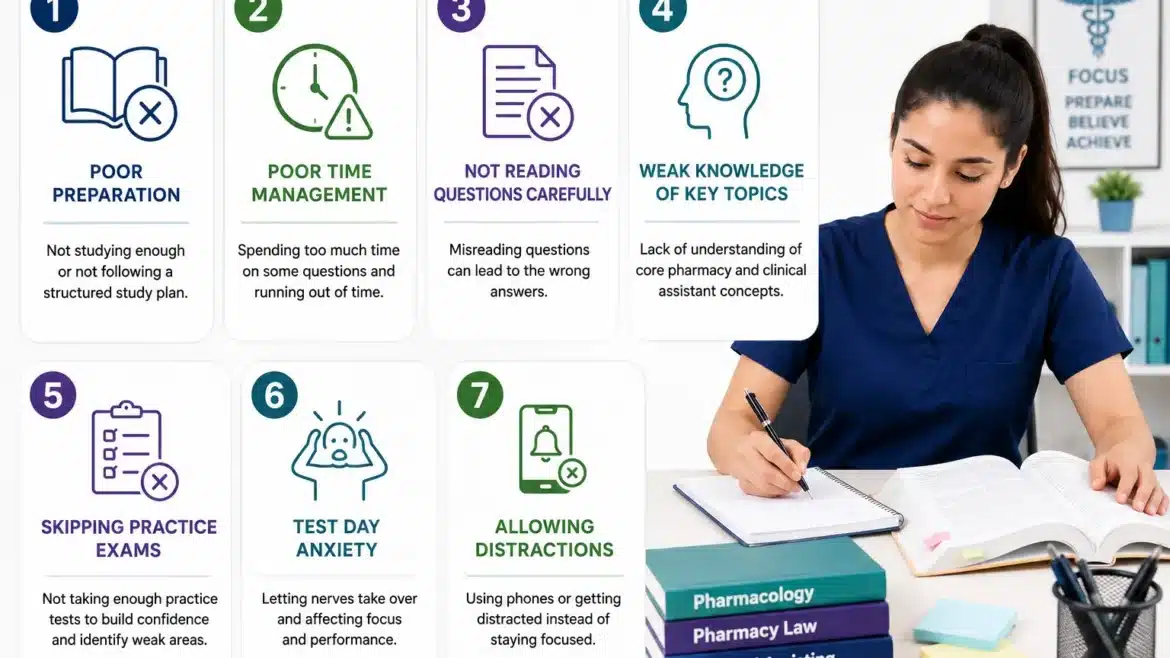
Most Common Reasons Students Fail:
- Passive studying without active practice
- Ignoring pharmacy calculations
- Poor time management
- Weak medication terminology knowledge
- Lack of realistic practice testing
Mistake #1: Relying Only on Memorization
One of the biggest mistakes EXCPT students make is trying to memorize pharmacy information without understanding how it applies in real pharmacy situations.
Many exam questions combine multiple concepts together, meaning memorization alone is usually not enough.
For example, a question may require understanding prescription abbreviations, medication safety procedures, and pharmacy law concepts at the same time.
Students who focus only on flashcards and definitions often struggle when scenario-based questions appear during the exam.
Successful candidates usually focus on understanding pharmacy workflow and why procedures matter in real workplace settings.
Mistake #2: Ignoring Pharmacy Calculations
Some students avoid pharmacy math because they feel nervous about calculations. Unfortunately, this becomes a major weakness during the exam.
Pharmacy calculations are important because technicians work with medication quantities, dosage instructions, and measurement conversions regularly in real pharmacies.
Questions involving calculations often test:
- Measurement conversions
- Days’ supply calculations
- Dosage interpretation
- Medication quantity accuracy
Students who practice pharmacy calculations consistently usually improve much faster than those who avoid them completely.
Mistake #3: Studying Random Topics Without a Plan
Another common problem is studying without structure. Some students jump randomly between pharmacy law, calculations, medications, and abbreviations every day without clear direction.
This often creates confusion and weak long-term retention.
Organized preparation works much better because students can focus deeply on one subject area before moving to the next.
Structured study also helps reduce anxiety because students feel more in control of their progress.
Why Realistic Practice Questions Matter
Many students spend too much time reading notes passively instead of testing themselves under realistic conditions.
Practice questions help students:
- Improve timing skills
- Recognize question patterns
- Strengthen pharmacy reasoning
- Identify weak areas early
- Build confidence before exam day
Students often feel more comfortable with the actual exam after working through pharmacy technician exam-style practice because it helps them experience the structure and pacing of the test before exam day arrives.
Mistake #4: Underestimating Medication Safety Questions
Medication safety is one of the most important areas on the EXCPT exam because pharmacy technicians work directly with medications that affect patient health.
Some students focus heavily on memorizing drug names while ignoring how medication safety procedures work in real pharmacy environments.
This creates problems during scenario-based questions where students must recognize potential risks, labeling issues, or prescription concerns.
Questions involving medication safety may include:
- Proper medication storage
- High-alert medication awareness
- Prescription verification
- Error prevention procedures
- Safe handling standards
Students who understand why these procedures matter usually perform better than students who rely entirely on memorization.
Mistake #5: Weak Understanding of Pharmacy Terminology
Pharmacy terminology appears throughout the EXCPT exam, not just in one isolated section.
Students who struggle with abbreviations, sig codes, and medication terminology often become confused even when they understand the general topic.
This is especially common when candidates try to memorize hundreds of terms individually instead of grouping concepts together logically.
Strong terminology skills improve:
- Prescription interpretation
- Question comprehension
- Medication recognition
- Calculation accuracy
- Overall exam confidence
Mistake #6: Never Practicing Under Timed Conditions
Some students know the material well but still struggle during the actual exam because they are not used to answering questions under time pressure.
The EXCPT exam requires both accuracy and pacing. Spending too much time on difficult questions can create panic later in the test.
Timed practice helps students learn:
- How fast to move through questions
- When to skip and return later
- How to stay calm under pressure
- How to manage mental fatigue
Students who regularly practice timed pharmacy scenarios often feel far more confident on exam day.
Mistake #7: Not Understanding the Actual Exam Structure
Many candidates begin studying without fully understanding how the EXCPT exam is organized.
As a result, they may spend too much time on lower-priority topics while ignoring areas that appear frequently on the test.
Understanding the structure of the exam early helps students study more strategically and reduce unnecessary stress.
Students who want a clearer understanding of the test format, pharmacy topics, and question categories can review this detailed guide explaining what is covered on the EXCPT certification exam before building their study strategy.
Why Passive Studying Creates False Confidence
Passive studying feels comfortable because information looks familiar while reading notes repeatedly.
However, recognition is very different from recall.
During the actual exam, students must retrieve information quickly under pressure without relying on notes or repeated exposure.
More Effective Study Methods:
- Timed practice questions
- Scenario-based review
- Calculation drills
- Medication grouping techniques
- Reviewing incorrect answers carefully
These active learning methods strengthen long-term retention and improve pharmacy decision-making skills far more effectively than passive reading alone.
How Anxiety Causes Students to Make More Mistakes
Many students underestimate how much stress can affect performance during the EXCPT exam.
Even candidates who studied for weeks may struggle if panic takes control during timed sections.
Stress often causes students to:
- Rush through questions too quickly
- Misread prescription details
- Forget simple pharmacy calculations
- Second-guess correct answers
- Lose track of time
One difficult question early in the exam can sometimes affect a student’s confidence for the entire test if they are not mentally prepared.
This is why realistic practice and consistent preparation are so important before exam day.
Why Consistency Beats Last-Minute Cramming
Some students try to study large amounts of pharmacy information only a few days before the exam.
Unfortunately, cramming usually increases stress and weakens long-term memory retention.
Pharmacy concepts such as medication safety, pharmacy law, sig codes, and calculations are easier to retain when reviewed consistently over time.
Students who build steady study habits often feel calmer and more confident because they gradually strengthen understanding instead of trying to memorize everything at once.
How Real Pharmacy Understanding Improves Exam Performance
The EXCPT exam is designed around real pharmacy responsibilities, which means understanding pharmacy workflow matters greatly during preparation.
Students who think through pharmacy situations logically often perform better than those who rely entirely on memorization.
For example, understanding why medication safety procedures exist makes it easier to answer scenario-based questions involving patient protection and prescription accuracy.
Real understanding also improves confidence because students can reason through unfamiliar situations instead of panicking when a question looks different from what they memorized.
Signs You May Need to Change Your Study Strategy
Some students continue using ineffective study habits even when their progress is clearly slowing down.
Warning signs often include:
- Repeatedly missing pharmacy calculations
- Difficulty remembering medication terminology
- Poor timed quiz performance
- Feeling overwhelmed by scenario questions
- Avoiding weak topics repeatedly
Recognizing these signs early gives students time to improve before the actual certification exam.
Why Exam Preparation Connects to Real Pharmacy Work
The EXCPT exam is not only about passing a certification test. The skills students develop during preparation directly connect to daily pharmacy responsibilities.
Certified pharmacy technicians help support medication safety, prescription accuracy, inventory organization, and patient communication in real healthcare environments.
That is why the certification process focuses heavily on accuracy, organization, and pharmacy workflow understanding instead of memorization alone.
How Practice Builds Confidence Before Exam Day
Many students feel anxious because they are unsure how the real EXCPT exam will feel under pressure.
Practice-based preparation helps students become more familiar with pharmacy terminology, question wording, and timing expectations before test day arrives.
Students often feel more prepared after working through pharmacy technician prep with realistic question formats because it helps reduce uncertainty and improve confidence ahead of the certification exam.
Final Thoughts on Avoiding EXCPT Exam Failure
Most EXCPT exam failures are not caused by lack of intelligence. They usually happen because students use ineffective preparation methods, avoid weak subjects, or underestimate the importance of active practice.
Understanding these mistakes early allows students to prepare more strategically and build stronger pharmacy knowledge over time.
Students who focus on consistency, practical understanding, and realistic pharmacy scenarios often perform much better than those relying only on memorization.
With proper preparation habits and steady improvement, the EXCPT exam becomes far more manageable than many candidates initially expect.
Frequently Asked Questions (FAQs)
What is the most common reason students fail the EXCPT exam?
Many students fail because they rely too heavily on memorization instead of understanding pharmacy workflow and practicing realistic questions.
Are pharmacy calculations difficult on the EXCPT exam?
The calculations are usually basic, but students must practice regularly to improve accuracy and speed under pressure.
Does anxiety affect EXCPT exam performance?
Yes. Stress and panic can cause students to rush, misread questions, and lose confidence during timed sections.
Is passive studying enough for EXCPT preparation?
No. Passive reading alone often creates false confidence because students are not actively testing recall or problem-solving skills.
What is the best way to avoid failing the EXCPT exam?
Consistent study routines, realistic practice questions, pharmacy calculations, and active review methods usually improve performance significantly.