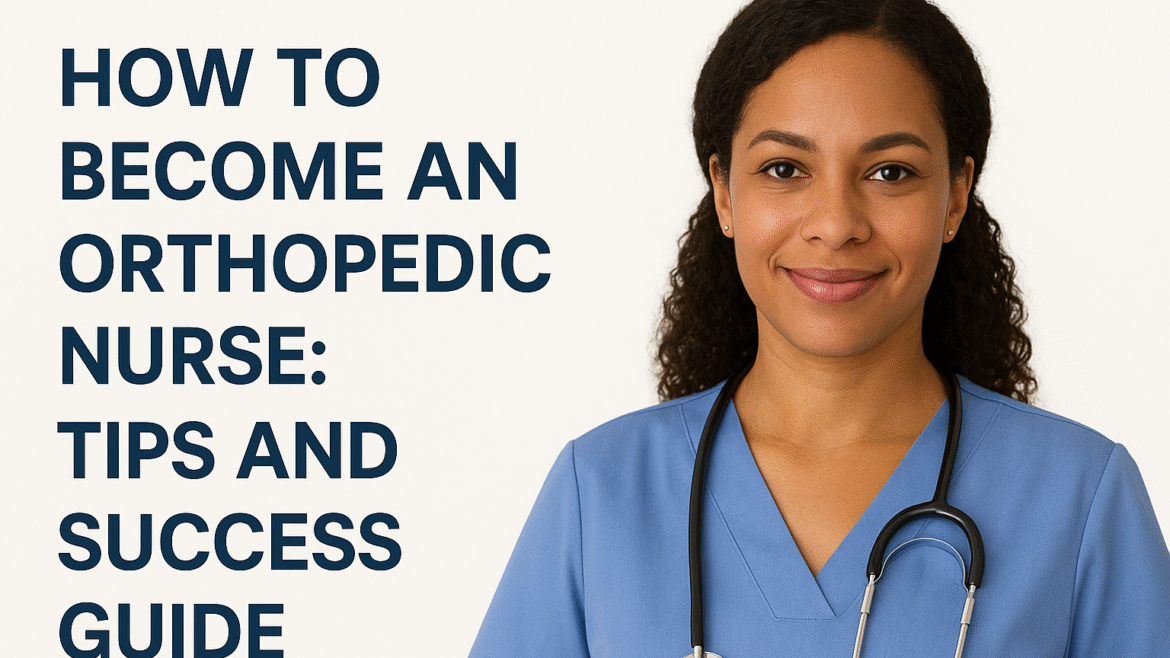

How to Become an Orthopedic Nurse: Tips and Success Guide
Orthopedic nursing is one of the most rewarding and specialized fields in healthcare. As the population ages and musculoskeletal conditions increase, the demand for skilled orthopedic nurses continues to grow. Whether you are an aspiring nurse, a recent graduate, or an experienced registered nurse looking to specialize, understanding the pathways, opportunities, and responsibilities of orthopedic nursing can set you on a successful career journey.
This comprehensive guide will walk you through everything you need to know about becoming an orthopedic nurse, including career paths, salaries, specialties like trauma care, job preparation, interview strategies, and educational resources.
What Do Orthopedic Nurses Do?
Orthopedic nurses are healthcare professionals who specialize in the care of patients with musculoskeletal conditions. These include bone fractures, joint replacements, arthritis, osteoporosis, spinal disorders, and sports-related injuries. Their role is vital in hospitals, rehabilitation centers, outpatient clinics, and surgical units.
Key responsibilities include:
- Patient Care and Assessment: Orthopedic nurses evaluate patients’ conditions, monitor healing progress, and provide direct bedside care after surgeries such as hip or knee replacements.
- Pain Management: They work closely with physicians to create and implement pain management plans tailored to patients recovering from fractures or joint surgeries.
- Mobility Assistance: Orthopedic nurses teach patients how to use crutches, walkers, and braces while also guiding them in safe exercises that prevent re-injury.
- Surgical Support: In surgical units, they assist surgeons before, during, and after orthopedic procedures.
- Patient Education: A large part of the role involves educating patients and their families about treatment plans, recovery, and lifestyle adjustments.
Orthopedic nursing is not limited to physical tasks—it also requires emotional support. Patients often face long recovery times, chronic pain, or lifestyle changes, and nurses play a key role in motivating and guiding them through the healing journey.
This field offers diverse work settings. Some orthopedic nurses work in trauma centers where they handle critical injuries, while others focus on rehabilitation or long-term care. The ability to combine technical expertise with compassionate care makes orthopedic nursing both challenging and fulfilling.
Orthopedic Nurse Practitioner
An Orthopedic Nurse Practitioner (ONP) is an advanced practice registered nurse (APRN) who specializes in diagnosing and managing musculoskeletal conditions. Unlike registered nurses, ONPs hold a master’s or doctoral degree in nursing and have the authority to prescribe medications, order diagnostic tests, and develop treatment plans independently in many states.
Key Responsibilities:
- Conducting physical exams and ordering imaging tests like X-rays or MRIs.
- Diagnosing orthopedic conditions such as fractures, degenerative joint disease, and spinal problems.
- Prescribing medications for pain relief and inflammation.
- Collaborating with surgeons for pre- and post-operative care.
- Leading rehabilitation programs for patients recovering from orthopedic surgeries.
ONPs often work in orthopedic clinics, sports medicine practices, rehabilitation centers, and hospitals. They also play a crucial role in rural and underserved areas where access to orthopedic surgeons may be limited.
Education Path:
- Earn a Bachelor of Science in Nursing (BSN).
- Pass the NCLEX-RN exam and gain experience as a registered nurse.
- Complete a Master of Science in Nursing (MSN) or Doctor of Nursing Practice (DNP) with a focus on orthopedics.
- Obtain national certification as a nurse practitioner.
This advanced role not only enhances clinical responsibility but also provides professional autonomy. Orthopedic nurse practitioners bridge the gap between patients and orthopedic surgeons, ensuring continuous, holistic care.
Orthopedic Nurse Practitioner Salary
Salary is one of the key factors attracting nurses to orthopedic specialties. According to U.S. labor data and professional nursing organizations, Orthopedic Nurse Practitioners earn an average annual salary between $115,000 and $140,000, depending on location, experience, and workplace setting.
Salary Influencers:
- Experience Level: Entry-level orthopedic nurse practitioners typically start at $100,000–$110,000, while those with 10+ years of practice can surpass $150,000.
- Geographic Location: States like California, New York, and Texas often offer higher salaries due to cost of living and demand for specialists.
- Work Setting: ONPs working in hospitals and surgical centers usually earn more than those in outpatient clinics or community health facilities.
- Certifications: Additional certifications in orthopedics, pain management, or rehabilitation can increase earning potential.
In addition to salary, ONPs often receive comprehensive benefits, including health insurance, retirement plans, tuition reimbursement, and opportunities for continuing education.
Compared to general nurse practitioners, orthopedic NPs earn slightly higher wages due to the technical expertise and specialized skills required. With the increasing demand for joint replacement surgeries and the rise of sports-related injuries, the earning potential in this field is expected to grow.
For nurses passionate about musculoskeletal health and advanced practice roles, orthopedic nursing provides both financial rewards and professional satisfaction.
Orthopedic Trauma Nursing
Orthopedic trauma nursing is one of the most intense and fast-paced areas within orthopedic care. Trauma nurses work with patients who suffer from severe injuries such as motor vehicle accidents, falls, workplace injuries, and high-impact sports incidents. These cases often involve multiple fractures, spinal injuries, or complex orthopedic surgeries.
Key Responsibilities:
- Emergency Response: Stabilizing patients in critical condition, applying splints, and preparing them for surgery.
- Surgical Assistance: Supporting orthopedic surgeons during trauma operations.
- Critical Monitoring: Managing patients in intensive care units, monitoring vital signs, and preventing complications such as infections or blood clots.
- Rehabilitation Coordination: Helping patients transition from acute care to rehabilitation and recovery.
Skills Needed:
- Quick decision-making in high-pressure environments.
- Proficiency in advanced trauma life support (ATLS) protocols.
- Emotional resilience to handle critical and often life-threatening injuries.
Orthopedic trauma nurses often work in emergency departments and Level I trauma centers. They collaborate with trauma surgeons, orthopedic specialists, and rehabilitation teams to ensure seamless care.
This subspecialty requires continuous training and often involves unpredictable work hours, but it provides an unmatched opportunity to make immediate life-saving impacts. For nurses seeking adrenaline-filled, impactful careers, orthopedic trauma nursing is a top choice.
Orthopedic Registered Nurse
An Orthopedic Registered Nurse (Orthopedic RN) is a licensed nurse specializing in musculoskeletal health but does not hold advanced practice credentials like an NP. These nurses provide bedside care, assist in surgeries, and play an essential role in patient recovery.
Responsibilities:
- Administering medications and monitoring post-surgical patients.
- Assisting with orthopedic devices such as casts, braces, and traction equipment.
- Collaborating with physical therapists to ensure mobility goals are met.
- Documenting patient progress and updating care plans.
Orthopedic RNs typically work in hospital orthopedic units, outpatient surgical centers, and rehabilitation facilities. Their daily tasks may range from preparing patients for hip replacement surgery to helping children with congenital bone conditions.
Education Path:
- Earn an Associate Degree in Nursing (ADN) or Bachelor of Science in Nursing (BSN).
- Pass the NCLEX-RN exam.
- Gain experience in orthopedic or surgical units.
- Optional: Earn certification such as the Orthopaedic Nurse Certified (ONC) credential from the Orthopaedic Nurses Certification Board (ONCB).
The role of orthopedic RNs is critical because they act as the backbone of patient care. They balance technical duties with emotional support, guiding patients through what can often be long and painful recoveries.
Orthopedic Nurse Job Description Resume
When applying for orthopedic nursing positions, having a strong, targeted resume is essential. An orthopedic nurse resume should highlight both technical expertise and compassionate care skills.
Key Elements:
- Professional Summary: Start with a concise introduction that showcases years of experience, areas of expertise, and career goals.
Example: “Dedicated Orthopedic Registered Nurse with 6+ years of experience in post-operative care, pain management, and patient education in high-volume orthopedic units.” - Core Skills: List relevant skills such as fracture care, cast application, post-surgical monitoring, patient rehabilitation, and knowledge of orthopedic devices.
- Experience Section:
- Include specific achievements, not just duties.
- Use metrics: “Provided post-op care for 15+ patients daily, reducing average recovery time by 10%.”
- Education and Certifications:
- Nursing degree (ADN/BSN/MSN).
- Certifications such as ONC or NP licensure if applicable.
- Professional Affiliations: Membership in organizations like the National Association of Orthopaedic Nurses (NAON) can strengthen your resume.
Resume Tips:
- Tailor your resume for each job posting by using keywords from the job description.
- Highlight teamwork and leadership experiences, especially in surgical or trauma units.
- Keep formatting clean, professional, and easy to scan.
A well-crafted resume not only gets you noticed but also positions you as a strong candidate for competitive orthopedic nursing jobs.
Orthopedic Nurse Interview Questions
Orthopedic nurse interviews often test both your technical knowledge and your ability to provide compassionate care. Preparing for common interview questions can boost your confidence.
Common Questions:
- “What interests you about orthopedic nursing?”
- Employers want to see your passion for musculoskeletal health and patient recovery.
- “How do you handle patients in severe pain?”
- Highlight pain management strategies and your empathetic approach.
- “Describe a challenging case and how you managed it.”
- Use the STAR method (Situation, Task, Action, Result) to show problem-solving skills.
- “What precautions do you take with post-operative orthopedic patients?”
- Discuss infection prevention, mobility safety, and patient education.
- “How do you collaborate with surgeons and rehabilitation teams?”
- Emphasize teamwork and communication.
Preparation Tips:
- Review orthopedic conditions like fractures, joint replacements, and spinal injuries.
- Be ready to explain how you’ve educated patients about recovery.
- Prepare questions to ask the employer, such as opportunities for continuing education or nurse-to-patient ratios.
Strong interview preparation demonstrates both your technical knowledge and your interpersonal skills, making you a top candidate for orthopedic nursing roles.
Orthopedic Nursing Jobs
The job market for orthopedic nurses is thriving due to rising orthopedic procedures, sports injuries, and aging populations. Opportunities span across multiple settings.
Common Workplaces:
- Hospitals: Orthopedic units and surgical floors.
- Outpatient Clinics: Sports medicine, fracture care, and pain management.
- Rehabilitation Centers: Assisting patients in long-term recovery after surgery or injury.
- Trauma Centers: Handling emergency orthopedic cases.
Job Outlook:
The Bureau of Labor Statistics projects steady growth in nursing, with orthopedic specialties in particularly high demand. With joint replacements and spinal surgeries becoming more common, orthopedic nurses are indispensable.
Career Advancement:
- Start as an orthopedic RN.
- Pursue advanced practice roles (NP or Clinical Nurse Specialist).
- Specialize further in trauma, pediatrics, or geriatric orthopedics.
Orthopedic nursing jobs offer competitive salaries, advancement opportunities, and personal fulfillment. Nurses in this field enjoy the satisfaction of helping patients regain independence and mobility.
Orthopedic Nursing Courses
Specialized training is essential for success in orthopedic nursing. Many institutions offer orthopedic nursing courses designed to provide in-depth knowledge and practical skills.
Course Topics Include:
- Anatomy and physiology of the musculoskeletal system.
- Management of fractures and orthopedic devices.
- Surgical procedures and post-operative care.
- Pain management techniques.
- Patient education and rehabilitation.
Certification:
- Orthopaedic Nurse Certified (ONC): Offered by the ONCB, requires experience and a passing exam.
- Advanced Practice Certification: For nurse practitioners specializing in orthopedics.
Courses are available through universities, nursing associations, and online platforms. Many hospitals also provide in-house training for orthopedic staff.
Completing these courses not only enhances knowledge but also boosts employability and career progression. Employers often prioritize candidates with certified orthopedic training, as it demonstrates commitment and expertise.
 As you are here, you may want to check out the following Nursing Study Exam Prep Material:
Orthopedic Nursing Practice Questions
Palliative Care Nursing Exam
Microbiology for Nursing Professionals Exam
Conclusion
Becoming an orthopedic nurse is a rewarding path that combines medical expertise, patient care, and opportunities for advancement. From bedside roles as an orthopedic RN to advanced practice as a nurse practitioner, this specialty offers diverse career options.
By pursuing the right education, certifications, and hands-on experience, you can build a thriving career in orthopedic nursing. Whether your interest lies in trauma, rehabilitation, or advanced practice, this field promises growth, stability, and the chance to make a profound impact on patients’ lives.