
Many students lose easy marks not because they don’t know the content, but because anxiety, poor timing, or confusion about exam rules affects their focus.
This guide explains exactly what happens on exam day, how the testing center works, and how you can stay calm and focused from start to finish.
What You Will Learn in This Guide:
- What happens at the testing center
- How the CCMA exam environment feels
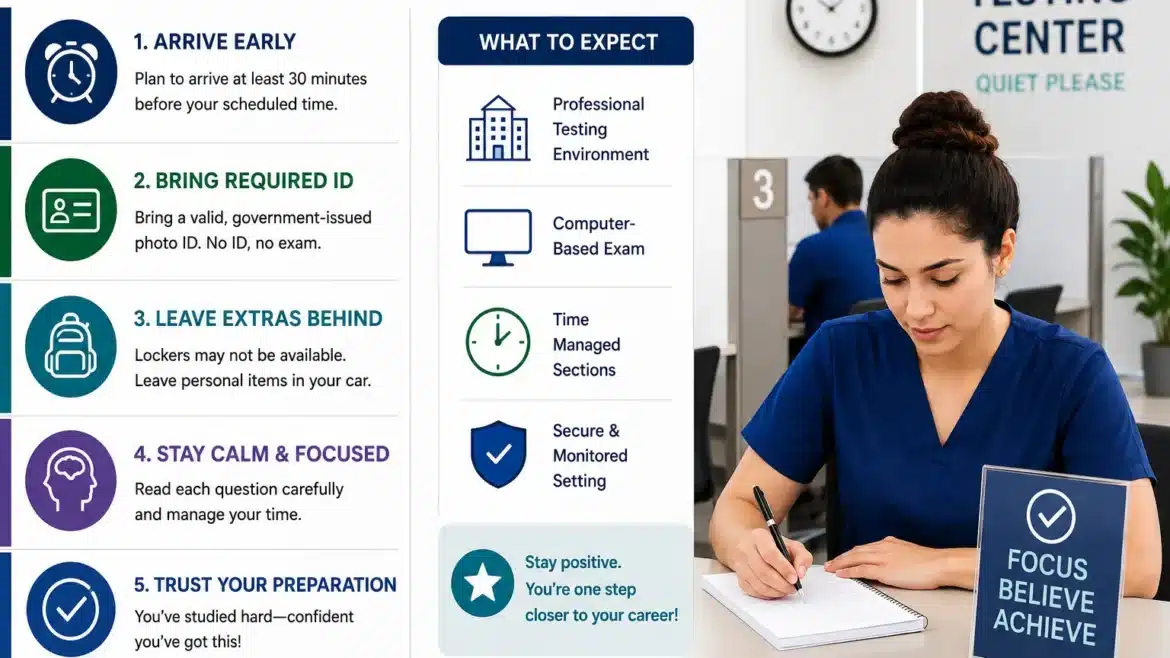
- What to bring and what not to bring
- How to manage time during the exam
- How to control anxiety and stay focused
What Happens When You Arrive at the Testing Center
On exam day, you will first go through a check-in process. This usually includes identity verification, security checks, and instructions from the test center staff.
You may be required to store personal items such as bags, phones, and notes in a locker before entering the exam room.
After check-in, you will be guided to your computer-based testing station where your CCMA exam will take place.
Everything is designed to ensure fairness, security, and a distraction-free environment.
Why Exam Day Feels More Stressful Than Practice
Many students feel nervous even if they have prepared well. This happens because the exam environment creates pressure that is very different from studying at home.
You are sitting in a quiet room, surrounded by strict rules, with a timer running on the screen. This can increase stress if you are not mentally prepared for it.
The good news is that familiarity reduces anxiety. The more you understand the process, the more confident you will feel on exam day.
What the CCMA Exam Environment Is Like
The CCMA exam is usually taken on a computer in a controlled testing center environment. The room is quiet, monitored, and designed to prevent distractions.
You will typically be seated at an individual workstation with headphones or a divider between candidates.
The goal is to create a standardized testing experience for all students.
How to Manage Your Time During the CCMA Exam
Time management is one of the most overlooked parts of exam day performance. Many students enter the testing room well-prepared, but still struggle because they spend too long on a few difficult questions.
The CCMA exam is designed to test both knowledge and decision-making under pressure, which means pacing is just as important as understanding the material.
A smart approach is to move through the questions steadily instead of getting stuck early in the test.
Simple Exam Timing Strategy:
- Answer easy questions first to build confidence
- Flag difficult questions and return later
- Avoid spending too long on a single item
- Keep checking your progress calmly
Understanding the Type of Questions You Will Face
Many students feel anxious because they are unsure what the questions will actually look like on exam day.
In reality, the CCMA exam includes a mix of clinical, administrative, and patient-care scenarios that reflect real healthcare situations.
Some questions may test basic knowledge, while others require applying concepts to real-life medical situations involving patients, safety, or procedures.
If you want a clearer breakdown of topics and question areas, reviewing this detailed CCMA exam content overview can help you understand exactly what to expect in each section.
Why Preparation Strategy Matters on Exam Day
Strong exam performance is not just about what you know, but also about how well you prepared in advance.
Students who follow a structured study plan tend to feel more confident and less stressed when facing timed questions.
Good preparation builds familiarity with question patterns, improves recall speed, and reduces panic during difficult sections.
Many successful candidates use structured preparation methods such as a focused 30-day CCMA preparation routine with daily study goals to stay consistent and organized before exam day.
How Stress Can Affect Your Performance
Even well-prepared students can lose marks if they become too stressed during the exam.
Stress can lead to rushing, second-guessing answers, or misreading questions.
The key is to stay calm, focus on one question at a time, and avoid thinking about the entire exam all at once.
Controlled breathing and steady pacing can make a big difference in overall performance.
What to Bring to the Testing Center
One of the easiest ways to reduce stress on exam day is preparing everything the night before.
Many students become anxious simply because they are rushing in the morning or worrying about missing documents.
Before leaving for the testing center, make sure you have:
- A valid government-issued photo ID
- Your exam appointment confirmation
- Basic understanding of testing center rules
Most testing centers do not allow personal items such as phones, bags, notes, or study guides inside the exam room.
Arriving early can also help you settle mentally before the exam begins.
Why Confidence Improves Performance
Students often believe success depends only on knowledge, but confidence plays a major role during timed healthcare exams.
When candidates panic, they tend to overthink questions, change correct answers unnecessarily, and lose valuable time.
Meanwhile, students who stay calm usually think more clearly and make better clinical decisions throughout the exam.
Ways to Stay Mentally Focused:
- Read every question carefully
- Do not panic over difficult questions
- Maintain steady pacing
- Trust your preparation
- Focus only on the current question
How CCMA Certification Impacts Career Opportunities
For many students, exam day represents more than just passing a test. It is the beginning of a professional healthcare career with long-term growth opportunities.
Certified medical assistants work in clinics, urgent care centers, hospitals, and specialty healthcare environments across the United States.
Many students preparing for the exam are also interested in future salary potential and workplace opportunities. This detailed guide on CCMA salary ranges and medical assistant job roles by state explains how earnings and responsibilities can vary across different healthcare settings.
Why Employers Value Certified Candidates
Healthcare employers prefer candidates who already understand patient care standards, clinical workflows, and healthcare professionalism.
Certification helps demonstrate that a candidate has completed structured preparation and understands essential healthcare responsibilities.
If you want to better understand the hiring advantages certification provides, this guide explaining why employers often choose certified medical assistants first breaks down the real workplace value of becoming certified.
Understanding Your Long-Term Career Path
Exam day can feel stressful, but it is important to remember that certification is only the beginning of the journey.
Medical assisting offers opportunities for career growth, specialization, and long-term healthcare experience.
Students who want a broader understanding of daily responsibilities, workplace environments, and future opportunities can explore this complete career guide for future CCMA professionals to better understand how the profession works beyond the exam itself.
Choosing the Right Certification Direction
Some students preparing for the CCMA exam may still be comparing certification pathways and wondering how CCMA differs from other medical assistant credentials.
Understanding these differences can help students feel more confident about their long-term healthcare direction.
If you are comparing certification options, this detailed breakdown of CCMA and CMA career path differences explains how each certification aligns with different career goals and workplace environments.
Many students feel far more comfortable on exam day after practicing with realistic CCMA study Questions because it helps them get familiar with timing pressure, question wording, and mixed clinical scenarios before entering the actual testing center.
Final Thoughts
The CCMA testing center experience can feel intimidating at first, but preparation and familiarity make a major difference.
Students who understand the testing process, practice under realistic conditions, and stay calm during the exam often perform much better overall.
Exam day is not about perfection. It is about staying focused, managing time wisely, and trusting the preparation work you already completed.
With the right mindset and strategy, students can enter the testing center with greater confidence and leave knowing they gave themselves the best chance to succeed.
Frequently Asked Questions (FAQs)
How early should I arrive at the CCMA testing center?
Arriving at least 30 minutes early is usually recommended to complete check-in procedures calmly without unnecessary stress.
What should I avoid doing before the exam?
Avoid last-minute cramming, staying up late, and increasing anxiety by overstudying the night before the exam.
Are CCMA testing centers strict?
Yes. Testing centers follow strict security and identification procedures to maintain fairness and exam integrity.
Can anxiety affect CCMA exam performance?
Absolutely. Stress and panic can affect focus, timing, and decision-making during the exam, even for prepared students.
What is the best way to feel more confident on exam day?
Practicing realistic exam questions, understanding the testing environment, and maintaining steady preparation routines can significantly improve confidence.