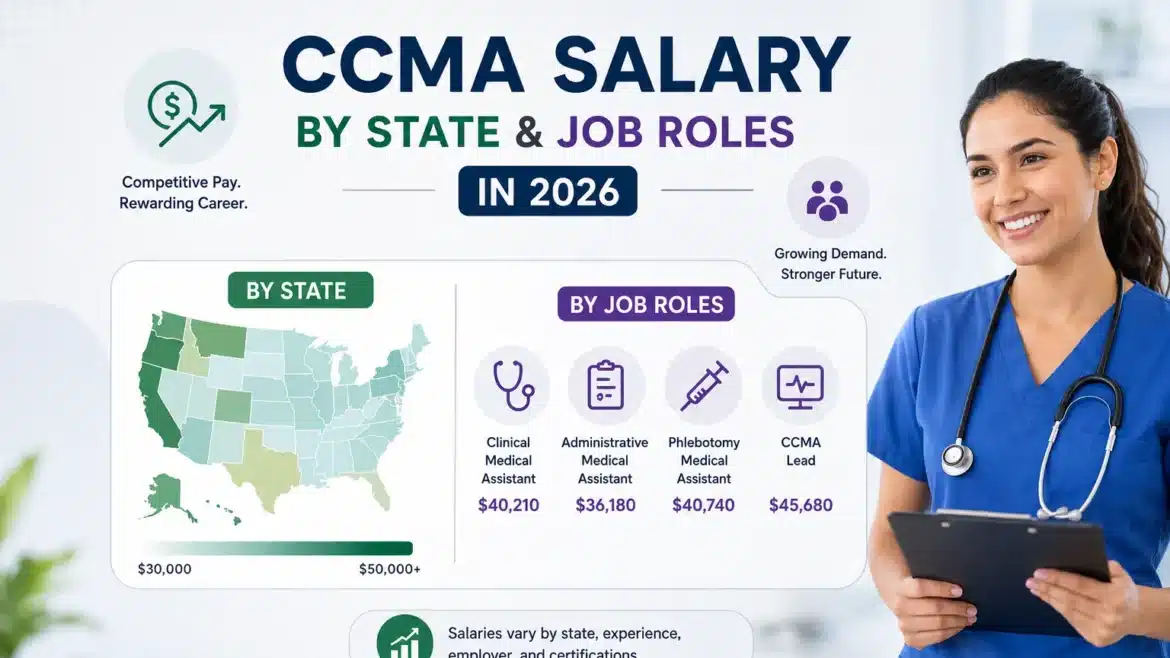

Key Factors That Affect CCMA Salary:
- State and city location
- Years of experience
- Type of healthcare facility
- Specialization or department
- Certification and additional skills
What Is the Average CCMA Salary in the USA?
Across the United States, certified medical assistants earn a wide salary range depending on their work environment and experience level.
On average, entry-level CCMAs typically start at a lower hourly wage, while experienced professionals working in specialized clinics or hospitals earn significantly more.
In general, CCMA professionals benefit from stable income growth as they gain hands-on experience and develop stronger clinical skills.
Many employers also offer additional benefits such as health insurance, paid leave, retirement plans, and overtime opportunities, which increase overall compensation value beyond base salary.
Why Salary Varies So Much by State
One of the most important factors affecting CCMA income is geographic location. Healthcare wages are heavily influenced by cost of living, demand for medical staff, and state-level healthcare infrastructure.
For example, urban states with large hospital systems and high patient volume often pay more than rural areas with smaller clinics.
At the same time, competition in high-paying states may also be stronger, requiring more experience or additional skills.
CCMA Salary Overview Table (USA)
| Experience Level | Average Hourly Pay | Annual Salary Range |
|---|---|---|
| Entry-Level (0–1 year) | $14 – $18 | $28,000 – $36,000 |
| Mid-Level (2–5 years) | $18 – $23 | $36,000 – $47,000 |
| Experienced (5+ years) | $23 – $30+ | $47,000 – $60,000+ |
These ranges may vary depending on state laws, healthcare demand, and employer size.
Highest Paying States for CCMA Professionals
Some states consistently offer higher salaries for medical assistants due to stronger healthcare systems and higher living costs.
While opportunities exist nationwide, certain regions stand out for better compensation and career growth potential.
- California
- Washington
- Massachusetts
- New York
- Alaska
- Oregon
These states often provide higher pay but may also require more competitive hiring standards and experience.
Entry-Level vs Experienced CCMA Salary
One of the biggest changes in CCMA earnings happens as professionals gain experience in real clinical environments.
Entry-level medical assistants usually focus on basic patient care, administrative support, and learning clinic workflows.
As experience increases, responsibilities expand into more advanced clinical support tasks, specialty procedures, and leadership roles within healthcare teams.
This natural career progression leads to higher earning potential over time.
CCMA Job Roles and Where You Can Work
CCMA certification does not limit you to a single type of job. In fact, one of the biggest advantages of becoming a certified medical assistant is the variety of healthcare environments where you can work.
Certified professionals are needed in clinics, hospitals, private practices, urgent care centers, and specialty departments. Each workplace comes with slightly different responsibilities and pay structures.
In smaller clinics, medical assistants often handle both clinical and administrative tasks. In larger hospitals, roles are usually more specialized and structured.
Common CCMA Job Roles in Healthcare
After certification, most students enter one of the following job roles depending on their interests and workplace demand:
- Clinical Medical Assistant
- Administrative Medical Assistant
- Patient Care Technician Assistant
- Urgent Care Assistant
- Specialty Clinic Assistant (Cardiology, Dermatology, Pediatrics)
- Outpatient Care Assistant
Each role may slightly differ in responsibilities, but all contribute directly to patient care and healthcare operations.
Clinic vs Hospital Salary Differences
Where you work plays a major role in how much you earn as a CCMA professional.
Clinics often provide stable schedules and consistent patient flow, while hospitals may offer higher salaries due to more complex cases and shift-based work environments.
| Work Setting | Salary Trend | Work Style |
|---|---|---|
| Private Clinics | Moderate | Regular hours, stable routine |
| Hospitals | Higher potential | Shift-based, fast-paced |
| Specialty Centers | Above average | Focused clinical work |
Why Certified Medical Assistants Earn More
Certification directly impacts salary potential because employers trust certified candidates more in clinical environments.
Certified professionals are usually preferred because they require less training, demonstrate verified knowledge, and understand healthcare safety standards.
This hiring advantage is one reason many employers actively choose certified candidates over non-certified applicants when offering higher-paying positions.
In fact, understanding why healthcare employers prioritize certified medical assistants helps explain why certification often leads to better salary offers and faster hiring opportunities.
Career Growth and Long-Term Salary Potential
CCMA salary does not stay fixed. With experience, professionals often move into higher-paying roles with additional responsibilities.
Some medical assistants eventually transition into leadership positions, specialty clinics, or advanced healthcare support roles.
This progression significantly increases earning potential over time, especially for those who continue gaining clinical experience.
Understanding different certification paths also plays a role in long-term income growth. Many students compare options before entering the field, and this guide on CCMA vs CMA certification differences and career outcomes helps clarify which path may offer better opportunities depending on career goals.
How Career Direction Affects Salary Growth
Your long-term earnings depend not only on where you start but also on how you grow in your career.
Some professionals choose to specialize in high-demand areas such as cardiology, dermatology, or surgical support, which can lead to higher compensation.
Others focus on administrative leadership or patient coordination roles within larger healthcare systems.
To better understand how medical assistants progress over time and what career paths are available after certification, this detailed CCMA career roadmap for healthcare professionals provides a clear breakdown of job growth and real-world responsibilities.
Final Insight on CCMA Salary Growth
CCMA salary is not just about starting pay—it is about long-term opportunity.
With experience, specialization, and continued learning, medical assistants can steadily increase their income while building a stable healthcare career.
For most students, certification is the first step toward a career that offers both financial stability and professional growth in the healthcare industry.
Factors That Increase CCMA Salary Over Time
CCMA salary is not fixed permanently. Many medical assistants see steady income growth as they gain real clinical experience and expand their skill set within healthcare environments.
Employers often reward professionals who demonstrate reliability, accuracy, and strong patient care skills with higher pay and better roles.
Some of the most important factors that influence salary growth include:
- Years of hands-on clinical experience
- Specialization in high-demand medical departments
- Additional certifications or skills
- Ability to handle both clinical and administrative duties
- Performance and patient care quality
How Exam Preparation Impacts Future Earnings
Many students do not realize that the way they prepare for the CCMA exam can directly influence their long-term career performance.
The certification exam is not just a test—it reflects real healthcare responsibilities such as patient safety, clinical decision-making, and medical documentation.
Students who prepare deeply often enter the workforce with stronger confidence and better practical understanding, which can positively affect job performance and future salary growth.
To understand exactly what topics influence both exam success and workplace readiness, this detailed breakdown of what is included in the CCMA exam syllabus and structure helps students prepare more strategically.
Common Mistakes That Can Affect Career Progress
Some students underestimate how important preparation quality is for both exam success and long-term career outcomes.
Poor preparation habits during the certification stage can lead to weaker understanding of clinical concepts, which may later affect workplace performance and confidence.
Common Mistakes Students Make:
- Relying only on memorization instead of understanding
- Ignoring weak subjects during preparation
- Not practicing timed exam questions
- Skipping clinical scenario practice
- Underestimating infection control importance
These mistakes not only affect exam performance but can also limit confidence when starting a healthcare job for the first time.
Many of these issues are avoidable when students understand early what actually causes exam failure. This guide on common CCMA exam mistakes students should avoid explains the preparation errors that most often lead to poor results.
Why Strong Exam Preparation Builds Better Professionals
Students who prepare properly for the CCMA exam often enter the workforce with stronger clinical awareness and better decision-making skills.
This is because effective preparation builds habits like attention to detail, structured thinking, and the ability to handle pressure in healthcare environments.
These skills directly translate into better job performance, which can positively influence long-term salary growth and career advancement opportunities.
Long-Term Salary Growth Potential
CCMA professionals often see salary improvements over time as they gain experience and take on more responsibilities.
Some move into specialized clinical roles, while others advance into supervisory or administrative positions within healthcare organizations.
With continued learning and experience, many medical assistants build stable, long-term healthcare careers with steady income growth.
Final Thoughts on CCMA Salary and Career Value
CCMA salary in the United States varies widely based on location, experience, and workplace setting, but the overall career path remains stable and growing.
Certification provides a strong foundation for entering the healthcare field, improving job opportunities, and building long-term professional growth.
For students willing to invest time in proper preparation and skill development, medical assisting offers both financial stability and meaningful career opportunities in patient care.
How Practice Preparation Impacts Real Salary Growth
Many students underestimate how much strong exam preparation influences long-term career success. While salary depends on experience and location, employers often notice how prepared a candidate is during early job performance.
Students who practice consistently before certification tend to enter the workforce with better clinical confidence, faster decision-making skills, and stronger accuracy in patient-related tasks.
This is why hands-on preparation is often just as important as classroom learning when building a healthcare career.
Why Practice Matters for Career Growth:
- Improves clinical decision-making speed
- Builds real exam confidence
- Reduces workplace errors
- Strengthens patient care skills
- Helps transition smoothly into job roles
Many students improve their readiness using structured preparation tools like CCMA questions for Exam Success, which help them understand real exam patterns and clinical scenarios before entering the workforce.
Salary Growth and Real-World Skill Development
CCMA professionals who continuously improve their skills often see better salary progression over time. Employers value individuals who not only pass certification exams but also demonstrate ongoing learning and adaptability.
As healthcare systems evolve, certified medical assistants who stay updated with clinical procedures and patient care standards often qualify for better positions and increased pay opportunities.
Frequently Asked Questions (FAQs)
Can better exam scores affect job offers?
In some cases, yes. Strong preparation often improves interview confidence and can help candidates stand out during hiring processes.
How important is hands-on practice for CCMA careers?
Very important. Practical understanding of clinical tasks improves job performance, which can support long-term salary growth.
Do employers prefer candidates with strong exam preparation?
Yes. Well-prepared candidates usually adapt faster to healthcare environments and require less initial training.
What is the best way to improve CCMA career growth?
Gaining experience, improving clinical skills, and staying consistent with learning are key factors for long-term salary growth in this field.