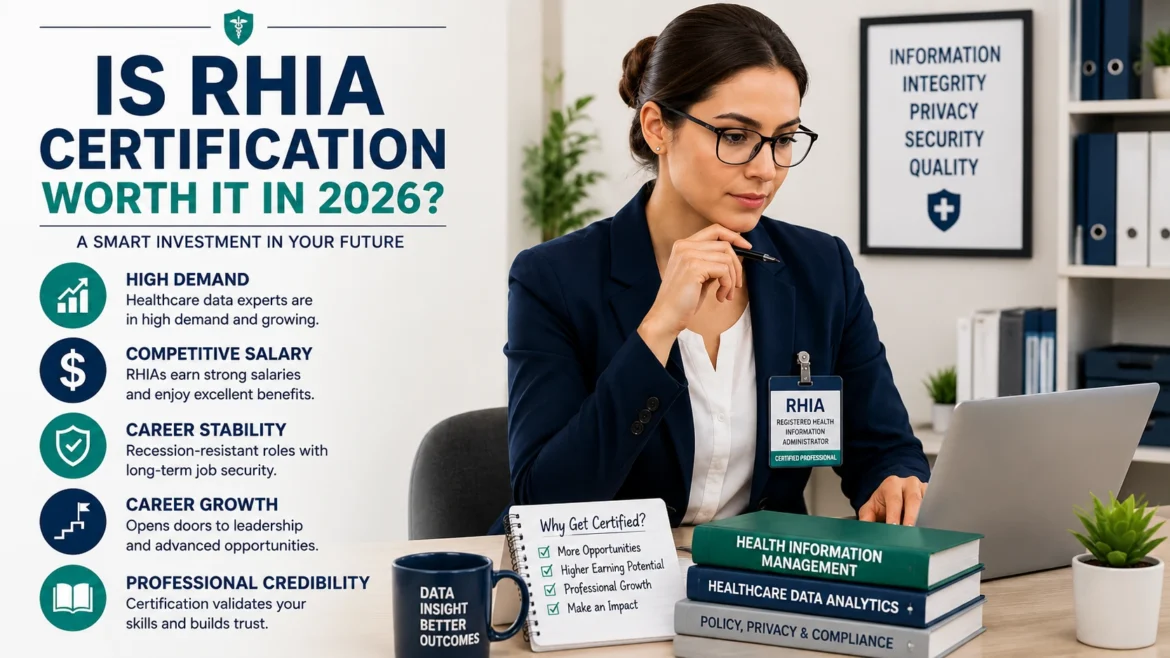

Some students are attracted to RHIA because they want leadership-oriented healthcare careers without direct bedside patient care responsibilities.
Others are interested in:
- Healthcare operations
- Healthcare technology
- Compliance systems
- Healthcare leadership pathways
- Information management careers
At the same time, students also worry about:
- Career stability
- Job demand
- Technology changes
- Certification difficulty
- Long-term healthcare opportunities
Quick RHIA Career Snapshot
| Area | RHIA Career Outlook |
|---|---|
| Industry Focus | Healthcare information management and leadership |
| Work Environment | Hospitals, healthcare systems, insurance organizations, compliance departments |
| Key Strength Areas | Leadership, systems management, compliance, healthcare operations |
| Technology Connection | Electronic records, healthcare analytics, information governance |
Healthcare Is Becoming More Information-Driven
One reason RHIA careers continue attracting attention is because healthcare systems now depend heavily on organized digital information.
Modern healthcare organizations manage:
- Electronic health records
- Healthcare analytics systems
- Compliance reporting
- Patient-data security
- Documentation accuracy standards
- Operational healthcare workflows
As healthcare grows more digital and data-focused, organizations increasingly need professionals who understand how healthcare information systems operate efficiently and safely.
Healthcare Industry Trend:
Healthcare organizations are relying more heavily on structured information systems, compliance oversight, and healthcare data management than ever before.
RHIA Careers Feel Different From Many Healthcare Roles
RHIA careers usually appeal to students who enjoy leadership, organization, systems thinking, and operational problem-solving more than direct clinical treatment.
Unlike some healthcare careers focused primarily on bedside care, RHIA pathways often involve:
- Healthcare operations
- Compliance management
- Information governance
- Documentation quality oversight
- Healthcare-system coordination
This creates a healthcare career path that combines healthcare knowledge with leadership and technology-focused responsibilities.
Why Some Students Believe RHIA Is Worth Pursuing
Many students view RHIA as valuable because it connects healthcare knowledge with long-term operational and leadership opportunities inside healthcare systems.
Students are often attracted to:
- Healthcare leadership potential
- Growing healthcare technology integration
- Operational healthcare roles
- Compliance and governance careers
- Structured professional environments
For detail-oriented students interested in healthcare systems rather than direct bedside care, RHIA may provide a strong long-term professional direction.
RHIA Preparation Requires Serious Commitment
Students should also understand realistically that RHIA certification preparation involves more than memorization alone.
The certification often requires understanding:
- Healthcare systems
- Compliance concepts
- Healthcare operations
- Information-management workflows
- Leadership-oriented problem solving
Many students preparing for healthcare information leadership roles improve confidence using realistic RHIA exam-style scenarios and practice questions because exposure to healthcare-information workflows and operational situations helps concepts feel more practical before the certification exam.
Why Healthcare Employers Value RHIA Professionals
Healthcare organizations rely heavily on accurate information systems to support patient care, compliance, reporting, reimbursement, and operational decision-making.
Because of this, employers often value professionals who understand:
- Healthcare documentation systems
- Compliance management
- Operational healthcare workflows
- Information governance
- Healthcare data accuracy
RHIA professionals may help healthcare systems improve organization, reduce documentation problems, support regulatory standards, and coordinate information-management processes across departments.
Important Career Perspective:
Modern healthcare organizations increasingly depend on professionals who understand how healthcare information systems affect operations, compliance, communication, and patient-care coordination.
How Technology Is Changing Healthcare Information Careers
Healthcare systems are rapidly becoming more digital, data-driven, and technology-focused.
Organizations now rely on:
- Electronic health records
- Healthcare analytics platforms
- Digital documentation systems
- Compliance tracking software
- Healthcare information-security systems
This technological growth increases the importance of professionals who understand how healthcare information systems operate across complex healthcare environments.
| Healthcare Trend | Why RHIA Roles Matter |
|---|---|
| Electronic Records Expansion | Healthcare systems require stronger information oversight and governance |
| Healthcare Compliance Growth | Organizations need professionals who understand documentation standards and reporting systems |
| Healthcare Data Analytics | Accurate healthcare information supports operational and strategic decision-making |
| Healthcare System Integration | RHIA professionals help coordinate organized information across departments and systems |
Source: General healthcare information management operational trends and healthcare technology developments.
What Students Often Misunderstand About RHIA Careers
Some students incorrectly assume RHIA work involves only repetitive administrative tasks or paperwork.
In reality, many RHIA roles involve:
- Leadership responsibilities
- Healthcare operational coordination
- Compliance oversight
- Healthcare reporting systems
- Documentation quality management
Healthcare systems rely heavily on organized information because operational efficiency and patient-care coordination depend on accurate communication across departments.
Why RHIA May Not Be the Right Fit for Everyone
Although RHIA careers offer strong healthcare opportunities, the pathway may not match every student’s interests or personality.
Students seeking careers focused primarily on:
- Direct bedside treatment
- Hands-on clinical procedures
- Emergency patient interaction
- Constant face-to-face patient care
may ultimately prefer more clinically focused healthcare careers instead.
RHIA careers usually fit students who enjoy structured systems, healthcare operations, organization, leadership, and analytical problem-solving.
Helpful Career Insight:
Students who enjoy systems thinking, healthcare operations, leadership responsibilities, and organized workflows often adapt well to RHIA environments.
Why RHIA Careers May Continue Growing
Healthcare organizations continue expanding digital systems, healthcare analytics, compliance requirements, and operational reporting processes.
This ongoing growth increases the need for professionals who understand:
- Healthcare information governance
- Documentation quality systems
- Operational healthcare workflows
- Healthcare compliance management
- Data organization and reporting
As healthcare systems become more technology-driven, healthcare information leadership remains increasingly connected to the future of organized healthcare operations.
What Makes RHIA Different From Many Certifications?
One reason some students view RHIA as a strong long-term healthcare credential is because it combines multiple professional areas together instead of focusing on only one narrow skill set.
RHIA careers often involve:
- Healthcare systems
- Leadership responsibilities
- Compliance oversight
- Information management
- Healthcare operations
- Technology-driven workflows
This broader operational focus makes RHIA feel very different from many certifications centered only on direct clinical procedures or technical tasks.
Healthcare Industry Reality:
As healthcare systems become larger and more digitally connected, organizations increasingly depend on professionals who can manage healthcare information accurately and strategically.
How RHIA Careers Connect to Healthcare Leadership
Many RHIA professionals eventually work in positions involving coordination, administration, reporting oversight, or healthcare operations management.
Depending on the organization, responsibilities may involve:
- Managing health information departments
- Improving documentation quality systems
- Supporting healthcare audits
- Monitoring compliance procedures
- Coordinating healthcare reporting workflows
This leadership-oriented direction is one reason RHIA attracts students interested in long-term healthcare operational growth.
Can Healthcare Technology Replace RHIA Roles?
Some students worry that automation or artificial intelligence could eventually reduce the importance of healthcare information management careers.
However, healthcare systems still require professionals who understand:
- Healthcare compliance
- Documentation standards
- Patient-information governance
- Operational healthcare workflows
- Healthcare communication systems
Technology may change how information is processed, but healthcare organizations still depend on trained professionals to oversee information accuracy, compliance, and operational coordination.
| Healthcare Need | Why Human Oversight Still Matters |
|---|---|
| Compliance Oversight | Healthcare regulations require organized human review and governance |
| Documentation Quality | Healthcare systems still depend on accurate and coordinated information management |
| Operational Coordination | Healthcare departments require organized communication and reporting systems |
| Patient Information Security | Healthcare organizations must maintain structured information governance and protection |
Source: General healthcare information governance and operational healthcare management principles.
What Students Should Understand Before Pursuing RHIA
Students considering RHIA certification should approach the field realistically.
Healthcare information management involves much more than memorizing terminology or handling paperwork.
The profession often requires:
- Analytical thinking
- Leadership skills
- Attention to detail
- Healthcare-system understanding
- Organizational communication
Students who genuinely enjoy healthcare systems and operational environments often feel much more satisfied long term within RHIA pathways.
Helpful Preparation Advice
Many students improve RHIA confidence faster when they stop viewing preparation as simple memorization and begin understanding how healthcare systems function together operationally.
Realistic healthcare-information scenarios often help students understand:
- Documentation workflows
- Compliance processes
- Healthcare communication systems
- Operational reporting structures
- Healthcare-information governance
This broader understanding usually makes certification preparation feel more practical and less overwhelming.
Students who better understand how RHIA professionals manage healthcare information systems and operational workflows often approach certification preparation with stronger long-term career perspective and more realistic expectations about the field.
Final Thoughts
For students interested in healthcare leadership, operational systems, healthcare technology, compliance management, and information governance, RHIA certification may offer meaningful long-term career opportunities within modern healthcare environments.
Healthcare systems continue becoming more digital, more data-driven, and more operationally complex every year.
Because of this, professionals who understand healthcare information management, compliance systems, documentation quality, and operational coordination are likely to remain increasingly valuable across hospitals, healthcare systems, insurance organizations, and healthcare technology environments.
RHIA may not fit every student equally well, but for individuals who enjoy healthcare operations, organization, systems thinking, and leadership-focused environments, the certification can represent a strong and future-oriented healthcare career pathway.