
Doctors immediately review the patient’s electronic health record to identify allergies, medications, previous conditions, and treatment history before making urgent medical decisions.
Now imagine if part of that information is incomplete, outdated, or documented incorrectly.
Even small healthcare-information errors can create serious operational and patient-safety consequences across modern healthcare systems.
This is one reason healthcare data accuracy has become increasingly important throughout hospitals, clinics, insurance organizations, and healthcare networks.
Why Accurate Healthcare Information Matters
- Supports safer patient-care decisions
- Improves communication between healthcare teams
- Helps maintain compliance standards
- Supports healthcare reporting systems
- Reduces operational documentation problems
- Improves healthcare-system efficiency
Modern Healthcare Depends on Digital Information
Healthcare systems today generate enormous amounts of digital information every day.
Hospitals and healthcare organizations manage:
- Electronic health records
- Patient documentation
- Medication histories
- Compliance reports
- Healthcare analytics systems
- Insurance and reimbursement documentation
As healthcare becomes increasingly digital, information accuracy becomes deeply connected to patient safety, operational coordination, and healthcare-system reliability.
Healthcare Reality:
Modern healthcare systems rely heavily on accurate information to coordinate communication, treatments, compliance processes, and operational decision-making across departments.
How Small Documentation Errors Create Bigger Problems
Some healthcare-information problems begin as small documentation mistakes that later affect larger healthcare processes.
| Small Documentation Issue | Possible Larger Impact |
|---|---|
| Incorrect allergy information | Medication safety risks during treatment |
| Incomplete patient documentation | Communication problems between departments |
| Coding inaccuracies | Billing and reimbursement complications |
| Missing compliance documentation | Audit and regulatory concerns |
Source: General healthcare documentation and health information management operational principles.
Why Healthcare Communication Depends on Accurate Records
Modern healthcare involves communication between multiple departments, professionals, and systems.
Doctors, nurses, specialists, pharmacies, billing departments, and healthcare administrators often rely on shared healthcare information to coordinate care and operations.
When healthcare records contain errors or inconsistencies, communication problems may affect:
- Treatment coordination
- Medication management
- Healthcare reporting
- Operational workflows
- Patient-care continuity
Accurate documentation helps healthcare organizations maintain safer and more organized healthcare environments.
Why Healthcare Information Careers Matter More Today
As healthcare systems become more digital and data-driven, healthcare organizations increasingly depend on professionals who understand:
- Information governance
- Documentation quality
- Healthcare compliance
- Electronic health-record systems
- Operational healthcare workflows
Students who understand how RHIA professionals support healthcare systems behind the scenes often realize that organized healthcare information affects far more than paperwork alone.
Many students preparing for healthcare information leadership roles improve confidence using RHIA practice scenarios questions focused on healthcare operations and documentation systems because realistic exposure helps operational workflows and compliance concepts feel more practical before certification preparation.
Why Compliance Depends on Accurate Healthcare Data
Healthcare organizations must follow strict standards involving documentation quality, patient privacy, reporting accuracy, and healthcare information security.
Accurate healthcare data helps organizations:
- Maintain regulatory compliance
- Prepare for audits
- Support reimbursement systems
- Protect patient information
- Reduce operational risks
Even small documentation inconsistencies can create larger compliance concerns when healthcare systems manage thousands of patient records daily.
Important Operational Reality:
Healthcare organizations depend on organized documentation not only for patient care, but also for compliance, reporting, operational coordination, and financial accuracy.
Electronic Health Records Increased the Importance of Data Accuracy
Electronic health records transformed how healthcare information moves through hospitals and healthcare systems.
Today, healthcare professionals often rely on digital systems to:
- Review patient histories
- Coordinate treatments
- Track medications
- Monitor healthcare documentation
- Support healthcare analytics
Because information now travels rapidly between departments and systems, documentation accuracy becomes even more important throughout modern healthcare environments.
| Healthcare Area | Why Accurate Data Matters |
|---|---|
| Patient Care Coordination | Medical teams rely on consistent healthcare information across departments |
| Healthcare Reporting | Reliable documentation supports organized operational reporting systems |
| Insurance and Billing | Accurate records support smoother reimbursement and claims processes |
| Compliance Audits | Healthcare systems must maintain secure and organized documentation standards |
Source: General healthcare information management and healthcare compliance operational standards.
How Data Accuracy Supports Patient Safety
Many people assume healthcare data management affects only administrative systems.
In reality, organized and accurate healthcare information directly supports patient safety throughout healthcare environments.
Healthcare teams rely on accurate information to:
- Review allergies and medications
- Track treatments and procedures
- Coordinate care between specialists
- Monitor patient histories
- Reduce communication errors
As healthcare systems become more complex, organized information management remains deeply connected to safer healthcare delivery.
Why Healthcare Data Careers Continue Growing
Healthcare organizations continue expanding digital systems, analytics platforms, compliance programs, and operational reporting structures.
This growth increases demand for professionals who understand:
- Healthcare information governance
- Documentation quality systems
- Healthcare operations
- Compliance procedures
- Electronic healthcare systems
Students considering healthcare information pathways often begin seeing stronger long-term value once they understand why RHIA careers remain increasingly relevant within modern healthcare systems as hospitals and organizations continue relying more heavily on structured healthcare information and operational coordination.
Healthcare Trend:
As healthcare systems become more digital and data-driven, organized healthcare-information leadership remains increasingly important for operational success and patient-care coordination.
Why Healthcare Information Errors Are Difficult to Manage
Healthcare systems process enormous amounts of information every day across multiple departments, providers, and digital platforms.
Because of this complexity, even small documentation problems can spread quickly throughout healthcare operations if not identified early.
Healthcare organizations must manage:
- Patient records
- Clinical documentation
- Insurance information
- Compliance reporting
- Healthcare analytics systems
- Operational communication workflows
This is one reason healthcare organizations place increasing importance on organized information governance and documentation quality systems.
Operational Challenge:
In large healthcare systems, inaccurate information can affect multiple departments simultaneously because modern healthcare environments rely heavily on connected digital systems.
How Healthcare Data Supports Better Decision-Making
Healthcare organizations use information systems not only for patient records, but also for operational planning, reporting, compliance monitoring, and healthcare analytics.
Reliable healthcare data helps organizations:
- Improve operational efficiency
- Identify documentation issues
- Support healthcare reporting
- Monitor compliance standards
- Coordinate healthcare services
Without organized and accurate information, healthcare systems become much more difficult to manage effectively.
| Healthcare Function | Role of Accurate Information |
|---|---|
| Patient Coordination | Supports communication between healthcare teams and departments |
| Operational Planning | Helps healthcare organizations manage workflows and reporting systems |
| Compliance Oversight | Supports accurate documentation and regulatory preparation |
| Healthcare Analytics | Reliable information improves organizational analysis and decision-making |
Source: General healthcare information management and operational healthcare workflow principles.
Why Healthcare Information Leadership Is Becoming More Valuable
Healthcare organizations continue expanding digital systems, operational analytics, compliance requirements, and information-management infrastructure.
As healthcare grows more technology-driven, organizations increasingly need professionals who understand:
- Healthcare documentation systems
- Operational healthcare workflows
- Information governance
- Healthcare compliance standards
- Data-management coordination
Healthcare information leadership now plays a much larger role in operational healthcare success than many people realize.
Future Healthcare Trend:
As healthcare technology continues evolving, organized healthcare information and operational data management will likely become even more important across hospitals and healthcare systems.
Why Students Are Becoming More Interested in Healthcare Information Careers
Some students want healthcare careers connected to technology, operations, analytics, and healthcare systems rather than direct bedside treatment roles.
Healthcare information pathways often appeal to students interested in:
- Healthcare operations
- Compliance systems
- Leadership environments
- Healthcare technology
- Documentation quality systems
As healthcare systems continue becoming more digitally connected, these operational healthcare roles are gaining increasing importance throughout the industry.
Final Thoughts
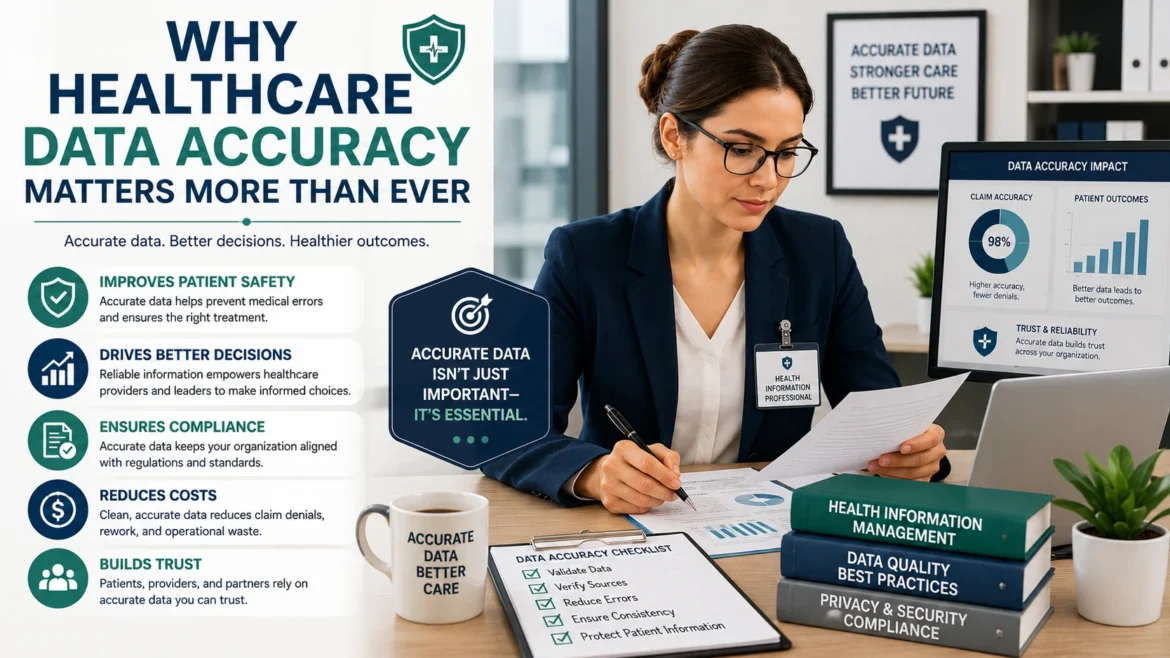
Healthcare data accuracy matters more than ever because modern healthcare systems depend heavily on organized information to support patient care, compliance, communication, operational coordination, and healthcare decision-making.
Even small documentation problems can create larger operational consequences when healthcare environments rely on connected digital systems across multiple departments and workflows.
As healthcare technology continues expanding, healthcare organizations increasingly depend on professionals who understand healthcare information governance, documentation quality, operational systems, and compliance management.
Accurate healthcare information is no longer simply an administrative responsibility — it has become a foundational part of how modern healthcare systems operate safely and efficiently.