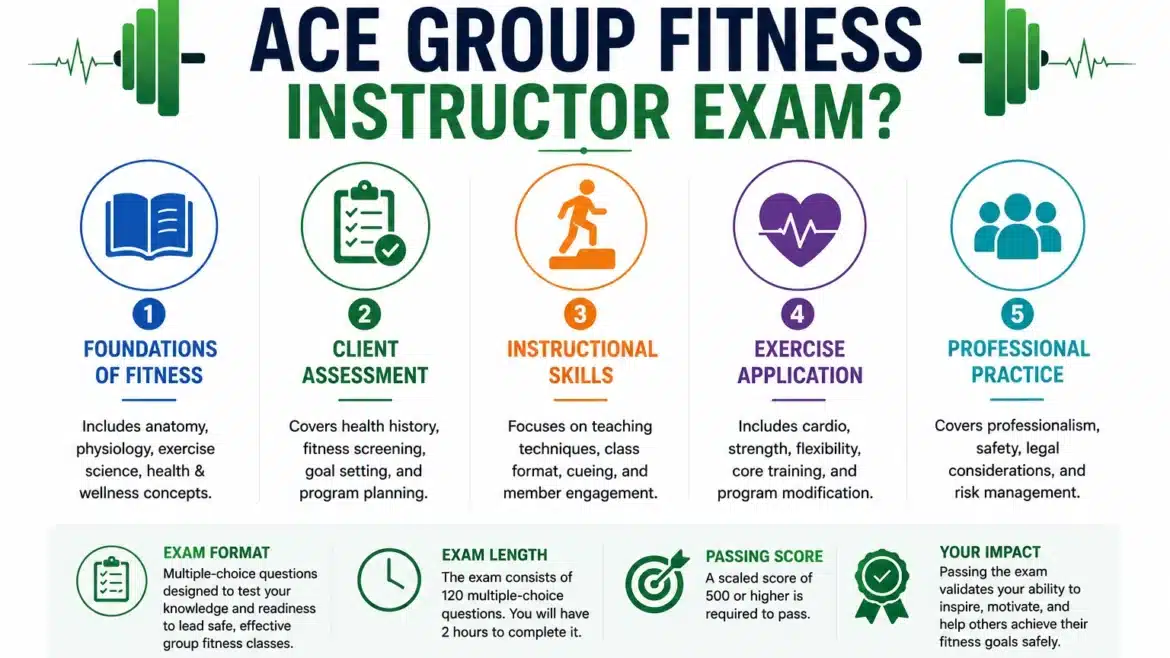

Students are tested on exercise science fundamentals, class design, coaching techniques, participant safety, communication skills, and professional responsibilities.
Understanding the structure of the exam early helps students study more strategically and avoid wasting time on low-priority topics.
Main Areas Covered on the ACE Group Fitness Instructor Exam:
- Exercise science fundamentals
- Class design and structure
- Movement safety and technique
- Coaching and cueing skills
- Participant motivation
- Professional responsibilities
- Emergency and safety awareness
What Exactly Is the ACE Group Fitness Instructor Certification?
The ACE Group Fitness Instructor certification is designed for individuals who want to lead group exercise classes professionally in gyms, fitness studios, recreation centers, and wellness facilities.
Unlike personal training, group fitness instruction focuses heavily on leading multiple participants at once while maintaining class safety, motivation, organization, and energy.
Certified instructors must understand how to communicate clearly, adapt workouts for different fitness levels, and create positive exercise experiences for participants.
Because group fitness environments move quickly, instructors must combine technical fitness knowledge with leadership and communication skills.
Why Some Students Struggle With the ACE GFI Exam
One reason students struggle with the ACE Group Fitness Instructor exam is because many questions involve real coaching situations instead of simple memorization.
For example, a question may ask how an instructor should respond when participants show signs of fatigue, poor exercise form, or low motivation during a class.
Students who focus only on memorizing fitness definitions often feel unprepared when scenario-based questions appear.
Successful candidates usually focus on understanding how group fitness instruction works in real exercise environments.
Exercise Science Fundamentals
Exercise science is one of the core foundations of the ACE Group Fitness Instructor exam because instructors must understand how the body responds to movement and physical activity.
Students should understand:
- Basic anatomy and muscle function
- Exercise physiology principles
- Cardiorespiratory training concepts
- Flexibility and mobility basics
- Movement mechanics
The exam does not expect advanced medical-level knowledge, but instructors must understand enough exercise science to lead safe and effective classes.
Class Design and Workout Structure
Group fitness instructors are responsible for organizing workouts that are both safe and engaging for participants.
This means students preparing for the exam should understand how to structure complete fitness classes properly.
Questions may involve:
- Warm-up design
- Main workout structure
- Cooldown procedures
- Exercise sequencing
- Class intensity management
Students who understand why workout structure matters usually perform better on scenario-based questions involving participant safety and class flow.
Coaching and Cueing Skills
Communication is one of the most important responsibilities of a group fitness instructor.
Instructors must guide participants clearly while maintaining class energy, safety, and organization throughout the session.
The exam often tests understanding of:
- Verbal cueing techniques
- Motivational coaching
- Exercise correction strategies
- Participant engagement
- Inclusive communication styles
Strong cueing skills help instructors create classes that feel safe, professional, and enjoyable for participants of different fitness levels.
Why One Student Changed Preparation Methods
Sophia originally prepared for the ACE GFI exam by reading fitness textbooks repeatedly each night after work. However, she noticed she struggled whenever practice questions involved real class leadership situations instead of direct definitions.
After changing her preparation style, she began focusing more on coaching scenarios, participant safety situations, and class structure examples.
Once she started thinking like an actual instructor instead of only memorizing terminology, her confidence improved significantly.
Many students experience similar progress when they begin connecting fitness concepts to real coaching environments.
Why Practice-Based Preparation Helps More Than Passive Reading
Many students spend too much time rereading notes instead of practicing how certification questions are actually structured.
Practice-based preparation helps future instructors become more comfortable with coaching scenarios, class-management questions, and exercise safety situations before exam day.
Many candidates improve confidence using group fitness instructor prep designed around realistic certification scenarios because it helps them understand how leadership and coaching concepts appear during the actual exam.
Participant Safety and Risk Awareness
Safety is one of the most important responsibilities of a group fitness instructor, which is why participant protection appears heavily throughout the ACE GFI exam.
Instructors must understand how to recognize unsafe movement patterns, excessive fatigue, environmental risks, and situations where exercise modifications may be necessary.
Questions may involve:
- Exercise form correction
- Participant monitoring
- Overexertion warning signs
- Safe class progression
- Emergency awareness procedures
Students who think through real class situations logically usually perform better than those who rely entirely on memorization.
Why Leadership Skills Matter on the Exam
Many students are surprised by how much leadership and communication influence the ACE Group Fitness Instructor certification exam.
Group fitness instructors are responsible for motivating participants, maintaining class energy, and helping individuals feel confident during workouts.
Because of this, the exam often evaluates whether candidates understand:
- Positive coaching communication
- Professional leadership behavior
- Group motivation techniques
- Inclusive instruction styles
- Confidence-building strategies
Strong leadership creates safer and more engaging fitness experiences for participants of different ages and fitness levels.
Helpful Insight:The ACE GFI exam is designed to evaluate real coaching readiness, not just textbook memorization.
Understanding Exercise Modifications
Not every participant in a group fitness class has the same physical ability, endurance level, or movement experience.
Because of this, instructors must know how to adjust exercises safely while keeping participants engaged.
Students preparing for the exam should understand:
- Beginner-friendly exercise variations
- Low-impact movement options
- Intensity adjustments
- Movement regressions and progressions
- Participant safety adaptations
Questions involving exercise modifications often focus on safety, inclusiveness, and maintaining proper class flow.
Professional Responsibilities of Group Fitness Instructors
The ACE exam also evaluates professional behavior because group fitness instructors represent gyms, studios, and wellness facilities directly.
Professional responsibilities may include:
- Maintaining class professionalism
- Creating welcoming fitness environments
- Following safety standards
- Managing participant expectations
- Communicating respectfully
Employers and fitness facilities value instructors who can combine energy and motivation with professional conduct and organization.
Why Time Management Matters During the Exam
Some students know the material well but still struggle because they are not comfortable answering questions under time pressure.
The ACE Group Fitness Instructor exam requires steady pacing and careful reading because many questions involve coaching scenarios with multiple reasonable-looking answers.
Students who practice under timed conditions often become more comfortable:
- Managing question pacing
- Avoiding panic during difficult sections
- Analyzing coaching situations quickly
- Maintaining focus throughout the exam
Realistic preparation helps reduce anxiety and improve confidence before certification day.
Common Topics Students Find Most Difficult
Most students preparing for the ACE GFI exam have strengths in certain areas and weaknesses in others.
However, several topics consistently challenge candidates because they require both technical understanding and practical coaching judgment.
| Topic Area | Why Students Struggle |
|---|---|
| Exercise Science | Too much memorization without application |
| Cueing and Coaching | Requires practical leadership understanding |
| Exercise Modifications | Different participant needs create complexity |
| Safety Procedures | Scenario-based judgment questions |
Students usually improve faster once they begin practicing realistic coaching situations instead of focusing only on memorization.
How Real Coaching Understanding Improves Exam Scores
The ACE Group Fitness Instructor exam is designed around real coaching environments, which means practical understanding matters far more than memorizing random fitness definitions.
Students who think through participant safety, workout flow, communication, and motivation logically usually adapt better when questions become unfamiliar.
For example, understanding why a warm-up matters or why exercise modifications are necessary helps students answer scenario-based questions more confidently.
Real coaching understanding also improves long-term success after certification because instructors face these situations regularly in actual group fitness classes.
How to Prepare More Effectively for the ACE GFI Exam
Many students spend too much time passively reading textbooks without actively applying fitness concepts to realistic class situations.
More effective preparation usually combines:
- Scenario-based practice questions
- Exercise science review
- Coaching and cueing practice
- Timed question sessions
- Safety and modification analysis
Students who actively practice decision-making often feel more prepared than those relying only on memorization.
What Future Instructors Should Focus on Most
Students preparing for certification should focus heavily on understanding how classes operate in real fitness environments.
This includes:
- Leading participants confidently
- Recognizing unsafe movement patterns
- Creating organized workout structures
- Managing different fitness levels
- Communicating clearly during exercise
Fitness facilities want instructors who can create positive experiences while maintaining participant safety throughout every class.
Why Certification Matters in the Fitness Industry
Many gyms, wellness centers, and fitness studios prefer certified instructors because certification demonstrates structured preparation and professional commitment.
Certified instructors are often viewed as individuals who understand exercise fundamentals, coaching responsibilities, and participant safety standards before leading classes independently.
This is especially important because instructors influence participant motivation, confidence, and physical well-being directly during every session.
How Practice Builds Confidence Before Exam Day
Many students feel anxious before the ACE Group Fitness Instructor exam because they are unsure how the real test will feel under pressure.
Practice-based preparation helps reduce uncertainty by allowing candidates to experience realistic coaching scenarios, leadership questions, and safety situations before certification day.
Many future instructors improve confidence using realistic ACE Group Fitness Instructor practice materials because it helps them become more comfortable with the pacing and structure of certification-style questions.
What Happens After Certification?
After becoming certified, group fitness instructors may work in:
- Commercial gyms
- Fitness studios
- Community recreation centers
- Corporate wellness programs
- Online group fitness platforms
Some instructors specialize in areas such as strength training, dance fitness, cycling, functional movement, or senior fitness programs over time.
Career growth often improves through experience, coaching confidence, communication skills, and strong participant relationships.
Final Thoughts
The ACE Group Fitness Instructor exam evaluates much more than exercise terminology. It measures whether future instructors can lead safe, organized, and motivating group fitness experiences professionally.
Students who understand exercise science, participant safety, coaching communication, and class structure usually prepare more effectively than those relying only on memorization.
Success on the exam often comes from combining technical fitness knowledge with practical leadership understanding and realistic preparation methods.
With steady preparation and active practice, many candidates discover the exam becomes far more manageable and less intimidating than they initially expected.
Frequently Asked Questions (FAQs)
What subjects are most important on the ACE GFI exam?
Exercise science, class design, participant safety, coaching communication, and workout structure are among the most important exam areas.
Is the ACE Group Fitness Instructor exam difficult?
The exam can feel challenging because many questions involve real coaching situations and participant safety decisions rather than memorization alone.
Do I need advanced anatomy knowledge for the ACE GFI exam?
No. Students need foundational exercise science understanding, not advanced medical-level anatomy expertise.
Why do some students struggle with the ACE GFI exam?
Many students rely too heavily on memorization instead of understanding practical class leadership and coaching situations.
What is the best way to prepare for the ACE Group Fitness Instructor exam?
Scenario-based practice questions, exercise science review, coaching analysis, and realistic preparation methods usually improve confidence and performance.