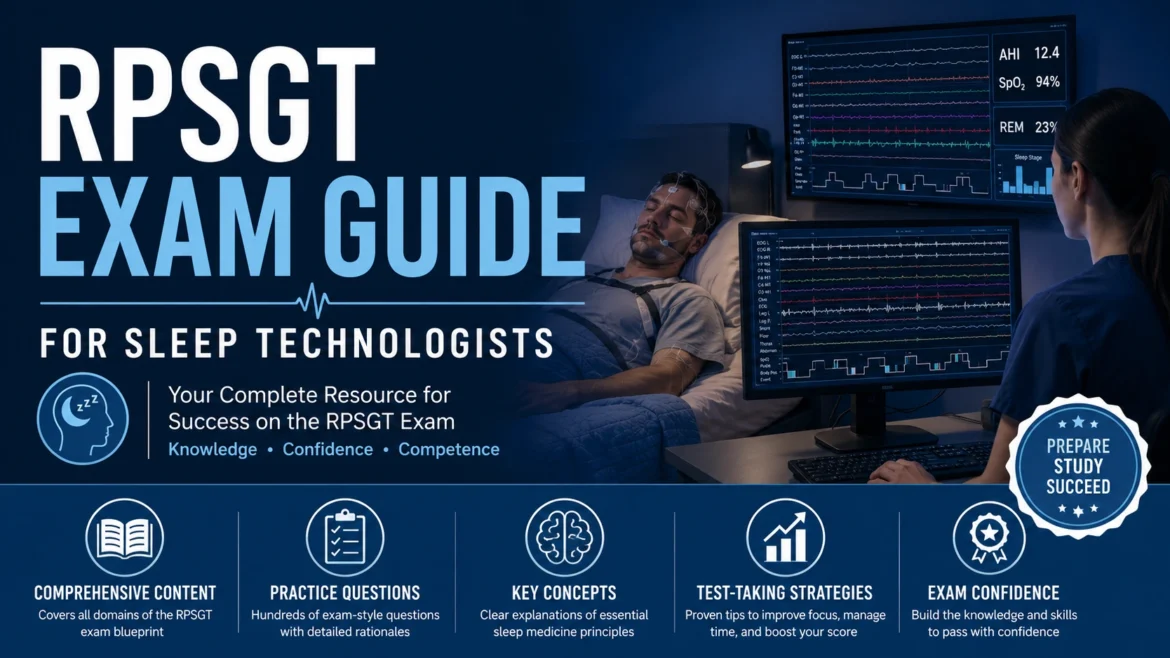

The Registered Polysomnographic Technologist (RPSGT) certification exam is one of the most recognized professional credentials in the field of sleep technology and sleep medicine in the United States.
The exam is designed to evaluate whether sleep technologists possess the clinical knowledge, technical skills, patient monitoring abilities, and professional judgment required to work safely and effectively in sleep laboratories and healthcare environments focused on sleep disorders.
Sleep technologists play an important role in modern healthcare because sleep disorders can significantly affect physical health, mental wellbeing, cardiovascular function, respiratory stability, cognitive performance, and overall quality of life.
The RPSGT credential demonstrates advanced competency in:
- Polysomnography procedures
- Sleep study monitoring
- Patient safety
- Respiratory event recognition
- Sleep stage scoring
- CPAP therapy
- Sleep disorder evaluation
Because sleep medicine continues growing rapidly across healthcare systems, certified sleep technologists are becoming increasingly valuable in hospitals, sleep centers, pulmonary clinics, and specialized sleep medicine facilities.
Why Many Sleep Technologists Pursue RPSGT Certification
Many professionals pursue RPSGT certification because it demonstrates specialized expertise in sleep technology and helps validate advanced clinical and technical skills.
Employers often value certified technologists because they have demonstrated competency in areas involving:
- Sleep study procedures
- Patient monitoring accuracy
- Sleep disorder recognition
- Equipment management
- Clinical troubleshooting
- Safety standards
For many sleep technologists, certification may also support:
- Career advancement
- Higher earning potential
- Expanded job opportunities
- Professional confidence
- Long-term specialization growth
As sleep medicine technology becomes more advanced, healthcare employers increasingly look for professionals with strong technical and clinical expertise.
What Does a Sleep Technologist Do?
Sleep technologists work closely with patients undergoing diagnostic sleep studies and sleep disorder evaluations.
Their responsibilities often involve monitoring patients during overnight sleep testing while collecting and analyzing physiological data related to sleep patterns, breathing, neurological activity, and body function.
Common responsibilities may include:
- Preparing patients for sleep studies
- Applying monitoring equipment and sensors
- Monitoring EEG activity
- Observing respiratory events
- Managing CPAP therapy adjustments
- Recording physiological data accurately
- Responding to patient concerns during studies
Because sleep technologists often work overnight shifts and monitor patients continuously, attention to detail and patient safety awareness are extremely important.
Why Sleep Medicine Matters in Modern Healthcare
Sleep medicine has become increasingly important because untreated sleep disorders can contribute to serious long-term health complications.
Conditions such as sleep apnea, insomnia, narcolepsy, and movement-related sleep disorders may affect:
- Cardiovascular health
- Respiratory function
- Mental health
- Cognitive performance
- Workplace safety
- Daily functioning
Sleep studies help physicians diagnose and manage these conditions more effectively.
As awareness of sleep health continues growing in the United States, demand for trained sleep technologists is expected to remain strong.
What Topics Are Covered on the RPSGT Exam?
The RPSGT exam evaluates a broad range of sleep technology competencies involving both technical knowledge and clinical reasoning.
Important exam areas may include:
- Sleep physiology
- Polysomnography procedures
- Sleep stage scoring
- Respiratory monitoring
- CPAP and BiPAP therapy
- EEG interpretation basics
- Patient safety standards
- Sleep disorders
- Equipment troubleshooting
- Clinical documentation
Because the exam combines technical and clinical application skills, candidates often benefit from active learning methods and realistic practice scenarios during preparation.
How the RPSGT Exam Challenges Candidates
Many candidates discover that the RPSGT exam requires more than memorizing definitions or technical terminology.
The exam frequently evaluates whether candidates can apply sleep technology knowledge within realistic clinical situations involving:
- Patient monitoring changes
- Equipment complications
- Respiratory event recognition
- Sleep stage interpretation
- Safety concerns
- Clinical troubleshooting decisions
This practical application focus is one reason many candidates initially find preparation challenging.
Strong preparation usually requires repeated exposure to sleep-study scenarios and technical interpretation practice.
Common Skills Successful Candidates Develop
Candidates preparing effectively for the RPSGT exam often strengthen multiple professional skills simultaneously.
Important development areas may include:
| Skill Area | Why It Matters |
|---|---|
| Sleep Study Interpretation | Supports accurate patient monitoring. |
| Respiratory Event Recognition | Important for identifying sleep-related breathing disorders. |
| Technical Troubleshooting | Helps maintain study quality and patient safety. |
| Clinical Reasoning | Improves decision-making during complex studies. |
| Documentation Accuracy | Supports quality patient care and reporting standards. |
These skills are valuable not only for exam success but also for long-term professional performance in sleep medicine environments.
Why Active Learning Improves RPSGT Preparation
Many candidates preparing for specialized healthcare certification exams improve retention more effectively through active learning methods rather than passive reading alone.
For RPSGT preparation, active learning may involve:
- Sleep study scenario analysis
- Practice scoring exercises
- Respiratory event interpretation
- Equipment troubleshooting review
- Timed practice questions
- Rationale analysis
These methods help candidates apply technical knowledge more effectively within realistic sleep medicine situations.
Many sleep technologists preparing for certification strengthen readiness by working through realistic RPSGT practice exam questions that simulate the technical reasoning, sleep-study interpretation, and patient-monitoring challenges commonly seen during the actual certification exam.
Understanding Sleep Disorders for the RPSGT Exam
One of the most important areas of RPSGT preparation involves understanding common sleep disorders and how they affect patient health, breathing patterns, neurological activity, and overall sleep quality.
Sleep technologists frequently work with patients experiencing conditions such as:
- Obstructive sleep apnea
- Central sleep apnea
- Insomnia
- Narcolepsy
- Restless legs syndrome
- REM sleep behavior disorders
- Circadian rhythm disorders
The exam may evaluate whether candidates can recognize patterns associated with these disorders during sleep study monitoring and patient observation.
Strong understanding of sleep disorders helps technologists contribute to more accurate sleep study interpretation and patient care.
Why Respiratory Monitoring Skills Matter
Respiratory monitoring is one of the most critical responsibilities for sleep technologists because many sleep disorders involve breathing irregularities that occur during sleep.
The RPSGT exam often evaluates understanding of:
- Respiratory effort monitoring
- Oxygen saturation interpretation
- Airflow measurement
- Apnea and hypopnea recognition
- CPAP therapy adjustment
- Ventilation-related events
Technologists must understand how to identify respiratory abnormalities accurately while maintaining patient safety and sleep study quality.
Because respiratory events may occur repeatedly throughout a study, attention to detail becomes extremely important.
The Importance of EEG and Sleep Stage Recognition
Electroencephalography (EEG) plays a major role in polysomnography because sleep technologists must recognize different sleep stages and neurological patterns throughout overnight monitoring.
The exam may evaluate understanding of:
- Sleep stage progression
- REM and non-REM sleep
- Brainwave activity patterns
- Arousal recognition
- Sleep fragmentation
- Neurological monitoring basics
Accurate sleep staging is essential because physicians rely on this information when diagnosing sleep disorders and evaluating treatment effectiveness.
Strong EEG interpretation skills also help improve overall sleep study reliability and clinical reporting quality.
Why Patient Safety Is a Major Priority
Patient safety remains one of the most important responsibilities for sleep technologists because patients undergoing sleep studies may experience respiratory instability, medical concerns, or unexpected physiological changes during monitoring.
Sleep technologists must remain alert and prepared to:
- Recognize respiratory distress
- Respond to emergencies appropriately
- Monitor oxygen levels carefully
- Address equipment-related issues
- Support patient comfort and safety
The RPSGT exam may include scenarios requiring candidates to prioritize patient safety while maintaining proper study procedures and technical accuracy.
Strong clinical awareness is therefore just as important as technical knowledge.
How CPAP and BiPAP Therapy Relate to the Exam
Continuous Positive Airway Pressure (CPAP) and BiPAP therapy are major components of sleep medicine because they help manage breathing-related sleep disorders such as obstructive sleep apnea.
Candidates preparing for the RPSGT exam should understand:
- CPAP equipment basics
- Pressure adjustment principles
- Mask fitting considerations
- Patient tolerance challenges
- Therapy troubleshooting
- Respiratory response monitoring
Because many sleep studies involve PAP therapy titration, technologists must understand how equipment settings affect patient breathing patterns and sleep quality.
Why Technical Troubleshooting Skills Are Important
Sleep studies rely heavily on monitoring equipment and sensor accuracy. Even small technical problems may affect study quality or interfere with proper interpretation.
The exam may evaluate whether candidates can identify and manage:
- Signal interference
- Loose sensor connections
- Equipment calibration issues
- Data recording problems
- Monitoring disruptions
- Patient movement complications
Strong troubleshooting abilities help technologists maintain reliable study conditions while minimizing interruptions during overnight monitoring.
These practical technical skills are extremely valuable in real sleep laboratory environments.
The Role of Documentation in Sleep Technology
Accurate documentation is another important part of sleep technology because physicians rely on sleep study reports and monitoring records when evaluating patient conditions.
Sleep technologists must document:
- Patient observations
- Respiratory events
- Sleep stage changes
- Equipment adjustments
- Therapy responses
- Safety concerns
Strong documentation practices help ensure:
- Clinical accuracy
- Treatment continuity
- Quality patient care
- Professional accountability
The RPSGT exam may evaluate understanding of proper documentation standards and professional communication responsibilities.
How Sleep Technologists Build Long-Term Career Opportunities
Sleep medicine continues growing as awareness of sleep disorders increases across healthcare systems in the United States.
Certified sleep technologists may find opportunities within:
- Hospitals
- Sleep laboratories
- Pulmonary clinics
- Neurology practices
- Research facilities
- Specialized sleep medicine centers
Many employers prefer certified professionals because the RPSGT credential demonstrates advanced technical competency and clinical understanding.
For many technologists, certification can also support:
| Career Benefit | Potential Advantage |
|---|---|
| Professional Credibility | Strengthens employer confidence. |
| Specialization Growth | Supports advanced sleep medicine roles. |
| Career Advancement | May improve leadership opportunities. |
| Technical Confidence | Improves patient-monitoring skills. |
| Long-Term Stability | Supports growing healthcare demand. |
As sleep medicine technology continues advancing, skilled sleep technologists are expected to remain important within specialized healthcare environments.
Why Clinical Reasoning Matters for Sleep Technologists
The RPSGT exam evaluates far more than technical memorization. Successful candidates must demonstrate strong clinical reasoning skills while interpreting sleep studies, identifying physiological changes, and responding appropriately during patient monitoring situations.
Sleep technologists often encounter complex situations involving:
- Respiratory instability
- Equipment-related complications
- Patient movement disruptions
- Abnormal sleep patterns
- Unexpected physiological changes
- CPAP tolerance challenges
The ability to think critically during these situations is extremely important because patient safety and study accuracy depend heavily on careful observation and professional judgment.
How Practice Questions Improve RPSGT Preparation
Many candidates preparing for healthcare certification exams improve retention significantly through repeated exposure to realistic practice questions and technical scenarios.
Practice-based preparation helps strengthen:
- Sleep study interpretation
- Respiratory event recognition
- Clinical troubleshooting
- Technical reasoning
- Documentation awareness
- Time management
Repeated scenario analysis also helps candidates become more comfortable applying sleep medicine concepts under testing pressure.
Over time, realistic practice often improves confidence while reducing anxiety related to technical interpretation and patient-monitoring decisions.
Why Attention to Detail Is Essential in Sleep Medicine
Sleep technologists work in highly detail-oriented environments where even small monitoring changes may significantly affect study interpretation and patient outcomes.
Professionals in sleep medicine must remain attentive to:
- Respiratory pattern changes
- Sensor placement accuracy
- Sleep stage transitions
- Oxygen saturation fluctuations
- Neurological activity patterns
- Equipment performance
The RPSGT exam often evaluates whether candidates can recognize subtle but clinically important details within monitoring scenarios.
Strong attention to detail therefore becomes one of the most valuable long-term skills for successful sleep technologists.
How Busy Professionals Can Prepare More Efficiently
Many RPSGT candidates prepare for certification while balancing overnight shifts, healthcare responsibilities, family obligations, and physically demanding work schedules.
Efficient preparation strategies often include:
- Short focused study sessions
- Practice-question review
- Topic rotation schedules
- Sleep-study scenario analysis
- Weekend simulation practice
- Rationale review
Consistent active learning is often far more effective than occasional long study sessions followed by burnout.
Even smaller daily review sessions can strengthen technical reasoning and long-term retention gradually over time.
Why Understanding Sleep Physiology Is Important
Sleep physiology forms the foundation of many polysomnography concepts because sleep technologists must understand how the body functions during different stages of sleep.
Candidates should understand relationships involving:
- Brainwave activity
- Respiratory regulation
- Heart rate changes
- Muscle tone variations
- REM sleep physiology
- Sleep-cycle progression
This knowledge helps technologists interpret sleep studies more accurately and recognize abnormal physiological patterns during overnight monitoring.
Strong understanding of sleep physiology also supports better clinical communication with physicians and healthcare teams.
How Communication Skills Affect Sleep Technology
Although sleep medicine is highly technical, communication skills remain extremely important for sleep technologists.
Technologists frequently interact with patients who may feel:
- Anxious about sleep testing
- Uncomfortable with monitoring equipment
- Concerned about sleep disorders
- Frustrated by CPAP therapy
- Emotionally exhausted from chronic sleep problems
Strong communication skills help technologists:
- Explain procedures clearly
- Reduce patient anxiety
- Improve study cooperation
- Support patient comfort
- Maintain professional trust
These communication abilities contribute significantly to overall patient experience and study quality.
The Importance of Long-Term Professional Growth
For many healthcare professionals, earning the RPSGT credential represents more than simply passing a certification exam.
The preparation process often strengthens:
- Technical confidence
- Clinical reasoning
- Monitoring accuracy
- Professional discipline
- Patient-care awareness
- Sleep medicine expertise
These improvements can support long-term professional growth within specialized healthcare environments.
As sleep medicine continues expanding, professionals with advanced polysomnography knowledge and technical expertise are expected to remain highly valuable.
How Structured Preparation Reduces Exam Stress
Many candidates experience anxiety before the RPSGT exam because of the large amount of technical material involved.
Structured preparation often helps reduce stress by improving:
| Preparation Benefit | How It Helps |
|---|---|
| Topic Organization | Improves study efficiency. |
| Practice Questions | Builds technical confidence. |
| Scenario Review | Strengthens clinical application. |
| Timed Sessions | Improves pacing and endurance. |
| Weak Area Tracking | Supports targeted improvement. |
Many successful candidates focus on gradual long-term progress rather than overwhelming themselves with unrealistic study expectations.
Final Thoughts
The RPSGT certification exam plays an important role in validating the technical knowledge, patient-monitoring skills, and clinical reasoning abilities required for professional sleep technology practice.
Strong preparation typically involves:
- Sleep physiology review
- Respiratory monitoring practice
- EEG and sleep-stage understanding
- Patient safety awareness
- Technical troubleshooting
- Scenario-based learning
Because sleep medicine combines technical precision with patient-centered healthcare responsibilities, successful candidates usually focus on both practical application and conceptual understanding throughout preparation.
Over time, consistent preparation and active learning can help future sleep technologists build the confidence, technical accuracy, and professional judgment needed for both certification success and long-term career growth within sleep medicine.
Frequently Asked Questions (FAQs)
What does the RPSGT certification stand for?
RPSGT stands for Registered Polysomnographic Technologist, a professional credential for sleep technologists working in sleep medicine and polysomnography.
What topics are important for the RPSGT exam?
Important areas often include sleep physiology, respiratory monitoring, EEG interpretation, CPAP therapy, sleep disorders, patient safety, and technical troubleshooting.
Why is the RPSGT certification valuable?
The credential demonstrates specialized sleep medicine competency and may support professional credibility, career advancement, and expanded job opportunities.
How can candidates prepare effectively for the RPSGT exam?
Practice questions, sleep-study scenarios, active learning methods, and consistent topic review often improve preparation significantly.
What does a sleep technologist do?
Sleep technologists monitor patients during sleep studies, analyze physiological data, manage equipment, and support the diagnosis of sleep disorders.