
Preparing for the National Clinical Mental Health Counseling Examination (NCMHCE) can feel extremely difficult for counseling professionals balancing demanding schedules, internships, supervision hours, employment responsibilities, family obligations, and emotional exhaustion from client care.
Many candidates begin studying with strong motivation but quickly become overwhelmed because they try to prepare without a sustainable strategy.
Common challenges busy counseling professionals face include:
- Limited daily study time
- Mental fatigue after work
- Emotional burnout
- Difficulty staying consistent
- Poor time management
- Overwhelming study materials
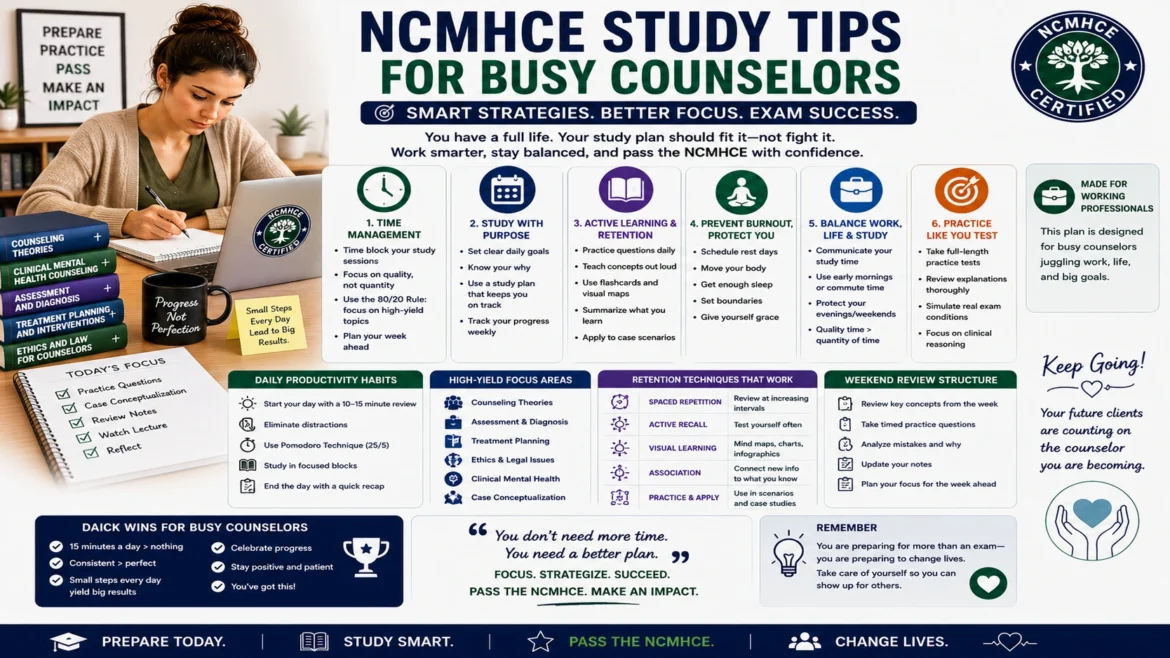
Fortunately, successful NCMHCE preparation does not require studying endlessly every day. In many cases, focused and consistent preparation is far more effective than exhausting study marathons.
Focus on Consistency Instead of Perfection
One of the biggest mistakes counseling candidates make is expecting themselves to study perfectly every single day. Busy schedules rarely allow ideal preparation conditions.
Some candidates become discouraged after missing study sessions and then stop preparing consistently altogether.
Successful counselors usually focus on maintaining steady progress rather than chasing perfection.
Even shorter study sessions completed consistently throughout the week can strengthen:
- Clinical reasoning
- Ethical decision-making
- Treatment planning skills
- Client assessment interpretation
- Long-term memory retention
Consistency helps counseling knowledge build gradually over time without creating unnecessary emotional exhaustion.
Create Smaller Daily Study Blocks
Many busy counseling professionals struggle because they believe studying only counts if they complete several uninterrupted hours at a time.
In reality, smaller focused study sessions are often easier to maintain and mentally process.
For example, candidates may benefit from:
| Study Block | Suggested Focus |
|---|---|
| 20–30 Minutes | Ethics review or terminology refresh |
| 30–45 Minutes | Scenario-based counseling practice |
| 45–60 Minutes | Practice simulations and rationale analysis |
| Weekend Sessions | Longer timed simulations and weak area review |
This type of flexible structure often works much better for professionals managing unpredictable counseling schedules.
Prioritize High-Yield Counseling Topics First
Busy counselors rarely have unlimited study time, so prioritization becomes extremely important during preparation.
Instead of trying to review every counseling concept equally, candidates should initially focus more heavily on high-yield clinical areas commonly emphasized during the NCMHCE.
Important focus areas often include:
- Client assessment
- Treatment planning
- Crisis intervention
- Ethical decision-making
- Risk assessment
- Cultural competency
- Trauma-informed counseling
These topics frequently appear within complex counseling simulations and strongly influence clinical reasoning performance.
Mastering foundational counseling skills first often makes advanced clinical scenarios easier to analyze later.
Use Active Learning Instead of Passive Reading
One reason many busy professionals struggle with preparation efficiency is because they spend too much time passively rereading textbooks or highlighting notes without actively applying the information.
Passive reading may create temporary familiarity, but it often fails to strengthen the practical counseling judgment required for the NCMHCE.
Active learning methods are usually far more effective because they require candidates to:
- Analyze counseling scenarios
- Interpret emotional patterns
- Apply ethical reasoning
- Select treatment interventions
- Evaluate client risks
Examples of strong active learning methods include:
- Practice simulations
- Case study analysis
- Timed counseling scenarios
- Rationale review
- Teaching concepts aloud
These methods often improve retention significantly while strengthening real clinical reasoning abilities.
Protect Your Mental Energy Carefully
Mental health counseling is emotionally demanding work. Many candidates prepare for the NCMHCE while simultaneously supporting clients experiencing trauma, anxiety, grief, addiction, crisis situations, and severe emotional distress.
Emotional burnout can negatively affect:
- Concentration
- Memory retention
- Clinical reasoning
- Motivation
- Testing confidence
Protecting mental energy is therefore extremely important during preparation.
Healthy study habits often include:
- Scheduled breaks
- Reasonable expectations
- Consistent sleep routines
- Stress management activities
- Balanced workloads
Preparation should strengthen professional growth, not create harmful exhaustion.
Practice Clinical Simulations Regularly
The NCMHCE focuses heavily on realistic counseling scenarios and practical clinical reasoning. Because of this, counseling simulations should become a central part of preparation.
Practice simulations help busy counselors improve:
- Treatment planning
- Ethical reasoning
- Crisis response skills
- Time management
- Decision-making confidence
- Emotional analysis
Repeated exposure to realistic counseling situations helps candidates become more comfortable analyzing emotionally complex client scenarios under pressure.
Many counseling candidates strengthen preparation by working through realistic NCMHCE counseling practice simulations that mirror the structure and clinical reasoning demands commonly seen during the actual licensure exam.
Review Answer Rationales Carefully
Many counseling candidates make the mistake of checking only whether their answers are correct or incorrect during practice sessions without fully analyzing the explanation behind each response.
However, the real value of preparation often comes from understanding why specific counseling decisions are clinically appropriate.
Detailed rationale review helps candidates strengthen:
- Clinical reasoning
- Treatment prioritization
- Ethical decision-making
- Risk assessment judgment
- Client communication strategies
For example, a candidate may answer a crisis intervention question incorrectly not because of weak knowledge, but because they failed to prioritize immediate client safety appropriately.
Understanding these reasoning patterns is extremely important for long-term counseling competence.
Track Weak Areas Instead of Avoiding Them
Busy professionals often prefer reviewing topics they already understand because familiar material feels less stressful. Unfortunately, avoiding weaker counseling areas can create major preparation gaps over time.
Common weak areas may include:
- Crisis intervention
- Substance use counseling
- Trauma-informed care
- Ethical dilemmas
- Treatment planning
- Cultural competency
Instead of ignoring difficult topics, successful candidates usually track weaknesses intentionally and review them repeatedly throughout preparation.
Many counselors keep simple progress lists to identify:
- Frequently missed question categories
- Ethical reasoning struggles
- Time management issues
- Risk assessment confusion
- Treatment planning weaknesses
This targeted approach often improves preparation efficiency significantly.
Use Weekends for Deeper Clinical Simulations
Busy counseling schedules may limit study time during weekdays, making weekends valuable opportunities for deeper preparation sessions.
Weekend study blocks often work best for:
- Full-length counseling simulations
- Timed practice sessions
- Detailed rationale review
- Weak-area reinforcement
- Longer ethics review sessions
Longer weekend simulations also help candidates build mental endurance for the actual exam experience.
Many counseling candidates discover that realistic timed practice improves:
- Scenario interpretation speed
- Decision-making confidence
- Pacing consistency
- Emotional focus under pressure
This gradual exposure often makes the actual exam environment feel much less overwhelming.
Build a Flexible Weekly Routine
One reason many study schedules fail is because they are too rigid for real counseling lifestyles.
Unexpected client responsibilities, emotional fatigue, supervision meetings, or personal obligations can easily disrupt unrealistic schedules.
Flexible routines often work better because they allow candidates to adapt without feeling discouraged.
For example, candidates may choose:
| Day Type | Suggested Goal |
|---|---|
| Busy Workdays | Short ethics review or 20-minute scenario practice |
| Moderate Schedule Days | 45–60 minute counseling simulations |
| Weekends | Longer timed practice and weak area review |
| Recovery Days | Light review and mental recovery |
This type of structure often feels more sustainable for long-term preparation.
Improve Retention With Topic Rotation
Studying the same counseling topic repeatedly for long periods may reduce concentration and memory efficiency.
Many busy counselors improve retention by rotating topics throughout the week.
For example:
- Monday: Ethics and professional boundaries
- Tuesday: Crisis intervention
- Wednesday: Treatment planning
- Thursday: Trauma-informed counseling
- Friday: Client assessment review
- Weekend: Full counseling simulations
This rotation strategy helps reinforce multiple counseling competencies while reducing mental fatigue.
Candidates seeking a more organized preparation structure may also benefit from following a detailed weekly counseling exam preparation roadmap designed specifically for busy mental health professionals balancing work and study responsibilities.
Focus on Clinical Application Over Memorization
The NCMHCE evaluates how counselors think through emotionally complex client situations rather than how many counseling definitions they can memorize.
Busy professionals should therefore prioritize:
- Scenario interpretation
- Treatment planning logic
- Ethical reasoning
- Client safety prioritization
- Emotional analysis
- Professional communication skills
Repeated counseling application strengthens real-world decision-making far more effectively than passive textbook review alone.
This practical focus also helps future counselors feel more prepared for real clinical environments after licensure.
Study the Most Frequently Tested Counseling Areas
Because time is limited for many professionals, focusing heavily on high-impact counseling topics often improves preparation efficiency.
Areas frequently emphasized during the NCMHCE include:
- Client assessment
- Treatment planning
- Ethics
- Crisis intervention
- Risk management
- Trauma counseling
- Cultural competency
Candidates looking to prioritize study time more effectively may benefit from reviewing detailed resources covering the highest-yield counseling concepts on the NCMHCE to strengthen focus on the clinical areas most connected to counseling decision-making and exam performance.
How Better Preparation Improves Real Counseling Practice
The purpose of licensure preparation extends far beyond passing an exam. Strong study habits and active clinical reasoning practice directly improve long-term counseling effectiveness.
As candidates strengthen counseling judgment, they often become more confident in:
- Client communication
- Risk assessment
- Treatment planning
- Ethical professionalism
- Crisis intervention
- Emotional support strategies
These improvements continue benefiting counselors long after the licensing process is complete.
Reduce Test Anxiety With Familiarity
Many busy counseling professionals experience significant anxiety before the NCMHCE because the exam directly affects career progression, licensure opportunities, and long-term professional goals.
Test anxiety often becomes worse when candidates feel unfamiliar with:
- Clinical simulations
- Timed counseling scenarios
- Ethical reasoning questions
- Treatment planning decisions
- Complex emotional case analysis
One of the best ways to reduce anxiety is through repeated exposure to realistic counseling situations during preparation.
As candidates practice more simulations, they often become:
- More confident interpreting scenarios
- More comfortable prioritizing interventions
- Faster at recognizing emotional patterns
- Calmer under pressure
Familiarity helps transform uncertainty into confidence over time.
Do Not Compare Your Preparation to Other Counselors
Many future counselors become discouraged when comparing their preparation speed or practice scores to classmates, coworkers, or online discussions.
However, every counseling professional studies under different circumstances.
Some candidates may have:
- Full-time work schedules
- Internship responsibilities
- Family obligations
- Different learning styles
- Emotional burnout from clinical work
Strong preparation is not about studying perfectly or progressing faster than everyone else.
The goal is building genuine counseling judgment, ethical reasoning, and professional confidence gradually over time.
Steady progress usually matters far more than temporary high practice scores.
Avoid Last-Minute Cramming
Busy professionals sometimes postpone preparation until the final weeks before the exam and then attempt aggressive cramming schedules.
Unfortunately, this often increases emotional exhaustion while reducing retention and clinical reasoning clarity.
Last-minute cramming can lead to:
- Mental fatigue
- Difficulty concentrating
- Lower confidence
- Poor memory retention
- Increased anxiety
The NCMHCE evaluates practical counseling judgment and emotional reasoning, which usually improve more effectively through gradual reinforcement rather than intense short-term memorization.
Consistent long-term preparation often produces much stronger outcomes.
Strengthen Time Management Skills Early
Time management is another major challenge for busy counselors preparing for licensure exams.
Without structured pacing, candidates may:
- Overanalyze difficult questions
- Spend too much time on one scenario
- Rush through later sections
- Lose concentration during long simulations
Strong pacing skills improve through repeated timed practice sessions.
Many candidates benefit from practicing:
- Short timed counseling scenarios
- Weekend simulation sessions
- Quick ethical decision drills
- Focused treatment-planning exercises
These habits help candidates become more comfortable making counseling decisions efficiently under exam conditions.
Recognize and Correct Common Study Habits That Hurt Performance
Many busy counseling professionals unknowingly develop study habits that reduce preparation efficiency and increase stress unnecessarily.
Examples include:
- Studying without structure
- Avoiding weak counseling topics
- Passive rereading without application
- Ignoring rationale explanations
- Overfocusing on memorization
Understanding these patterns early can significantly improve preparation quality.
Candidates reviewing guidance on study behaviors that commonly affect counseling exam performance often become better at identifying preparation weaknesses and adjusting their routines before exam day.
Think Like a Counselor During Preparation
One of the most important mindset shifts during NCMHCE preparation is moving beyond “student memorization” and beginning to think more like a practicing counselor.
This means focusing on:
- Client wellbeing
- Ethical responsibility
- Treatment effectiveness
- Emotional safety
- Clinical prioritization
- Professional communication
Strong candidates usually approach counseling scenarios by asking:
- What does this client need most right now?
- What response protects client safety?
- What intervention is most clinically appropriate?
- What ethical concerns must be considered?
This mindset helps strengthen real-world counseling judgment significantly.
Build Confidence Through Small Weekly Wins
Confidence grows gradually through repeated progress and consistent effort.
Busy counselors often benefit from tracking smaller preparation victories such as:
| Weekly Progress Example | Confidence Benefit |
|---|---|
| Improved simulation score | Builds clinical confidence |
| Better pacing during practice | Reduces exam anxiety |
| Stronger ethical reasoning | Improves decision-making |
| Understanding difficult topics | Increases motivation |
| Consistent study routine | Strengthens long-term discipline |
Recognizing these smaller improvements can help maintain motivation during demanding preparation periods.
Focus on Long-Term Professional Growth
The NCMHCE is not simply a licensing obstacle. The preparation process also helps counselors strengthen the clinical reasoning and emotional judgment required for long-term counseling effectiveness.
Strong preparation can improve:
- Treatment planning confidence
- Client communication
- Crisis response skills
- Ethical professionalism
- Emotional awareness
- Clinical decision-making
Many future counselors also benefit from reviewing broader guidance on effective strategies for passing the NCMHCE successfully while building sustainable long-term counseling study habits and professional confidence.
Final Thoughts
Busy counseling professionals can absolutely prepare successfully for the NCMHCE with the right strategies, realistic expectations, and consistent routines.
The most effective preparation plans usually focus on:
- Consistency over perfection
- Active learning
- Counseling simulations
- Clinical reasoning development
- Balanced mental wellness
- Long-term professional growth
Rather than relying on exhausting study marathons, successful candidates often build confidence gradually through structured practice, reflection, and repeated exposure to realistic counseling scenarios.
Over time, these habits help future counselors feel more prepared for both licensure success and real-world mental health counseling practice.
Frequently Asked Questions (FAQs)
How can busy counselors study effectively for the NCMHCE?
Short focused study sessions, active learning methods, counseling simulations, and consistent weekly routines often work best for busy professionals.
What are the best study methods for the NCMHCE?
Practice simulations, rationale review, treatment planning exercises, ethics review, and clinical scenario analysis are highly effective preparation methods.
How can counselors avoid burnout while studying?
Balanced schedules, realistic expectations, breaks, sleep management, and mental recovery routines can help reduce emotional exhaustion during preparation.
Why are counseling simulations important?
Counseling simulations strengthen clinical reasoning, ethical decision-making, crisis response skills, and confidence under realistic exam conditions.
Is consistency more important than long study hours?
Yes. Consistent active learning over time is usually more effective than occasional intensive cramming sessions.