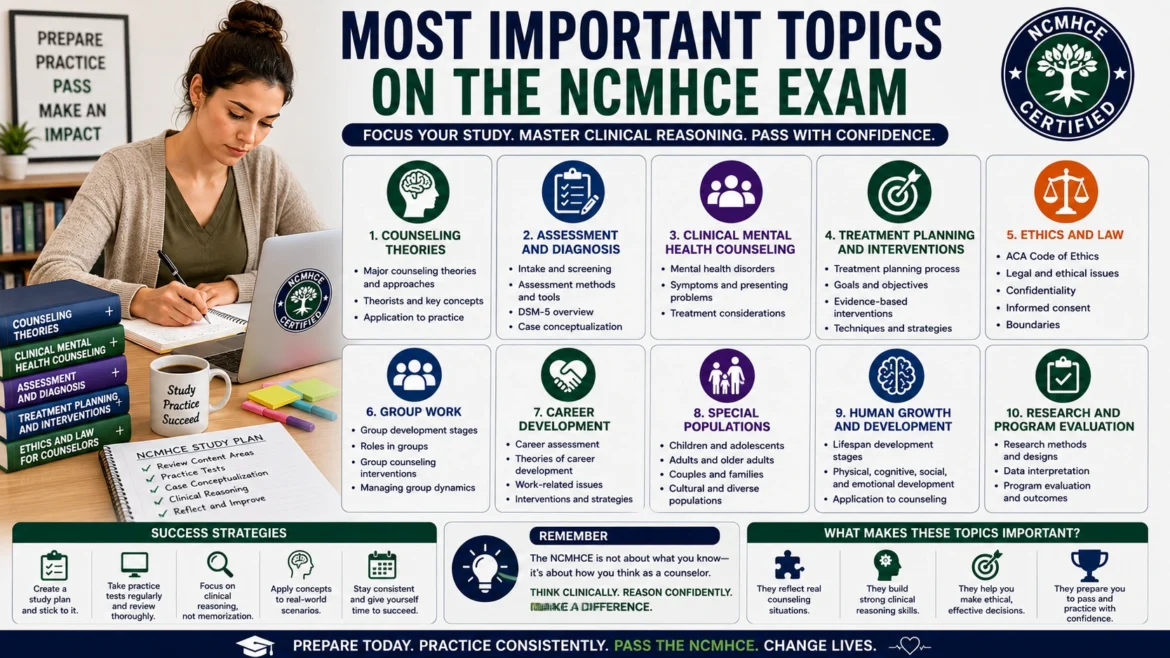

The National Clinical Mental Health Counseling Examination (NCMHCE) is designed to evaluate whether counseling candidates possess the clinical reasoning, ethical judgment, and practical decision-making abilities required for professional mental health counseling.
Unlike exams focused mainly on memorization, the NCMHCE challenges candidates to analyze realistic counseling scenarios involving emotional, behavioral, ethical, and psychological complexities.
Because the exam covers a wide range of counseling competencies, many candidates feel overwhelmed trying to determine which topics deserve the most preparation time.
While every area matters, certain high-yield counseling topics consistently play a major role in both exam performance and real-world counseling practice.
Why Topic Prioritization Matters During Preparation
One of the biggest preparation mistakes counseling candidates make is attempting to study every topic equally without prioritizing high-impact clinical areas first.
Because counseling preparation involves large amounts of emotional, behavioral, ethical, and diagnostic information, focused topic prioritization often improves retention and reduces mental overwhelm.
Strategic preparation helps candidates:
- Strengthen high-yield counseling skills faster
- Improve clinical reasoning gradually
- Reduce study burnout
- Build confidence more effectively
- Identify weak areas earlier
Many successful candidates begin by mastering the counseling topics most closely connected to real clinical decision-making situations.
Client Assessment and Intake Evaluation
Client assessment is one of the most important areas on the NCMHCE because effective counseling begins with understanding the client’s emotional condition, history, risks, and treatment needs.
The exam frequently evaluates whether candidates can gather and interpret important clinical information appropriately.
Candidates should feel comfortable with:
- Initial intake assessment
- Mental status evaluation
- Behavioral observations
- Emotional symptom recognition
- Risk factor identification
- Substance use assessment
- Client history evaluation
Strong assessment skills help counselors recognize urgent concerns, prioritize treatment needs, and create effective counseling plans.
Because assessment forms the foundation of treatment planning, this topic often appears repeatedly throughout counseling scenarios.
Treatment Planning and Counseling Interventions
Treatment planning remains another major focus area because counselors must understand how to develop structured, goal-oriented strategies that support client progress safely and ethically.
The NCMHCE often evaluates whether candidates can:
- Identify appropriate treatment goals
- Select counseling interventions logically
- Adjust approaches based on client needs
- Recognize ineffective strategies
- Prioritize immediate concerns
- Evaluate client progress appropriately
Questions frequently require candidates to analyze which intervention is most clinically appropriate based on the client’s emotional state, history, safety concerns, and presenting symptoms.
This requires clinical reasoning rather than simple memorization of counseling techniques.
Crisis Intervention and Risk Assessment
Crisis intervention is considered one of the highest-priority counseling competencies because client safety remains central to professional mental health practice.
The exam may present emotionally intense situations involving:
- Suicidal ideation
- Self-harm risk
- Domestic violence
- Substance abuse emergencies
- Trauma responses
- Panic crises
- Severe emotional instability
Candidates must demonstrate the ability to:
- Recognize urgent warning signs
- Prioritize client safety
- Select appropriate crisis interventions
- Respond ethically under pressure
- Evaluate risk severity accurately
Because these scenarios require fast but thoughtful decision-making, many candidates find crisis-related questions emotionally challenging initially.
Repeated practice with realistic counseling scenarios often improves confidence significantly.
Ethics and Professional Responsibilities
Ethical decision-making appears throughout many areas of the NCMHCE because counselors regularly encounter emotionally and professionally sensitive situations requiring careful judgment.
Important ethical topics may include:
- Confidentiality
- Mandatory reporting
- Dual relationships
- Professional boundaries
- Informed consent
- Client autonomy
- Documentation standards
- Cultural sensitivity
The exam often evaluates whether candidates can identify the most ethical counselor response during difficult client situations.
Strong ethical reasoning protects both clients and counseling professionals in real clinical environments.
Cultural Competency and Diversity Awareness
Modern counseling practice requires strong cultural awareness because clients come from diverse backgrounds, belief systems, family structures, and life experiences.
The NCMHCE may evaluate whether counselors can provide respectful and effective care while considering:
- Cultural identity
- Religious beliefs
- Socioeconomic factors
- Family values
- Communication differences
- Trauma experiences
- Social barriers
Candidates should understand how cultural factors influence communication styles, treatment preferences, emotional expression, and counseling relationships.
Cultural competency is essential for ethical and effective counseling care.
Diagnosis and Symptom Recognition
Although the NCMHCE focuses heavily on counseling application, candidates still need strong understanding of mental health symptoms and diagnostic patterns.
Questions may involve recognizing symptoms associated with:
- Anxiety disorders
- Depressive disorders
- Trauma-related conditions
- Substance use disorders
- Mood disorders
- Behavioral disorders
- Personality disorders
Candidates should understand how symptoms affect counseling planning, treatment priorities, safety assessment, and referral decisions.
However, the exam typically emphasizes application and clinical reasoning rather than pure memorization of diagnostic definitions.
Many counseling candidates strengthen clinical judgment and preparation by working through realistic NCMHCE practice exam simulations that focus on treatment planning, ethics, crisis intervention, and counseling decision-making under realistic exam conditions.
Family Counseling and Relationship Dynamics
Family relationships often play a major role in mental health counseling because emotional struggles rarely exist in complete isolation. Clients may experience stress connected to parenting, marriage, communication problems, trauma histories, or family conflict.
The NCMHCE may include counseling scenarios involving:
- Family conflict
- Relationship stress
- Parent-child communication issues
- Divorce and separation concerns
- Boundary problems
- Interpersonal trauma
Candidates should understand how family systems and relationship patterns can affect emotional wellbeing and treatment planning.
Strong counselors recognize that improving communication, emotional awareness, and coping strategies often requires understanding broader relational dynamics rather than focusing only on isolated symptoms.
Substance Use and Addiction Counseling
Substance use disorders remain a major topic area because addiction frequently overlaps with trauma, anxiety, depression, relationship difficulties, and crisis situations.
The exam may evaluate whether candidates can:
- Recognize addiction warning signs
- Assess substance use risk
- Identify co-occurring disorders
- Support relapse prevention planning
- Respond ethically during addiction scenarios
- Encourage appropriate treatment referrals
Substance-related counseling situations often require strong emotional awareness, safety prioritization, and nonjudgmental communication skills.
Candidates should also understand how addiction can affect family systems, treatment compliance, emotional stability, and crisis risk.
Trauma-Informed Counseling Approaches
Trauma-informed care has become increasingly important in modern counseling because many clients seeking mental health support have experienced significant emotional, physical, or psychological trauma.
The NCMHCE may include trauma-related scenarios involving:
- Abuse history
- PTSD symptoms
- Domestic violence
- Childhood trauma
- Emotional neglect
- Acute stress responses
Candidates should understand how trauma affects:
- Emotional regulation
- Trust and communication
- Behavior patterns
- Coping mechanisms
- Relationship dynamics
- Treatment planning decisions
Trauma-informed counseling emphasizes safety, empathy, emotional stabilization, and respectful communication throughout the therapeutic process.
Group Counseling Principles
Group counseling concepts may also appear on the exam because counselors frequently work with support groups, therapy groups, or psychoeducational programs in clinical settings.
Important group counseling topics may include:
- Group dynamics
- Conflict management
- Therapeutic communication
- Leadership approaches
- Confidentiality within groups
- Participation challenges
- Emotional safety
Strong group facilitators must balance individual client needs while maintaining healthy group interaction and emotional structure.
Understanding how clients behave within group environments can improve overall counseling effectiveness significantly.
Career Counseling and Life Transitions
Career counseling may appear in certain scenarios because emotional wellbeing is often closely connected to employment stress, career uncertainty, financial pressure, and life transitions.
Candidates should understand how counselors may help clients:
- Manage career-related anxiety
- Navigate major life changes
- Build coping strategies
- Improve decision-making confidence
- Address workplace stress
- Strengthen self-awareness
Life transitions such as divorce, grief, relocation, career loss, or educational changes may significantly affect mental health and emotional functioning.
Strong counselors recognize how external stressors can influence emotional stability and counseling priorities.
Documentation and Professional Communication
Professional documentation remains an important counseling responsibility because accurate records support ethical care, legal protection, treatment continuity, and client safety.
The exam may evaluate understanding of:
- Progress notes
- Treatment documentation
- Risk documentation
- Referral records
- Confidentiality standards
- Professional communication practices
Counselors must document client interactions clearly, professionally, and ethically while protecting client privacy and maintaining accurate clinical records.
Good documentation skills also support interdisciplinary communication and long-term treatment planning.
Why Clinical Application Matters More Than Memorization
One reason many candidates struggle during preparation is because they focus heavily on memorizing definitions without practicing real counseling application.
The NCMHCE typically evaluates:
- Clinical reasoning
- Treatment prioritization
- Ethical decision-making
- Risk assessment
- Intervention selection
- Client-centered communication
Because of this, strong preparation requires repeated exposure to realistic counseling situations instead of passive textbook review alone.
Many candidates preparing for licensure also benefit from understanding the most common study habits and preparation problems that can negatively affect clinical reasoning during the exam. Educational resources focused on mistakes future counselors should avoid during NCMHCE preparation can help candidates improve study efficiency while strengthening counseling judgment and confidence.
How Topic-Focused Preparation Improves Retention
Because the NCMHCE covers multiple counseling competencies, topic-focused preparation often helps candidates organize information more effectively.
Many successful candidates divide preparation into focused counseling categories such as:
| Study Week | Primary Focus |
|---|---|
| Week 1 | Client assessment and diagnosis |
| Week 2 | Treatment planning and interventions |
| Week 3 | Crisis intervention and ethics |
| Week 4 | Trauma and substance counseling |
| Week 5 | Group counseling and family systems |
This structured approach often improves organization, confidence, and long-term memory retention while reducing study overwhelm.
How Strong Topic Knowledge Improves Counseling Confidence
As candidates strengthen understanding of major counseling topics, they often become more confident in real counseling environments as well.
Strong topic knowledge helps counselors feel more prepared for:
- Difficult client conversations
- Crisis situations
- Ethical challenges
- Treatment planning decisions
- Assessment interpretation
- Professional communication
This growing confidence can significantly improve both exam performance and long-term counseling effectiveness.
Why Ethical Reasoning Appears Throughout the NCMHCE
Ethical reasoning is deeply connected to nearly every major topic on the NCMHCE because professional counselors regularly face emotionally sensitive situations involving confidentiality, client safety, treatment boundaries, and professional responsibility.
The exam often evaluates whether candidates can make ethical decisions during complex counseling scenarios involving:
- Suicidal clients
- Mandatory reporting situations
- Dual relationships
- Confidentiality concerns
- Boundary violations
- Cultural sensitivity issues
Strong ethical judgment requires more than memorizing professional standards. Counselors must understand how ethics apply within emotionally complicated real-world situations.
This is one reason many candidates find ethical questions challenging initially.
Why Communication Skills Matter During Counseling Scenarios
Communication is one of the core foundations of effective mental health counseling. The NCMHCE frequently evaluates whether candidates understand how counselors should communicate during emotionally difficult client situations.
Candidates may encounter scenarios involving:
- Emotionally distressed clients
- Resistance to treatment
- Trauma disclosure
- Relationship conflict
- Anger management concerns
- Crisis intervention conversations
Strong communication skills involve:
- Active listening
- Empathy
- Professional boundaries
- Appropriate questioning techniques
- Emotional validation
- Clear treatment communication
Because counseling relationships depend heavily on trust and emotional safety, communication-focused questions often require thoughtful clinical reasoning rather than simple memorization.
The Importance of Prioritization During Client Care
Many counseling situations involve multiple concerns occurring simultaneously. Candidates must often decide which issue requires immediate attention and which concerns can be addressed later in treatment.
For example, a client may present with:
- Depression symptoms
- Relationship stress
- Substance use concerns
- Employment anxiety
- Suicidal thoughts
The NCMHCE evaluates whether candidates can prioritize the most urgent safety and clinical concerns appropriately.
Strong prioritization skills help counselors:
- Protect client safety
- Reduce crisis escalation
- Improve treatment effectiveness
- Maintain structured counseling goals
These abilities become especially important during emotionally high-risk counseling situations.
How Realistic Counseling Scenarios Improve Preparation
Many candidates improve significantly when they practice with realistic counseling simulations instead of relying only on textbook review.
Scenario-based learning helps strengthen:
- Clinical judgment
- Treatment planning
- Ethical reasoning
- Risk assessment
- Emotional awareness
- Decision-making under pressure
Repeated exposure to realistic client situations helps candidates become more comfortable managing emotionally complex counseling interactions.
Over time, counselors often begin recognizing emotional and behavioral patterns more naturally, which improves both exam readiness and clinical confidence.
Why Mental Health Diagnoses Should Be Understood Conceptually
Although the NCMHCE is not purely diagnosis-focused, candidates still need a strong understanding of how emotional and behavioral disorders affect treatment planning and counseling decisions.
Instead of memorizing diagnostic labels mechanically, candidates should focus on understanding:
- Behavior patterns
- Emotional symptoms
- Risk factors
- Functional impairment
- Client coping challenges
- Treatment implications
This conceptual understanding helps counselors analyze client scenarios more effectively and apply interventions appropriately.
Strong clinical reasoning develops when counselors understand the emotional and behavioral meaning behind symptoms rather than simply recalling definitions.
The Role of Emotional Intelligence in Counseling
Emotional intelligence is a major part of effective counseling because counselors must continuously interpret emotions, communication patterns, and relationship dynamics during client interactions.
The NCMHCE may indirectly evaluate emotional intelligence through scenarios involving:
- Trauma responses
- Relationship conflict
- Emotional dysregulation
- Client resistance
- Grief reactions
- Cultural sensitivity concerns
Counselors who develop stronger emotional awareness often become more effective at:
- Building therapeutic rapport
- Responding empathetically
- Recognizing emotional warning signs
- Supporting client trust
- Managing emotionally intense situations
These abilities support both exam performance and real-world counseling effectiveness.
How Consistency Helps Candidates Master Major Topics
Because the NCMHCE covers multiple counseling domains, consistent preparation is usually more effective than short-term intensive cramming.
Regular exposure to counseling topics helps reinforce:
- Clinical reasoning pathways
- Ethical standards
- Treatment planning logic
- Assessment interpretation
- Risk management strategies
Many successful candidates create balanced preparation routines involving:
| Preparation Method | Purpose |
|---|---|
| Practice Simulations | Improves clinical application skills. |
| Rationale Analysis | Strengthens counseling judgment. |
| Topic Review | Improves conceptual understanding. |
| Timed Practice | Builds pacing and endurance. |
| Weak Area Tracking | Improves focused preparation. |
This balanced approach often improves confidence while reducing preparation overwhelm.
Final Thoughts
The NCMHCE evaluates far more than academic counseling knowledge. Successful candidates must demonstrate strong clinical reasoning, ethical awareness, emotional intelligence, treatment planning ability, and crisis intervention judgment.
Some of the most important areas candidates should prioritize include:
- Client assessment
- Treatment planning
- Crisis intervention
- Ethical decision-making
- Cultural competency
- Trauma-informed counseling
- Substance use counseling
- Communication skills
Because counseling is a highly human-centered profession, strong preparation should focus on realistic application and thoughtful clinical reasoning instead of memorization alone.
Over time, consistent practice and active counseling analysis can help future mental health counselors build the confidence and professional judgment needed for both licensure success and effective long-term clinical practice.
Frequently Asked Questions (FAQs)
What are the most important topics on the NCMHCE exam?
Major focus areas often include client assessment, treatment planning, ethics, crisis intervention, trauma counseling, substance use counseling, and clinical reasoning.
Does the NCMHCE focus heavily on ethics?
Yes. Ethical decision-making and professional responsibility are integrated throughout many counseling scenarios on the exam.
Why is crisis intervention important for the NCMHCE?
Crisis intervention helps counselors recognize safety risks, manage emergencies, and protect client wellbeing during emotionally high-risk situations.
Is memorization enough to pass the NCMHCE?
No. The exam strongly emphasizes counseling application, treatment planning, ethical reasoning, and practical clinical judgment.
How can candidates improve clinical reasoning for the exam?
Scenario-based learning, counseling simulations, rationale review, and consistent practice testing often improve clinical reasoning significantly.