
Preparing for the National Clinical Mental Health Counseling Examination (NCMHCE) can feel overwhelming for many counseling professionals, especially those balancing internships, clinical hours, employment, supervision responsibilities, family obligations, and emotional burnout from demanding counseling environments.
One of the biggest reasons candidates struggle during preparation is not lack of intelligence or counseling ability. Instead, many candidates simply study without a realistic structure.
Without a clear study plan, preparation often becomes:
- Inconsistent
- Emotionally exhausting
- Poorly organized
- Focused on the wrong topics
- Overwhelming near exam day
A structured study plan helps candidates build clinical reasoning gradually while reducing stress and improving long-term retention.
Preparation Insight:Consistent study routines usually improve counseling judgment and memory retention far more effectively than short-term cramming.
How Busy Counselors Can Study More Efficiently
Many future counselors assume successful preparation requires studying for several exhausting hours every day. In reality, consistency and focused active learning are often far more important than total study time.
Busy counseling professionals usually benefit from:
- Short focused study blocks
- Topic-based scheduling
- Scenario-based learning
- Regular practice simulations
- Weekly progress tracking
- Balanced mental recovery time
Because the NCMHCE focuses heavily on clinical reasoning and counseling application, active learning methods often produce stronger results than passive reading alone.
Even 60–90 minutes of focused preparation several days each week can create meaningful progress when structured properly.
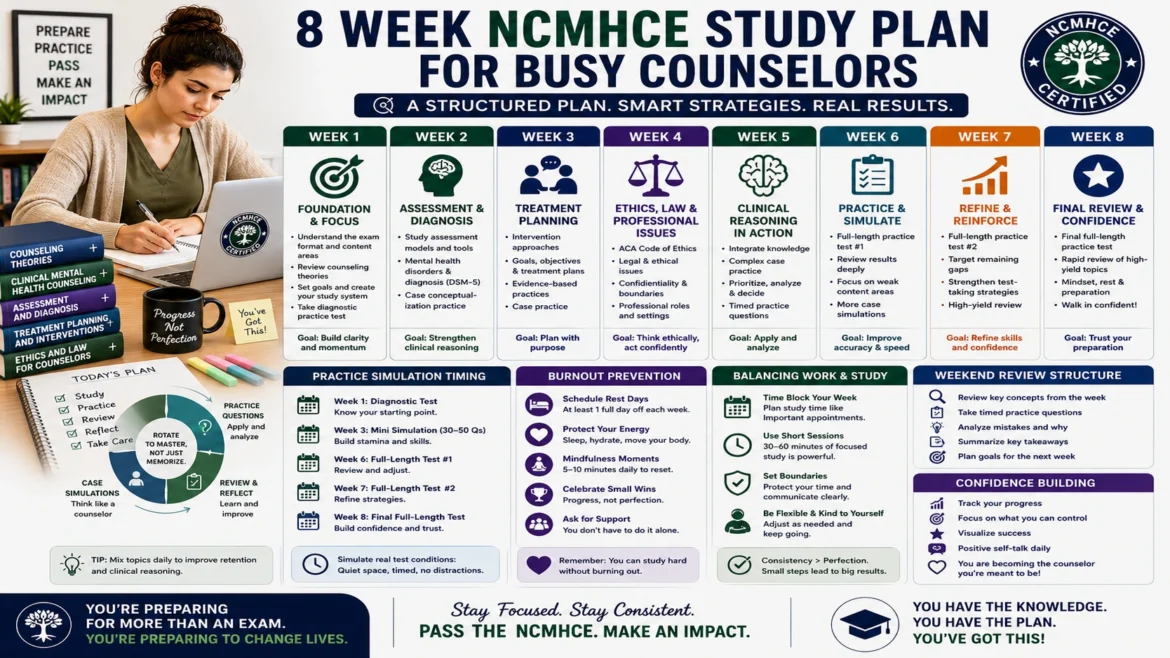
Week 1: Building Your Counseling Foundation
The first week should focus on organizing study materials, understanding exam expectations, and reviewing foundational counseling concepts.
Many candidates begin preparation feeling mentally scattered because they attempt to study everything at once.
Week 1 should focus on creating structure and clarity.
Main Goals for Week 1
- Understand the NCMHCE format
- Review major counseling domains
- Organize study resources
- Create a realistic weekly schedule
- Identify weak counseling areas
Important foundational review topics may include:
- Client assessment basics
- Treatment planning principles
- Ethical standards
- Crisis intervention fundamentals
- Cultural competency concepts
This week is not about perfection. The goal is building a stable preparation routine that feels sustainable long term.
Study Tip:Short daily review sessions are often easier to maintain than occasional long study marathons, especially for busy counseling professionals.
Week 2: Client Assessment and Diagnosis
The second week should focus heavily on client assessment skills because accurate assessment forms the foundation of effective counseling care.
The NCMHCE frequently evaluates whether candidates can recognize emotional symptoms, behavioral patterns, risk factors, and treatment priorities within client scenarios.
Key Areas to Review
- Mental status evaluations
- Behavioral observations
- Emotional symptom patterns
- Substance use assessment
- Risk identification
- Diagnostic reasoning basics
Many counseling candidates benefit from practicing scenario analysis during this phase because assessment interpretation becomes easier through repeated application.
Rather than memorizing symptoms mechanically, candidates should focus on understanding how emotional patterns affect treatment decisions and counseling priorities.
Week 3: Treatment Planning and Counseling Interventions
Treatment planning is one of the most important parts of counseling practice because effective therapy requires structured goals, appropriate interventions, and ongoing evaluation of client progress.
Week 3 should focus on strengthening the ability to:
- Select appropriate interventions
- Prioritize treatment goals
- Adjust counseling strategies
- Recognize ineffective interventions
- Support client progress safely
Candidates should practice thinking through realistic counseling scenarios involving:
- Anxiety disorders
- Depression
- Trauma responses
- Family conflict
- Substance abuse concerns
- Relationship stress
Repeated scenario analysis helps strengthen counseling judgment and improve treatment planning confidence.
Week 4: Ethics and Professional Responsibilities
Ethics appears throughout many NCMHCE scenarios because counseling professionals regularly encounter emotionally sensitive situations requiring careful judgment.
Week 4 should focus heavily on:
- Confidentiality
- Mandatory reporting
- Professional boundaries
- Dual relationship concerns
- Informed consent
- Client safety responsibilities
- Cultural sensitivity
Many ethical questions involve emotionally complicated counseling situations where multiple concerns overlap simultaneously.
Candidates should focus on understanding why certain responses are ethically appropriate rather than simply memorizing ethical definitions.
Professional Reminder:Strong ethical reasoning protects both client wellbeing and professional counseling integrity during difficult situations.
Why Practice Simulations Become More Important Over Time
As preparation progresses, counseling simulations become increasingly important because they help candidates combine multiple counseling skills simultaneously.
Scenario-based learning strengthens:
- Clinical reasoning
- Risk assessment
- Treatment planning
- Ethical decision-making
- Emotional awareness
- Time management
Many counseling candidates improve confidence faster when using realistic NCMHCE Practice Questions that mirror the emotional complexity and clinical reasoning challenges commonly seen during the actual licensure exam.
Week 5: Crisis Intervention and Risk Assessment
Week 5 should focus heavily on crisis intervention because client safety is one of the highest priorities in professional mental health counseling.
The NCMHCE frequently includes emotionally intense counseling scenarios involving:
- Suicidal ideation
- Self-harm concerns
- Domestic violence
- Trauma crises
- Substance abuse emergencies
- Panic-related instability
Candidates should strengthen the ability to:
- Recognize urgent warning signs
- Prioritize client safety quickly
- Select appropriate interventions
- Respond ethically under pressure
- Develop immediate action plans
Because crisis situations require rapid but thoughtful decision-making, repeated scenario-based learning often improves confidence significantly.
Clinical Insight:Strong crisis intervention skills require counselors to balance empathy, safety, ethics, and professional judgment simultaneously.
Week 6: Trauma, Substance Use, and Family Counseling
Many counseling situations involve overlapping emotional concerns connected to trauma, addiction, family conflict, or unhealthy relationship dynamics.
Week 6 should focus on strengthening understanding of:
- Trauma-informed counseling
- Substance use disorders
- Family systems concepts
- Relationship dynamics
- Behavioral coping patterns
- Emotional regulation challenges
Candidates should pay attention to how trauma and addiction may affect:
- Communication
- Trust
- Treatment engagement
- Emotional stability
- Risk assessment
- Therapeutic relationships
These topics often appear within complex counseling scenarios requiring thoughtful emotional analysis and treatment planning.
Week 7: Full Practice Simulations and Weak Area Review
By Week 7, candidates should begin focusing more heavily on full-length counseling simulations and realistic testing conditions.
This phase is important because many candidates understand counseling concepts individually but struggle combining multiple skills during long scenario-based sessions.
Week 7 should emphasize:
- Timed practice sessions
- Clinical simulation endurance
- Pacing improvement
- Weak area identification
- Rationale analysis
- Stress management
Many candidates discover important weaknesses during this stage involving:
- Ethical reasoning
- Crisis intervention
- Treatment prioritization
- Overanalyzing questions
- Time management
Careful rationale review becomes especially important because understanding why answers are correct strengthens counseling judgment more effectively than memorization alone.
Study Reminder:The goal is not perfection during practice testing. The goal is improving clinical reasoning gradually through consistent application and review.
Week 8: Final Review and Confidence Building
The final week should focus on reinforcement, confidence building, and mental preparation instead of trying to learn completely new material.
Many candidates increase anxiety unnecessarily during the final days before the exam by attempting aggressive last-minute cramming.
Instead, Week 8 should focus on:
- Reviewing major counseling concepts
- Practicing lighter simulations
- Strengthening confidence
- Managing stress
- Improving sleep routines
- Maintaining emotional balance
This final phase is about helping candidates feel mentally prepared, emotionally stable, and professionally confident before exam day.
How Busy Counselors Can Avoid Burnout
One of the biggest challenges during licensure preparation is emotional exhaustion. Many future counselors are simultaneously supporting clients while managing their own stress, financial pressure, supervision requirements, and personal responsibilities.
Burnout can negatively affect:
- Concentration
- Memory retention
- Motivation
- Clinical reasoning
- Testing confidence
Healthy preparation should include:
- Reasonable study expectations
- Scheduled recovery time
- Balanced routines
- Adequate sleep
- Stress management strategies
Protecting mental wellness is extremely important because emotional exhaustion can reduce learning efficiency significantly.
Why Active Learning Works Better Than Passive Reading
Many counseling candidates spend large amounts of time rereading notes or highlighting textbooks without actively applying the information.
Unfortunately, passive studying often produces weaker retention and limited clinical reasoning development.
Active learning methods are usually far more effective because they require candidates to:
- Analyze client situations
- Interpret emotional patterns
- Apply counseling strategies
- Evaluate ethical concerns
- Make treatment decisions
Examples of strong active learning methods include:
| Active Learning Method | Primary Benefit |
|---|---|
| Practice Simulations | Improves clinical reasoning. |
| Rationale Review | Strengthens counseling judgment. |
| Case Analysis | Improves treatment planning skills. |
| Timed Sessions | Builds pacing and endurance. |
| Weak Area Tracking | Supports targeted improvement. |
This type of active engagement often improves both confidence and long-term memory retention.
Learning From Common Preparation Problems
Many candidates improve their study efficiency significantly once they recognize the habits that commonly interfere with successful NCMHCE preparation.
For example, some counseling candidates struggle because they:
- Overfocus on memorization
- Avoid weak topics
- Delay practice simulations
- Study without structure
- Overanalyze every question
Educational resources discussing frequent NCMHCE preparation errors can help future counselors recognize these issues early and build stronger study habits throughout the preparation process.
How Consistency Builds Long-Term Counseling Confidence
Clinical reasoning develops gradually through repeated exposure to realistic counseling situations and thoughtful reflection on treatment decisions.
Even shorter study sessions repeated consistently each week can strengthen:
- Ethical awareness
- Treatment planning
- Assessment interpretation
- Risk management skills
- Clinical confidence
Over time, this consistency helps counseling candidates feel more prepared not only for the licensure exam but also for long-term professional counseling practice.
How Time Management Affects NCMHCE Performance
Many counseling candidates underestimate how mentally demanding long clinical simulations can become during the actual NCMHCE exam. Even highly knowledgeable candidates may struggle if they lack pacing strategies or become emotionally overwhelmed during difficult scenarios.
Without proper time management, candidates may:
- Spend too much time analyzing one scenario
- Rush later questions
- Lose concentration during longer sessions
- Experience increased anxiety
- Second-guess correct decisions repeatedly
Timed practice sessions throughout the 8-week study plan help candidates improve:
- Decision-making speed
- Mental endurance
- Clinical prioritization
- Scenario interpretation efficiency
- Confidence under pressure
These improvements often make the real exam environment feel more manageable and less intimidating.
Exam Strategy:Strong pacing skills help counselors preserve emotional focus and mental energy during complex counseling simulations.
Why Overstudying Can Become Counterproductive
Some candidates believe studying for extremely long hours every day guarantees success. However, excessive studying without mental recovery can increase emotional exhaustion and reduce learning efficiency.
Burnout often leads to:
- Reduced concentration
- Poor memory retention
- Increased frustration
- Lower motivation
- Difficulty processing counseling scenarios clearly
Mental health counseling preparation requires emotional balance because counseling itself is already an emotionally demanding profession.
Healthy preparation routines typically include:
- Reasonable study sessions
- Scheduled breaks
- Sleep management
- Stress reduction activities
- Balanced weekly goals
Many successful candidates study consistently without allowing preparation to completely overwhelm their daily lives.
How Busy Counselors Can Stay Motivated
Motivation naturally changes throughout longer study plans, especially for candidates balancing internships, work schedules, supervision hours, and personal responsibilities.
Some days may feel productive and encouraging, while other days feel mentally exhausting.
Maintaining motivation often becomes easier when candidates:
- Track weekly progress
- Celebrate small improvements
- Focus on long-term career goals
- Use realistic expectations
- Avoid comparing themselves to others
Many future counselors experience periods of self-doubt during preparation. This is completely normal during demanding professional licensing processes.
Consistency matters far more than perfection.
Mindset Reminder:Steady long-term progress usually produces stronger results than intense short-term studying followed by burnout.
Why Counseling Simulations Build Real Clinical Confidence
One of the biggest benefits of scenario-based preparation is that it helps candidates transition from “student thinking” into more professional clinical reasoning.
Repeated counseling simulations help strengthen:
- Treatment planning confidence
- Ethical decision-making
- Emotional awareness
- Client communication reasoning
- Crisis response judgment
- Professional counseling identity
Over time, candidates often become more comfortable analyzing emotionally difficult counseling situations without panic or excessive hesitation.
This confidence can positively affect both exam performance and real-world counseling effectiveness.
Creating a Sustainable Weekly Study Routine
Many busy counseling professionals benefit from flexible but structured weekly routines rather than rigid schedules that become difficult to maintain.
For example, a balanced weekly routine may include:
| Day | Suggested Focus |
|---|---|
| Monday | Topic review and notes |
| Tuesday | Practice simulations |
| Wednesday | Weak area review |
| Thursday | Ethics and treatment planning |
| Friday | Short practice session |
| Saturday | Longer counseling simulations |
| Sunday | Rest and light review |
This type of balanced structure often feels more sustainable for professionals managing busy counseling schedules.
The Importance of Mental Recovery During Preparation
Because counseling work often involves emotional intensity, candidates should not ignore the importance of mental recovery throughout preparation.
Healthy recovery habits may include:
- Physical activity
- Sleep consistency
- Healthy routines
- Mindfulness practices
- Supportive conversations
- Short mental breaks
Emotional balance can improve learning efficiency significantly because exhausted candidates often struggle retaining counseling information clearly.
Preparing for a professional counseling exam should strengthen long-term professional growth, not create harmful burnout.
How Structured Preparation Improves Counseling Judgment
The greatest advantage of a structured 8-week study plan is that it allows counseling skills to develop gradually through repeated reinforcement.
Over time, candidates often improve their ability to:
- Interpret client emotions
- Recognize treatment priorities
- Evaluate safety concerns
- Apply ethical reasoning
- Select interventions confidently
These improvements support both exam readiness and real-world counseling effectiveness.
Many successful counselors later realize that the reasoning skills strengthened during preparation continue benefiting their professional careers long after licensure.
Final Thoughts
The NCMHCE evaluates far more than textbook knowledge. Successful candidates must demonstrate clinical reasoning, emotional awareness, ethical professionalism, crisis intervention judgment, and practical counseling decision-making abilities.
An organized 8-week preparation plan helps future counselors:
- Study more efficiently
- Reduce overwhelm
- Strengthen weak areas gradually
- Improve counseling confidence
- Develop stronger clinical reasoning
- Build long-term professional skills
Rather than relying on last-minute cramming, many successful candidates focus on consistency, active learning, counseling simulations, and realistic long-term preparation habits.
Over time, this balanced preparation approach helps future mental health counselors feel more confident, professionally prepared, and emotionally ready for both licensure success and real counseling practice.
Frequently Asked Questions (FAQs)
How long should I study for the NCMHCE?
Many candidates prepare effectively over 6–10 weeks using structured study schedules focused on counseling simulations, ethics, treatment planning, and clinical reasoning.
Is an 8-week NCMHCE study plan enough?
Yes. An organized 8-week plan can provide enough time for consistent topic review, practice simulations, and weak area improvement for many candidates.
How many hours should busy counselors study weekly?
Many busy professionals benefit from 6–12 focused study hours weekly combined with active learning and consistent practice testing.
What should candidates focus on most during preparation?
Important focus areas often include treatment planning, ethics, crisis intervention, assessment skills, counseling simulations, and clinical reasoning.
Why are counseling simulations important for the NCMHCE?
Counseling simulations help candidates strengthen real-world decision-making, ethical judgment, pacing, and treatment planning confidence.