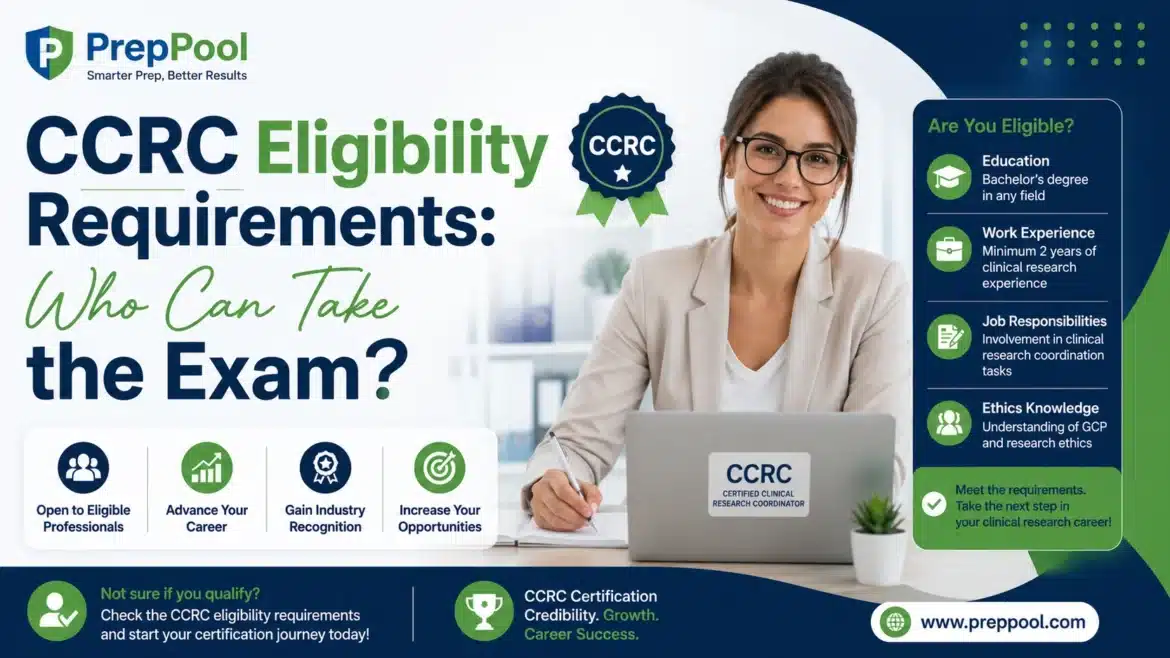

Before investing time in exam preparation, it’s important to confirm that you meet the eligibility requirements for the Certified Clinical Research Coordinator (CCRC®) examination. The certification is intended for experienced clinical research professionals, which means candidates must satisfy specific qualifications before they can apply to take the exam.
Understanding the eligibility criteria early can save time, help you prepare the necessary documentation, and ensure you’re following the correct certification pathway. Whether you’re currently working as a Clinical Research Coordinator, research nurse, or another member of a clinical research team, reviewing the requirements is one of the first steps toward earning the CCRC credential.
If you’re still deciding whether certification aligns with your long-term career goals, our guide on the career benefits of CCRC certification explains how the credential can support professional growth and strengthen your qualifications within the clinical research industry.
What You’ll Learn in This Guide
- Who is eligible to apply for the CCRC certification exam.
- What type of clinical research experience generally qualifies.
- How eligibility is evaluated.
- Common misunderstandings about the requirements.
- How to prepare once you’ve confirmed your eligibility.
Why Does the CCRC Have Eligibility Requirements?
The CCRC credential is designed for professionals who have already developed practical experience coordinating or supporting clinical research involving human participants. Rather than serving as an entry-level certification, it validates the knowledge and judgment gained through hands-on involvement in clinical trials.
Because certified coordinators often manage complex responsibilities—including participant safety, regulatory compliance, study documentation, protocol implementation, and communication with investigators and sponsors—the certification process requires candidates to demonstrate relevant professional experience before taking the examination.
This approach helps ensure that the exam measures applied knowledge rather than theoretical concepts alone.
Who Can Apply for the CCRC Exam?
The CCRC examination is generally intended for clinical research professionals who actively coordinate or manage research studies. While job titles differ among organizations, eligibility is based more on your responsibilities and experience than on your exact position title.
Professionals commonly pursuing certification include:
- Clinical Research Coordinators.
- Clinical Research Nurses.
- Research Coordinators working in hospitals.
- Clinical trial coordinators.
- Academic research professionals.
- Research staff working at independent clinical research sites.
- Experienced professionals supporting regulated clinical studies.
Your day-to-day responsibilities should involve meaningful participation in the coordination and conduct of clinical research rather than purely administrative or unrelated healthcare duties.
Important NoteMeeting the eligibility requirements is based on your actual clinical research experience, not simply your job title. Two professionals with the same title may qualify differently depending on the nature of their responsibilities.
Clinical Research Experience Matters Most
The most important part of determining eligibility is evaluating your practical clinical research experience. Certification organizations generally expect candidates to have actively participated in coordinating clinical trials and carrying out research activities under applicable regulations and ethical standards.
Qualifying experience often includes responsibilities such as:
- Coordinating participant visits.
- Maintaining study documentation.
- Supporting informed consent procedures.
- Managing regulatory records.
- Communicating with investigators, sponsors, and monitors.
- Following study protocols and Good Clinical Practice (GCP).
- Assisting with participant safety monitoring.
The greater your direct involvement in these activities, the more prepared you’ll typically be for both the certification process and the examination itself.
Experience Is More Valuable Than Memorization
One reason the CCRC examination is respected throughout the clinical research community is that it evaluates how candidates apply knowledge gained through real-world experience. Many exam questions reflect situations that experienced coordinators encounter during participant enrollment, study visits, protocol implementation, regulatory compliance, and documentation management.
This emphasis on practical decision-making means candidates often benefit from combining their workplace experience with focused exam preparation rather than relying solely on textbooks or study guides.
Start by Reviewing Your Professional Responsibilities
If you’re unsure whether you qualify, begin by reviewing your current and previous clinical research responsibilities. Compare the work you’ve performed with the types of activities expected of Clinical Research Coordinators, paying particular attention to your involvement in study coordination, participant management, regulatory documentation, and compliance with research protocols.
Taking the time to evaluate your experience now will make the application process smoother and help you move forward with greater confidence once you’re ready to prepare for the examination.
Understanding Qualifying Clinical Research Experience
One of the most important aspects of CCRC eligibility is the quality of your professional experience rather than simply the amount of time you’ve spent in a research environment. Certification is intended for individuals who have actively participated in coordinating clinical studies and supporting research activities throughout the life cycle of a clinical trial.
Experience gained in hospitals, academic medical centers, private research sites, contract research organizations (CROs), physician practices, or other regulated clinical research settings may contribute toward eligibility when your responsibilities involve meaningful participation in clinical research.
| Examples of Relevant Responsibilities | Why They Matter |
|---|---|
| Coordinating participant visits | Demonstrates involvement in day-to-day study operations. |
| Managing study documentation | Shows experience maintaining accurate research records. |
| Supporting informed consent | Reflects understanding of participant rights and ethics. |
| Regulatory document management | Demonstrates familiarity with compliance requirements. |
| Communicating with sponsors and monitors | Highlights collaboration throughout clinical studies. |
| Following research protocols | Shows practical application of Good Clinical Practice principles. |
Experience Can Look Different Across Organizations
Not every Clinical Research Coordinator performs exactly the same duties. Responsibilities often vary depending on the size of the research site, the therapeutic area, the number of ongoing studies, and the structure of the research team.
For example, coordinators working at large academic medical centers may specialize in certain responsibilities, while professionals at smaller research sites often manage a broader range of study activities. Both types of experience can be valuable when they involve active participation in clinical research.
Practical AdviceWhen reviewing your experience, focus on the actual research responsibilities you’ve performed rather than your job title. Your day-to-day duties provide a much clearer picture of your readiness for certification.
Common Misunderstandings About Eligibility
Many professionals assume that working in healthcare automatically qualifies them for the CCRC examination. In reality, clinical healthcare experience and clinical research experience are not the same.
Providing patient care alone does not necessarily satisfy certification requirements if your role has not included responsibilities related to clinical research studies.
Similarly, administrative positions that involve scheduling appointments or general office management without active participation in research coordination may not represent the type of experience expected for certification.
Questions to Ask Yourself Before Applying
If you’re uncertain about your eligibility, consider whether you can confidently answer “yes” to most of the following questions:
- Have I actively coordinated or supported clinical research studies?
- Do I understand Good Clinical Practice principles?
- Have I worked with research protocols and study procedures?
- Have I maintained study documentation or regulatory records?
- Have I interacted with investigators, sponsors, monitors, or study participants?
- Have I contributed to protecting participant safety and maintaining regulatory compliance?
If your daily responsibilities regularly include these activities, you may already possess much of the practical experience expected of CCRC candidates.
Keep Records of Your Professional Experience
Before beginning the application process, it’s a good idea to organize information about your employment history and research responsibilities. Maintaining accurate records can make completing your application easier and help you verify your experience if additional documentation is required.
Helpful information to gather includes:
- Employment dates.
- Research positions held.
- Clinical research responsibilities.
- Types of studies supported.
- Supervisors or principal investigators you’ve worked with.
- Professional training related to clinical research.
RememberCertification organizations periodically review their policies and application procedures. Before submitting your application, always review the most current eligibility information and documentation requirements provided by the certifying organization to ensure you meet all applicable criteria.
Eligibility Is Only the First Step
Confirming that you qualify for the examination is an important milestone, but it’s only the beginning of the certification journey. Once you’ve established your eligibility, your attention should shift toward building a structured study plan, reviewing key clinical research concepts, and strengthening your ability to apply knowledge in realistic exam scenarios.
Starting your preparation early gives you more time to identify weaker subject areas, reinforce your understanding of research regulations and ethics, and develop the confidence needed to perform well on exam day.
What to Do After Confirming Your Eligibility
Once you’ve determined that you meet the eligibility requirements, the next step is creating a preparation strategy that fits your schedule and professional responsibilities. Many Clinical Research Coordinators prepare for the examination while working full-time, so developing a realistic study routine can make the process more manageable.
Instead of trying to review every topic at once, divide your preparation into smaller study sessions that focus on one subject at a time. This approach helps improve long-term retention and reduces the stress that often comes with last-minute studying.
| Preparation Step | Purpose |
|---|---|
| Confirm Eligibility | Ensure you meet the certification requirements before applying. |
| Create a Study Schedule | Organize your review into manageable weekly goals. |
| Review Core Clinical Research Topics | Build a solid understanding of regulations, ethics, and study operations. |
| Complete Practice Questions | Apply your knowledge and identify weaker subject areas. |
| Review Answer Explanations | Strengthen clinical reasoning and improve decision-making. |
Practice Questions Help You Prepare More Effectively
Eligibility confirms that you have the necessary professional experience, but exam success depends on how well you apply that experience to the types of questions presented during the certification examination.
Working through realistic practice questions allows you to reinforce important concepts, improve critical thinking, and become more comfortable analyzing situations involving participant safety, regulatory compliance, informed consent, protocol implementation, documentation, and study management.
Equally important is reviewing detailed answer explanations. Understanding why one answer is correct—and why the others are not—helps strengthen your knowledge far more effectively than simply memorizing facts.
Study TipDon’t wait until you’ve finished reading every study resource before attempting practice questions. Mixing active practice with content review helps reinforce learning and highlights areas that deserve additional attention.
Prepare with Confidence Using PrepPool
If you’ve confirmed your eligibility and are ready to begin studying, PrepPool offers realistic CCRC practice exam questions designed to help you review essential clinical research concepts in an exam-focused format.
Each practice question is supported by detailed explanations that reinforce key topics such as Good Clinical Practice (GCP), regulatory compliance, informed consent, participant protection, study documentation, investigational product accountability, and clinical trial operations. Consistent practice can help you recognize knowledge gaps and build greater confidence before exam day.
Explore More Healthcare Certification Resources
If you’re planning to earn additional professional credentials or are exploring other healthcare career pathways, visit PrepPool’s collection of Healthcare Certification Exam Preparation resources. The page features practice materials for a wide variety of healthcare and allied health certification exams, making it easier to continue your professional development beyond the CCRC credential.
Why Candidates Choose PrepPool
- Realistic exam-style practice questions.
- Detailed answer explanations that support active learning.
- Coverage of important clinical research concepts.
- Self-paced study designed for busy professionals.
- Resources that help identify strengths and improve weaker areas.
- A practical companion throughout your certification preparation.
Final Thoughts
Meeting the CCRC eligibility requirements is an important milestone because it confirms that you’ve gained meaningful experience in clinical research and are ready to pursue professional certification. Although every candidate’s career path is different, understanding the requirements before applying helps make the certification process smoother and allows you to focus your energy on preparing for the examination itself.
By combining your real-world clinical research experience with structured study, consistent practice, and high-quality preparation materials, you’ll be well positioned to approach the CCRC examination with confidence and continue advancing your career in clinical research.
FAQs
Can I take the CCRC exam without clinical research experience?
The CCRC certification is intended for professionals with qualifying clinical research experience. Before applying, review the current eligibility criteria established by the certifying organization to determine whether your background meets the requirements.
Does my job title determine whether I’m eligible?
No. Eligibility is generally based on your actual clinical research responsibilities and professional experience rather than your job title alone.
Does nursing experience automatically qualify me for the CCRC exam?
Not necessarily. Nursing experience can be valuable, but eligibility depends on your involvement in clinical research activities, such as coordinating studies, managing research documentation, and supporting regulated clinical trials.
Should I verify my eligibility before I begin studying?
Yes. Confirming that you meet the eligibility requirements before investing significant time in exam preparation helps ensure you’re following the appropriate certification pathway.
Are practice tests useful after I meet the eligibility requirements?
Absolutely. Practice questions help reinforce key concepts, improve clinical reasoning, identify weaker subject areas, and provide valuable experience answering questions similar to those found on the certification examination.