U.S. Nursing Exam Preparation Guide (2026)
A complete professional roadmap for passing NCLEX, TEAS, HESI, and U.S. nursing certification exams.
Learn proven study strategies, realistic preparation timelines, and exam-level practice methods used by successful nursing students across the United States.
stable, high-paying healthcare career. Whether you are preparing for the NCLEX-RN, TEAS, HESI, or
a specialty certification like CCRN, these exams are designed to test not just knowledge, but
clinical judgment, safety awareness, and real-world decision-making.Many nursing students underestimate how challenging U.S. nursing exams can be. Even strong students
who perform well in nursing school sometimes struggle with standardized exams because the questions
focus heavily on critical thinking rather than memorization. Understanding how these exams work—and
how to prepare strategically—can make the difference between failing and passing on your first attempt.This guide provides a complete, professional roadmap for passing nursing exams in the United States.
It covers proven study methods, realistic timelines, exam-day strategies, and common mistakes to avoid.
Whether you are a first-time test taker, a repeat candidate, or an international nurse planning to work
in the U.S., this pillar guide will help you build a structured plan and approach your exam with confidence.
Why Passing Nursing Exams in the USA Matters
The United States continues to face a strong demand for qualified nurses. Hospitals, clinics, and
healthcare organizations across the country are actively hiring registered nurses and licensed
practical nurses to meet growing patient needs. Passing your required nursing exam is the key step
that allows you to obtain licensure and begin working in the U.S. healthcare system.
| Career Level | Average U.S. Salary | Required Exam | Growth Outlook |
|---|---|---|---|
| Registered Nurse (RN) | $75,000 – $110,000 | NCLEX-RN | Very High |
| Licensed Practical Nurse | $50,000 – $65,000 | NCLEX-PN | High |
| Critical Care Nurse | $95,000+ | CCRN | Specialized |
With strong salaries, job stability, and career advancement opportunities, passing your nursing
exam is more than just an academic milestone—it is the gateway to long-term professional success
in the United States healthcare system.
Major Nursing Exams in the United States
Before building a study plan, it is important to understand which exam you are preparing for. Each
nursing exam serves a different purpose and requires a slightly different preparation strategy.
| Exam | Who It’s For | Difficulty Level | Focus Areas |
|---|---|---|---|
| NCLEX-RN | Registered Nurses | High | Clinical judgment, safety |
| NCLEX-PN | Practical Nurses | Medium | Patient care basics |
| TEAS | Nursing school entry | Medium | Science, math, reading |
| HESI | School entrance/exit | Medium | Core nursing knowledge |
| CCRN | Critical care nurses | Very High | Advanced patient care |
Why Many Students Fail U.S. Nursing Exams
Nursing exams in the United States are designed to test clinical thinking rather than simple
memorization. Many students who fail do so not because they lack knowledge, but because they
approach preparation incorrectly.
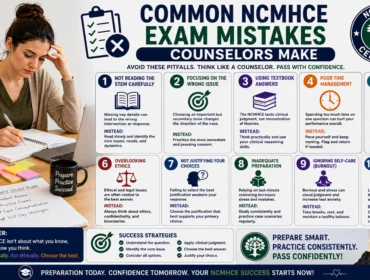
- Relying only on textbooks without practicing exam-style questions
- Poor time management and inconsistent study schedules
- Weak pharmacology and fundamentals foundation
- Test anxiety and lack of exam strategy
- Not understanding how adaptive testing works (NCLEX)
Successful candidates focus heavily on practice questions, clinical reasoning, and structured
revision plans rather than passive reading. Developing a realistic study schedule and using
high-quality practice material can significantly improve your chances of passing on the first attempt.
Study Time vs Passing Probability
1–2 weeks
4 weeks
8 weeks
12+ weeks
Higher Pass Rate
Students who follow structured 8–12 week study plans consistently achieve higher first-attempt pass rates.
Start Practicing the Right Way
One of the most effective ways to prepare for any U.S. nursing exam is through consistent, realistic
practice testing. Working through exam-level questions daily helps build clinical judgment, improves
time management, and identifies weak areas before test day.
You can begin structured preparation using Nursing Practice Exams and Test Prep Questions and Answers designed to match real exam difficulty and format. Practicing under timed conditions allows you to simulate the actual testing environment and build confidence gradually.
Step-by-Step Study Plan to Pass Nursing Exams in the USA
Preparing for a nursing exam requires more than simply reading textbooks or watching lectures.
Successful candidates follow structured, realistic study plans that focus on understanding concepts,
practicing daily, and reviewing weak areas consistently. Whether you are preparing for NCLEX, TEAS,
HESI, or a specialty certification, a strategic approach will significantly improve your chances of
passing on your first attempt.
Most nursing candidates benefit from an 8- to 12-week preparation timeline. This allows enough time
to review core nursing concepts, practice hundreds of exam-style questions, and build strong
clinical reasoning skills.
Recommended 12-Week Nursing Exam Study Timeline
| Week | Focus Area | Study Goals |
|---|---|---|
| 1–2 | Fundamentals | Review core nursing concepts and patient safety |
| 3–4 | Pharmacology | Drug classifications, side effects, calculations |
| 5–6 | Medical-Surgical | System-based disorders and treatments |
| 7–8 | Practice Exams | Daily timed practice and analysis |
| 9–10 | Weak Areas | Focus on low-scoring topics |
| 11–12 | Final Revision | Full-length mock exams and review |
Ideal Daily Study Routine for Nursing Students
Consistency matters more than long study sessions. Most successful candidates study 3–5 hours daily
using a structured routine that balances content review and practice questions.
- Morning: Review core concepts and weak topics
- Afternoon: Practice 50–100 exam-style questions
- Evening: Review explanations and note mistakes
- Weekly: Take one full-length timed mock test
Studying this way helps build long-term retention and improves critical thinking skills required
for high-level nursing exams in the United States.
Best Study Methods to Pass U.S. Nursing Exams
Active Recall Learning
Instead of re-reading textbooks repeatedly, test yourself frequently. Active recall forces the brain
to retrieve information, strengthening memory and improving long-term retention. Flashcards, quizzes,
and self-testing are highly effective techniques.
Spaced Repetition
Review topics multiple times over several weeks rather than cramming everything in a short period.
Spaced repetition improves retention and ensures that key nursing concepts remain fresh on exam day.
Practice Questions Every Day
Daily practice questions are essential. Most successful candidates complete hundreds or even thousands
of practice questions before sitting for their exam. Reviewing answer explanations carefully helps
strengthen clinical judgment and decision-making.
Case-Based Learning
U.S. nursing exams focus heavily on real-world patient scenarios. Practice case studies and scenario-based
questions to improve critical thinking and prioritization skills.
Timed Mock Exams
Simulating real testing conditions reduces anxiety and builds confidence. Schedule at least one timed
full-length practice exam each week during your final preparation phase.
Most Effective Study Techniques
Practice Tests
Active Recall
Flashcards
Reading Only
Students who prioritize practice testing and active recall consistently achieve higher exam scores
compared to passive reading alone.
Common Mistakes to Avoid When Preparing
- Studying without a structured weekly plan
- Ignoring weak subject areas
- Not reviewing answer explanations carefully
- Taking too few full-length practice exams
- Last-minute cramming before exam day
Avoiding these common mistakes can dramatically increase your chances of passing your nursing exam
on the first attempt.
30-Day Final Revision Plan Before Exam
| Days | Focus | Goal |
|---|---|---|
| 1–5 | Fundamentals Review | Strengthen basics |
| 6–10 | Pharmacology | Drug safety mastery |
| 11–20 | Practice Tests | Daily timed exams |
| 21–30 | Final Review | Confidence building |
How Many Practice Questions Should You Do Daily?
One of the most common questions nursing students ask is how many practice questions they should
complete each day. While the exact number varies depending on your schedule and exam timeline,
consistent daily practice is one of the strongest predictors of success.
| Preparation Level | Questions Per Day | Recommended Timeline |
|---|---|---|
| Beginner | 40–60 questions | First 3–4 weeks |
| Intermediate | 75–120 questions | Middle preparation |
| Final Month | 150–200 questions | Last 30 days |
The key is not just completing questions but reviewing every explanation carefully. Understanding
why an answer is correct or incorrect builds the clinical judgment needed to pass U.S. nursing exams.
Nursing Exam Day Strategies for Success
Proper preparation does not end with studying. Your performance on exam day depends heavily on
confidence, time management, and mental focus. Many well-prepared candidates underperform simply
because they do not manage stress or time effectively.
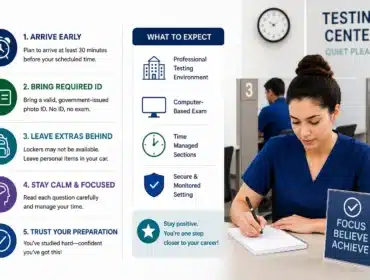
- Get at least 7–8 hours of sleep before exam day
- Arrive early at the testing center to avoid stress
- Read each question carefully and avoid rushing
- Use elimination strategy for difficult questions
- Stay calm and trust your preparation
Remember that most nursing exams are designed to test clinical judgment rather than memorization.
Focus on patient safety, prioritization, and logical reasoning when answering complex questions.
Time Management During the Exam
Effective time management can significantly impact your score. Many nursing exams include
challenging scenario-based questions that require careful reading and analysis.
- Do not spend too long on one difficult question
- Use clinical logic when unsure of answers
- Maintain a steady pace throughout the exam
- Review flagged questions if time allows
Practicing under timed conditions during your preparation will help you develop confidence and
accuracy under pressure.
Confidence vs Exam Performance
Students who complete full-length mock exams before test day typically show higher confidence and
stronger performance during actual nursing exams.
Mental Preparation and Reducing Exam Anxiety
Anxiety is a common challenge for nursing students. Even highly prepared candidates sometimes
struggle with test-day stress. Managing your mindset is just as important as mastering the content.
- Practice deep breathing before and during the exam
- Take short mental breaks if allowed
- Avoid comparing yourself to other candidates
- Focus on one question at a time
- Trust your preparation and training
Confidence comes from consistent preparation and repeated exposure to realistic practice questions.
The more you simulate exam conditions, the more comfortable you will feel on test day.
Frequently Asked Questions About Passing Nursing Exams in the USA
How hard is it to pass nursing exams in the United States?
Nursing exams in the U.S. are challenging because they test critical thinking and clinical judgment.
With a structured study plan, consistent practice, and strong fundamentals, most candidates can pass
successfully on their first attempt.
How long should I study before taking the NCLEX or other nursing exams?
Most candidates prepare for 8–12 weeks. However, preparation time depends on your background knowledge,
study consistency, and comfort with clinical scenarios.
Can I pass a nursing exam without coaching classes?
Yes. Many successful candidates prepare independently using structured study plans and high-quality
practice questions. Consistency and proper strategy are more important than coaching.
What is the best way to improve my score quickly?
Focus on daily practice questions, review explanations carefully, and identify weak areas. Targeted
revision is far more effective than general reading.
What should I do if I fail my first attempt?
Review your score report carefully, identify weak sections, and build a new study plan focusing on
those areas. Many nurses pass successfully on their second attempt with improved preparation.
Final Thoughts: Build a Smart Strategy and Stay Consistent
Passing a nursing exam in the United States is a major achievement that opens the door to stable,
rewarding career opportunities. Success depends not only on how much you study, but how effectively
you prepare. A structured study plan, consistent practice testing, and strong clinical reasoning
skills will significantly increase your chances of passing on your first attempt.
Stay disciplined, practice regularly, and approach exam day with confidence. With the right strategy
and preparation, you can successfully pass your nursing exam and move forward in your healthcare career.
This professional nursing exam guide is prepared by healthcare exam research specialists and updated
regularly to reflect current U.S. nursing exam patterns, formats, and preparation strategies.
Recommended Healthcare & Nursing Practice Exams
Rehabilitation Health Exam Practice
Updated practice questions with detailed explanations for rehabilitation health exams.
Occupational Therapy Practice Exam
Exam-level occupational therapy questions with scenario-based preparation.
Occupational Health Exam Prep
Comprehensive occupational health certification practice questions.
Preventive Care Exam Practice
Strengthen preventive healthcare exam preparation with realistic tests.
CCHT Exam Practice
Certified Clinical Hemodialysis Technician exam-level practice questions.
Epidemiology Practice Exam
Practice epidemiology exam questions for healthcare and public health students.