
Why Many Nurses Struggle With the CNRN Exam
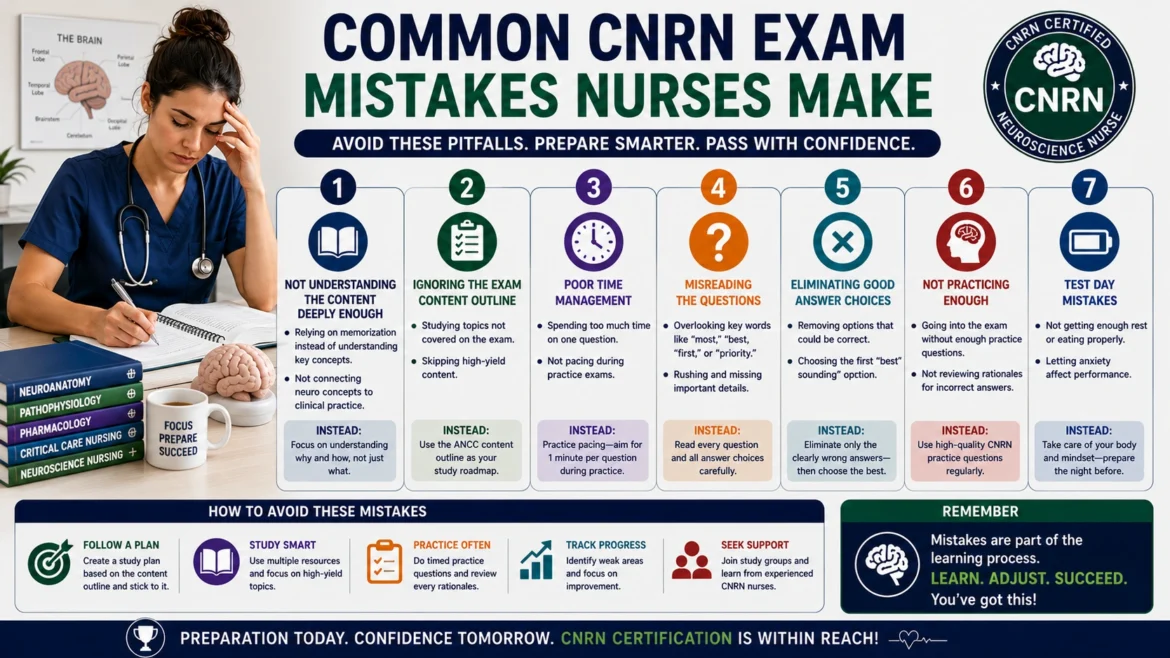
The Certified Neuroscience Registered Nurse (CNRN) exam is considered one of the more specialized nursing certification exams because it evaluates advanced neurological knowledge, clinical judgment, and patient care decision-making skills. Many experienced nurses enter the preparation process believing their clinical background alone will guarantee success, only to realize the exam requires a much deeper level of structured preparation.
One of the biggest reasons candidates struggle is not lack of intelligence or clinical experience. Instead, preparation problems often come from ineffective study habits, inconsistent practice routines, and misunderstanding how the exam evaluates neuroscience nursing knowledge.
The good news is that many common mistakes are completely avoidable once candidates recognize them early.
Mistake #1: Relying Only on Passive Reading
One of the most common study mistakes neuroscience nursing candidates make is spending too much time passively reading textbooks, notes, and review guides without actively applying the information.
Although reading is important for building foundational knowledge, passive review alone rarely develops the clinical reasoning skills required for certification exams.
Many candidates repeatedly highlight pages, reread chapters, or watch educational videos for hours while feeling productive. However, without active engagement, long-term retention often remains weak.
The CNRN exam typically challenges candidates to:
- Analyze neurological patient scenarios
- Prioritize interventions
- Recognize dangerous complications
- Interpret assessment findings
- Apply evidence-based care decisions
These skills require active thinking, not simple memorization.
Nurses who combine reading with active recall methods, case analysis, and scenario-based learning usually retain information more effectively and improve clinical judgment faster.
Mistake #2: Ignoring Weak Neuroscience Topics
Many candidates naturally spend more time reviewing topics they already understand well because studying familiar material feels comfortable and rewarding.
Unfortunately, avoiding weaker neuroscience topics can create dangerous knowledge gaps during the exam.
For example, some nurses feel highly confident in stroke management but struggle with:
- Intracranial pressure monitoring
- Cranial nerve assessment
- Seizure emergencies
- Neuro pharmacology
- Spinal cord injuries
- Post-neurosurgical complications
The certification exam may heavily test these weaker areas, making balanced preparation essential.
Strong candidates regularly identify weak areas and intentionally dedicate extra study time to strengthening them.
Mistake #3: Underestimating Clinical Reasoning Questions
Many nurses expect certification exams to focus mainly on recalling isolated facts. However, neuroscience nursing exams often emphasize clinical reasoning and prioritization instead.
This means candidates may encounter questions requiring them to:
- Identify the safest intervention first
- Recognize subtle neurological decline
- Prioritize emergency care actions
- Interpret multiple assessment findings together
- Evaluate patient safety risks
Candidates who focus only on memorization frequently struggle with these higher-level scenario questions.
Clinical reasoning improves when nurses practice analyzing patient situations instead of simply reviewing definitions.
Real neuroscience nursing environments rarely present perfectly straightforward cases. Patients may show overlapping symptoms, rapidly changing neurological conditions, and competing care priorities.
The exam reflects this reality.
Mistake #4: Not Practicing Under Timed Conditions
Another major preparation mistake involves avoiding timed practice sessions.
Some candidates study content thoroughly but never simulate actual testing conditions before exam day. As a result, they may experience unexpected stress, poor pacing, or mental fatigue during the real exam.
Timed practice helps nurses improve:
- Question pacing
- Decision-making speed
- Mental endurance
- Focus under pressure
- Confidence during difficult questions
Without timed practice, even knowledgeable candidates may spend too long analyzing difficult questions and lose valuable time later in the exam.
Simulated testing environments help reduce uncertainty and improve overall exam readiness.
Mistake #5: Memorizing Without Understanding
Some candidates attempt to memorize large amounts of neuroscience information mechanically without understanding the deeper clinical meaning behind the material.
This approach creates major difficulties during application-based questions because memorized facts alone often cannot solve complex patient scenarios.
For example, memorizing symptoms of increased intracranial pressure is helpful, but the exam may require candidates to recognize subtle symptom progression in a deteriorating trauma patient.
Understanding why symptoms occur and how neurological conditions evolve is far more important than memorizing isolated details.
Strong neuroscience preparation focuses on:
- Understanding pathophysiology
- Connecting symptoms to neurological function
- Recognizing complication patterns
- Applying interventions logically
- Prioritizing patient safety
This deeper understanding strengthens both exam performance and real clinical care abilities.
How Stress and Burnout Affect Preparation
Many nurses preparing for certification are simultaneously balancing demanding work schedules, night shifts, family responsibilities, and emotional fatigue from patient care environments.
Burnout can significantly affect concentration, memory retention, motivation, and study consistency.
Signs of unhealthy preparation burnout may include:
| Burnout Sign | Possible Impact |
|---|---|
| Mental exhaustion | Reduced concentration and memory retention |
| Skipping study sessions | Inconsistent preparation progress |
| Overstudying without breaks | Lower long-term retention |
| Increased anxiety | Reduced testing confidence |
| Poor sleep habits | Impaired cognitive performance |
Healthy study balance is important because mental performance directly affects learning efficiency and clinical reasoning development.
Why Practice Questions Help Prevent Major Mistakes
One of the most effective ways to identify preparation weaknesses early is through realistic neuroscience practice questions.
Practice testing helps candidates recognize:
- Knowledge gaps
- Poor pacing habits
- Weak clinical reasoning
- Problematic prioritization skills
- Neurological assessment confusion
- Difficulty interpreting scenarios
Instead of discovering weaknesses during the actual exam, candidates can address them gradually throughout preparation.
Many neuroscience nurses preparing for certification strengthen readiness by working through structured CNRN practice exam questions & answers that simulate realistic neurological care scenarios and improve critical thinking under exam-style conditions.
Mistake #6: Studying Without a Structured Plan
Many candidates begin preparing for the CNRN exam with strong motivation but no clear study structure. Without a realistic plan, preparation often becomes inconsistent, disorganized, and stressful.
Some nurses study intensely for a few days and then stop completely for long periods because work schedules and personal responsibilities interrupt momentum.
A structured study plan helps candidates:
- Stay consistent over time
- Cover all major neuroscience topics
- Track preparation progress
- Reduce last-minute panic
- Balance difficult and easier content areas
- Build confidence gradually
Preparation becomes much more manageable when candidates divide neuroscience content into smaller sections instead of trying to study everything at once.
For example, some nurses organize study schedules around weekly focus topics such as:
- Stroke care
- Seizure management
- Neuro assessment
- Spinal cord injuries
- Intracranial pressure
- Neuro pharmacology
This structured approach often improves retention while reducing overwhelm.
Mistake #7: Focusing Too Much on Scores Instead of Learning
Some candidates become overly focused on practice exam percentages instead of analyzing why mistakes happen.
While tracking progress is helpful, the real educational value comes from understanding:
- Why an answer was incorrect
- What neurological concept was misunderstood
- How prioritization errors occurred
- Which assessment clues were missed
- What patient safety principle applied
Nurses who carefully review rationales often improve much faster than those who simply chase higher scores.
The purpose of practice testing is not only measuring performance. It is developing stronger neurological reasoning skills and safer clinical thinking patterns.
High-performing candidates often spend as much time reviewing rationales as they spend answering questions themselves.
Mistake #8: Ignoring Neurological Assessment Fundamentals
Neurological assessment forms the foundation of neuroscience nursing care. However, some candidates focus heavily on advanced concepts while overlooking essential assessment skills.
The CNRN exam frequently evaluates whether nurses can identify subtle neurological changes that may indicate serious complications.
Candidates should feel confident with:
- Glasgow Coma Scale interpretation
- Pupil assessment findings
- Motor strength evaluation
- Cranial nerve assessment basics
- Sensory deficits
- Changes in consciousness
- Stroke symptom progression
Because neurological deterioration can happen quickly, accurate assessments are critical for patient safety in real clinical settings.
Repeated practice with scenario-based questions helps nurses strengthen these assessment interpretation skills significantly.
Mistake #9: Comparing Progress to Other Nurses
Certification preparation looks different for every nurse. Some candidates require more time because of work schedules, family obligations, stress levels, or learning preferences.
Unfortunately, comparing preparation progress to coworkers or online discussions can increase anxiety unnecessarily.
Some nurses become discouraged when they:
- Score lower on practice exams initially
- Need longer to understand difficult topics
- Study at a slower pace
- Feel less confident than peers
Effective preparation is not about matching someone else’s timeline. The goal is developing genuine neuroscience understanding and clinical confidence.
Many successful candidates improve gradually through consistency rather than rapid short-term progress.
Mistake #10: Waiting Too Long to Start Practice Questions
Some candidates avoid practice questions until they feel fully prepared. However, delaying active practice often slows overall learning progress.
Practice questions are not only assessment tools. They are also powerful learning tools.
Starting practice questions earlier helps candidates:
- Identify weak areas faster
- Improve question interpretation
- Develop testing strategies
- Strengthen active recall
- Reduce exam anxiety gradually
Even candidates who answer many questions incorrectly initially can improve rapidly through repeated exposure and rationale review.
Early practice often reveals hidden weaknesses that passive reading alone may never uncover.
Why Realistic Neuroscience Scenarios Matter
The most effective CNRN preparation materials reflect realistic neurological patient care situations instead of simple fact memorization exercises.
Real neuroscience nursing environments involve:
- Rapid patient deterioration
- Competing clinical priorities
- Complex symptom interpretation
- Emergency interventions
- Interdisciplinary communication
- Patient safety decisions
Certification exams are designed to reflect these realities because neuroscience nurses must think critically during high-pressure situations.
Scenario-based learning helps candidates develop stronger decision-making pathways that support both exam performance and real clinical care.
Building Better Long-Term Study Habits
Strong study habits do not only improve certification outcomes. They also contribute to long-term professional development throughout a nursing career.
Nurses who develop disciplined study routines often become more confident in:
- Clinical reasoning
- Neurological assessments
- Emergency response situations
- Provider communication
- Evidence-based care decisions
These benefits extend far beyond passing the exam itself.
Many nurses preparing for advanced neuroscience certification also find it helpful to understand the broader career path, certification expectations, and long-term professional opportunities associated with neuroscience nursing. Educational resources like this CNRN certification roadmap for nurses can provide additional guidance while building a stronger overall preparation strategy.
Final Thoughts
Many common CNRN preparation mistakes are preventable with the right study approach, realistic expectations, and consistent practice habits.
Successful candidates usually focus on:
- Active learning
- Clinical reasoning development
- Balanced neuroscience review
- Scenario-based practice
- Rationale analysis
- Long-term consistency
Neuroscience nursing is a demanding specialty that requires both technical knowledge and strong critical thinking abilities. Certification preparation should strengthen both areas simultaneously.
By recognizing common mistakes early and building smarter study habits, candidates can improve confidence, reduce anxiety, and prepare more effectively for advanced neuroscience nursing certification.
How Poor Time Management Hurts Exam Performance
Time management problems affect many capable nurses during certification exams. Even candidates with strong neuroscience knowledge may struggle if they spend too much time analyzing difficult questions early in the test.
The CNRN exam often includes detailed neurological scenarios that require careful interpretation. Without pacing strategies, candidates can experience:
- Mental fatigue
- Increased anxiety
- Rushed decision-making
- Difficulty concentrating later in the exam
- Incomplete question review
Effective time management improves through repeated practice under realistic testing conditions.
Many successful candidates develop habits such as:
- Reading questions carefully but efficiently
- Avoiding excessive overthinking
- Flagging difficult questions temporarily
- Maintaining steady pacing throughout the exam
- Practicing full-length timed sessions regularly
These habits often improve confidence and reduce unnecessary stress during exam day.
Why Overconfidence Can Become Dangerous
Clinical experience is extremely valuable in neuroscience nursing, but relying only on work experience without structured preparation can create problems during certification exams.
Some experienced nurses assume years of neurological patient care automatically guarantee success. However, certification exams often evaluate areas that may not appear frequently in daily practice.
For example, a nurse working primarily in stroke care may have limited exposure to:
- Spinal cord injury rehabilitation
- Neuro-oncology complications
- Advanced neuro diagnostics
- Certain seizure disorders
- Rare neurological syndromes
Overconfidence may cause candidates to underestimate the depth and variety of content covered during the exam.
Balanced preparation remains essential regardless of experience level.
The Problem With Last-Minute Cramming
Many candidates become overwhelmed near exam day and attempt to absorb large amounts of neuroscience information rapidly. Unfortunately, last-minute cramming often increases stress while reducing long-term retention.
Neuroscience nursing concepts require deeper understanding and clinical application, not short-term memorization alone.
Heavy cramming can lead to:
- Mental exhaustion
- Difficulty recalling information clearly
- Reduced concentration
- Higher anxiety levels
- Poor sleep quality
Consistent study routines spread over time usually produce much stronger outcomes because the brain retains information more effectively through repetition and active recall.
Even short daily study sessions can be more beneficial than occasional intensive marathon reviews.
Why Understanding Rationales Is Critical
One of the biggest missed learning opportunities during exam preparation occurs when candidates review only whether an answer was correct or incorrect without studying the rationale carefully.
Detailed rationales help nurses understand:
- Why one intervention takes priority
- Why alternative answers may be unsafe
- How neurological symptoms connect clinically
- What assessment findings matter most
- How patient safety influences decisions
This deeper analysis strengthens critical thinking significantly more than memorizing isolated facts.
Strong neuroscience nurses understand the reasoning behind interventions instead of simply recalling information mechanically.
The Importance of Building Exam Endurance
Long certification exams can become mentally exhausting, especially when candidates encounter multiple complex neurological scenarios consecutively.
Some nurses struggle not because of weak knowledge, but because mental fatigue affects focus and concentration later in the exam.
Building endurance through realistic practice sessions helps candidates prepare mentally for:
- Long periods of concentration
- Complex neurological analysis
- Maintaining focus under pressure
- Reading carefully despite fatigue
- Managing stress throughout the exam
Practice sessions that simulate actual testing conditions often improve both confidence and mental stamina.
How Better Preparation Improves Real Patient Care
Although certification exams are important career milestones, the deeper purpose of preparation is improving patient care quality and neurological clinical performance.
Strong neuroscience preparation can help nurses become:
- More confident during emergencies
- More accurate in assessments
- Better at recognizing deterioration
- More effective communicators
- Safer clinical decision-makers
- Stronger patient advocates
These improvements directly benefit neurological patients and healthcare teams in real clinical environments.
In high-acuity neurological settings, rapid recognition of subtle patient changes can dramatically affect patient outcomes and recovery.
Why Continuous Learning Matters in Neuroscience Nursing
Neuroscience nursing continues evolving rapidly as new technologies, treatments, and neurological research emerge across healthcare systems in the United States.
Certified neuroscience nurses often pursue continuous learning because neurological care standards continue advancing in areas such as:
- Stroke intervention techniques
- Neurocritical care monitoring
- Brain injury rehabilitation
- Seizure treatment approaches
- Advanced neurological imaging
- Patient recovery protocols
Certification preparation helps nurses strengthen lifelong learning habits that support long-term professional growth.
Nurses who consistently improve their neuroscience knowledge often become valuable leaders within stroke centers, trauma programs, neuro ICUs, and rehabilitation units.
How Practice-Based Learning Reduces Common Mistakes
Many preparation mistakes become easier to correct when candidates actively engage with realistic neuroscience practice scenarios regularly.
Practice-based learning helps improve:
| Skill Area | How Practice Helps |
|---|---|
| Clinical Reasoning | Improves neurological decision-making abilities. |
| Assessment Interpretation | Strengthens recognition of neurological changes. |
| Prioritization | Improves emergency intervention selection. |
| Confidence | Reduces uncertainty during difficult scenarios. |
| Memory Retention | Strengthens active recall and long-term learning. |
Many neuroscience nurses preparing for certification strengthen preparation strategies further by understanding how active testing and scenario-based learning improve exam readiness. Educational resources like this guide on why CNRN practice questions improve exam readiness can help candidates build more effective study routines while improving neurological critical thinking skills.
Frequently Asked Questions (FAQs)
What is the biggest mistake candidates make during CNRN preparation?
One of the most common mistakes is relying too heavily on memorization instead of developing clinical reasoning and neurological application skills.
Why do practice questions help prevent exam mistakes?
Practice questions help identify weak areas, improve critical thinking, strengthen pacing, and build confidence under exam-style conditions.
Is passive reading enough for CNRN preparation?
No. Passive reading alone usually does not develop the neurological decision-making and scenario analysis skills required for certification exams.
How can candidates improve time management during the exam?
Timed practice sessions, pacing strategies, and repeated exposure to realistic neurological scenarios can improve testing efficiency significantly.
Why is clinical reasoning important for neuroscience nursing?
Clinical reasoning helps nurses recognize neurological deterioration, prioritize interventions safely, and respond effectively during emergencies.