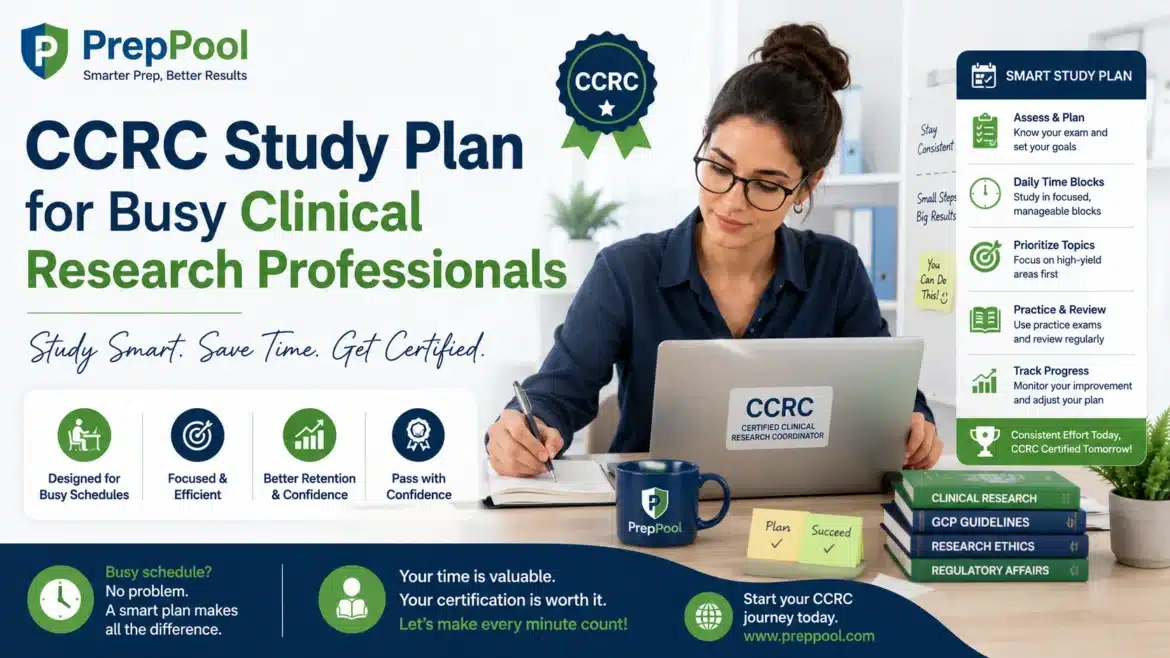

Preparing for the CCRC® examination while managing a full-time job can feel overwhelming, especially if you’re balancing study time with patient visits, research documentation, sponsor communications, and other daily responsibilities. The good news is that passing the exam doesn’t require spending hours studying every day. A realistic, organized study plan is often more effective than long, inconsistent study sessions.
The goal isn’t to memorize every regulation or guideline. Instead, focus on developing a solid understanding of the clinical research principles that Clinical Research Coordinators apply throughout the life of a study. Consistent review and regular practice can help you build confidence without disrupting your work-life balance.
If you’re still deciding whether certification aligns with your long-term goals, take a look at the career opportunities after CCRC certification to understand how earning the credential can support professional growth.
- How to build a practical study schedule around a busy workweek.
- How much time you should realistically dedicate to preparation.
- Common study mistakes that reduce productivity.
- Ways to stay consistent without feeling overwhelmed.
- How to prepare efficiently as exam day approaches.
Why a Study Plan Matters
Many candidates begin preparing with good intentions but quickly lose momentum because they don’t have a clear plan. Without a structured schedule, it’s easy to jump between topics, spend too much time on familiar material, or postpone studying after a busy day at work.
A well-designed study plan keeps your preparation organized and ensures that every major exam domain receives adequate attention. It also helps reduce stress by breaking the workload into manageable sessions rather than leaving everything until the final weeks before the exam.
Start with a Realistic Timeline
The amount of time you’ll need depends on your professional experience, familiarity with clinical research, and available study hours each week. Someone with several years of research coordination experience may require less review than a candidate who recently entered the field, but both benefit from following a consistent schedule.
Instead of focusing on the total number of study hours, aim for regular progress. Even short, focused study sessions completed several times a week can be more effective than occasional marathon sessions.
| Weekly Availability | Suggested Approach |
|---|---|
| 3–5 hours | Review one major topic each week and complete practice questions regularly. |
| 6–8 hours | Combine content review with scenario-based practice and weekly revision. |
| 8–10+ hours | Cover topics more quickly while allowing additional time for comprehensive review. |
Balance Study Time with Your Work Schedule
Clinical Research Coordinators often work in fast-paced environments where unexpected responsibilities can interrupt carefully planned schedules. Rather than aiming for perfection, build flexibility into your study plan. If you miss one session, simply continue with your next scheduled review instead of trying to make up everything at once.
Many professionals find success by studying during quieter parts of the day, such as early mornings, lunch breaks, or evenings. The most effective schedule is one that fits naturally into your routine and can be maintained consistently.
Avoid Common Study Mistakes
Even motivated candidates sometimes waste valuable preparation time by following ineffective study habits. Recognizing these mistakes early can help you make better use of every study session.
- Waiting until the last few weeks to begin preparing.
- Reading reference materials without testing your understanding.
- Ignoring weaker subject areas because they seem difficult.
- Studying without clear weekly goals.
- Relying entirely on professional experience instead of reviewing the complete exam content.
If you’ve already confirmed that you’re eligible to take the examination, reviewing the meeting the CCRC exam eligibility requirements is a helpful reminder that preparation should begin well before your planned testing date.
Set Achievable Weekly Goals
Breaking your preparation into smaller milestones makes the process more manageable and helps you stay motivated. Instead of trying to master everything at once, focus on completing one or two related topics each week, followed by a short review session to reinforce what you’ve learned.
By building steady progress over time, you’ll reach exam day with greater confidence and a stronger understanding of the knowledge expected of a Certified Clinical Research Coordinator.
Create a Weekly Study Routine That Works
A study plan doesn’t need to be complicated to be effective. The key is choosing a routine that fits your schedule and allows you to make steady progress each week. Rather than studying only when you have free time, reserve specific days and times for preparation so studying becomes part of your regular routine.
Most working professionals find it easier to schedule shorter sessions during the week and dedicate a longer review session on the weekend. This approach helps reinforce new material while providing enough time to revisit challenging topics.
| Day | Suggested Study Activity |
|---|---|
| Monday | Review one core topic such as research ethics or Good Clinical Practice (GCP). |
| Tuesday | Study regulatory requirements and protocol compliance. |
| Wednesday | Complete practice questions and review explanations. |
| Thursday | Focus on informed consent, participant safety, or documentation. |
| Friday | Review notes and revisit difficult concepts. |
| Weekend | Take a longer practice session and summarize what you learned during the week. |
Study High-Yield Topics First
While every exam objective deserves attention, some topics appear repeatedly because they reflect the everyday responsibilities of Clinical Research Coordinators. Beginning with these high-yield areas gives you a strong foundation before moving on to more specialized subjects.
Your study plan should include regular review of:
- Good Clinical Practice (GCP).
- Research ethics and participant protection.
- Informed consent procedures.
- Protocol implementation and compliance.
- Source documentation and case report forms.
- Safety reporting and adverse events.
- Investigational product accountability.
- Quality assurance and regulatory responsibilities.
As your understanding grows, connect related topics together instead of studying each one in isolation. This makes it easier to apply concepts during scenario-based exam questions.
Combine Reading with Practice Questions
Reading textbooks and study guides provides essential background knowledge, but reading alone isn’t enough for most candidates. The CCRC examination requires you to interpret information, analyze situations, and choose the best course of action based on established clinical research principles.
After completing each study topic, answer several practice questions related to that subject. Then spend time reviewing every explanation, including questions you answered correctly. Understanding why an answer is correct is just as important as selecting the right option.
If you’re concerned about the level of challenge you’ll face on exam day, reviewing this guide on understanding the CCRC exam difficulty can help you know what to expect and identify the areas that deserve extra attention during your preparation.
Track Your Progress Every Week
Monitoring your progress helps you stay motivated and prevents weaker subjects from being overlooked. At the end of each week, spend a few minutes reviewing what you’ve accomplished and identify any topics that still need additional work.
Simple progress tracking can include:
- Checking off completed study topics.
- Recording practice question scores.
- Listing concepts that require further review.
- Setting goals for the following week.
Keeping a written record of your progress also makes it easier to see how much you’ve improved over time, which can boost confidence as the exam approaches.
Adjust Your Plan When Necessary
No study schedule remains perfect from beginning to end. Work responsibilities, family commitments, and unexpected events may occasionally interrupt your routine. Rather than trying to catch up by studying for several hours in one day, simply adjust your schedule and continue moving forward.
Flexibility is one of the strengths of an effective study plan. Consistent progress over several weeks is far more valuable than following a rigid schedule that becomes difficult to maintain.
How to Prepare During the Final Weeks Before the Exam
As your exam date approaches, your focus should gradually shift from learning new material to reinforcing what you’ve already studied. The final weeks are an opportunity to strengthen weaker areas, improve confidence, and practice applying your knowledge under conditions similar to the actual exam.
Avoid the temptation to cover large amounts of new content at the last minute. Instead, review your notes, revisit challenging topics, and spend more time working through realistic practice questions.
| Final Preparation Goal | Recommended Action |
|---|---|
| Identify weak subjects | Review lower-scoring topics and revisit answer explanations. |
| Improve clinical reasoning | Complete scenario-based practice questions regularly. |
| Strengthen memory | Review concise notes instead of rereading entire textbooks. |
| Build confidence | Take timed practice sessions to simulate the testing experience. |
| Reduce stress | Maintain a consistent routine and avoid last-minute cramming. |
Make Practice Questions Part of Every Study Session
Practice questions are one of the most effective ways to measure your readiness. They help you recognize patterns in exam-style questions, improve decision-making, and identify topics that require additional review.
After each practice session, don’t focus only on the number of correct answers. Carefully read every explanation to understand why the correct response is appropriate and why the other options are less suitable. This process strengthens your ability to apply clinical research principles in unfamiliar situations.
Take Care of Yourself Before Exam Day
Preparation isn’t only about studying. Your physical and mental well-being can also influence your performance. Getting enough sleep, staying hydrated, taking regular breaks, and maintaining a balanced routine can help improve concentration and reduce exam-day stress.
The day before your exam, avoid trying to learn entirely new topics. A light review of key concepts is usually more beneficial than an intensive study session that leaves you feeling tired or overwhelmed.
Practice with PrepPool
Once you’ve established a solid study routine, the next step is applying what you’ve learned. PrepPool offers comprehensive CCRC practice test questions designed to help you reinforce essential clinical research concepts while becoming familiar with the style of questions commonly seen on certification exams.
Each practice question is accompanied by a detailed explanation, allowing you to understand the reasoning behind the correct answer and strengthen your knowledge of topics such as Good Clinical Practice (GCP), participant safety, regulatory compliance, study documentation, informed consent, and protocol management.
Continue Building Your Healthcare Knowledge
If you’re preparing for additional professional certifications in healthcare, explore PrepPool’s collection of Healthcare Certification Exam Preparation resources. These study materials support learners preparing for a wide variety of healthcare and allied health certification exams.
- Breaks large amounts of information into manageable study sessions.
- Helps maintain steady progress while working full time.
- Encourages regular review instead of last-minute cramming.
- Improves confidence through consistent practice.
- Makes it easier to identify and strengthen weaker subject areas.
- Supports long-term retention of important clinical research concepts.
Final Thoughts
A successful CCRC study plan doesn’t require studying for hours every day. What matters most is consistency, organization, and focusing on understanding rather than memorization. By following a realistic schedule, reviewing key concepts regularly, and practicing with exam-style questions, you’ll steadily build the knowledge and confidence needed for exam day.
Remember that earning the CCRC credential is more than passing an exam—it’s an opportunity to demonstrate your commitment to high-quality clinical research and continued professional development.
FAQs
How long should I study for the CCRC exam?
The ideal study period varies depending on your experience and available time. Many candidates prepare over several weeks or months using a consistent schedule that fits around their work commitments.
How many hours should I study each week?
Even 3 to 8 hours of focused study per week can be effective when combined with regular review and practice questions. Consistency is generally more important than the total number of hours studied.
Should I use practice questions throughout my preparation?
Yes. Practice questions help reinforce knowledge, improve critical thinking, and identify areas that require additional review. Reviewing answer explanations is just as important as answering the questions correctly.
Is it possible to study for the CCRC exam while working full time?
Absolutely. Many Clinical Research Coordinators prepare successfully by scheduling shorter study sessions during the week and using weekends for more comprehensive review.
What should I do during the last week before the exam?
Focus on reviewing key concepts, revisiting weaker subjects, completing practice questions, and getting adequate rest. Avoid trying to learn large amounts of new material immediately before the examination.