
The Physician Assistant National Recertifying Examination (PANRE®) is designed to evaluate the broad medical knowledge physician assistants need to provide safe and effective patient care. Unlike specialty-specific certifications, the PANRE assesses clinical knowledge across multiple organ systems, patient populations, and medical disciplines, making comprehensive preparation essential.
Because the exam covers a wide range of topics, many candidates wonder where they should focus their study time. Understanding the major content areas before you begin preparing allows you to organize your review, prioritize high-yield subjects, and build a study plan that covers the full scope of the examination.
- The major medical specialties covered on the PANRE.
- How the exam evaluates clinical knowledge.
- Which subjects deserve additional attention during preparation.
- How to organize your study plan by medical specialty.
- Practical tips for reviewing comprehensive exam content.
Why Understanding the Exam Topics Matters
The PANRE is intended to measure broad clinical competence rather than expertise in one specialty. Even if you work primarily in a focused area of medicine, you’ll be expected to answer questions from many different clinical disciplines. Reviewing the complete range of exam topics helps reduce knowledge gaps and ensures you’re prepared for the variety of questions you may encounter.
If you’re still evaluating the overall challenge of the examination, our guide on what to expect on the PANRE examination explains why many candidates benefit from starting their preparation early.
Major Medical Specialties Commonly Reviewed
Your preparation should include a balanced review of the major medical specialties commonly encountered in clinical practice. While the emphasis of individual exams may vary, physician assistants should be comfortable applying clinical reasoning across multiple systems and patient presentations.
| Medical Specialty | Examples of Topics to Review |
|---|---|
| Cardiovascular Medicine | Hypertension, heart failure, arrhythmias, ischemic heart disease. |
| Pulmonary Medicine | Asthma, COPD, pneumonia, pulmonary embolism. |
| Gastroenterology | GERD, liver disease, inflammatory bowel disease, GI bleeding. |
| Endocrinology | Diabetes, thyroid disorders, adrenal disease. |
| Neurology | Stroke, seizures, headaches, movement disorders. |
| Musculoskeletal Medicine | Fractures, arthritis, sports injuries, back pain. |
| Infectious Diseases | Common bacterial and viral infections, antimicrobial therapy. |
| Emergency Medicine | Acute illness, trauma, stabilization, urgent management. |
Focus on Clinical Decision-Making
Success on the PANRE requires more than remembering isolated facts. Many questions are designed to assess your ability to interpret clinical findings, choose appropriate diagnostic tests, develop treatment plans, and apply evidence-based medicine in realistic patient scenarios.
As you study each specialty, think beyond memorization. Practice connecting symptoms, examination findings, laboratory results, and imaging studies to arrive at the most appropriate clinical decision.
Organize Your Review Strategically
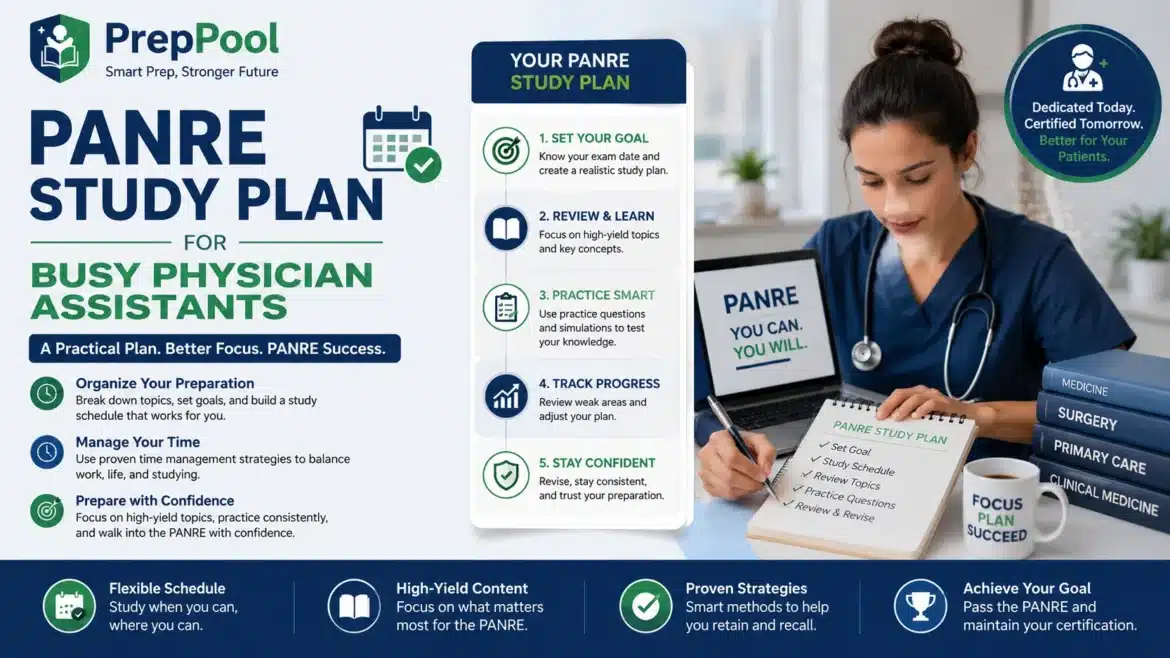
A comprehensive exam becomes much more manageable when divided into smaller sections. Many physician assistants choose to review one specialty each week before revisiting weaker areas and completing cumulative practice questions.
If you’re creating your preparation schedule, our guide to building an effective PANRE study schedule offers practical strategies for balancing exam preparation with a busy clinical workload.
In the next section, we’ll examine additional clinical content areas, discuss effective study priorities, and explain how to make the most of every review session.
Review Both Common and Less-Frequent Conditions
Many physician assistants naturally spend more time reviewing conditions they see every day in clinical practice. While this helps reinforce familiar topics, it’s equally important to revisit disorders you encounter less often. The PANRE evaluates broad clinical knowledge, so balanced preparation across all major specialties is essential.
As you work through each medical discipline, include common presentations, differential diagnoses, diagnostic testing, treatment options, follow-up care, and preventive recommendations.
Study by Body System
Organizing your preparation by body system creates a logical learning sequence and makes it easier to identify connections between diseases, symptoms, and treatments. Many candidates find that this approach is more effective than studying unrelated topics in random order.
| Body System | Areas to Review |
|---|---|
| Cardiovascular | Risk factors, diagnosis, treatment, and long-term management. |
| Respiratory | Obstructive lung disease, infections, respiratory emergencies. |
| Gastrointestinal | Acute abdominal conditions, liver disorders, digestive diseases. |
| Endocrine | Hormonal disorders, diabetes management, metabolic conditions. |
| Neurologic | Acute neurologic emergencies, chronic disorders, diagnostic evaluation. |
| Musculoskeletal | Joint disorders, fractures, soft tissue injuries, rehabilitation. |
Don’t Overlook Preventive Care
In addition to diagnosing and treating illness, physician assistants are expected to understand preventive medicine and patient counseling. As you study, include topics such as health maintenance, disease prevention, screening recommendations, immunizations, and patient education whenever they relate to a medical condition.
Integrating preventive care into your review helps reinforce comprehensive patient management rather than focusing only on acute treatment decisions.
Identify Weak Areas Early
Every candidate has strengths and weaknesses. Some physician assistants may feel confident with cardiology but need additional review in endocrinology or neurology, while others may have the opposite experience. Identifying these gaps early allows you to allocate more study time where it will have the greatest impact.
Regular self-assessment through quizzes and practice questions makes it easier to measure progress and adjust your study schedule as needed.
Understand the Scope of the Examination
The PANRE is designed to evaluate broad clinical competence rather than mastery of one specialty. Successful candidates develop a solid understanding of multiple medical disciplines instead of concentrating exclusively on their everyday clinical responsibilities.
Before scheduling your examination, it’s also important to confirm who is eligible to take the PANRE so your study timeline aligns with your certification requirements.
Combine Reading with Active Practice
Reading review materials provides an important foundation, but applying that knowledge is equally valuable. Alternate between studying content and answering practice questions so you can reinforce concepts while improving your clinical decision-making skills.
Using multiple learning methods—including review notes, clinical scenarios, flashcards, and practice questions—helps improve retention and prepares you for the variety of situations you may encounter on the examination.
Build Knowledge Gradually
Trying to master every specialty in a short period of time can quickly become overwhelming. A gradual, organized review gives you time to revisit important concepts, strengthen weaker subjects, and build confidence before exam day. Small, consistent improvements over several weeks often produce better long-term results than last-minute intensive study.
In the final section, we’ll discuss how practice questions reinforce clinical reasoning, review common preparation mistakes, and share practical strategies for completing your PANRE preparation with confidence.
Reinforce Your Knowledge with Practice Questions
After reviewing the major exam topics, the next step is applying what you’ve learned. Practice questions allow you to move beyond memorization by testing your ability to interpret patient presentations, select appropriate diagnostic tests, and determine the best management strategies in realistic clinical scenarios.
Reviewing detailed answer explanations is just as important as answering the questions themselves. Explanations help clarify medical concepts, reinforce evidence-based decision-making, and highlight areas that deserve additional study.
| Preparation Strategy | Benefit |
|---|---|
| Review one specialty at a time | Creates a structured and organized study process. |
| Complete practice questions regularly | Applies clinical knowledge in exam-style situations. |
| Analyze answer explanations | Improves clinical reasoning and reinforces key concepts. |
| Track weaker topics | Helps prioritize future study sessions. |
| Review all body systems before the exam | Builds confidence across the full scope of exam content. |
Common Mistakes When Studying Exam Topics
Many physician assistants unintentionally make their preparation more difficult by focusing too heavily on familiar subjects or delaying review until the final weeks before the examination. Avoiding these common mistakes can make your study time much more productive.
- Studying only the specialties encountered in daily clinical practice.
- Ignoring weaker body systems until the end of the study plan.
- Reading review materials without applying knowledge through practice questions.
- Skipping answer explanations after completing quizzes.
- Trying to learn every topic during the final days before the exam.
Test Your Knowledge Before Exam Day
A comprehensive review should always include realistic practice questions that reflect the style and level of clinical reasoning expected on the PANRE. Completing full-length practice sessions also helps you become more comfortable managing your time and maintaining focus throughout the examination.
PrepPool offers complete PANRE practice tests with answer explanations designed to help physician assistants review major medical specialties, strengthen clinical decision-making, and identify areas that need additional attention before exam day.
Continue Expanding Your Medical Knowledge
If you’re preparing for other healthcare certification or licensure examinations, explore PrepPool’s collection of medical certification practice exams. These resources provide additional opportunities to review important clinical concepts and practice with high-quality exam-style questions across a variety of healthcare professions.
Key Takeaways
- Review every major body system instead of concentrating on only one specialty.
- Study both common medical conditions and less-frequent clinical presentations.
- Use practice questions to reinforce clinical reasoning and identify knowledge gaps.
- Revisit weaker topics regularly throughout your preparation.
- Follow a structured study plan to cover the full range of PANRE exam topics.
Final Thoughts
Understanding the PANRE exam topics gives you a clear roadmap for your preparation. By organizing your review around major medical specialties, strengthening weaker areas, and practicing with realistic clinical scenarios, you can approach the examination with greater confidence and a more balanced understanding of the material.
Remember that effective preparation isn’t about memorizing isolated facts. Success comes from developing strong clinical reasoning skills, applying evidence-based knowledge, and maintaining a consistent study routine that prepares you for the diverse questions you’ll encounter on exam day.
FAQs
What topics are covered on the PANRE?
The PANRE covers a broad range of medical specialties and body systems. Candidates should review common diseases, diagnostic evaluation, treatment strategies, preventive care, and clinical decision-making across multiple disciplines.
Should I focus only on my specialty?
No. Although your clinical experience is valuable, the examination assesses knowledge across many areas of medicine. A balanced review of all major body systems is recommended.
How should I organize my study plan?
Many physician assistants find it helpful to study one body system or medical specialty at a time, followed by regular review sessions and practice questions to reinforce learning.
Are practice questions important when reviewing exam topics?
Yes. Practice questions help you apply medical knowledge, improve clinical reasoning, identify weaker subjects, and become familiar with the style of questions used on the PANRE.
How can I remember so many medical topics?
Break your preparation into manageable sections, review topics consistently, revisit weaker areas frequently, and use active learning techniques such as practice questions and answer explanations to strengthen long-term retention.