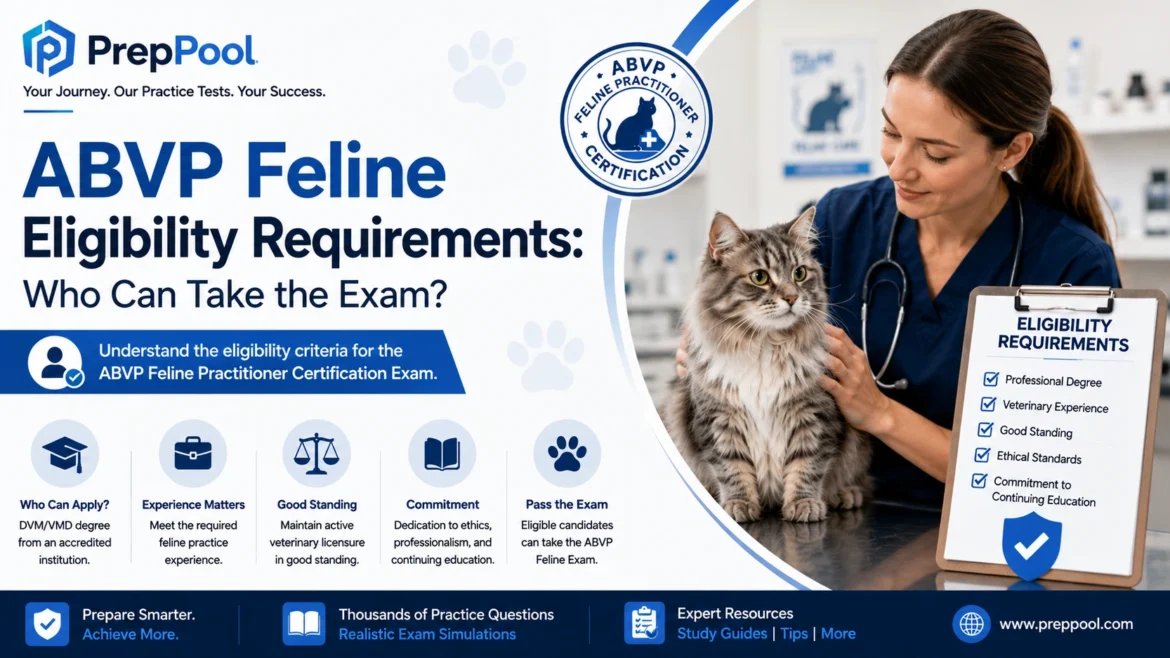

Pursuing the American Board of Veterinary Practitioners (ABVP) Feline certification is an important milestone for veterinarians who want to demonstrate advanced expertise in feline medicine. Before beginning exam preparation, however, many candidates ask an important question: Who is eligible to take the ABVP Feline certification exam?
Unlike entry-level licensing examinations, the ABVP Feline certification is intended for experienced veterinary professionals who have developed significant clinical knowledge through years of practice. The certification recognizes advanced competency in feline medicine and is designed for veterinarians who regularly diagnose, treat, and manage a wide variety of medical conditions affecting cats.
Understanding the eligibility requirements early can help you plan your professional development, identify areas where additional experience may be beneficial, and determine when you’re ready to begin the certification process.
If you’re already planning your preparation, reviewing realistic ABVP Feline practice questions alongside your clinical experience can help you become familiar with the type of knowledge expected during the certification exam.
- ABVP Feline certification is intended for licensed veterinarians.
- Candidates are expected to have substantial clinical experience.
- Advanced knowledge of feline medicine is essential.
- Professional development and continuing education are important.
- Preparation should begin well before submitting an application.
- Eligibility focuses on both experience and clinical competency.
Who Is the ABVP Feline Certification Designed For?
The certification is intended for veterinarians who have built their careers around companion animal medicine with a significant emphasis on feline healthcare. Candidates typically care for cats on a regular basis and have experience managing both routine wellness visits and complex medical cases.
Rather than measuring only academic knowledge, the certification recognizes veterinarians who consistently apply evidence-based medicine, sound clinical judgment, and effective patient management in everyday practice.
Many candidates work in:
- Companion animal veterinary hospitals.
- Cat-only veterinary practices.
- Multi-doctor small animal clinics.
- Referral hospitals with feline caseloads.
- Specialty veterinary practices.
Basic Eligibility Expectations
Although every applicant should carefully review the most current requirements published by the American Board of Veterinary Practitioners, successful candidates generally share several professional qualifications before pursuing board certification.
| Requirement | Why It Matters |
|---|---|
| Veterinary Degree | Provides the educational foundation for professional practice. |
| Professional Licensure | Demonstrates authorization to practice veterinary medicine. |
| Clinical Experience | Develops advanced diagnostic and treatment skills. |
| Feline Case Management | Builds practical expertise across a variety of medical conditions. |
| Continuing Education | Supports lifelong learning and current clinical knowledge. |
| Professional Commitment | Reflects dedication to maintaining high standards of patient care. |
Do You Need Extensive Experience With Cats?
Yes. Because this certification focuses exclusively on feline medicine, candidates are generally expected to have considerable hands-on experience treating cats throughout their clinical careers.
This experience extends well beyond routine wellness examinations. Veterinarians pursuing certification should be comfortable evaluating complex medical cases, interpreting diagnostic findings, developing treatment plans, communicating with pet owners, and managing patients with both acute and chronic illnesses.
Daily exposure to feline patients helps develop the clinical reasoning and decision-making skills that are essential for both the examination and long-term specialty practice.
Can General Small Animal Veterinarians Apply?
Absolutely. Many veterinarians pursuing ABVP Feline certification began their careers in general companion animal practice. Over time, some naturally develop a stronger interest in feline medicine and gradually increase the percentage of cat patients they see.
As clinical experience grows, many veterinarians choose to deepen their expertise through continuing education, advanced case management, and structured preparation for specialty certification.
If feline medicine has become a significant part of your professional practice, pursuing board certification may represent a logical next step in your career development.
Is Board Certification Right for Every Veterinarian?
Not necessarily. ABVP Feline certification is best suited for veterinarians who enjoy managing challenging feline medical cases, staying current with advances in veterinary medicine, and continually expanding their clinical knowledge.
For clinicians who primarily practice mixed animal medicine or have limited exposure to feline patients, gaining additional experience before pursuing certification may provide a stronger foundation for long-term success.
Common Misconceptions About Eligibility
Several misunderstandings can discourage veterinarians from exploring board certification. In reality, eligibility involves much more than simply meeting a minimum number of years in practice.
- Certification is not intended only for university faculty or specialists.
- General practitioners with substantial feline experience may also qualify.
- Clinical competence is more important than memorizing textbook information.
- Preparation begins long before scheduling the examination.
- Continuous professional development remains important throughout your career.
Understanding these expectations early allows you to build experience intentionally while preparing for future certification opportunities.
Professional Experience Plays an Important Role
One of the defining characteristics of ABVP Feline certification is its emphasis on practical clinical experience. While academic knowledge provides the foundation, board certification recognizes veterinarians who have applied that knowledge while caring for feline patients in real clinical settings.
Daily interaction with cats allows veterinarians to strengthen diagnostic reasoning, refine treatment decisions, improve communication with pet owners, and manage both common and complex medical conditions. Over time, these experiences build the confidence and clinical judgment expected of board-certified practitioners.
If you’re still deciding whether specialty certification aligns with your long-term goals, our benefits of becoming an ABVP Feline diplomate explains how certification can support professional development, lifelong learning, and career advancement.
Clinical Competencies Expected Before Certification
Veterinarians preparing for board certification should be comfortable evaluating feline patients across multiple body systems and adapting treatment plans based on individual patient needs. The certification process reflects the broad scope of feline medicine encountered in everyday practice.
| Clinical Competency | Why It Matters |
|---|---|
| Medical Assessment | Supports accurate diagnosis and patient evaluation. |
| Diagnostic Interpretation | Helps identify subtle or early-stage disease. |
| Treatment Planning | Develops individualized care strategies. |
| Preventive Medicine | Improves long-term feline health outcomes. |
| Pain Recognition and Management | Enhances patient comfort and recovery. |
| Client Communication | Builds trust and encourages treatment compliance. |
Why Diverse Case Experience Matters
Veterinarians who routinely encounter a broad range of feline conditions often develop stronger clinical reasoning skills than those who manage only routine wellness appointments. Exposure to different diseases helps improve decision-making and prepares candidates for scenario-based examination questions.
Examples of valuable clinical experience include:
- Managing chronic kidney disease.
- Diagnosing endocrine disorders.
- Treating infectious diseases.
- Handling emergency and critical care cases.
- Developing preventive healthcare plans.
- Working through complex diagnostic investigations.
Each patient encounter contributes to a deeper understanding of feline medicine and reinforces the practical knowledge expected during specialty certification.
Continuing Education Supports Exam Readiness
Veterinary medicine continues to evolve through ongoing research, improved diagnostic tools, and updated treatment recommendations. Successful candidates understand the importance of remaining current with developments in feline healthcare throughout their careers.
Continuing education helps reinforce existing knowledge while introducing new approaches that improve patient care. Regular participation in professional learning also encourages critical thinking and supports evidence-based clinical practice.
How to Know You’re Ready to Pursue Certification
Every veterinarian reaches this point at a different stage of their career. Some develop an interest in feline medicine early, while others discover their passion after years in companion animal practice.
You may be ready to begin preparing if you:
- Regularly treat feline patients.
- Feel confident managing both routine and challenging medical cases.
- Enjoy continuing education and professional growth.
- Are committed to evidence-based veterinary medicine.
- Want to deepen your expertise in feline healthcare.
- Are prepared to dedicate time to structured exam preparation.
Building Experience Before Applying
If you are not yet ready to pursue certification, that doesn’t mean your goal is out of reach. Every complex case, continuing education course, mentorship opportunity, and clinical discussion helps build the knowledge needed for future success.
Many successful candidates spend years strengthening their diagnostic skills, expanding their feline caseload, and refining their clinical judgment before beginning formal exam preparation. Viewing certification as part of your long-term professional development allows you to build confidence naturally while continuing to provide outstanding care for your patients.
Preparing for the ABVP Feline Certification Exam
Meeting the eligibility requirements is only the first step toward becoming board certified. Once you’ve built the necessary clinical experience and determined that certification aligns with your professional goals, the next challenge is preparing for a comprehensive examination that evaluates advanced knowledge of feline medicine.
Rather than relying on short-term memorization, successful candidates typically develop a structured study plan that covers major areas of feline practice while reinforcing clinical reasoning through regular review and case-based learning.
A balanced preparation strategy often includes:
- Reviewing core feline medicine topics systematically.
- Studying current evidence-based clinical guidelines.
- Analyzing real-world patient cases.
- Strengthening diagnostic and treatment decision-making.
- Regularly evaluating progress throughout the study period.
Common Challenges Candidates Face
Preparing for specialty certification while maintaining a busy veterinary practice requires discipline and careful planning. Even experienced clinicians may find certain topics outside their daily caseload or discover areas that require additional review.
Some of the most common preparation challenges include:
- Balancing study time with clinical responsibilities.
- Reviewing uncommon or complex feline diseases.
- Keeping up with advances in veterinary medicine.
- Maintaining consistent motivation over several months.
- Identifying weaker knowledge areas before the examination.
Recognizing these challenges early allows candidates to adjust their study approach and make better use of their preparation time.
Characteristics of Successful Candidates
Veterinarians who successfully earn ABVP Feline certification often share several habits throughout their preparation. While everyone studies differently, consistent learning and active engagement with clinical material are common themes.
| Habit | How It Supports Success |
|---|---|
| Consistent Study Routine | Builds knowledge steadily over time. |
| Case-Based Learning | Improves clinical reasoning and decision-making. |
| Regular Self-Assessment | Identifies strengths and knowledge gaps. |
| Evidence-Based Review | Keeps knowledge aligned with current veterinary practice. |
| Reflection on Clinical Cases | Connects daily practice with examination content. |
| Continuous Professional Development | Supports long-term growth beyond certification. |
Why Choose PrepPool for ABVP Feline Exam Preparation?
Preparing for an advanced certification examination requires resources that reinforce understanding rather than simple memorization. PrepPool provides realistic study materials designed to help veterinarians strengthen clinical reasoning, review essential feline medicine concepts, and become more confident before exam day.
Working through ABVP Feline certification exam preparation materials allows candidates to evaluate their understanding across multiple subject areas while identifying topics that may require additional review. Detailed answer explanations also encourage deeper learning by explaining the reasoning behind each response.
Why Veterinarians Choose PrepPool
- Realistic questions inspired by advanced feline clinical practice.
- Detailed explanations that reinforce diagnostic reasoning.
- Coverage of important topics encountered in feline medicine.
- Flexible self-paced learning that fits busy professional schedules.
- Helps identify strengths and areas needing additional study.
- Supports confident, structured preparation before the certification exam.
Final Thoughts
ABVP Feline certification is intended for veterinarians who have developed substantial experience in feline medicine and are committed to advancing their clinical expertise. Understanding the eligibility requirements early allows you to build the experience, knowledge, and professional confidence needed before beginning the certification process.
Whether you’re already treating a large feline caseload or gradually expanding your focus within companion animal practice, careful planning and continuous learning can help position you for future success. By combining meaningful clinical experience with structured preparation, you’ll be well equipped to pursue board certification and continue providing exceptional care for feline patients.
FAQs
Do I need to work in a cat-only practice to qualify for ABVP Feline certification?
No. Many successful candidates work in companion animal practices where they regularly diagnose and treat feline patients. What matters most is developing substantial experience in feline medicine.
Is clinical experience more important than studying?
Both are essential. Clinical experience builds practical decision-making skills, while structured study helps reinforce advanced medical knowledge and prepares you for the certification examination.
Can newly graduated veterinarians apply for ABVP Feline certification?
The certification is designed for experienced veterinarians. Building a strong foundation through clinical practice is an important step before pursuing board certification.
How can I determine whether I’m ready to begin preparing?
If you routinely manage feline patients, enjoy advanced clinical problem-solving, and are committed to continued professional development, you may be ready to start planning your certification journey.
What should I do after confirming I’m eligible?
Develop a realistic study schedule, review current feline medicine resources, strengthen your clinical reasoning through case-based learning, and use high-quality practice materials to evaluate your progress before the examination.