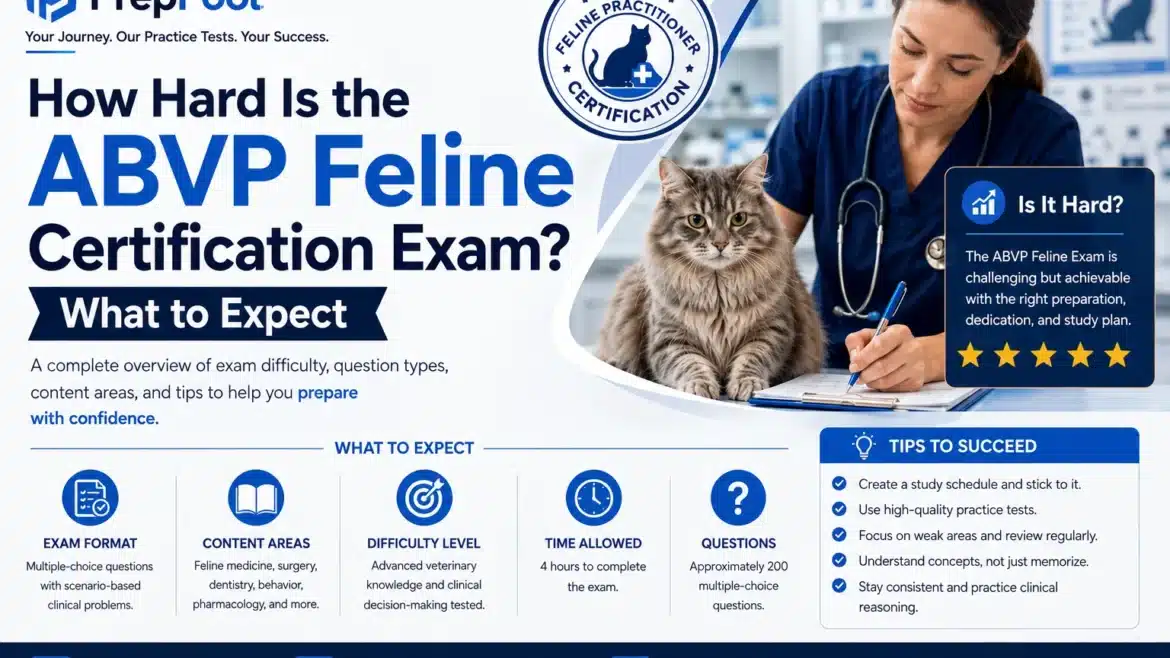

The American Board of Veterinary Practitioners (ABVP) Feline certification is recognized as an advanced credential for veterinarians who have developed extensive knowledge and clinical experience in feline medicine. Because it evaluates much more than textbook knowledge, many candidates naturally wonder whether the examination is difficult.
The short answer is yes—but not because it is designed to trick candidates. The exam is challenging because it measures your ability to apply evidence-based medicine, interpret complex clinical information, and make sound decisions across a broad spectrum of feline medical conditions. Rather than testing simple recall, it evaluates how you think as a clinician.
For veterinarians who routinely manage feline patients and prepare consistently, the examination becomes far more approachable. Building a structured study plan, reviewing challenging cases, and identifying weaker subject areas early can significantly improve both confidence and readiness.
If you’re still deciding whether pursuing specialty certification aligns with your long-term professional goals, our guide on the career advantages of ABVP Feline certification explains how board certification can support professional growth, recognition, and lifelong learning.
- The exam evaluates advanced clinical reasoning rather than memorization.
- Questions often require applying knowledge to realistic feline cases.
- Preparation involves reviewing multiple areas of feline medicine.
- Consistent study is generally more effective than last-minute cramming.
- Clinical experience plays an important role in exam readiness.
- Strong preparation can make the exam significantly more manageable.
Why Many Veterinarians Find the Exam Challenging
The ABVP Feline certification examination reflects the complexity of real clinical practice. Cats often present with subtle signs of disease, requiring veterinarians to combine history, physical examination findings, diagnostic results, and current medical knowledge before reaching an appropriate diagnosis and treatment plan.
Because of this, candidates are expected to demonstrate sound clinical judgment across numerous areas of feline medicine rather than relying on isolated facts. Success depends on understanding why particular diagnostic or therapeutic decisions are appropriate for each patient.
Instead of asking straightforward factual questions, many scenarios require candidates to analyze clinical information, prioritize differential diagnoses, and select the most appropriate next step in patient management.
| Challenge | Why It Increases Difficulty |
|---|---|
| Broad Subject Coverage | Requires knowledge across multiple areas of feline medicine. |
| Case-Based Questions | Tests clinical reasoning instead of memorization. |
| Diagnostic Interpretation | Requires careful analysis of clinical findings. |
| Treatment Planning | Evaluates evidence-based decision-making. |
| Time Management | Candidates must work efficiently while maintaining accuracy. |
Clinical Experience Makes a Difference
One reason experienced veterinarians often feel more comfortable during preparation is that many examination topics closely resemble situations encountered in daily practice. Diagnosing chronic diseases, managing emergencies, interpreting laboratory findings, and communicating treatment plans become easier when supported by years of practical experience.
Clinical exposure also helps candidates recognize subtle patterns that may not be obvious from reading textbooks alone. Every feline patient managed throughout your career contributes to the knowledge and judgment expected during board certification.
Do Eligibility Requirements Affect Exam Readiness?
Absolutely. The eligibility process exists for an important reason—it helps ensure candidates have developed sufficient clinical experience before attempting an advanced certification examination. The combination of professional practice and focused preparation creates a stronger foundation for success.
If you’re unsure whether you’ve reached that stage in your career, reviewing the ABVP Feline eligibility requirements can help you understand the experience and professional background generally expected before beginning exam preparation.
What Subjects Make the Exam Feel Difficult?
Because feline medicine covers numerous body systems and clinical disciplines, candidates must review a wide range of topics before sitting for the examination. The challenge often comes from integrating knowledge across multiple specialties rather than mastering one individual subject.
Areas that many veterinarians spend additional time reviewing include:
- Internal medicine.
- Infectious diseases.
- Endocrinology.
- Nephrology and urinary disorders.
- Cardiology.
- Emergency and critical care.
- Nutrition and preventive medicine.
- Pain management and anesthesia.
- Diagnostic imaging and laboratory interpretation.
The breadth of these topics is one reason candidates often begin preparing several months before the examination, allowing enough time to review each subject thoroughly without becoming overwhelmed.
Which Topics Do Candidates Find Most Challenging?
Every veterinarian enters the certification process with different strengths and clinical experiences. Someone who routinely manages endocrine disorders may feel confident in that area, while another clinician may be more comfortable with emergency medicine or preventive care. The key is recognizing that the examination assesses well-rounded knowledge across feline medicine rather than expertise in only one specialty.
Candidates often spend additional preparation time reviewing subjects they encounter less frequently in daily practice. Strengthening these weaker areas early can make studying more efficient and reduce stress as the examination approaches.
| Subject Area | Why It Can Be Challenging |
|---|---|
| Internal Medicine | Requires integrating clinical signs, diagnostics, and treatment decisions. |
| Endocrine Disorders | Many diseases present with overlapping clinical signs. |
| Infectious Diseases | Successful management depends on accurate diagnosis and current treatment recommendations. |
| Emergency and Critical Care | Requires rapid clinical prioritization and decision-making. |
| Diagnostic Imaging | Interpreting findings alongside the patient’s history and examination. |
| Preventive Medicine | Applies evidence-based recommendations to individual feline patients. |
Clinical Reasoning Is More Important Than Memorization
One of the biggest differences between board certification and many traditional examinations is the emphasis on clinical reasoning. Rather than asking you to recall isolated facts, the exam often requires interpreting patient histories, evaluating diagnostic findings, prioritizing differential diagnoses, and selecting the most appropriate management strategy.
This mirrors everyday veterinary practice, where successful patient care depends on understanding how multiple clinical findings fit together instead of relying on memorized information alone.
How Long Should You Prepare?
There is no single study schedule that works for every veterinarian. The ideal timeline depends on your clinical experience, familiarity with feline medicine, available study time, and confidence across different subject areas.
Many successful candidates begin preparing several months before the examination, allowing enough time to review major topics systematically while balancing professional responsibilities.
Rather than studying only when time allows, establishing a consistent weekly routine often leads to better retention and less last-minute pressure.
Common Preparation Mistakes
Even experienced veterinarians can unintentionally make preparation more difficult by following ineffective study habits. Recognizing these mistakes early can improve both efficiency and confidence.
- Waiting until the final weeks before beginning serious preparation.
- Focusing only on familiar clinical topics.
- Reading without actively testing clinical knowledge.
- Ignoring explanations after answering practice questions.
- Trying to memorize information instead of understanding disease processes.
- Skipping regular review of previously studied material.
Replacing these habits with active learning, case discussions, and consistent review creates a stronger foundation for examination success.
Does Every Candidate Find the Exam Equally Difficult?
Not necessarily. Veterinarians who routinely manage a large feline caseload often find certain topics more familiar because they regularly apply this knowledge in clinical practice. Others may need additional review if they encounter particular diseases or procedures less frequently.
Your individual experience influences which subjects require the most attention, making personalized preparation far more effective than following a generic study approach.
Confidence Comes From Preparation, Not Luck
Many candidates initially feel overwhelmed by the breadth of material covered on the examination. However, confidence typically grows as preparation becomes more organized. Breaking the content into manageable sections, reviewing challenging topics consistently, and evaluating your progress over time makes even complex material easier to understand.
As you continue preparing, remember that success begins with a solid foundation. If you’re still building your clinical background or planning your certification journey, reviewing the complete eligibility guide for ABVP Feline certification can help ensure you’re approaching the examination at the right stage of your professional development.
How to Improve Your Chances of Passing the ABVP Feline Certification Exam
Although the ABVP Feline certification exam is challenging, it is entirely achievable with thoughtful preparation and consistent study. The goal is not to learn everything at once, but to steadily strengthen your understanding of feline medicine while improving your ability to apply that knowledge in clinical situations.
Many successful candidates divide their preparation into manageable stages, reviewing one major subject area at a time and revisiting difficult topics throughout the study period. This approach reinforces long-term retention while helping prevent information overload.
Signs You’re Ready for the Examination
Every candidate reaches exam readiness at a different pace. Rather than waiting until you feel you’ve mastered every topic, look for steady improvement across the major areas of feline medicine and increasing confidence when solving clinical scenarios.
| Indicator | What It Suggests |
|---|---|
| Strong Clinical Reasoning | You can evaluate patient cases systematically and justify treatment decisions. |
| Broad Subject Knowledge | You feel comfortable reviewing multiple areas of feline medicine. |
| Consistent Study Routine | Your preparation has been organized over time rather than rushed. |
| Confidence With Case-Based Questions | You can apply knowledge to realistic clinical situations. |
| Awareness of Knowledge Gaps | You know which subjects still require additional review. |
Why Practice Questions Are So Valuable
One of the most effective ways to prepare is by regularly working through realistic clinical scenarios. Practice questions encourage active learning by requiring you to analyze patient information, evaluate possible diagnoses, and choose the most appropriate management strategy.
Equally important is reviewing the explanations behind each answer. Understanding why one option is correct—and why the others are not—helps reinforce clinical reasoning and strengthens your ability to apply knowledge in future cases.
Practice sessions also help identify subjects that need additional attention, allowing you to adjust your study plan before exam day.
Why Choose PrepPool for ABVP Feline Exam Preparation?
Preparing for an advanced veterinary certification requires study resources that reflect the complexity of real clinical practice. PrepPool helps veterinarians reinforce essential concepts through realistic case-based questions, detailed answer explanations, and structured review materials designed to support meaningful learning.
Whether you’re reviewing internal medicine, infectious diseases, emergency care, preventive medicine, or diagnostic interpretation, working through advanced ABVP Feline exam review questions can help strengthen clinical reasoning, reveal knowledge gaps, and build greater confidence before exam day.
Why Veterinarians Choose PrepPool
- Realistic case-based questions that reflect advanced feline clinical practice.
- Detailed answer explanations that reinforce evidence-based decision-making.
- Comprehensive coverage of major feline medicine topics.
- Flexible, self-paced study designed for busy veterinary professionals.
- Resources that help identify weaker areas before the examination.
- A practical way to prepare with greater confidence and structure.
Final Thoughts
The ABVP Feline certification exam is designed to recognize veterinarians who have developed advanced knowledge and sound clinical judgment in feline medicine. While the breadth of material can seem intimidating at first, consistent preparation, practical experience, and a structured study approach can make the examination much more manageable.
Rather than viewing the exam as an obstacle, consider it an opportunity to refine your clinical skills, expand your understanding of feline healthcare, and demonstrate your commitment to delivering exceptional patient care. Every study session contributes not only to exam readiness but also to your long-term growth as a veterinary professional.
FAQs
Is the ABVP Feline certification exam considered difficult?
Yes. The examination is designed for experienced veterinarians and emphasizes clinical reasoning, diagnostic interpretation, and evidence-based decision-making across a wide range of feline medical conditions.
Why do many candidates find the exam challenging?
The exam covers numerous areas of feline medicine and requires candidates to apply knowledge to realistic clinical scenarios rather than simply recalling isolated facts.
How can I improve my chances of passing?
Develop a structured study plan, review major subject areas consistently, strengthen your clinical reasoning, and regularly evaluate your progress using high-quality practice questions.
Does clinical experience make the exam easier?
Practical experience provides valuable context for many examination topics and helps candidates apply medical knowledge more effectively when working through case-based questions.
Should I rely only on textbooks while preparing?
No. Combining textbooks, current veterinary literature, clinical experience, and realistic practice questions provides a more comprehensive and effective preparation strategy.