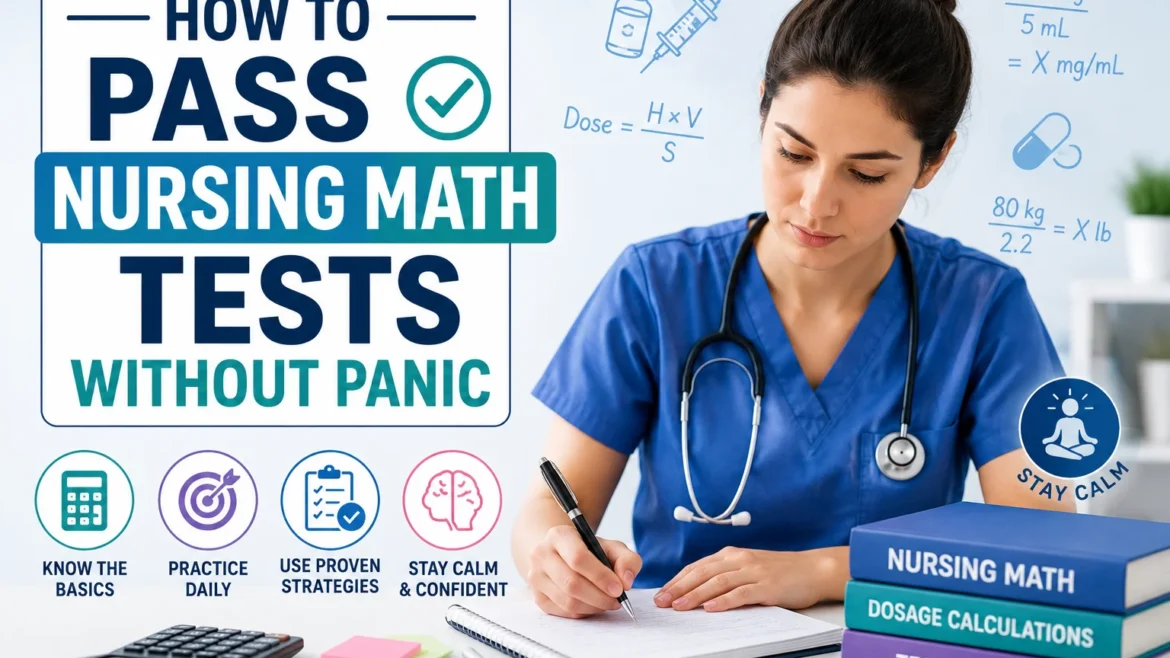

Some students immediately panic after seeing decimals, conversions, or IV calculations, even when they practiced similar problems successfully the night before.
This experience is far more common than many nursing students realize.
What Panic Usually Causes During Nursing Math Tests:
- Rushing through dosage calculations
- Forgetting conversion steps
- Misreading medication labels
- Second-guessing correct answers
- Losing confidence after one mistake
Why Nursing Math Feels So Stressful
Nursing calculations feel different from regular classroom math because students know medication accuracy connects directly to patient safety.
This creates emotional pressure that often makes even simple calculations feel overwhelming under timed conditions.
Many students fear:
- Failing nursing courses
- Making medication errors
- Falling behind classmates
- Not being “good at math”
- Embarrassing mistakes during clinicals
Unfortunately, panic itself often becomes a bigger problem than the math.
What Panic Does to Your Thinking
When students panic during nursing math tests, they often stop thinking step-by-step.
Instead, they begin:
- Rushing calculations emotionally
- Skipping conversion checks
- Changing answers repeatedly
- Losing focus after one difficult question
This creates a cycle where anxiety causes mistakes, and mistakes create even more anxiety.
Important Reality Check:Many nursing students fail dosage tests not because they cannot do the math, but because panic disrupts their normal thinking process.
Why Slowing Down Actually Helps
One of the most helpful nursing math habits is learning to slow down instead of reacting emotionally to difficult questions.
Strong nursing students usually:
- Read medication questions carefully
- Write calculations step-by-step
- Check units before solving
- Review decimal placement calmly
Slowing down often improves accuracy far more than trying to finish quickly.
Real Student Example
During one dosage-calculation exam, a nursing student panicked after getting stuck on an IV question near the beginning of the test.
Instead of moving forward calmly, she kept rereading the same problem repeatedly until stress affected the rest of the exam.
Later, she realized the biggest issue was not the calculation itself — it was allowing anxiety to control her focus and pacing.
Many nursing students experience similar situations during dosage testing.
Students who regularly practice with realistic nursing dosage calculation exercises often become more comfortable under pressure because repeated exposure helps reduce fear and build calculation confidence gradually.
How to Stay Calm During Difficult Questions
Every nursing student eventually encounters a dosage question that feels confusing or unfamiliar during an exam.
The problem is not the difficult question itself. The real danger is allowing one stressful moment to disrupt the rest of the test.
Strong students usually respond differently when they feel stuck.
Instead of panicking, they:
- Pause briefly and breathe
- Separate important information carefully
- Write calculations step-by-step
- Move forward if completely stuck
Staying emotionally steady often improves performance more than trying to solve every question perfectly.
Helpful Testing Habit:Treat each dosage problem as a separate situation instead of emotionally carrying mistakes from earlier questions into the rest of the exam.
Why Practice Reduces Fear
Many nursing students avoid dosage calculations because the problems feel stressful or intimidating.
Unfortunately, avoidance usually increases anxiety over time.
Students who practice consistently often notice that:
- Medication labels feel less confusing
- Conversions become more familiar
- Formulas feel easier to organize
- Timed tests become less overwhelming
Repeated exposure helps nursing math feel more routine instead of emotionally threatening.
Stop Comparing Yourself to Other Students
Many nursing students lose confidence because they compare their calculation speed or test scores to classmates constantly.
However, dosage-calculation confidence develops at different speeds for different students.
Some students learn quickly through repetition, while others need more time to build comfort with medication math.
Strong nursing habits come from steady improvement — not perfection during every practice session.
How Strong Students Recover After Mistakes
One difference between confident students and overwhelmed students is how they respond after making an error.
Students who panic often assume one mistake means they are failing completely.
More experienced nursing students usually:
- Correct the mistake calmly
- Review what went wrong
- Refocus on the next question
- Avoid emotional overreaction
This mindset helps prevent one difficult moment from affecting the entire exam.
Why Writing Every Step Helps Reduce Panic
Many students try solving dosage calculations mentally when they feel rushed.
This usually increases stress because mental calculations are harder to track during pressure-filled testing situations.
Writing each step clearly helps students:
- Stay organized
- Reduce confusion
- Catch mistakes earlier
- Slow down emotional reactions
Step-by-step organization creates a calmer and more controlled approach to nursing math testing.
Students who struggle with dosage confidence often improve significantly after understanding the most common nursing calculation habits that lead to avoidable errors during exams and clinical training.
Why Confidence Matters More Than Speed
Many nursing students believe strong performance means solving dosage calculations faster than everyone else.
In reality, safe nursing math depends much more on accuracy and calm thinking than pure speed.
Experienced nursing instructors often prefer students who:
- Read carefully
- Check conversions properly
- Review decimal placement
- Think step-by-step
Rushing usually creates more medication errors than slowing down and working carefully.
Important Reminder:Nursing math tests are designed to evaluate safe medication reasoning — not who can calculate the fastest under pressure.
How Sleep and Stress Affect Nursing Calculations
Many students underestimate how strongly exhaustion and stress affect concentration during dosage-calculation exams.
Poor sleep often causes:
- Missed conversion details
- Difficulty focusing
- Slower reading comprehension
- More calculation mistakes
Students who maintain healthier sleep habits before nursing exams often feel calmer and think more clearly during difficult calculations.
What to Do If You Freeze During the Test
Freezing during a dosage question happens to many nursing students, especially during high-pressure testing situations.
When this happens, strong students usually:
- Pause briefly instead of panicking
- Rewrite important information clearly
- Focus only on the current step
- Move forward if necessary and return later
Breaking the problem into smaller steps often helps students regain focus much faster than emotionally staring at the question repeatedly.
How Consistent Practice Changes Test Anxiety
Many students assume dosage calculations will always feel stressful.
However, repeated exposure to realistic nursing math problems often changes confidence dramatically over time.
Students who practice consistently usually improve:
- Calculation organization
- Medication interpretation
- Unit-conversion confidence
- Exam pacing
- Stress management
Eventually, dosage calculations begin feeling more structured and predictable instead of emotionally overwhelming.
Why Nursing Students Should Stop Expecting Perfection
Some students believe every practice session must go perfectly or they are “bad at nursing math.”
In reality, dosage-calculation confidence usually develops through mistakes, repetition, and gradual improvement.
Most experienced nurses once struggled with:
- Conversions
- Decimals
- Ratios and proportions
- Medication labels
- Timed dosage tests
Confidence grows much faster once students stop treating every difficult problem as proof they cannot succeed.
Final Thoughts on Passing Nursing Math Tests Calmly
Most nursing math panic comes from fear, pressure, and emotional overreaction — not from an inability to learn dosage calculations.
Students who slow down, practice consistently, and approach problems step-by-step usually improve significantly over time.
Nursing math becomes much more manageable once students focus on safe calculation habits instead of perfection or comparison with others.
With realistic practice and calmer thinking, many nursing students eventually discover they are far more capable of handling dosage calculations than they originally believed.
Frequently Asked Questions (FAQs)
Why do I panic during nursing math tests?
Stress, fear of medication errors, and timed testing pressure often affect concentration more than the calculations themselves.
How can I stop freezing during dosage calculations?
Writing problems step-by-step, slowing down, and practicing under timed conditions usually help reduce panic significantly.
Is nursing math harder than regular math?
Many students feel it is harder because medication calculations involve patient safety and clinical responsibility under pressure.
What helps improve nursing math confidence fastest?
Consistent realistic practice, reviewing mistakes calmly, and avoiding emotional overreaction usually improve confidence over time.
Do experienced nurses still double-check calculations?
Yes. Safe medication administration always involves reviewing calculations carefully to protect patient safety.