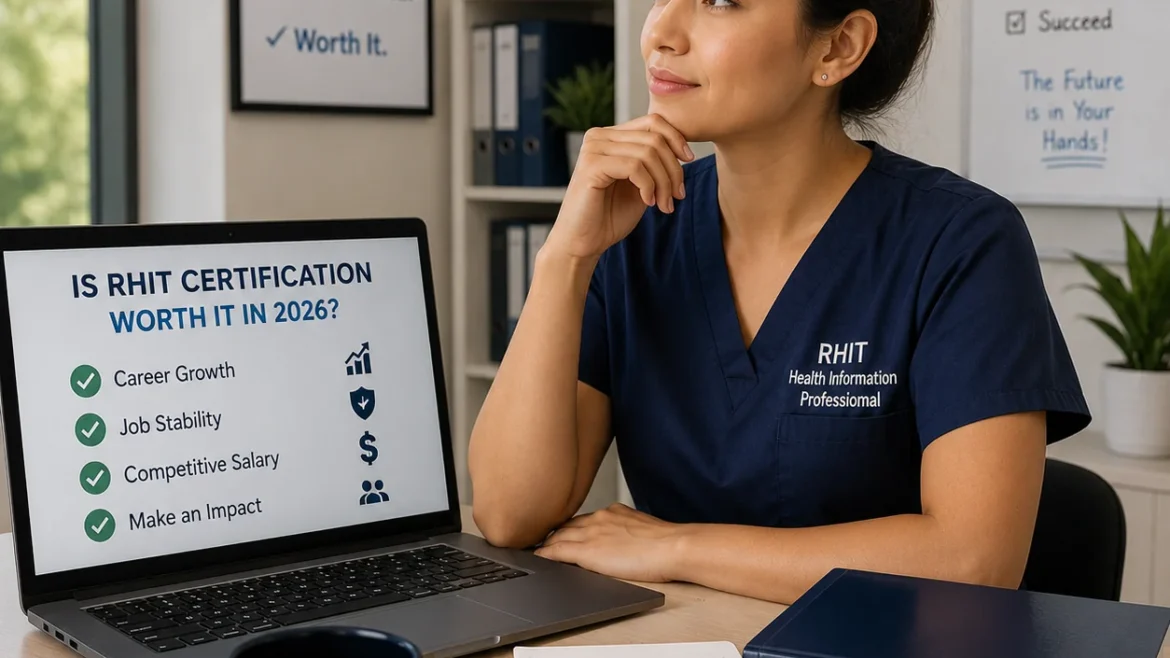

For some people, RHIT represents a pathway into healthcare without direct bedside-care responsibilities. For others, it offers opportunities to work with healthcare systems, medical records, compliance, and healthcare technology in a growing digital environment.
However, students also worry about important realities before investing time into certification preparation.
Common concerns include:
- Will RHIT jobs still be in demand?
- Is healthcare information management growing?
- Can RHIT lead to stable healthcare careers?
- Will technology replace some responsibilities?
- Is certification preparation difficult?
These are reasonable questions, especially as healthcare systems continue changing rapidly.
- Healthcare career opportunities
- Interest in medical-record systems
- Healthcare technology growth
- Structured work environments
- Compliance and information-management roles
- Non-bedside healthcare career paths
Healthcare Is Becoming More Information-Driven
Modern healthcare depends heavily on accurate electronic information systems.
Hospitals, clinics, insurance organizations, and healthcare networks all rely on:
- Electronic health records
- Documentation accuracy
- Healthcare compliance systems
- Patient-information security
- Data-management workflows
As healthcare becomes increasingly digital, healthcare organizations continue needing professionals who understand how information systems support patient care and operational accuracy.
RHIT Careers Appeal to a Different Type of Healthcare Student
Not every student entering healthcare wants direct clinical responsibilities involving bedside patient care.
Some students prefer:
- Organization and systems
- Technology-focused healthcare roles
- Analytical work environments
- Documentation and compliance processes
- Structured operational responsibilities
RHIT careers often attract students who enjoy detail-focused work and healthcare operations more than traditional clinical treatment roles.
Why Some Students Hesitate Before Pursuing RHIT
Although RHIT careers offer valuable healthcare opportunities, some students feel uncertain because healthcare information management is less publicly understood than careers like nursing or medical assisting.
Students may worry about:
- Career stability
- Certification difficulty
- Technology changes
- Job competition
- Long-term growth potential
These concerns are understandable because healthcare-information roles often operate behind the scenes and receive less public attention than direct clinical professions.
The RHIT Exam Requires Serious Preparation
One factor students should understand clearly is that RHIT certification preparation requires consistent effort.
The exam often includes:
- Healthcare terminology
- Documentation systems
- Compliance concepts
- Healthcare-information workflows
- Analytical scenario-based questions
Students who approach preparation passively sometimes struggle because the exam evaluates healthcare-system understanding — not just memorization alone.
Many students improve confidence using realistic RHIT certification practice scenarios because exposure to healthcare-information workflows and analytical questions helps concepts feel more practical before the exam.
How Healthcare Technology Is Changing RHIT Careers
One reason RHIT careers continue attracting attention is because healthcare systems are becoming increasingly technology-driven.
Modern healthcare organizations now depend heavily on:
- Electronic health record systems
- Digital documentation platforms
- Healthcare data management
- Information-security procedures
- Compliance tracking systems
This shift has increased demand for professionals who understand how healthcare information moves through complex systems safely and accurately.
What Students Often Misunderstand About RHIT Careers
Some students assume RHIT roles involve only repetitive paperwork or simple administrative tasks.
In reality, healthcare information professionals often work with:
- Documentation quality review
- Information-governance standards
- Compliance procedures
- Healthcare workflow coordination
- Patient-data accuracy systems
Healthcare organizations depend heavily on reliable information systems because communication, reimbursement, reporting, and patient-care coordination all rely on accurate records.
Why RHIT May Be a Strong Fit for Certain Personalities
RHIT careers usually appeal most to students who enjoy structured systems and detail-focused responsibilities.
Students who often adapt well to healthcare information careers typically enjoy:
- Organization and structure
- Analytical thinking
- Technology-based workflows
- Healthcare terminology
- Accuracy-focused environments
Students looking primarily for direct bedside patient interaction may prefer other healthcare pathways instead.
Why Some RHIT Students Struggle During Certification Preparation
One challenge students frequently encounter is underestimating how analytical the RHIT exam can feel.
Some candidates focus heavily on memorization but struggle when questions require:
- Healthcare-system reasoning
- Documentation analysis
- Compliance decision-making
- Workflow understanding
Students who understand why RHIT certification often feels difficult for first-time candidates usually prepare more realistically and avoid some of the most common study mistakes.
RHIT Careers Offer Different Types of Work Environments
Another reason some students consider RHIT certification worthwhile is because healthcare information careers exist across many healthcare settings.
RHIT-certified professionals may work in:
- Hospitals
- Outpatient healthcare facilities
- Insurance organizations
- Healthcare technology companies
- Government healthcare systems
- Remote or hybrid healthcare-information positions
This flexibility appeals to students interested in healthcare careers beyond traditional bedside-care environments.
Understanding the Real Role RHIT Professionals Play
Many students gain stronger motivation once they understand how healthcare information professionals support patient-care systems behind the scenes through documentation accuracy, organized records, compliance management, and healthcare communication support.
Although patients may not see this work directly, modern healthcare systems rely heavily on organized and accurate information to function safely and efficiently every day.
Can RHIT Careers Remain Valuable in the Future?
Some students worry that advancing healthcare technology or artificial intelligence could eventually reduce the need for healthcare information professionals.
However, modern healthcare systems still require trained professionals who understand:
- Documentation accuracy
- Healthcare regulations
- Compliance standards
- Patient-information security
- Healthcare workflow coordination
Technology may change how healthcare information is managed, but organized oversight and accurate healthcare records remain essential responsibilities inside medical systems.
What Makes RHIT Different From Many Healthcare Careers
RHIT careers occupy a unique position within healthcare because they combine:
- Healthcare knowledge
- Technology systems
- Documentation management
- Compliance awareness
- Analytical problem-solving
This creates a healthcare pathway that differs significantly from direct clinical treatment roles while still supporting patient-care operations indirectly.
Why Students Should Think Beyond the Certification Exam
Some students become so focused on passing the RHIT exam that they forget the certification represents preparation for real healthcare-information responsibilities.
Healthcare organizations need professionals who can:
- Maintain accurate records
- Protect confidential information
- Support healthcare communication
- Organize documentation systems
- Understand healthcare-information workflows
Students who approach RHIT preparation with long-term healthcare-system thinking often develop stronger confidence and motivation throughout the certification process.
When RHIT May Not Be the Right Fit
Although RHIT careers offer many advantages, the pathway may not fit every student equally well.
Students seeking careers focused primarily on:
- Direct bedside patient care
- Hands-on clinical treatment
- Fast-paced emergency interaction
- Constant face-to-face patient communication
may ultimately prefer more clinically focused healthcare roles instead.
RHIT careers generally fit students who enjoy structured systems, organization, analytical thinking, and healthcare operations behind the scenes.
How Students Usually Feel After Entering the Field
Many RHIT professionals report that healthcare-information work becomes much more meaningful once they see how strongly hospitals and healthcare organizations depend on accurate documentation systems.
Over time, students often begin understanding how healthcare information affects:
- Patient safety
- Healthcare coordination
- Compliance management
- Operational efficiency
- Communication across departments
This broader perspective often helps students appreciate the importance of healthcare information management beyond certification itself.
Final Thoughts on Whether RHIT Certification Is Worth It
For students interested in healthcare systems, documentation accuracy, healthcare technology, and organized operational environments, RHIT certification can offer a valuable and increasingly relevant healthcare career pathway.
Although certification preparation requires serious effort, healthcare organizations continue depending heavily on professionals who understand how to manage healthcare information accurately, securely, and efficiently.
RHIT careers may not fit every personality or career goal, but for detail-oriented students who enjoy systems, organization, and healthcare operations, the certification can provide meaningful long-term opportunities within modern healthcare environments.
As healthcare systems continue evolving digitally, healthcare information management remains closely connected to the future of organized patient care and healthcare communication.
Quick Questions
Is RHIT still worth it in 2026?
Many students still view RHIT as valuable because healthcare systems continue relying heavily on electronic records, compliance systems, and healthcare information management.
Do RHIT professionals work directly with patients?
Most RHIT roles focus more on healthcare information systems and documentation rather than bedside patient care.
Can RHIT careers involve remote work?
Some healthcare information positions may offer remote or hybrid opportunities depending on the employer and responsibilities.
Is the RHIT exam difficult?
Many students find the exam challenging because it requires healthcare-system reasoning, documentation understanding, and analytical thinking.
What type of student usually enjoys RHIT careers?
Students who enjoy organization, healthcare systems, accuracy, technology, and structured workflows often adapt well to RHIT-related roles.