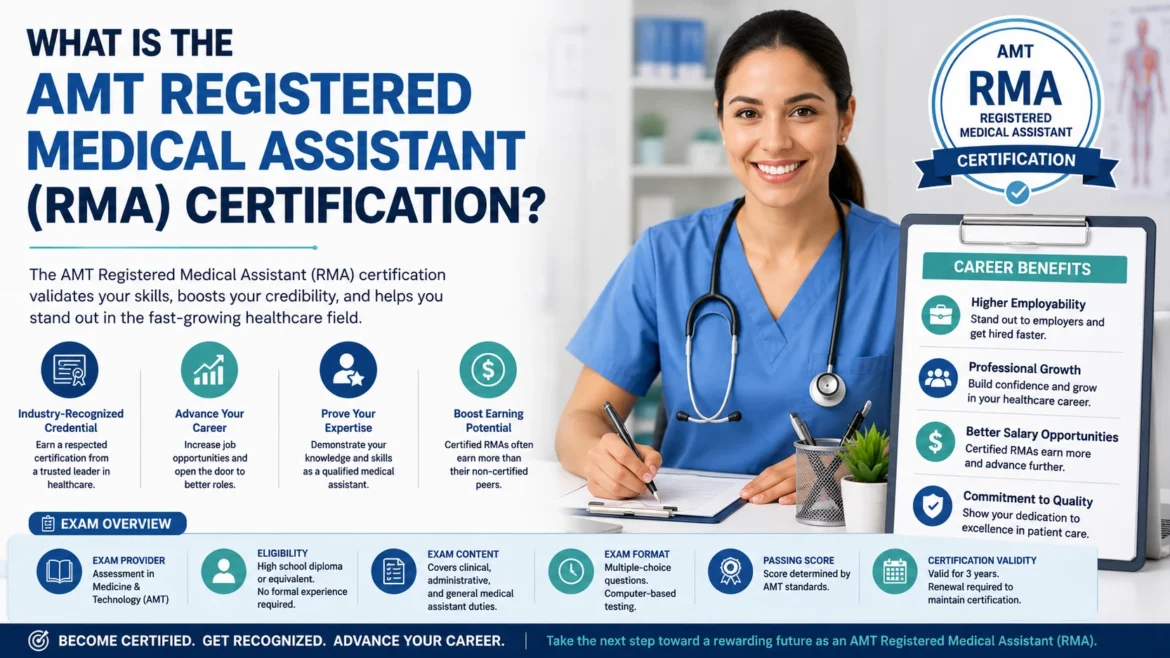

The Registered Medical Assistant (RMA) credential awarded by the American Medical Technologists (AMT) is a nationally recognized certification for medical assistants who demonstrate competency in both clinical and administrative responsibilities. It validates the knowledge and practical skills needed to support physicians, nurses, and other healthcare professionals in a variety of medical settings.
Medical assistants play an important role in modern healthcare. From preparing patients for examinations to documenting medical histories, performing basic clinical procedures, scheduling appointments, and maintaining accurate health records, their work helps healthcare facilities operate efficiently while improving the patient experience.
Earning the RMA credential demonstrates a commitment to professional standards and lifelong learning. Many employers recognize AMT certification as evidence that a candidate has met nationally accepted competency requirements for the profession.
Who Awards the RMA Credential?
The Registered Medical Assistant certification is awarded by the American Medical Technologists (AMT), a nationally recognized certification organization that offers professional credentials across several allied healthcare disciplines. AMT certifications are designed to evaluate the knowledge and skills required for safe, ethical, and effective patient care.
Healthcare employers throughout the United States often recognize AMT certifications when hiring qualified medical assistants, making the RMA credential a valuable professional achievement for individuals entering or advancing within the healthcare field.
| Certification | Description |
|---|---|
| Credential | Registered Medical Assistant (RMA) |
| Awarding Organization | American Medical Technologists (AMT) |
| Primary Focus | Clinical and administrative medical assisting competencies |
| Professional Setting | Physician offices, clinics, outpatient centers, hospitals, and specialty practices |
What Does a Registered Medical Assistant Do?
The responsibilities of an RMA can vary depending on the healthcare facility, specialty, and state regulations. Some professionals spend more time assisting with direct patient care, while others perform administrative duties that help coordinate daily clinical operations.
Common responsibilities include:
- Preparing examination rooms before patient visits.
- Recording medical histories and vital signs.
- Assisting physicians during examinations and minor procedures.
- Collecting and documenting patient information.
- Scheduling appointments and managing patient records.
- Performing basic laboratory procedures within their scope of practice.
- Educating patients about follow-up instructions and preventive care.
Medical assistants combine clinical knowledge with organizational skills, allowing healthcare providers to spend more time focusing on patient diagnosis and treatment while maintaining efficient daily operations.
Why Many Healthcare Professionals Choose the RMA Certification
Professional certification offers more than a credential after your name. It demonstrates that you’ve achieved a recognized standard of knowledge and are committed to maintaining professional competence throughout your career.
Individuals pursuing the RMA certification often seek opportunities to improve their employment prospects, strengthen their professional credibility, and qualify for positions that prefer or require nationally certified medical assistants.
As you begin preparing for certification, practicing with AMT RMA Test Questions can help you become familiar with the style of exam questions while identifying areas that need additional review.
Who Should Consider Becoming an RMA?
The Registered Medical Assistant credential is suitable for individuals at different stages of their healthcare careers. Whether you’re completing an accredited medical assisting program, transitioning into healthcare, or seeking professional advancement, certification can demonstrate your readiness to perform both clinical and administrative responsibilities.
In the next section, we’ll explore eligibility requirements, examine the knowledge areas covered by the certification process, and explain why employers continue to value the AMT Registered Medical Assistant credential across a wide range of healthcare settings.
Who Is Eligible for the AMT Registered Medical Assistant Certification?
The American Medical Technologists (AMT) offers multiple eligibility pathways for individuals seeking the Registered Medical Assistant (RMA) credential. These pathways are designed to recognize candidates who have completed formal education, gained practical work experience, or qualified through other approved routes established by the organization.
Regardless of the pathway, candidates should review the current eligibility requirements before applying to ensure they meet all educational, training, and documentation standards.
| Eligibility Area | General Requirement |
|---|---|
| Education | Completion of an approved medical assisting program or another qualifying pathway. |
| Training | Clinical and administrative medical assisting competencies. |
| Professional Standards | Compliance with AMT certification requirements. |
| Application | Successful completion of the certification application process. |
Knowledge and Skills Expected of an RMA
Registered Medical Assistants are expected to perform a combination of patient care and administrative responsibilities. The certification reflects competency across multiple areas commonly encountered in physician offices, outpatient clinics, urgent care centers, and other healthcare environments.
Candidates preparing for certification should become familiar with concepts related to:
- Medical terminology and basic anatomy.
- Patient communication and professionalism.
- Clinical procedures and patient preparation.
- Vital signs and basic patient assessment.
- Infection prevention and safety protocols.
- Medical records and documentation.
- Administrative office procedures.
- Ethics, confidentiality, and regulatory compliance.
Successful medical assistants combine technical knowledge with strong communication, organization, and interpersonal skills. These abilities help create a positive experience for both patients and healthcare providers.
Where Do Registered Medical Assistants Work?
One advantage of earning the RMA credential is the flexibility it offers. Certified medical assistants are employed in a wide variety of healthcare settings, allowing professionals to choose environments that align with their interests and career goals.
| Healthcare Setting | Typical Responsibilities |
|---|---|
| Primary Care Clinics | Patient intake, vital signs, documentation, and assisting providers. |
| Specialty Practices | Supporting specialty physicians and coordinating patient care. |
| Outpatient Centers | Preparing patients, scheduling services, and maintaining records. |
| Urgent Care Facilities | Assisting with examinations and managing patient flow. |
| Hospital Outpatient Departments | Supporting clinical teams and administrative operations. |
Career Advantages of Becoming an RMA
Professional certification can strengthen a candidate’s résumé and demonstrate dedication to recognized healthcare standards. Many employers prefer or encourage certification because it reflects verified knowledge, professionalism, and a commitment to continuing education.
Beyond improving employment opportunities, certification can also increase confidence when performing daily clinical and administrative responsibilities.
Certification doesn’t replace hands-on experience, but it validates the knowledge and competencies employers expect from today’s medical assistants.
Understanding Different Medical Assistant Certifications
Healthcare employers may recognize several nationally respected medical assistant credentials. While the Registered Medical Assistant (RMA) is awarded by the American Medical Technologists, other certifications are offered by different organizations and may have unique eligibility requirements, examination formats, and continuing certification expectations.
For example, professionals interested in administrative medical assisting may also explore the Certified Medical Administrative Assistant (CMAA) practice test, which focuses on front-office responsibilities such as patient scheduling, medical records, communication, insurance procedures, and office operations. Understanding the differences between these credentials can help candidates choose the certification that best aligns with their career goals.
Preparing for the Certification Process
Once you’ve confirmed your eligibility, preparation becomes the next priority. Building a strong understanding of medical terminology, clinical procedures, patient care, documentation, and administrative workflows provides a solid foundation for success.
Many candidates also reinforce their knowledge by working through AMT RMA practice test prep, allowing them to become familiar with question formats while identifying subjects that require additional review.
In the final section, we’ll discuss how the RMA credential supports long-term career development, answer common questions about certification, and summarize the key benefits of becoming a Registered Medical Assistant.
Building a Long-Term Career with the RMA Credential
For many healthcare professionals, earning the Registered Medical Assistant (RMA) credential is more than preparing for a certification exam—it’s an investment in a long-term career. Medical assistants are often among the first healthcare professionals patients interact with, making their clinical knowledge, communication skills, and professionalism essential to delivering high-quality care.
As healthcare organizations continue to emphasize quality improvement, patient safety, and efficient clinical operations, certified medical assistants remain valuable members of multidisciplinary healthcare teams. Developing strong clinical and administrative skills can also create opportunities for career advancement and additional professional certifications.
| Professional Skill | Career Benefit |
|---|---|
| Clinical competency | Supports safe and effective patient care. |
| Communication | Strengthens relationships with patients and healthcare teams. |
| Organization | Improves workflow efficiency and office productivity. |
| Documentation accuracy | Supports quality care, coding, and regulatory compliance. |
| Continuing education | Encourages professional growth and career development. |
Continuing Professional Development
Healthcare is constantly evolving as new technologies, clinical guidelines, and regulatory standards emerge. Successful medical assistants stay current by participating in continuing education, maintaining their certification, and expanding their knowledge in areas that complement their daily responsibilities.
Many professionals also pursue additional certifications based on their career interests. For example, individuals who develop an interest in medical documentation, coding compliance, and healthcare auditing often prepare for the Certified Professional Medical Auditor (CPMA) practice exam. While the CPMA credential serves a different professional role, both certifications highlight the importance of accurate documentation, regulatory compliance, and quality healthcare practices.
The strongest healthcare professionals continue learning throughout their careers. Each new skill—whether clinical, administrative, or documentation-related—adds value to both patient care and long-term career opportunities.
Preparing with Confidence
Certification preparation is most effective when it combines structured learning with consistent practice. Rather than relying solely on memorization, successful candidates focus on understanding clinical procedures, medical terminology, patient interactions, administrative workflows, and professional responsibilities encountered in everyday practice.
Working through AMT RMA practice questions with answers allows candidates to apply their knowledge in realistic scenarios, reinforce key concepts, and identify areas that require additional study before the certification exam.
Key Takeaways
- The AMT Registered Medical Assistant (RMA) credential is a nationally recognized certification for medical assisting professionals.
- RMAs perform both clinical and administrative responsibilities in a variety of healthcare settings.
- Certification demonstrates professional competency, commitment to quality patient care, and ongoing career development.
- Strong communication, documentation, and organizational skills are essential for success as a medical assistant.
- Consistent study and realistic practice questions help candidates prepare more effectively for certification.
FAQs
Who should pursue the RMA certification?
The certification is designed for individuals who meet AMT eligibility requirements and want to demonstrate professional competency as medical assistants working in physician offices, clinics, outpatient centers, and other healthcare settings.
What subjects are covered on the RMA certification exam?
The examination evaluates knowledge related to medical terminology, anatomy and physiology, clinical procedures, infection control, patient care, administrative responsibilities, medical law and ethics, and healthcare documentation.
Is the RMA certification recognized by employers?
Many healthcare employers recognize the AMT Registered Medical Assistant credential as evidence that a candidate has met nationally accepted standards for medical assisting knowledge and professional competency.
How can I prepare effectively for the RMA exam?
Create a structured study schedule, review core medical assisting concepts, practice clinical and administrative scenarios, and regularly assess your progress using high-quality practice questions with detailed explanations.
Can the RMA certification support future career growth?
Yes. Professional certification can strengthen employment opportunities, demonstrate commitment to continuing education, and provide a foundation for expanding into specialized healthcare roles as your experience grows.