
Doctors continue treating patients.
Nurses continue documenting care.
But behind the scenes, healthcare organizations rely on another type of professional to help maintain information accuracy, compliance systems, documentation standards, and healthcare data operations.
That professional may be an RHIA.
Many students entering healthcare careers have heard of nursing, medical assisting, or pharmacy technology, but fewer fully understand what Registered Health Information Administrators actually do inside modern healthcare systems.
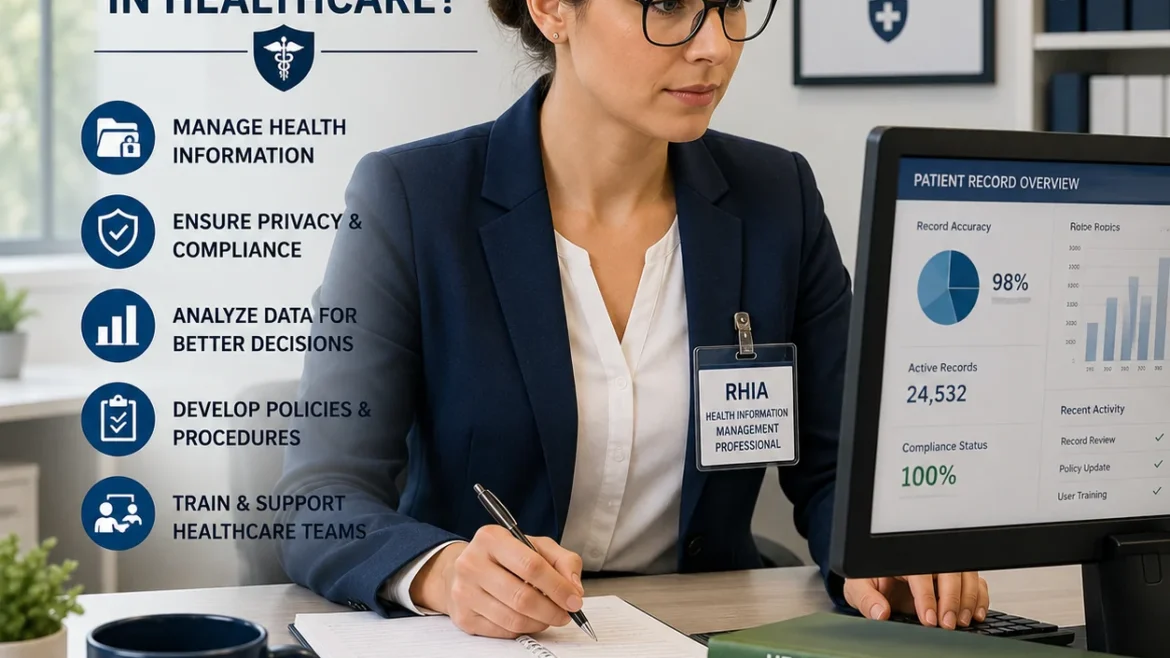
In reality, RHIA professionals often help manage the systems that keep healthcare information organized, compliant, secure, and operational across hospitals and healthcare networks.
Quick Snapshot: RHIA Career Overview
| Area | RHIA Role |
|---|---|
| Primary Focus | Healthcare information management and leadership |
| Typical Workplaces | Hospitals, healthcare systems, insurance organizations, compliance departments |
| Core Skills | Leadership, healthcare systems, compliance, data management |
| Technology Involvement | Electronic health records, healthcare databases, information governance systems |
Why RHIA Roles Matter More Than Ever
Modern healthcare depends heavily on organized digital information systems.
Healthcare organizations now manage enormous amounts of:
- Electronic health records
- Patient documentation
- Healthcare compliance systems
- Insurance reporting
- Data-security requirements
- Operational healthcare analytics
Without accurate information management, hospitals and healthcare systems become slower, less organized, and more vulnerable to compliance issues.
RHIA professionals help healthcare organizations maintain structure, documentation quality, operational accuracy, and information governance throughout complex healthcare environments.
Healthcare Reality:
Accurate healthcare information is not just administrative. It directly supports patient care coordination, communication, compliance, and healthcare-system efficiency.
RHIA vs RHIT: What’s the Difference?
| Category | RHIT | RHIA |
|---|---|---|
| Typical Focus | Technical health information work | Leadership and healthcare information management |
| Daily Responsibilities | Records, coding support, documentation systems | Compliance oversight, analytics, management |
| Leadership Involvement | Moderate | Higher |
| Healthcare Systems Strategy | Limited | Strong involvement |
Source: General AHIMA career pathway descriptions and healthcare information management role expectations.
What RHIA Professionals Actually Work On
Many RHIA professionals balance healthcare operations, documentation quality, healthcare compliance, leadership responsibilities, and healthcare information systems throughout the day.
Depending on the healthcare organization, daily responsibilities may involve:
- Managing healthcare information departments
- Reviewing compliance procedures
- Monitoring documentation quality
- Supporting healthcare reporting systems
- Improving operational workflows
- Protecting patient-information accuracy and privacy
Unlike some healthcare roles, RHIA careers often combine healthcare knowledge with systems thinking, leadership, technology, and operational management.
Important Career Insight:
RHIA careers usually fit students who enjoy healthcare systems, organization, leadership, analytical thinking, and operational problem-solving more than direct bedside patient care.
Healthcare Trends Making RHIA Roles More Important
| Healthcare Trend | Why RHIA Roles Matter |
|---|---|
| Electronic Health Records | Healthcare systems require organized digital-information oversight |
| Healthcare Compliance | Organizations need accurate documentation and governance systems |
| Healthcare Data Growth | Healthcare information management becomes more complex and valuable |
| Healthcare Analytics | Healthcare organizations increasingly rely on structured information systems |
A Realistic Day-in-the-Life Example
Imagine a hospital preparing for a healthcare compliance audit.
An RHIA professional may help:
- Review documentation quality
- Monitor healthcare reporting systems
- Coordinate information-governance procedures
- Support departmental communication
- Identify healthcare-record inconsistencies
Although patients may never directly see this work, healthcare systems depend heavily on organized and accurate information to function efficiently and safely.
Helpful Preparation Tip
Many students preparing for healthcare information careers build confidence using realistic RHIA certification practice scenarios because exposure to healthcare-information workflows, compliance situations, and documentation systems helps concepts feel more practical before the exam.
Final Thoughts
RHIA professionals play an important role in healthcare by helping organizations manage healthcare information systems, compliance standards, operational workflows, and documentation accuracy.
Although the role often operates behind the scenes, organized healthcare information directly affects patient-care coordination, healthcare communication, compliance, and operational efficiency throughout modern healthcare systems.
For students interested in healthcare leadership, healthcare technology, information systems, and operational management, RHIA careers may offer meaningful long-term opportunities inside an increasingly digital healthcare industry.
What Skills Help RHIA Professionals Succeed?
RHIA careers combine healthcare knowledge with leadership, organization, communication, and information-management responsibilities.
Students who perform well in healthcare information management often develop strengths in:
- Analytical thinking
- Healthcare terminology
- Problem-solving
- Communication and coordination
- Documentation review
- Attention to detail
Because healthcare systems involve large amounts of sensitive information, accuracy and consistency remain extremely important throughout RHIA work environments.
Professional Reality:
RHIA professionals often help healthcare organizations reduce documentation problems, improve operational efficiency, and maintain compliance standards across multiple departments.
How RHIA Professionals Support Healthcare Leadership
One major difference between RHIA and many other healthcare-information roles is the stronger leadership and administrative involvement.
Depending on the organization, RHIA professionals may participate in:
- Department coordination
- Healthcare policy implementation
- Compliance monitoring
- Information-governance planning
- Healthcare reporting oversight
This leadership element is one reason some students pursue RHIA instead of more technical-only healthcare information pathways.
Why Compliance Matters So Much in Healthcare
Healthcare organizations must follow strict standards involving privacy, patient information, reporting accuracy, and documentation management.
Compliance problems can affect:
- Patient trust
- Healthcare operations
- Insurance reimbursement
- Regulatory audits
- Organizational reputation
RHIA professionals often help healthcare systems maintain organized procedures that reduce these risks.
| Healthcare Area | Why Accurate Information Matters |
|---|---|
| Patient Care Coordination | Medical teams depend on organized records for communication and treatment continuity |
| Insurance Processing | Incomplete or incorrect documentation may affect reimbursement workflows |
| Compliance Audits | Healthcare systems must maintain organized and secure healthcare information |
| Healthcare Reporting | Reliable healthcare data supports operational and regulatory reporting requirements |
Source: General healthcare compliance and health information management operational standards.
What Makes RHIA Careers Challenging?
Although RHIA careers offer strong healthcare opportunities, the work environment also involves significant responsibility.
Challenges may include:
- Managing complex healthcare systems
- Keeping up with changing regulations
- Maintaining information accuracy
- Balancing operational priorities
- Handling large amounts of healthcare data
Students who understand these realities early usually build a more realistic and sustainable view of healthcare information careers.
Helpful Career Perspective:
RHIA careers are less about repetitive paperwork and more about helping healthcare systems operate safely, efficiently, and accurately through organized information management.
Why RHIA Careers Continue Growing
Healthcare organizations continue expanding digital systems, analytics platforms, compliance requirements, and information-management operations.
This growth increases the need for professionals who understand:
- Healthcare information systems
- Operational workflows
- Documentation standards
- Healthcare compliance
- Information governance
As healthcare becomes increasingly data-driven, organized healthcare-information leadership remains closely connected to the future of healthcare operations.
What Type of Student Usually Enjoys RHIA Careers?
RHIA pathways are often strongest for students who enjoy structured systems, organization, healthcare operations, and analytical problem-solving.
Students who usually adapt well to healthcare information management often prefer:
- Leadership-oriented responsibilities
- Technology-based healthcare environments
- Operational systems and workflows
- Data organization and accuracy
- Healthcare communication and coordination
Students seeking constant bedside interaction or hands-on clinical treatment may ultimately prefer more patient-facing healthcare careers instead.
Career Fit Insight:
RHIA careers often appeal most to students who enjoy healthcare systems, operational leadership, organization, and analytical thinking more than direct clinical treatment roles.
How RHIA Professionals Support Patient Care Indirectly
Although RHIA professionals may not treat patients directly, their work still affects healthcare quality every day.
Accurate healthcare information helps medical teams:
- Coordinate patient care safely
- Communicate effectively between departments
- Maintain organized treatment records
- Reduce documentation problems
- Support accurate healthcare reporting
Healthcare systems depend heavily on organized information to support safe and efficient operations across hospitals and healthcare networks.
Why Healthcare Technology Is Increasing RHIA Demand
Modern healthcare continues shifting toward digital systems, analytics, electronic records, and healthcare-data management.
As healthcare information grows more complex, organizations increasingly need professionals who understand:
- Healthcare information governance
- Electronic documentation systems
- Operational healthcare workflows
- Compliance and reporting standards
- Healthcare-system coordination
This technology shift is one reason healthcare information management remains highly relevant within modern healthcare environments.
| Healthcare Trend | RHIA Relevance |
|---|---|
| Electronic Health Records | Requires organized healthcare information leadership and oversight |
| Healthcare Analytics | Organizations rely on structured and accurate healthcare data |
| Compliance Expansion | Healthcare systems require stronger governance and documentation standards |
| Healthcare System Integration | RHIA professionals help maintain operational communication across departments |
Source: General healthcare information management and healthcare technology operational trends.
Helpful Preparation Advice for RHIA Students
Many students initially feel overwhelmed because RHIA preparation combines:
- Healthcare terminology
- Compliance concepts
- Information-management systems
- Leadership responsibilities
- Operational healthcare workflows
Students usually improve confidence faster when they focus on understanding how healthcare systems function together instead of memorizing isolated facts mechanically.
Realistic healthcare-information scenarios often help students understand how RHIA concepts apply within actual healthcare environments.
Why RHIA Careers May Become Even More Important
Healthcare systems continue becoming larger, more digital, more regulated, and more data-dependent every year.
Because of this, healthcare organizations increasingly rely on professionals who can:
- Manage healthcare information systems
- Improve documentation quality
- Support compliance operations
- Coordinate healthcare reporting
- Protect healthcare-information accuracy
As healthcare technology expands, organized healthcare-information leadership remains deeply connected to operational healthcare success.
Final Thoughts
RHIA professionals play an important role in healthcare by helping organizations manage healthcare information systems, compliance processes, operational workflows, and documentation quality.
Although the role often operates behind the scenes, organized healthcare information directly supports patient-care coordination, healthcare communication, operational efficiency, and healthcare-system reliability.
For students interested in healthcare leadership, healthcare technology, operational systems, compliance, and information management, RHIA careers may offer meaningful long-term opportunities within modern healthcare environments.
As healthcare continues evolving digitally, healthcare information leadership is likely to remain increasingly valuable across hospitals, healthcare systems, insurance organizations, and healthcare technology environments.