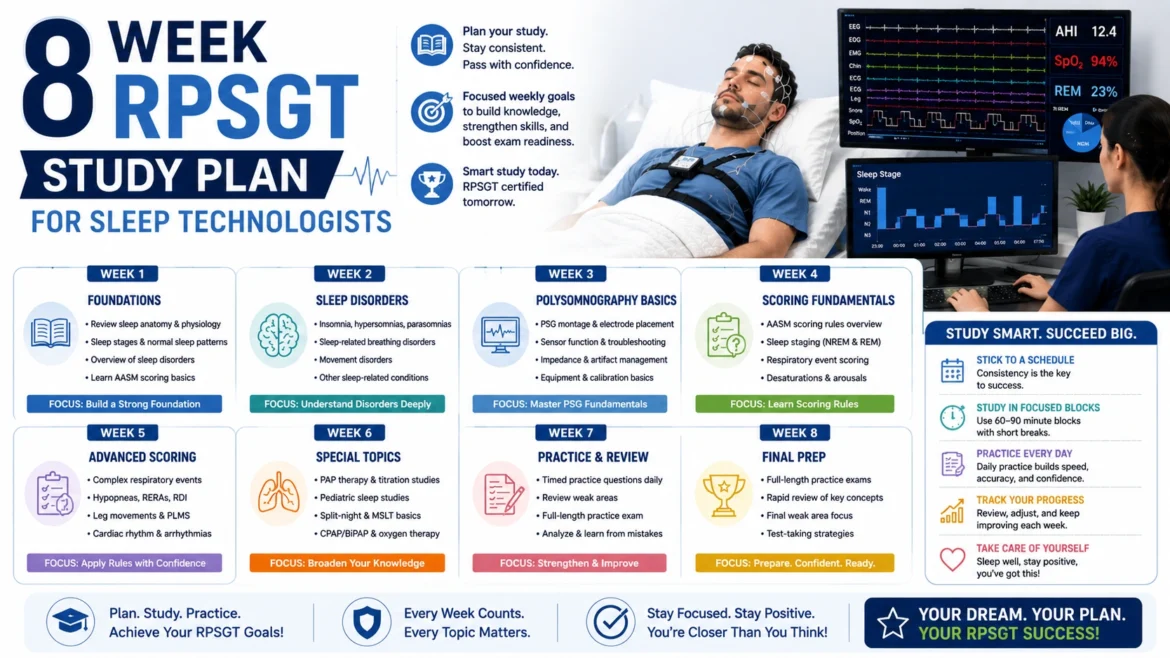

Preparing for the Registered Polysomnographic Technologist (RPSGT) exam can feel overwhelming for many sleep technologists balancing overnight shifts, healthcare responsibilities, family obligations, and mentally demanding clinical environments.
One of the biggest reasons candidates struggle during preparation is not lack of intelligence or technical ability. Instead, many candidates study without a structured long-term strategy.
Without organization, preparation often becomes:
- Inconsistent
- Emotionally exhausting
- Poorly prioritized
- Focused on the wrong topics
- Stressful near exam day
A structured study plan helps candidates improve gradually while strengthening technical confidence, respiratory interpretation skills, and sleep-study reasoning abilities over time.
Preparation Insight:Consistent long-term review often improves technical retention far more effectively than short-term intensive cramming.
How Busy Sleep Technologists Can Study More Efficiently
Many sleep technologists preparing for certification work physically and mentally demanding overnight schedules that make traditional long study sessions difficult to maintain.
Fortunately, effective RPSGT preparation does not require studying endlessly every day.
Busy professionals often improve more effectively when they focus on:
- Short focused study sessions
- Topic rotation schedules
- Practice-question review
- Technical interpretation exercises
- Weekend simulations
- Consistent active learning
Even 45–90 minutes of focused technical preparation several days each week can produce meaningful long-term progress when organized correctly.
Week 1: Understanding the RPSGT Exam Structure
The first week should focus on organizing study materials, understanding the exam structure, and reviewing foundational sleep medicine concepts.
Many candidates begin preparation feeling overwhelmed because they attempt to study everything simultaneously.
Week 1 should focus on creating structure and clarity.
Main Goals for Week 1
- Understand the RPSGT exam format
- Review major topic categories
- Organize study resources
- Create a realistic schedule
- Identify weak technical areas
Important introductory review topics may include:
- Sleep physiology basics
- Sleep stages
- Respiratory monitoring fundamentals
- Patient safety concepts
- Equipment terminology
The goal during this phase is not perfection. Instead, candidates should focus on building a sustainable study routine that fits realistically within demanding work schedules.
Study Tip:Smaller daily review sessions are often easier to maintain consistently than occasional long study marathons.
Week 2: Sleep Physiology and Sleep Architecture
Week 2 should focus heavily on sleep physiology because understanding how the body functions during sleep forms the foundation of polysomnography interpretation.
Candidates should review:
- REM and non-REM sleep
- Sleep-cycle progression
- Brainwave activity patterns
- Muscle tone changes
- Sleep-stage characteristics
- Neurological sleep functions
Strong conceptual understanding helps candidates interpret sleep-study patterns more accurately during technical scenarios.
Rather than memorizing isolated facts, candidates should focus on understanding how physiological changes affect monitoring interpretation.
Week 3: Sleep Staging and EEG Interpretation
Sleep staging remains one of the highest-priority technical areas on the RPSGT exam.
Week 3 should focus on improving confidence with:
- Stage N1 recognition
- Stage N2 recognition
- Stage N3 recognition
- REM sleep interpretation
- EEG waveform identification
- Arousal-event recognition
Many candidates initially struggle because they attempt to memorize scoring rules without repeated interpretation practice.
Repeated exposure to realistic EEG interpretation exercises often improves scoring consistency significantly.
Technical Reminder:Accurate sleep staging supports reliable sleep-study interpretation and patient diagnosis.
Week 4: Respiratory Monitoring and PAP Therapy
Week 4 should focus heavily on respiratory monitoring because breathing disorders represent one of the most important areas within sleep medicine.
Candidates should strengthen understanding of:
- Obstructive sleep apnea
- Central sleep apnea
- Hypopnea events
- Oxygen desaturation
- Airflow interpretation
- Respiratory effort monitoring
- CPAP therapy
- BiPAP therapy
Repeated respiratory interpretation practice helps technologists become more comfortable recognizing clinically important breathing abnormalities.
This phase should also include review of PAP therapy troubleshooting concepts and patient tolerance challenges.
Why Practice Questions Become More Important Over Time
As preparation progresses, practice questions become increasingly important because they help candidates combine multiple technical concepts simultaneously within realistic monitoring situations.
Practice-based learning strengthens:
- Technical reasoning
- Respiratory interpretation
- Sleep-stage analysis
- Troubleshooting confidence
- Patient-monitoring awareness
- Time management
Many sleep technologists preparing for certification improve technical confidence by consistently working through realistic RPSGT practice exam Preparation designed to mirror respiratory monitoring, sleep-study scoring, and troubleshooting scenarios commonly encountered during modern polysomnography environments.
Week 5: Technical Troubleshooting and Artifact Recognition
Week 5 should focus heavily on technical troubleshooting because reliable signal quality and accurate monitoring are essential in polysomnography environments.
The RPSGT exam frequently evaluates whether candidates can recognize and manage:
- Signal interference
- Electrode displacement
- Movement artifacts
- Poor sensor connections
- Recording inconsistencies
- Equipment calibration problems
Strong troubleshooting skills help technologists maintain study reliability while protecting patient safety and improving diagnostic accuracy.
Repeated artifact-recognition practice also helps candidates become more comfortable distinguishing true physiological events from technical recording problems.
Technical Insight:Accurate troubleshooting skills help maintain clean recordings and improve sleep-study interpretation quality.
Week 6: Patient Safety and Clinical Awareness
Patient safety remains one of the most important responsibilities for sleep technologists because overnight studies involve continuous physiological monitoring.
Week 6 should focus on strengthening awareness of:
- Respiratory instability
- Oxygen desaturation concerns
- Emergency-response priorities
- Patient discomfort recognition
- Clinical monitoring responsibilities
- Professional communication standards
The RPSGT exam may include situations requiring candidates to prioritize patient wellbeing while maintaining proper monitoring procedures and technical accuracy.
Strong clinical awareness therefore becomes just as important as technical interpretation skills.
Week 7: Full-Length Practice Sessions and Weak-Area Review
By Week 7, candidates should begin focusing more heavily on full-length practice sessions and realistic timed testing conditions.
Many candidates understand technical concepts individually but struggle combining multiple skills during longer monitoring scenarios.
Week 7 should emphasize:
- Timed practice sessions
- Sleep-study simulations
- Respiratory interpretation drills
- Sleep-stage review
- Technical troubleshooting exercises
- Weak-area reinforcement
Detailed rationale review becomes especially important during this phase because understanding why certain answers are correct strengthens technical judgment much more effectively than memorization alone.
Study Reminder:The goal of practice sessions is gradual technical improvement, not perfection during every simulation.
Week 8: Final Review and Confidence Building
The final week should focus on reinforcement, confidence building, and mental preparation instead of trying to learn completely new material.
Many candidates increase stress unnecessarily during the final days before the exam by attempting aggressive last-minute cramming.
Instead, Week 8 should focus on:
- Reviewing high-yield topics
- Strengthening weak areas lightly
- Improving confidence
- Managing stress levels
- Maintaining healthy sleep routines
- Practicing lighter technical review
This phase should help candidates feel mentally prepared and technically confident before exam day.
How Busy Sleep Technologists Can Avoid Burnout
Many RPSGT candidates prepare for certification while managing overnight shifts, inconsistent sleep schedules, physically demanding work, and emotionally exhausting healthcare environments.
Burnout can negatively affect:
- Concentration
- Memory retention
- Technical interpretation
- Motivation
- Testing confidence
Healthy preparation routines often include:
- Reasonable study expectations
- Scheduled recovery time
- Balanced workloads
- Sleep consistency
- Stress-management habits
Protecting mental focus becomes especially important because sleep medicine itself already requires high levels of sustained technical attention.
Why Active Learning Improves Technical Retention
Many candidates preparing for technical healthcare exams spend too much time passively reading notes without actively applying concepts.
Active learning methods are usually much more effective because they require candidates to:
- Interpret respiratory events
- Analyze sleep-study scenarios
- Recognize artifacts
- Apply troubleshooting logic
- Evaluate patient-monitoring changes
Examples of effective active learning methods include:
| Learning Method | Main Benefit |
|---|---|
| Practice Simulations | Improves technical reasoning. |
| Rationale Review | Strengthens interpretation accuracy. |
| Sleep-Stage Exercises | Builds scoring confidence. |
| Respiratory Drills | Improves event recognition. |
| Timed Sessions | Strengthens pacing and focus. |
This type of active preparation usually improves long-term retention more effectively than memorization alone.
Learning Insight:Technical confidence develops more naturally through repeated interpretation practice and realistic scenario exposure.
Learning From Professional Sleep Medicine Resources
Many candidates strengthen preparation quality by reviewing educational resources explaining broader sleep medicine responsibilities and certification expectations.
Helpful professional guidance may improve understanding of:
- Polysomnography workflows
- Sleep-study procedures
- Clinical monitoring responsibilities
- Respiratory interpretation standards
- Technical preparation strategies
Candidates looking for broader insight into polysomnography careers and certification pathways may benefit from reviewing a detailed sleep technologist certification preparation guide while building long-term technical confidence and patient-monitoring knowledge.
Sleep technologists may also improve study efficiency by understanding common polysomnography study habits that reduce exam performance before entering the final stages of certification preparation.
How Consistency Builds Long-Term Technical Confidence
Technical interpretation skills improve gradually through repeated exposure to respiratory analysis, sleep-stage scoring, troubleshooting scenarios, and patient-monitoring situations.
Even shorter consistent review sessions can strengthen:
- Pattern recognition
- Technical reasoning
- Clinical awareness
- Monitoring confidence
- Respiratory interpretation accuracy
Over time, this consistency helps future sleep technologists feel more comfortable analyzing complex monitoring situations during both certification preparation and real-world sleep medicine practice.
How Time Management Improves RPSGT Performance
Many sleep technologists underestimate how mentally demanding long technical review sessions and timed polysomnography scenarios can become during preparation.
Without proper pacing strategies, candidates may:
- Overanalyze technical details
- Lose concentration during long sessions
- Rush difficult respiratory questions
- Experience increased stress
- Struggle with technical retention
Strong time-management habits help candidates maintain:
- Better concentration
- More consistent technical review
- Improved pacing during practice
- Reduced burnout risk
- Greater long-term confidence
Even shorter organized study blocks often improve retention more effectively than exhausting study marathons.
Preparation Insight:Balanced study routines often improve technical retention and reduce mental fatigue during long-term certification preparation.
Why Candidates Should Focus on High-Yield Topics
Because the RPSGT exam covers multiple technical and clinical concepts, candidates often improve preparation efficiency by prioritizing high-yield subject areas first.
Important focus areas may include:
- Sleep staging
- Respiratory monitoring
- CPAP and BiPAP therapy
- Signal artifacts
- Technical troubleshooting
- Patient safety
- Sleep physiology
Focusing heavily on these core areas helps candidates strengthen the technical reasoning skills most closely connected to real polysomnography environments.
Candidates seeking deeper understanding of these subjects may also benefit from reviewing educational resources covering the most heavily emphasized RPSGT technical concepts frequently associated with modern sleep-study interpretation and respiratory monitoring.
How Practice Sessions Improve Technical Endurance
Many candidates understand technical material well during short review sessions but struggle maintaining concentration during longer testing environments.
Repeated timed practice sessions help improve:
- Mental endurance
- Technical focus
- Respiratory interpretation speed
- Decision-making confidence
- Stress management
Over time, candidates often become more comfortable working through complex monitoring scenarios without excessive hesitation or fatigue.
This type of endurance training can make the actual certification exam feel significantly less overwhelming.
Technical Reminder:Consistent practice under realistic conditions helps build stronger confidence and technical consistency over time.
Why Technical Confidence Matters in Sleep Medicine
Sleep technologists work in specialized healthcare environments where technical interpretation accuracy directly affects patient care and diagnostic reliability.
Strong technical confidence helps professionals:
- Recognize respiratory abnormalities faster
- Respond calmly during monitoring issues
- Interpret sleep-stage patterns accurately
- Manage troubleshooting situations effectively
- Support patient safety consistently
Preparation should therefore focus not only on passing the exam but also on building practical skills that remain valuable throughout long-term polysomnography careers.
How Practice Questions Support Better Study Habits
Many candidates improve study quality significantly once they begin using more active learning strategies instead of relying only on passive reading.
Practice questions help candidates:
- Identify weak technical areas
- Improve pattern recognition
- Strengthen long-term retention
- Practice respiratory interpretation
- Build troubleshooting confidence
Repeated active application often improves technical reasoning much more effectively than memorization alone.
Sleep technologists looking to strengthen preparation efficiency may also benefit from reviewing guidance explaining how practice-based polysomnography review improves certification readiness during modern RPSGT preparation.
Why Mental Recovery Is Important During Preparation
Sleep technologists often work physically and mentally demanding overnight schedules that can increase fatigue during certification preparation.
Without proper recovery, candidates may experience:
- Reduced concentration
- Poor technical retention
- Mental exhaustion
- Lower motivation
- Increased testing anxiety
Healthy preparation routines often include:
- Reasonable study expectations
- Balanced schedules
- Sleep consistency
- Stress-management strategies
- Scheduled recovery periods
Protecting mental energy helps candidates maintain stronger technical performance throughout the full 8-week study process.
Wellness Insight:Balanced preparation routines often improve learning efficiency and technical confidence more effectively than excessive study overload.
Building Long-Term Professional Skills
The benefits of structured RPSGT preparation extend far beyond passing a certification exam.
Consistent active learning often strengthens:
- Clinical reasoning
- Technical interpretation
- Respiratory analysis
- Troubleshooting ability
- Patient-monitoring awareness
- Professional confidence
These skills continue supporting technologists throughout careers in sleep laboratories, pulmonary clinics, hospitals, and specialized sleep medicine environments.
Many experienced professionals later realize that the technical judgment developed during preparation became highly valuable within real patient-monitoring situations.
Creating a Sustainable Weekly Routine
Many successful candidates use flexible but organized weekly study routines that fit realistically within overnight work schedules and healthcare responsibilities.
For example:
| Study Day | Suggested Focus |
|---|---|
| Monday | Sleep physiology review |
| Tuesday | Sleep staging practice |
| Wednesday | Respiratory interpretation drills |
| Thursday | Artifact recognition review |
| Friday | CPAP and troubleshooting practice |
| Weekend | Timed polysomnography simulations |
This type of balanced structure often improves consistency while reducing mental exhaustion during longer preparation periods.
Final Thoughts
An organized 8-week RPSGT study plan helps sleep technologists strengthen technical interpretation, respiratory monitoring confidence, troubleshooting abilities, and long-term clinical reasoning skills.
Strong preparation usually involves:
- Consistent active learning
- Sleep-stage practice
- Respiratory interpretation review
- Timed simulations
- Technical troubleshooting exercises
- Balanced mental recovery
Rather than relying on last-minute cramming, many successful candidates improve gradually through repeated technical application and structured polysomnography review.
Over time, this balanced preparation approach helps future sleep technologists feel more confident, technically prepared, and professionally ready for both RPSGT certification success and long-term growth within sleep medicine.
Frequently Asked Questions (FAQs)
Is 8 weeks enough to prepare for the RPSGT exam?
Yes. Many candidates prepare effectively within 6–10 weeks using structured topic review, practice questions, and technical interpretation exercises.
What topics should candidates focus on most?
Important areas often include sleep staging, respiratory monitoring, PAP therapy, troubleshooting, patient safety, and sleep physiology.
Why are practice simulations important for RPSGT preparation?
Practice simulations improve technical reasoning, respiratory interpretation, pacing, and confidence during realistic monitoring situations.
How can sleep technologists avoid burnout while studying?
Balanced study schedules, consistent sleep routines, mental recovery time, and realistic expectations can help reduce burnout.
What is the best study method for the RPSGT exam?
Active learning methods such as practice questions, scenario interpretation, troubleshooting drills, and timed simulations are highly effective.