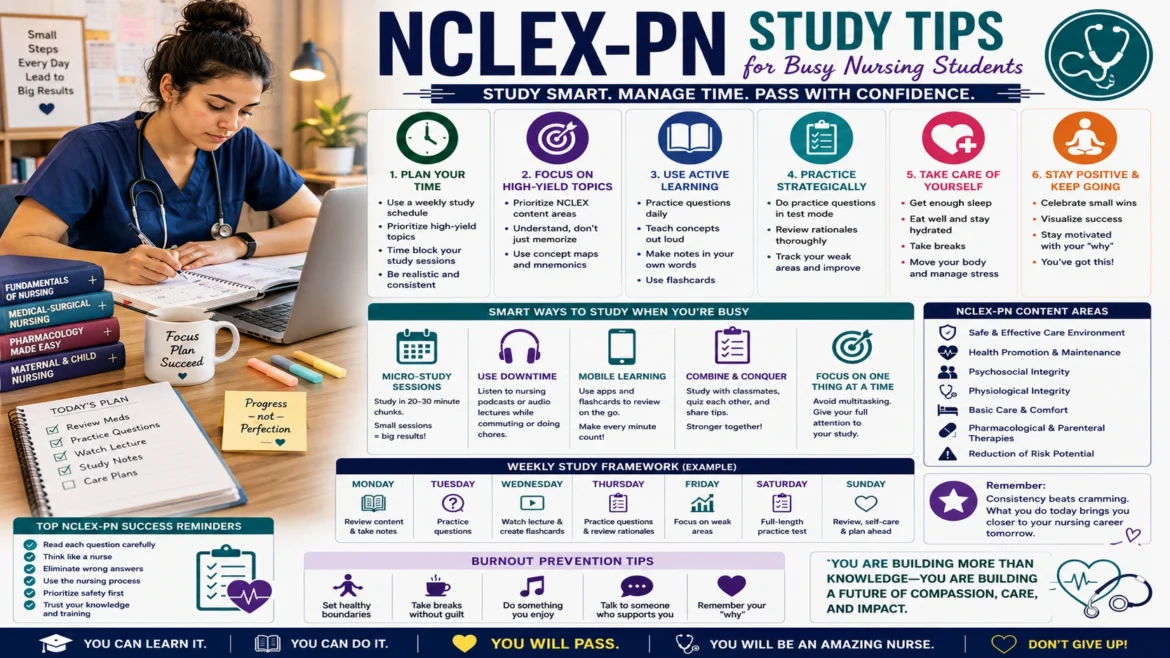

Why NCLEX-PN Preparation Feels Difficult for Busy Nursing Students
Many nursing students preparing for the NCLEX-PN balance far more than exam preparation alone. Clinical rotations, nursing coursework, work responsibilities, family obligations, and emotionally demanding healthcare environments can make studying feel exhausting.
Because practical nursing programs already require strong physical and emotional commitment, many students struggle finding enough time and energy to prepare consistently for licensure exams.
Without organization, preparation often becomes:
- Mentally overwhelming
- Inconsistent
- Stressful and exhausting
- Focused on the wrong topics
- Dependent on last-minute cramming
Fortunately, many students improve significantly once they begin using more realistic and structured study methods designed for busy healthcare schedules.
Nursing Insight:Consistent active learning often improves NCLEX-PN readiness more effectively than exhausting marathon study sessions.
Study Tip #1: Focus on Consistency Instead of Perfection
One of the biggest mistakes busy nursing students make is believing they must study for many hours every day to succeed on the NCLEX-PN.
In reality, shorter consistent study sessions often improve long-term retention more effectively than occasional overwhelming review sessions.
For example, many students benefit from:
- 45–90 minute focused sessions
- Daily practice-question review
- Topic rotation schedules
- Weekly weak-area review
- Short active-learning exercises
Consistency helps students strengthen clinical reasoning gradually without creating unnecessary mental exhaustion.
Study Tip #2: Prioritize High-Yield NCLEX-PN Topics
Busy nursing students usually cannot spend unlimited time reviewing every nursing topic equally.
Because of this, focusing on high-yield NCLEX-PN concepts often improves study efficiency significantly.
Important high-yield areas may include:
- Patient safety
- Clinical judgment
- Prioritization
- Pharmacology
- Infection control
- Communication skills
- Nursing fundamentals
Strong understanding of these concepts helps nursing students improve patient-care reasoning while strengthening preparation quality overall.
Preparation Reminder:Focused review of high-yield nursing concepts often improves efficiency and reduces unnecessary study overload.
Study Tip #3: Use Practice Questions Daily
Practice questions remain one of the most effective tools for improving NCLEX-PN readiness because they help students apply nursing concepts actively within realistic healthcare situations.
Practice-based learning strengthens:
- Clinical judgment
- Patient-safety awareness
- Medication understanding
- Emergency prioritization
- Communication confidence
- Testing endurance
Even completing smaller sets of practice questions consistently throughout the week can improve long-term retention significantly.
Many nursing students preparing for licensure improve confidence and patient-care reasoning by consistently working through realistic NCLEX-PN practice exam questions designed to simulate prioritization challenges, medication-safety situations, communication responsibilities, and modern clinical nursing scenarios commonly encountered within healthcare environments.
Study Tip #4: Study Actively Instead of Passively
Many students spend large amounts of time passively rereading notes or highlighting textbooks without actively applying nursing knowledge.
Active learning methods are usually much more effective because they require students to:
- Interpret patient symptoms
- Analyze patient risks
- Apply prioritization logic
- Evaluate nursing interventions
- Practice clinical judgment
Examples of effective active learning methods include:
- Practice questions
- Case studies
- Prioritization drills
- Medication-safety exercises
- Timed simulations
Repeated patient-care application helps strengthen long-term nursing retention much more effectively than memorization alone.
Learning Insight:Active learning helps nursing students apply patient-care knowledge more confidently during realistic healthcare situations.
Study Tip #5: Build a Realistic Weekly Schedule
Many nursing students struggle because study schedules are unrealistic and difficult to maintain long term.
Instead of creating exhausting daily plans, students often improve more consistently with flexible weekly structures.
For example:
| Study Day | Main Focus |
|---|---|
| Monday | Pharmacology review |
| Tuesday | Patient-safety scenarios |
| Wednesday | Prioritization practice |
| Thursday | Communication and psychosocial care |
| Friday | Practice-question review |
| Weekend | Timed nursing simulations |
This type of structure often helps students maintain consistency while balancing busy healthcare and academic responsibilities.
Study Tip #6: Review Rationales Carefully
Many students focus only on whether answers are correct or incorrect while ignoring the deeper reasoning behind nursing decisions.
However, rationale review often improves:
- Clinical judgment
- Patient-safety reasoning
- Medication understanding
- Prioritization skills
- Emergency-response thinking
Understanding why nursing interventions are correct helps students apply patient-care concepts much more effectively during unfamiliar scenarios.
Study Tip #7: Focus on Clinical Judgment Every Week
Clinical judgment remains one of the most important skills evaluated throughout the NCLEX-PN because practical nurses make patient-care decisions continuously during real healthcare situations.
Busy nursing students should consistently practice:
- Recognizing patient deterioration
- Prioritizing patient needs
- Identifying safety risks
- Choosing appropriate interventions
- Responding to emergencies safely
Clinical reasoning improves gradually through repeated patient-care application rather than memorization alone.
Even shorter daily exposure to nursing scenarios can strengthen long-term patient-safety awareness and healthcare confidence significantly.
Clinical Reminder:Strong clinical judgment helps practical nurses make safer patient-care decisions under pressure.
Study Tip #8: Avoid Last-Minute Cramming
Many nursing students panic during the final weeks before the NCLEX-PN and attempt to review every topic at once.
Unfortunately, excessive cramming often leads to:
- Mental exhaustion
- Poor retention
- Increased anxiety
- Reduced concentration
- Lower testing confidence
Steady preparation usually produces better long-term results because nursing knowledge strengthens gradually over time through repeated review and active learning.
Students looking for more organized preparation strategies may also benefit from following a structured weekly NCLEX-PN preparation schedule designed to balance patient-safety review, pharmacology practice, prioritization exercises, and realistic nursing scenarios.
Study Tip #9: Use Practice Questions to Build Confidence
Many nursing students initially feel anxious because NCLEX-PN questions often involve multiple patient-care responsibilities and safety concerns at the same time.
Practice questions help students improve familiarity with:
- Question wording
- Clinical reasoning patterns
- Medication-safety situations
- Prioritization scenarios
- Communication challenges
- Emergency-response decisions
Repeated exposure to realistic patient-care situations often helps students become more comfortable making nursing decisions under pressure.
Nursing students seeking stronger clinical confidence and testing readiness may also benefit from reviewing educational guidance explaining how practice-based NCLEX-PN review strengthens exam performance during modern nursing licensure preparation.
Study Insight:Repeated patient-care application often improves nursing confidence far more effectively than passive textbook review.
Study Tip #10: Protect Your Mental Energy
Nursing school, clinical rotations, healthcare work, and exam preparation can create significant emotional and physical stress for many students.
Without proper balance, burnout may negatively affect:
- Clinical reasoning
- Memory retention
- Testing confidence
- Motivation
- Learning efficiency
Healthy preparation habits often include:
- Consistent sleep routines
- Reasonable daily goals
- Mental recovery time
- Balanced study expectations
- Structured weekly planning
Protecting mental energy is especially important because nursing itself already requires strong emotional resilience and professional focus.
Study Tip #11: Focus on High-Yield Concepts First
Busy nursing students often improve study efficiency significantly once they stop trying to review every topic equally.
High-yield nursing concepts usually deserve the greatest attention because they appear repeatedly throughout NCLEX-PN scenarios.
Important focus areas may include:
- Patient safety
- Pharmacology
- Clinical judgment
- Prioritization
- Communication
- Infection control
- Nursing fundamentals
Students seeking stronger topic organization may also benefit from reviewing educational resources covering the highest-priority NCLEX-PN nursing concepts frequently associated with patient safety, emergency thinking, and practical healthcare decision-making.
Nursing Insight:Focused review of high-yield patient-care topics often improves long-term nursing retention significantly.
Study Tip #12: Learn From Mistakes Without Losing Confidence
Many nursing students become discouraged after difficult practice sessions or incorrect answers.
However, mistakes often provide valuable learning opportunities because they help students identify:
- Weak knowledge areas
- Safety misunderstandings
- Prioritization problems
- Medication confusion
- Clinical reasoning gaps
Reviewing mistakes carefully often improves nursing understanding much more effectively than avoiding difficult topics.
Over time, repeated correction of weak areas helps students build stronger clinical confidence gradually.
Why Small Daily Improvements Matter
Many busy nursing students underestimate how powerful smaller consistent improvements become over time.
Even shorter focused review sessions can strengthen:
- Patient-safety awareness
- Clinical reasoning
- Medication understanding
- Communication confidence
- Emergency prioritization
These improvements accumulate gradually throughout preparation and often produce major long-term gains in confidence and nursing readiness.
Consistency is usually far more important than perfection during NCLEX-PN preparation.
Study Tip #13: Improve Time Management During Practice Sessions
Time management becomes extremely important during NCLEX-PN preparation because many nursing students lose confidence when difficult questions slow their pacing.
Without proper pacing habits, students may:
- Overanalyze patient scenarios
- Rush through later questions
- Lose concentration during long sessions
- Experience unnecessary stress
- Struggle with testing endurance
Timed practice sessions help students become more comfortable recognizing clinical patterns and prioritizing important patient information efficiently.
Over time, repeated exposure often improves both confidence and patient-care decision-making speed.
Study Reminder:Realistic timed practice often improves nursing confidence and clinical reasoning under pressure.
Study Tip #14: Strengthen Patient-Safety Thinking Daily
Patient safety should remain central throughout NCLEX-PN preparation because nearly every nursing decision affects patient wellbeing directly.
Busy nursing students should regularly review concepts involving:
- Medication administration safety
- Infection prevention
- Fall precautions
- Emergency response priorities
- Patient monitoring
- Communication accuracy
Repeated patient-safety review helps students recognize dangerous healthcare situations more quickly during both exams and clinical practice.
This safety-focused mindset often improves prioritization and clinical judgment naturally over time.
Study Tip #15: Use Mistakes to Improve Clinical Judgment
Many nursing students become frustrated after missing difficult practice questions or struggling with prioritization scenarios.
However, mistakes often help strengthen:
- Clinical reasoning
- Medication understanding
- Patient-safety awareness
- Emergency prioritization
- Communication judgment
Instead of becoming discouraged, students often improve faster when they carefully analyze why nursing interventions were correct or incorrect.
This deeper understanding strengthens long-term nursing confidence significantly.
Learning Insight:Reviewing incorrect answers carefully often improves nursing judgment much more effectively than memorization alone.
How Busy Nursing Students Can Stay Motivated
Long-term NCLEX-PN preparation can feel emotionally exhausting, especially for students balancing clinical rotations, work schedules, and family responsibilities.
Many students stay motivated by:
- Tracking gradual progress
- Celebrating smaller achievements
- Using structured weekly goals
- Practicing consistently
- Maintaining balanced expectations
Remembering the long-term goal of becoming a licensed practical nurse often helps students stay focused during difficult stages of preparation.
Even steady smaller improvements can produce major long-term gains in nursing readiness and professional confidence.
Why Understanding Common Study Mistakes Matters
Many nursing students unintentionally develop study habits that reduce preparation quality and increase exam stress.
Examples may include:
- Passive rereading without application
- Ignoring weak areas
- Avoiding prioritization practice
- Overthinking questions
- Poor time management
Students seeking stronger preparation habits may also benefit from reviewing educational guidance explaining common NCLEX-PN preparation mistakes nursing students make that frequently affect patient-safety reasoning, clinical judgment, medication understanding, and long-term retention.
Understanding the Bigger Role of Practical Nursing
Many students preparing for the NCLEX-PN strengthen motivation once they better understand how practical nurses contribute to modern healthcare systems and patient wellbeing.
Practical nurses help support:
- Direct patient care
- Medication administration
- Patient education
- Vital sign monitoring
- Healthcare communication
- Clinical teamwork
Students seeking broader understanding of practical nursing responsibilities, healthcare expectations, and licensure preparation may also benefit from reviewing a detailed NCLEX-PN nursing career and exam overview while building stronger clinical confidence and patient-care reasoning skills.
Professional Insight:Successful practical nurses combine patient-safety awareness, communication skills, clinical reasoning, and professional accountability.
How Consistency Builds Long-Term Nursing Confidence
Clinical judgment and patient-care reasoning improve gradually through repeated exposure to realistic healthcare situations and active nursing application.
Even shorter daily review sessions often strengthen:
- Clinical reasoning
- Patient-safety awareness
- Medication understanding
- Communication confidence
- Emergency prioritization
Over time, this consistency helps future practical nurses feel more comfortable making patient-care decisions within both licensure testing and real healthcare environments.
Many busy nursing students improve preparation efficiency and clinical confidence by consistently practicing with realistic NCLEX-PN practice questions and exam simulations designed to strengthen patient-safety reasoning, prioritization skills, pharmacology understanding, and modern nursing decision-making within healthcare environments.
Final Thoughts
Busy nursing students preparing for the NCLEX-PN often face significant challenges balancing coursework, clinical responsibilities, work schedules, and personal obligations.
Strong preparation usually involves:
- Consistent active learning
- Practice-question review
- Clinical judgment exercises
- High-yield topic prioritization
- Balanced mental recovery
- Realistic study scheduling
Rather than relying on exhausting cramming sessions, many successful nursing students improve gradually through structured preparation and repeated patient-care application.
Over time, these habits help future practical nurses build the clinical reasoning, patient-safety awareness, and professional confidence needed for both NCLEX-PN success and long-term nursing growth.
Frequently Asked Questions (FAQs)
How many hours should busy nursing students study for the NCLEX-PN?
Many students benefit from 45–90 minute focused sessions several days each week using active learning and practice questions.
What are the best study methods for busy nursing students?
Practice questions, patient-care scenarios, prioritization drills, rationale review, and consistent active learning are highly effective.
Why do busy students struggle with NCLEX-PN preparation?
Clinical rotations, work schedules, family obligations, and emotional exhaustion often make consistent studying difficult.
How can nursing students avoid burnout during NCLEX-PN preparation?
Balanced schedules, realistic goals, sleep consistency, and mental recovery time often help reduce burnout significantly.
Why are practice questions important for NCLEX-PN success?
Practice questions improve clinical reasoning, patient-safety awareness, prioritization skills, and long-term nursing confidence.