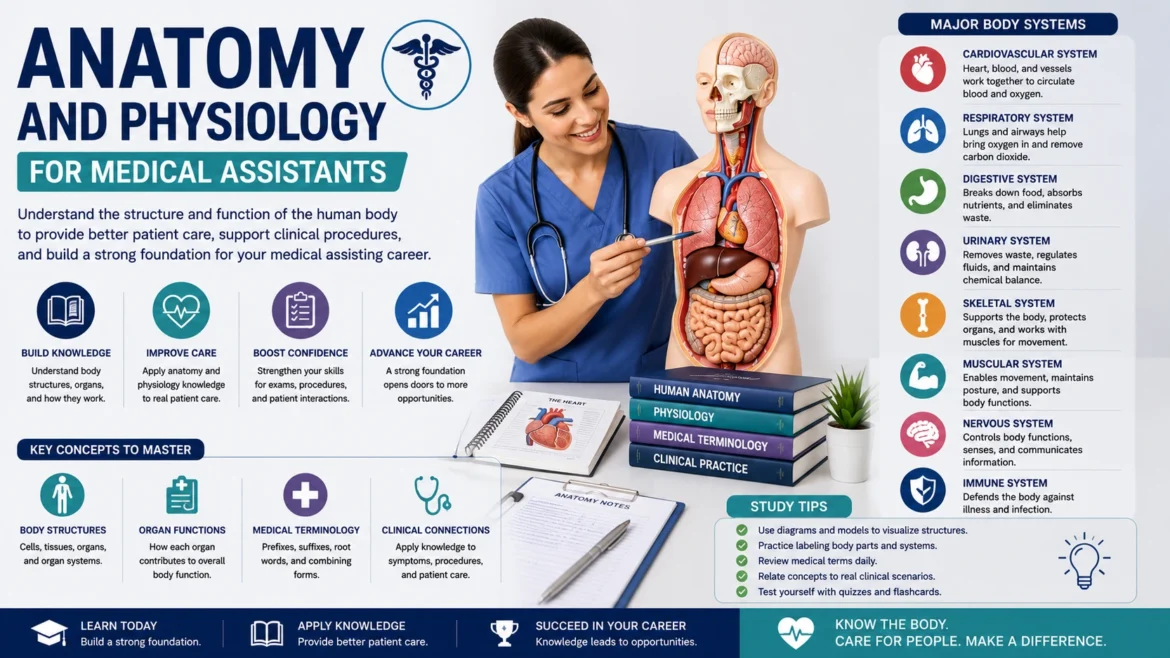

Every successful medical assistant begins with a solid understanding of anatomy and physiology. Whether measuring vital signs, preparing patients for examinations, collecting laboratory specimens, or documenting clinical findings, knowledge of how the human body is structured and how it functions is essential for providing safe, efficient patient care.
Anatomy focuses on the body’s physical structures, including organs, tissues, bones, muscles, and body systems. Physiology explains how those structures work together to perform vital functions such as circulation, respiration, digestion, and movement. Although these subjects are often studied separately, they are closely connected in everyday healthcare practice.
Medical assistants apply anatomy and physiology throughout their daily responsibilities. Understanding where an organ is located, what its function is, and how diseases affect normal body processes allows healthcare professionals to communicate effectively, recognize abnormal findings, and assist providers more confidently.
Why Anatomy and Physiology Matter in Medical Assisting
Medical assistants work directly with patients and healthcare providers in a variety of clinical settings. Their responsibilities require more than simply following instructions—they must understand the reason behind many clinical procedures and recognize how different body systems interact.
For example, when recording blood pressure, a medical assistant needs basic knowledge of the cardiovascular system. During respiratory assessments, understanding normal lung function helps recognize potential concerns. Even routine documentation often includes terminology related to anatomy and physiology.
Strong foundational knowledge also improves communication with physicians, nurses, laboratory personnel, and patients by making medical information easier to understand and explain.
Medical assistants don’t need the same depth of anatomical knowledge as physicians, but they do need a practical understanding of body systems that supports accurate patient care, documentation, and communication.
The Difference Between Anatomy and Physiology
Although the two subjects are closely related, they describe different aspects of the human body.
| Anatomy | Physiology |
|---|---|
| Studies body structures. | Studies how body structures function. |
| Includes organs, bones, muscles, tissues, and body systems. | Explains how organs and systems work together. |
| Focuses on physical organization. | Focuses on biological processes. |
| Answers “What is it?” | Answers “How does it work?” |
Both subjects are essential because understanding where an organ is located is only part of the picture. Medical assistants must also understand how that organ contributes to normal body function and how disease may affect its performance.
Levels of Organization in the Human Body
The human body is organized into increasingly complex levels, beginning with microscopic structures and progressing to complete body systems. Understanding this organization helps explain how diseases or injuries affecting one area may influence the body as a whole.
| Level | Description |
|---|---|
| Cell | The smallest living unit responsible for carrying out basic biological functions. |
| Tissue | A group of similar cells working together to perform a specific function. |
| Organ | Multiple tissues combined to perform specialized tasks. |
| Organ System | Groups of organs working together to maintain body functions. |
| Organism | The complete human body functioning as a single integrated system. |
Each level depends on the one before it. Healthy organs require healthy tissues, while healthy tissues depend on properly functioning cells.
The Major Body Systems Every Medical Assistant Should Know
Medical assistants encounter every major body system throughout their careers. While some specialties focus on particular organs or diseases, a general understanding of all major systems provides an important foundation for patient care.
| Body System | Primary Function |
|---|---|
| Cardiovascular | Circulates blood, oxygen, nutrients, and hormones. |
| Respiratory | Provides oxygen and removes carbon dioxide. |
| Digestive | Breaks down food and absorbs nutrients. |
| Nervous | Controls body activities and communication. |
| Musculoskeletal | Supports movement, posture, and protection. |
| Urinary | Removes waste and regulates fluid balance. |
| Endocrine | Produces hormones that regulate body functions. |
| Integumentary | Protects the body through skin, hair, and nails. |
| Lymphatic | Supports immune function and fluid balance. |
| Reproductive | Supports human reproduction. |
Anatomical Position and Directional Terms
Healthcare professionals use standardized directional terminology to describe body locations accurately. Instead of saying “left side” or “upper area,” medical terminology provides precise descriptions that reduce confusion during examinations and documentation.
| Directional Term | Meaning |
|---|---|
| Anterior | Front of the body. |
| Posterior | Back of the body. |
| Superior | Toward the head. |
| Inferior | Toward the feet. |
| Medial | Toward the body’s midline. |
| Lateral | Away from the body’s midline. |
| Proximal | Closer to the point of attachment. |
| Distal | Farther from the point of attachment. |
Many of these terms are easier to understand after learning the medical terminology fundamentals commonly used throughout healthcare documentation and clinical communication.
In the next section, we’ll examine each major body system in greater detail, discuss the organs involved, explore their primary physiological functions, and explain why this knowledge is important for medical assistants working in everyday clinical practice.
The Cardiovascular System
The cardiovascular system is responsible for transporting oxygen, nutrients, hormones, and other essential substances throughout the body while removing waste products such as carbon dioxide. It consists primarily of the heart, blood vessels, and blood, all of which work together to maintain normal body function.
Medical assistants interact with this system every day by measuring blood pressure, recording pulse rates, preparing patients for cardiovascular examinations, and documenting circulation-related findings. Understanding normal cardiovascular physiology also helps identify abnormal observations that should be reported to the healthcare provider.
| Primary Organ | Main Function |
|---|---|
| Heart | Pumps blood throughout the body. |
| Arteries | Carry oxygen-rich blood away from the heart. |
| Veins | Return blood to the heart. |
| Capillaries | Exchange oxygen, nutrients, and waste products with tissues. |
The Respiratory System
The respiratory system provides oxygen to body tissues while removing carbon dioxide through the breathing process. Efficient gas exchange is essential for every organ system because cells require oxygen to produce energy.
Medical assistants frequently observe respiratory rate, oxygen saturation, breathing patterns, and patient comfort during clinical assessments. Understanding normal respiratory physiology helps recognize findings that may require immediate medical attention.
Healthcare professionals specializing in pulmonary diagnostics often require a much deeper understanding of respiratory anatomy, pulmonary function, and respiratory physiology. Candidates pursuing respiratory care credentials commonly strengthen these concepts while preparing with an NBRC Neonatal/Pediatric Specialty (NPS) practice exam, where advanced respiratory knowledge is applied to complex patient scenarios.
The Digestive System
The digestive system converts food into nutrients that provide energy, support growth, and maintain healthy body tissues. It also absorbs vitamins, minerals, and water while eliminating waste materials from the body.
Major digestive organs include:
- Mouth
- Esophagus
- Stomach
- Small intestine
- Large intestine
- Liver
- Gallbladder
- Pancreas
Medical assistants may prepare patients for digestive procedures, record gastrointestinal symptoms, explain preparation instructions, and document patient histories related to digestive disorders.
Although each body system has unique functions, they constantly work together. For example, nutrients absorbed by the digestive system enter the bloodstream through the cardiovascular system and are delivered to tissues that depend on oxygen supplied by the respiratory system.
The Nervous System
The nervous system serves as the body’s communication network. It receives information from the environment, processes that information, and coordinates responses through the brain, spinal cord, and peripheral nerves.
Medical assistants often observe neurological status while recording patient histories, documenting symptoms, measuring pupil responses when appropriate, and assisting during neurological examinations.
| Structure | Function |
|---|---|
| Brain | Controls thought, memory, movement, and body regulation. |
| Spinal Cord | Transmits signals between the brain and body. |
| Peripheral Nerves | Carry sensory and motor information throughout the body. |
The Musculoskeletal System
The musculoskeletal system provides body support, protects internal organs, and enables movement. Bones, muscles, tendons, ligaments, and joints work together to maintain posture and perform everyday activities.
Medical assistants frequently assist patients experiencing musculoskeletal injuries or chronic conditions by documenting symptoms, preparing examination rooms, measuring height and weight, and assisting with mobility when appropriate.
A basic understanding of skeletal landmarks also helps when measuring vital signs, positioning patients for examinations, and explaining certain diagnostic procedures.
The Urinary and Endocrine Systems
The urinary system removes waste products from the bloodstream while maintaining fluid and electrolyte balance. The kidneys filter blood continuously, helping regulate blood pressure and overall body homeostasis.
The endocrine system works differently. Rather than transporting blood or removing waste, endocrine glands release hormones that regulate growth, metabolism, reproduction, blood glucose levels, and many other physiological processes.
Although these systems perform different functions, they often influence one another. For example, hormonal changes can affect kidney function, while kidney disease may alter hormone regulation.
The Integumentary and Lymphatic Systems
The integumentary system includes the skin, hair, nails, and associated glands. It serves as the body’s first line of defense against injury, infection, and environmental hazards while helping regulate body temperature.
The lymphatic system complements the immune system by transporting lymphatic fluid, filtering harmful microorganisms, and supporting immune responses. Medical assistants should understand the basic functions of both systems because skin conditions, wound care, and infection prevention are common aspects of outpatient healthcare.
Professionals working in dialysis and extracorporeal therapies often expand their understanding of vascular access, circulation, infection prevention, and patient physiology. These concepts are explored further in a Certified Hemodialysis Biomedical Technician practice test, where anatomy and physiology play an important role in maintaining safe treatment equipment and patient care.
Why Anatomy and Physiology Improve Clinical Decision-Making
Anatomy and physiology help medical assistants understand not only what they are doing but also why each clinical procedure matters. Whether measuring blood pressure, collecting laboratory specimens, assisting with examinations, or educating patients, a strong understanding of body systems improves confidence and supports safer patient care.
If you’re preparing for certification, developing a structured study routine is just as important as learning the science itself. Our guide on how to prepare effectively for the AMT RMA certification exam outlines practical study strategies that can help organize your review and strengthen long-term retention.
Building this knowledge also becomes easier after understanding the role and responsibilities of the Registered Medical Assistant credential, since anatomy and physiology form part of the broader competencies expected in clinical practice.
Anatomy Knowledge Beyond Direct Patient Care
A solid understanding of anatomy and physiology benefits professionals in many areas of healthcare, not only those providing direct patient care. Accurate documentation, insurance claims, medical coding, and reimbursement all rely on correctly identifying body structures, diagnoses, and clinical procedures.
Individuals interested in healthcare administration, coding, and reimbursement frequently apply anatomical knowledge while preparing with a medical billing certification practice exam, where understanding body systems and medical terminology contributes to accurate documentation and claims processing.
In the final section, we’ll review practical clinical examples, discuss effective study techniques for mastering anatomy and physiology, explore common learning mistakes, and answer frequently asked questions for aspiring medical assistants.
Applying Anatomy and Physiology in Everyday Medical Assisting
Anatomy and physiology are much more than classroom subjects—they are practical tools used throughout every patient encounter. Medical assistants apply these concepts when collecting vital signs, preparing examination rooms, documenting symptoms, assisting with procedures, and communicating with healthcare providers.
For example, understanding the cardiovascular system helps explain why blood pressure is measured correctly using the appropriate cuff size. Knowledge of respiratory physiology makes it easier to recognize abnormal breathing patterns, while familiarity with the musculoskeletal system supports safe patient positioning during examinations.
As clinical knowledge grows, medical assistants become more confident in recognizing normal findings, identifying changes that require attention, and communicating observations accurately to providers.
Every clinical task has an anatomical or physiological reason behind it. Understanding that reason transforms routine procedures into informed patient care rather than simple repetition.
Connecting Body Systems During Patient Care
The human body functions as a single integrated system. A change affecting one organ often influences several other body systems, which is why healthcare professionals evaluate patients holistically rather than focusing on one isolated symptom.
Consider a patient with dehydration. The digestive system may be involved if fluid loss results from vomiting or diarrhea, while the cardiovascular system responds through changes in heart rate and blood pressure. The urinary system adjusts urine production, and the nervous system may respond with dizziness or confusion.
Understanding these relationships helps medical assistants appreciate why providers collect detailed histories, perform comprehensive assessments, and order diagnostic testing before making clinical decisions.
| Body System | Example of Clinical Interaction |
|---|---|
| Cardiovascular + Respiratory | Oxygen delivery depends on both circulation and lung function. |
| Digestive + Endocrine | Blood glucose regulation is influenced by nutrient absorption and hormones. |
| Musculoskeletal + Nervous | Movement requires coordinated muscle contraction and nerve signals. |
| Urinary + Cardiovascular | Fluid balance affects blood volume and blood pressure. |
| Integumentary + Immune | Healthy skin provides an important barrier against infection. |
Effective Ways to Study Anatomy and Physiology
Many learners believe anatomy and physiology require memorizing hundreds of facts. In reality, long-term success comes from understanding relationships between structures and functions rather than relying on rote memorization.
Consider these study techniques:
- Study one body system at a time before moving to the next.
- Review labeled anatomical diagrams regularly.
- Create summary notes using your own words.
- Relate new concepts to real clinical situations.
- Practice identifying organs and their primary functions.
- Review terminology alongside anatomy instead of treating them as separate subjects.
- Use self-testing to reinforce long-term retention.
Breaking complex topics into manageable sections makes learning more efficient while helping connect new information to previously learned concepts.
Common Learning Mistakes to Avoid
Students often struggle because they focus exclusively on memorizing anatomical structures without understanding their physiological roles. Others spend hours reading textbooks but rarely test their ability to recall information independently.
| Common Mistake | Better Approach |
|---|---|
| Memorizing isolated facts | Understand how organs function together. |
| Ignoring anatomical diagrams | Study structures visually as well as verbally. |
| Studying only before exams | Review consistently throughout your learning process. |
| Skipping practice questions | Use self-assessment to identify knowledge gaps. |
| Learning systems separately forever | Connect multiple body systems during clinical scenarios. |
Anatomy Knowledge Across Healthcare Professions
A thorough understanding of anatomy and physiology benefits professionals throughout the healthcare industry. While medical assistants rely on these concepts during patient care and documentation, nurses, healthcare managers, and other clinical professionals also depend on the same scientific foundation to perform their responsibilities effectively.
For example, nursing students studying complex adult health conditions build upon anatomical and physiological principles while working through a Medical-Surgical Nursing I practice exam with explanations. Understanding how body systems respond to illness allows nurses to recognize changes in patient conditions and provide appropriate care.
As nursing education advances, learners continue applying anatomy and physiology to increasingly detailed patient scenarios. These concepts remain central throughout preparation for an NCLEX Medical-Surgical Nursing practice exam, where clinical reasoning depends on understanding how multiple body systems interact during disease and recovery.
Healthcare leadership also benefits from foundational clinical knowledge. Although managers may spend less time providing direct patient care, understanding medical terminology, anatomy, and healthcare workflows improves communication with clinical staff. Professionals preparing for leadership responsibilities often encounter these concepts while studying for the Certified Medical Manager (CMM) exam, particularly when overseeing clinical operations and quality improvement initiatives.
Final Thoughts
Anatomy and physiology provide the scientific foundation that supports every aspect of medical assisting. From measuring vital signs and documenting patient information to assisting providers during examinations, understanding how the human body is structured and how it functions allows medical assistants to deliver safe, accurate, and compassionate care.
Rather than trying to memorize every detail at once, focus on understanding each body system, its primary organs, and the relationships between normal anatomy and normal physiology. As your knowledge grows, you’ll find it easier to interpret clinical information, communicate with healthcare professionals, and apply these concepts confidently in real-world patient care.
FAQs
Why do medical assistants need to study anatomy and physiology?
Medical assistants use anatomy and physiology to understand body systems, assist with clinical procedures, document patient information accurately, and communicate effectively with healthcare providers.
What’s the difference between anatomy and physiology?
Anatomy focuses on the physical structures of the body, while physiology explains how those structures function individually and together to maintain health.
Which body systems are most important for medical assistants?
Medical assistants should understand all major body systems, with particular emphasis on the cardiovascular, respiratory, digestive, musculoskeletal, nervous, urinary, endocrine, integumentary, and lymphatic systems.
How can I remember anatomy more effectively?
Study one body system at a time, use labeled diagrams, review consistently, connect structures with their functions, and practice applying concepts to clinical situations instead of memorizing isolated facts.
Is anatomy and physiology difficult to learn?
These subjects can seem challenging at first, but learning progressively and understanding how body systems work together makes them much easier to master over time.
How does anatomy and physiology improve patient care?
A solid understanding of anatomy and physiology helps medical assistants recognize normal and abnormal findings, communicate accurately with healthcare teams, support clinical decision-making, and contribute to safer, more effective patient care.