
The dosage appears unusual compared to earlier documentation.
Instead of rushing forward, the nurse pauses, reviews the information carefully, and communicates with the healthcare team before continuing.
Moments like this happen regularly in healthcare environments.
Patient safety often depends on nurses recognizing concerns early, communicating clearly, and paying close attention to details throughout patient care.
This is one reason patient safety remains one of the most important responsibilities in nursing.
What Patient Safety Often Involves
- Medication safety awareness
- Clear healthcare communication
- Patient observation and monitoring
- Infection prevention practices
- Accurate documentation habits
- Organized clinical decision-making
Why Small Mistakes Can Create Bigger Problems
Healthcare environments involve constant communication, documentation, treatments, medications, and patient-care responsibilities.
Because healthcare systems move quickly, even small mistakes can sometimes create larger patient-safety concerns.
Examples may include:
- Incorrect documentation
- Missed patient changes
- Communication misunderstandings
- Medication errors
- Delayed reporting of symptoms
Strong nursing habits help reduce preventable safety risks throughout healthcare environments.
Healthcare Reality:
Patient safety often depends on organized communication, careful observation, and attention to detail throughout routine nursing care.
Why Communication Matters for Patient Safety
Nurses communicate constantly with patients, doctors, families, and healthcare teams.
Clear communication helps healthcare organizations:
- Reduce misunderstandings
- Improve care coordination
- Respond to concerns earlier
- Maintain organized workflows
- Support safer patient care
Even strong clinical skills can become less effective if communication between healthcare professionals breaks down.
| Patient Safety Area | Why It Matters in Nursing |
|---|---|
| Medication Safety | Helps reduce preventable treatment errors |
| Patient Observation | Supports early recognition of healthcare concerns |
| Communication | Improves healthcare teamwork and patient coordination |
| Documentation Accuracy | Supports organized healthcare information and continuity of care |
Source: General nursing education principles and patient-safety healthcare practices.
Why Observation Skills Protect Patients
Nurses spend significant time monitoring patients throughout healthcare environments.
Strong observation skills help nurses notice:
- Changes in breathing
- Behavior differences
- Signs of discomfort
- Changes in mobility
- Unexpected medication reactions
Recognizing concerns early often allows healthcare teams to respond before situations become more serious.
Why Patient Safety Is Not Only About Emergencies
Many people associate patient safety only with dramatic emergencies or critical-care situations.
In reality, patient safety often depends on small everyday nursing habits such as:
- Double-checking information
- Communicating clearly
- Following infection-control procedures
- Monitoring patient conditions carefully
- Maintaining organized documentation
These consistent habits help create safer healthcare environments across hospitals, clinics, and patient-care settings.
Many nursing students improve confidence using nursing fundamentals questions for exam prep because repeated exposure to clinical situations helps patient-safety concepts feel more practical and easier to apply during real healthcare experiences.
Why Medication Safety Requires Careful Attention
Medication administration is one of the areas where patient safety becomes especially important in nursing.
Nurses often manage:
- Medication timing
- Dosage verification
- Patient identification
- Documentation accuracy
- Monitoring for reactions or side effects
Even small medication-related mistakes can create serious concerns if information is rushed, misunderstood, or documented incorrectly.
Important Clinical Reminder:
Patient safety often depends on nurses slowing down enough to verify information carefully instead of rushing through clinical responsibilities under pressure.
Why Infection Prevention Matters in Nursing
Healthcare environments expose patients to many different health risks, especially individuals with weakened immune systems or complex medical conditions.
Nurses help reduce infection risks by maintaining:
- Hand hygiene practices
- Clean clinical procedures
- Organized patient-care routines
- Safe equipment handling
- Proper protective measures
Although these habits may appear routine, they play a major role in maintaining safer healthcare environments for both patients and healthcare staff.
| Patient Safety Habit | How It Helps Patients |
|---|---|
| Medication Verification | Helps reduce preventable medication errors |
| Patient Observation | Supports earlier recognition of patient concerns |
| Hand Hygiene | Helps reduce infection-related risks |
| Clear Documentation | Improves healthcare communication and continuity of care |
Source: General nursing patient-safety principles and foundational healthcare safety practices.
Why Teamwork Improves Patient Safety
Patient safety is rarely the responsibility of one healthcare professional alone.
Healthcare environments rely heavily on teamwork between:
- Nurses
- Doctors
- Pharmacists
- Healthcare assistants
- Specialists and support staff
Strong teamwork helps healthcare organizations communicate more effectively, reduce confusion, and coordinate patient care more safely.
Healthcare Reality:
Many patient-safety problems occur because of communication breakdowns or missed information between healthcare teams rather than a single isolated mistake.
Why Nursing Students Sometimes Underestimate Safety Responsibilities
Some students initially focus heavily on procedures and technical skills while overlooking how important communication, organization, and patient observation become in real healthcare environments.
However, patient safety often depends on:
- Consistent clinical habits
- Organized thinking
- Attention to detail
- Professional communication
- Careful patient monitoring
Students who understand why nursing fundamentals shape patient safety and clinical confidence usually develop stronger healthcare habits much earlier in nursing school.
Why Patient Safety Requires Continuous Learning
Healthcare environments continue evolving through technology, updated safety protocols, communication systems, and patient-care standards.
Because of this, nurses continue improving patient-safety skills throughout their careers by:
- Reviewing clinical experiences
- Strengthening communication habits
- Improving observation skills
- Following updated healthcare guidelines
- Learning from patient-care situations
Patient safety is not simply a single lesson taught during nursing school — it becomes an ongoing professional responsibility throughout healthcare practice.
Why Clinical Judgment Supports Safer Patient Care
Patient safety depends heavily on nurses recognizing concerns early and responding appropriately during changing healthcare situations.
Nurses often evaluate:
- Patient symptoms
- Behavior changes
- Medication responses
- Communication difficulties
- Potential safety risks
Strong clinical judgment helps nurses organize information, prioritize patient needs, and communicate concerns before situations become more serious.
Clinical Insight:
Patient safety often improves when nurses recognize subtle changes early instead of waiting until healthcare problems become obvious or urgent.
Why Documentation Is Part of Patient Safety
Accurate documentation helps healthcare teams communicate consistently throughout patient care.
Nurses often document:
- Patient observations
- Medication administration
- Changes in condition
- Patient responses
- Communication with healthcare teams
Clear documentation helps reduce confusion and supports continuity of care between healthcare professionals across different shifts and departments.
| Patient Safety Skill | Long-Term Healthcare Benefit |
|---|---|
| Clinical Observation | Supports earlier recognition of patient concerns |
| Communication Skills | Improves healthcare teamwork and patient coordination |
| Documentation Accuracy | Supports continuity of care and organized healthcare communication |
| Safety Awareness | Helps reduce preventable patient-care risks |
Source: General nursing education principles and patient-safety healthcare practices.
Why Patient Safety Can Feel Overwhelming for Students
Many nursing students feel nervous when they realize how much responsibility nurses carry in real healthcare environments.
Students may worry about:
- Making mistakes
- Missing patient changes
- Communicating incorrectly
- Handling medications safely
- Responding during emergencies
These concerns are extremely common during nursing education and usually improve gradually through patient-care experience and stronger clinical confidence.
Important Perspective:
Strong patient-safety habits usually develop through repeated clinical experience, organized communication, observation practice, and careful attention to healthcare routines.
Why Clinical Judgment and Patient Safety Work Together
Patient safety becomes much harder without organized clinical thinking and strong nursing judgment.
Nurses constantly prioritize:
- Urgent patient needs
- Potential risks
- Medication concerns
- Communication priorities
- Patient-condition changes
Students who understand how clinical judgment supports safer nursing decisions and patient observation often develop stronger confidence and more organized patient-care habits throughout nursing school.
Final Thoughts
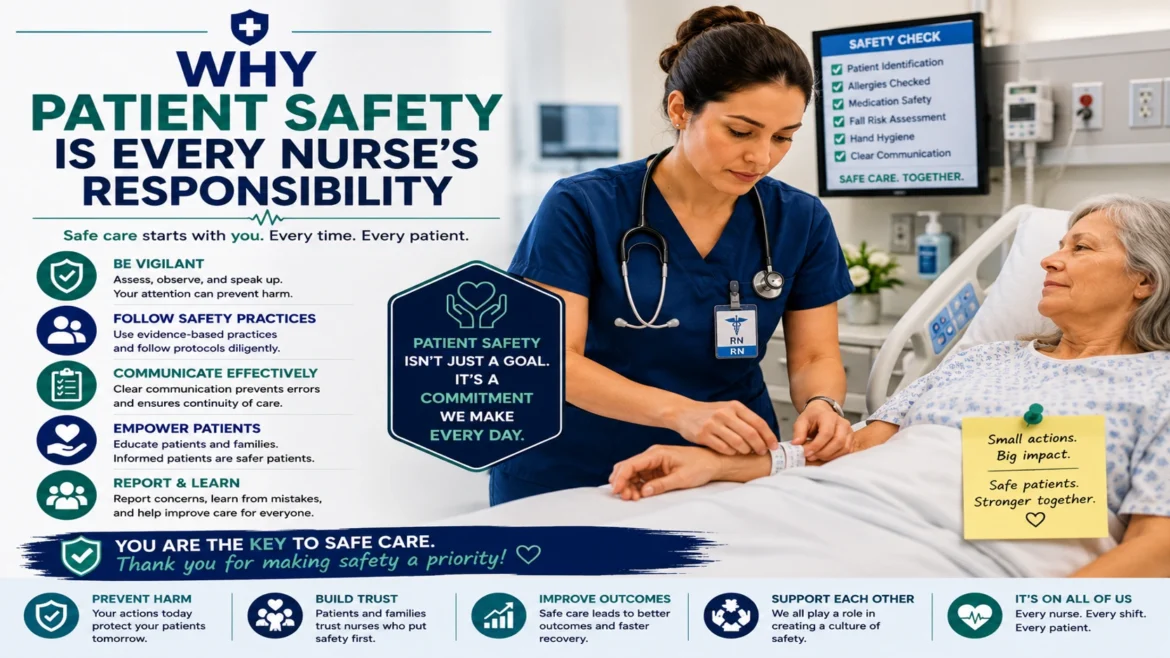
Patient safety is every nurse’s responsibility because healthcare environments depend heavily on organized communication, observation, teamwork, documentation accuracy, and clinical decision-making throughout patient care.
Even small nursing habits — such as double-checking information, monitoring patients carefully, or communicating concerns clearly — can significantly affect healthcare outcomes and patient well-being.
As healthcare environments continue becoming more complex and fast-paced, patient safety remains closely connected to strong nursing fundamentals, clinical judgment, teamwork, and professional responsibility.
For nursing students, understanding patient safety early helps build safer clinical habits, stronger confidence, and more organized patient-care thinking throughout future healthcare practice.