
Moments like this happen regularly in healthcare environments.
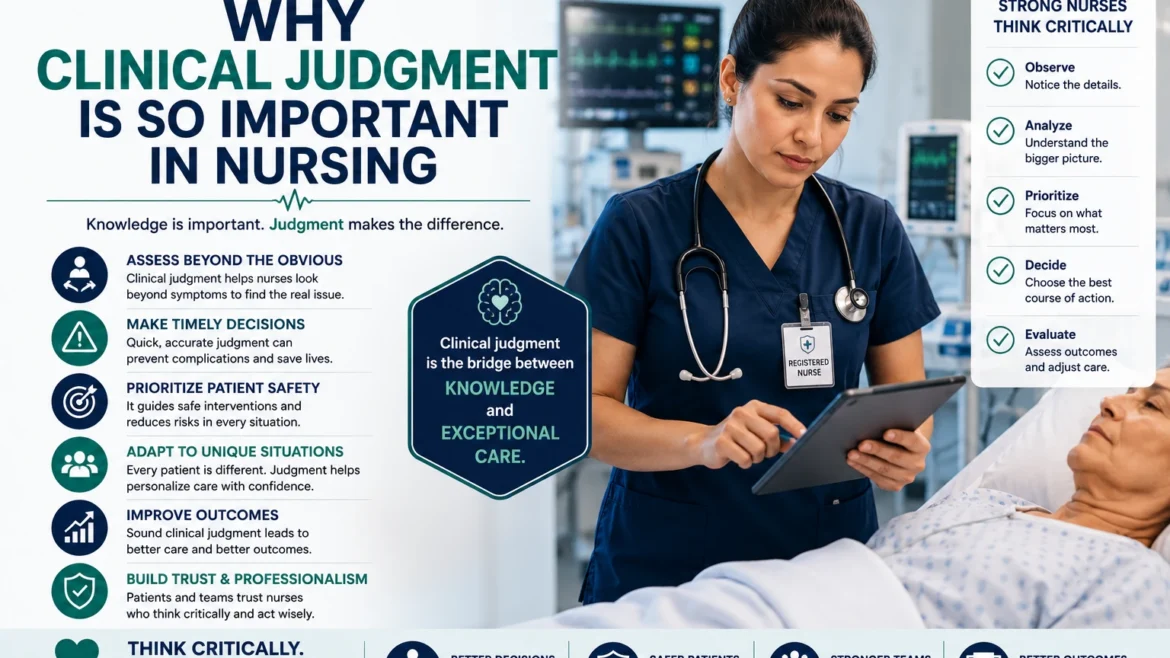
Strong nurses do much more than complete tasks or follow instructions mechanically. They constantly observe, evaluate, prioritize, communicate, and make decisions throughout patient care.
This ability is closely connected to clinical judgment.
What Clinical Judgment Often Involves
- Observing patient changes carefully
- Recognizing potential safety concerns
- Prioritizing patient-care needs
- Making organized nursing decisions
- Communicating concerns appropriately
- Responding calmly in changing situations
Why Nursing Requires More Than Memorization
Many students initially assume nursing success depends mostly on memorizing procedures, terminology, or textbook information.
Although knowledge is important, real healthcare environments often involve unpredictable patient situations that require organized thinking and clinical awareness.
Nurses regularly evaluate:
- Patient symptoms
- Behavior changes
- Safety concerns
- Communication problems
- Changes in vital signs
Clinical judgment helps nurses connect information together instead of viewing patient care as isolated tasks.
Clinical Reality:
Strong nursing care often depends on recognizing subtle patient changes early and responding appropriately before problems become more serious.
Why Observation Skills Matter So Much
Experienced nurses constantly observe patients even during routine care activities.
Observation may involve noticing:
- Breathing changes
- Confusion or behavior differences
- Pain or discomfort signs
- Changes in mobility
- Communication difficulties
These observations help nurses identify concerns early and communicate important information to healthcare teams.
Students who develop stronger observation habits often improve clinical judgment more effectively over time.
| Clinical Judgment Skill | Why It Matters in Nursing |
|---|---|
| Patient Observation | Helps identify changes in patient condition early |
| Prioritization | Supports organized and safe patient-care decisions |
| Communication | Improves healthcare teamwork and patient coordination |
| Safety Awareness | Helps reduce preventable patient-care risks |
Source: General nursing education principles and foundational clinical nursing practices.
Why Prioritization Is Critical in Nursing
Nurses often care for multiple patients with different needs, symptoms, and priorities simultaneously.
Clinical judgment helps nurses determine:
- Which patient needs attention first
- Which symptoms may be more urgent
- When communication is necessary
- How to organize patient-care tasks safely
Without strong prioritization skills, healthcare environments can quickly become overwhelming and less organized.
Why New Nursing Students Sometimes Struggle
Many nursing students initially feel overwhelmed because clinical judgment develops gradually through experience, observation, and repeated patient-care exposure.
Students may struggle with:
- Fear of making mistakes
- Information overload
- Clinical anxiety
- Uncertainty during patient situations
- Difficulty prioritizing responsibilities
These experiences are extremely common during early nursing education.
Students who understand why strong nursing fundamentals support safer patient care and clinical confidence often begin developing better clinical judgment habits much earlier in nursing school.
Many students improve confidence using realistic fundamentals nursing quiz and clinical-style patient scenarios because repeated exposure to patient-care situations helps clinical reasoning feel more practical and organized over time.
Why Communication Is Part of Clinical Judgment
Clinical judgment is not only about recognizing patient problems. Nurses must also communicate observations clearly and appropriately within healthcare teams.
Nurses often communicate with:
- Doctors
- Other nurses
- Patients and families
- Healthcare staff
Strong communication helps healthcare teams respond more quickly, organize patient care effectively, and reduce misunderstandings in clinical environments.
Important Clinical Insight:
Even when nurses recognize patient concerns correctly, poor communication can still create delays, confusion, or safety problems within healthcare environments.
Why Small Patient Changes Matter
In healthcare settings, serious complications sometimes begin with very small warning signs.
A patient may:
- Become slightly more confused
- Develop mild breathing changes
- Show unusual fatigue
- Appear emotionally distressed
- Respond differently than earlier
Clinical judgment helps nurses recognize that small changes may require closer observation or additional communication.
Experienced nurses often notice subtle concerns early because they continuously evaluate patient conditions rather than simply completing routines mechanically.
| Patient Situation | Why Clinical Judgment Matters |
|---|---|
| Behavior changes | May indicate confusion, distress, or worsening condition |
| Breathing changes | Could signal respiratory or safety concerns |
| Pain or discomfort | May require reassessment or healthcare communication |
| Medication responses | Helps nurses monitor patient safety and treatment effects |
Source: General nursing education principles and clinical patient-observation practices.
Why Clinical Judgment Improves Patient Safety
Patient safety is one of the biggest reasons clinical judgment matters throughout nursing practice.
Strong clinical thinking helps nurses:
- Recognize risks earlier
- Prioritize urgent situations
- Communicate patient concerns effectively
- Reduce preventable mistakes
- Respond more calmly during changing situations
Healthcare environments can become fast-paced and unpredictable, which makes organized nursing thinking extremely important for safe patient care.
Healthcare Reality:
Strong clinical judgment often develops through repeated patient-care experience, observation, communication, and reflection rather than instant expertise.
Why Fundamentals and Clinical Judgment Work Together
Clinical judgment becomes much harder without strong foundational nursing habits.
Students who develop better:
- Communication skills
- Patient observation habits
- Safety awareness
- Documentation organization
- Professional behavior
often improve clinical thinking more naturally over time.
Students who understand how nursing fundamentals shape patient safety, communication, and clinical organization usually build stronger long-term nursing judgment during clinical education.
Why Nursing Judgment Takes Time to Develop
Many students become frustrated because they expect clinical confidence to develop quickly.
In reality, strong nursing judgment usually grows gradually through:
- Clinical exposure
- Patient interaction
- Observation practice
- Healthcare teamwork
- Reflection after patient-care experiences
Even experienced nurses continue improving clinical judgment throughout their careers as they encounter new patient situations and healthcare challenges.
Why Clinical Judgment Helps Nurses Stay Organized
Healthcare environments often require nurses to manage multiple responsibilities simultaneously while maintaining patient safety and organized communication.
Nurses may need to:
- Monitor changing patient conditions
- Respond to urgent situations
- Communicate with healthcare teams
- Document patient information accurately
- Prioritize patient-care tasks efficiently
Clinical judgment helps nurses organize these responsibilities calmly instead of reacting emotionally or impulsively during stressful situations.
Clinical Perspective:
Strong nurses often appear calm during stressful situations because organized clinical thinking helps them prioritize patient needs more effectively.
Why Nursing Judgment Is Important in Every Specialty
Clinical judgment is not limited to emergency departments or critical-care units.
Nurses in nearly every healthcare environment rely on clinical thinking daily, including:
- Medical-surgical nursing
- Pediatrics
- Long-term care
- Rehabilitation
- Home healthcare
- Community health
Regardless of specialty, nurses continuously evaluate patient needs, safety concerns, communication priorities, and healthcare coordination throughout clinical care.
| Clinical Judgment Habit | Long-Term Nursing Benefit |
|---|---|
| Patient Observation | Supports earlier recognition of healthcare concerns |
| Prioritization Skills | Improves patient-care organization and workflow management |
| Communication Awareness | Supports stronger healthcare teamwork and patient coordination |
| Safety-Focused Thinking | Helps reduce preventable patient-care risks |
Source: General nursing education principles and clinical patient-care practices.
Why Reflection Helps Nurses Improve Judgment
Many experienced nurses improve clinical judgment by reflecting on patient-care situations after clinical experiences.
Nurses often think about:
- What went well
- What could improve
- How communication affected patient care
- Whether priorities were organized correctly
- How patients responded clinically
This reflection process helps nurses strengthen decision-making and patient-care awareness over time.
Important Reminder:
Strong clinical judgment is rarely developed instantly. It usually grows gradually through experience, observation, communication, patient interaction, and continued learning.
Why Modern Nursing Education Focuses More on Judgment
Modern healthcare environments have become increasingly complex and fast-paced.
Because of this, nursing education now places stronger emphasis on:
- Clinical reasoning
- Patient prioritization
- Safety-focused decision-making
- Communication skills
- Organized healthcare thinking
Nursing students are increasingly expected to analyze patient situations critically instead of relying only on memorized information.
Understanding clinical judgment is only the first step—developing it requires consistent practice with realistic nursing scenarios. If you’re looking for additional NCLEX-style nursing resources, case-based questions, and exam preparation materials, you can explore the Nursing Practice Tests available at ExamFellow. These practice resources are designed to help students strengthen critical thinking, improve prioritization skills, and build the clinical reasoning needed for success in nursing school and future licensure exams.
Final Thoughts
Clinical judgment is important in nursing because patient care often depends on organized observation, prioritization, communication, and decision-making throughout changing healthcare situations.
Strong nurses continuously evaluate patient conditions, identify potential concerns, communicate effectively, and respond thoughtfully instead of simply completing tasks mechanically.
Although clinical judgment takes time to develop, strong nursing foundations, patient-care experience, communication practice, and reflection all help students improve confidence and decision-making gradually.
As healthcare environments continue becoming more complex, clinical judgment remains one of the most important skills supporting safe, organized, and effective nursing care.