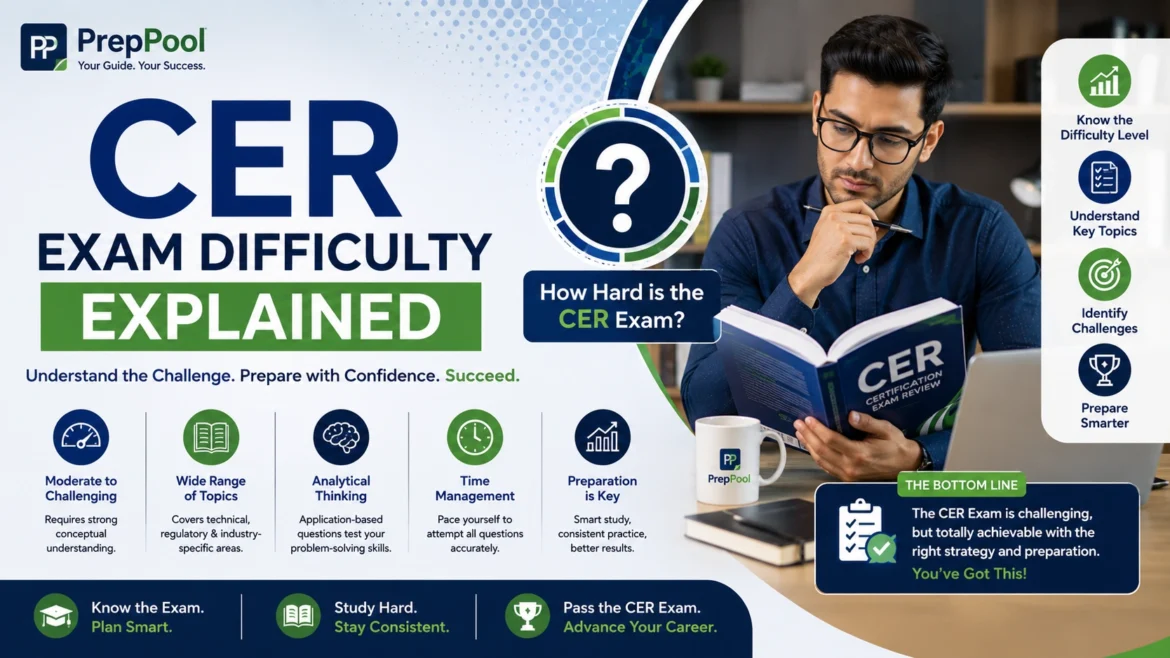

In reality, the difficulty of the CER exam often depends on several important factors including technical knowledge, professional experience, study consistency, time management, and familiarity with certification-style testing environments.
The good news is that candidates who understand what makes the exam difficult usually prepare more effectively and feel much more confident approaching test day.
- What makes the CER exam challenging
- Why some candidates struggle more than others
- How professional experience affects difficulty
- Common preparation mistakes
- How to improve confidence before exam day
- Best ways to prepare effectively
Why the CER Exam Feels Difficult for Many Candidates
Certification exams are often designed to evaluate more than memorization alone. Many CER questions test practical reasoning, operational awareness, technical understanding, and professional judgment within realistic workplace situations.
Candidates often find the exam difficult because it requires them to:
- Interpret technical information quickly
- Apply concepts within practical scenarios
- Manage time under pressure
- Recognize operational risks
- Make professional decisions logically
Candidates who prepare only through memorization often struggle more with scenario-based certification questions.
Professional Experience Can Reduce Exam Difficulty
Professionals already working within technical or operational environments related to CER certification often feel more comfortable with industry terminology and workplace procedures.
However, professional experience alone does not guarantee success.
Some experienced professionals still struggle because they:
- Underestimate certification preparation
- Ignore realistic practice exams
- Rely only on workplace familiarity
- Do not review weaker concepts
- Have weak exam pacing strategies
Organized preparation is usually important for both experienced professionals and first-time certification candidates.
Scenario-Based Questions Often Increase Difficulty
One major reason candidates consider the CER exam difficult is the presence of scenario-based questions. These questions evaluate how well candidates apply technical understanding within realistic workplace situations rather than simply recalling definitions.
Scenario-based questions often test:
- Professional judgment
- Operational reasoning
- Technical interpretation
- Compliance awareness
- Problem-solving ability
Candidates who regularly practice realistic workplace scenarios usually improve confidence significantly before exam day.
How Preparation Habits Affect CER Exam Difficulty
The CER exam often feels much harder for candidates who begin studying late or prepare inconsistently. Strong preparation habits usually improve confidence and reduce unnecessary stress significantly.
Effective preparation often includes:
- Weekly study schedules
- Realistic practice questions
- Timed mock exams
- Reviewing technical terminology
- Analyzing incorrect answers carefully
Candidates who prepare steadily over longer periods often feel much more comfortable handling certification pressure during the actual exam.
Why Practice Questions Make the CER Exam Easier
One of the most effective ways to reduce exam difficulty is through realistic practice questions that simulate actual certification testing environments.
Structured CER practice quiz help candidates strengthen technical reasoning, improve pacing, and become more comfortable with certification-style wording before test day.
Practice questions help candidates:
- Reduce exam anxiety
- Improve confidence under pressure
- Recognize question patterns faster
- Identify weak knowledge areas
- Improve technical interpretation skills
Time Pressure Makes Certification Exams More Challenging
Many candidates understand technical concepts reasonably well during study sessions but struggle once realistic time pressure is introduced during the exam.
Time pressure often becomes difficult because candidates must:
- Analyze technical questions quickly
- Maintain concentration for long periods
- Manage pacing carefully
- Avoid unnecessary second-guessing
- Stay calm during difficult sections
Candidates who practice under timed conditions regularly often improve pacing and confidence significantly before exam day.
| What Increases Difficulty | What Makes the Exam Easier |
|---|---|
| Inconsistent preparation | Structured weekly study plans |
| No realistic practice | Using timed practice exams |
| Memorizing only | Practicing operational reasoning |
| Weak pacing skills | Improving time management |
Why Some Candidates Struggle More Than Others
Not all candidates experience the same level of difficulty during the CER exam. Some professionals feel comfortable with technical terminology and workplace scenarios because of previous industry experience, while others may need more structured preparation before feeling confident.
Candidates often struggle more when they:
- Begin studying too late
- Study inconsistently
- Avoid difficult concepts
- Ignore timed practice sessions
- Rely only on memorization
Certification exams usually become much more manageable when candidates prepare consistently and understand how concepts apply within realistic workplace situations.
How Structured Preparation Reduces CER Exam Difficulty
Many first-time certification candidates feel overwhelmed simply because they do not know where to begin. Organized study plans often reduce unnecessary stress and help candidates focus on the most important concepts first.
Candidates reviewing this complete CER certification preparation resource often gain a clearer understanding of exam expectations, preparation methods, and study organization strategies before test day.
Structured preparation usually helps candidates:
- Improve study consistency
- Reduce last-minute stress
- Track preparation progress
- Strengthen weak areas gradually
- Build confidence over time
Common Preparation Mistakes Increase Difficulty
Many candidates unintentionally make the CER exam feel harder because of avoidable preparation mistakes. Weak study habits often create confusion, increase stress, and reduce confidence during the actual certification exam.
Candidates reviewing these common CER certification preparation problems often improve study efficiency and avoid unnecessary exam-day struggles.
Common mistakes often include:
- Last-minute cramming
- Ignoring weaker knowledge areas
- Skipping practice exams
- Studying without structure
- Not reviewing incorrect answers
Candidates who identify these problems early often improve much faster during certification preparation.
Why Confidence Matters During the CER Exam
Many candidates know more information than they realize but still struggle because stress and anxiety affect concentration under pressure. Confidence often becomes a major factor influencing certification performance.
Confidence usually improves through:
- Consistent practice sessions
- Timed mock exams
- Reviewing technical concepts repeatedly
- Understanding realistic workplace scenarios
- Tracking gradual preparation progress
Calm and organized candidates often manage pacing better and make fewer avoidable mistakes during the actual exam.
| Less Effective Habit | More Effective Preparation Strategy |
|---|---|
| Passive memorization only | Practicing operational reasoning |
| Ignoring realistic pacing | Using timed mock exams |
| Studying inconsistently | Maintaining structured preparation |
| Avoiding difficult topics | Strengthening weaker concepts regularly |
How Working Professionals Experience CER Exam Difficulty
Many CER candidates are already balancing demanding work schedules alongside certification preparation. Because of this, time management and study efficiency become extremely important.
Working professionals often struggle when they:
- Attempt unrealistic study schedules
- Study only occasionally
- Become mentally exhausted
- Do not practice consistently
- Feel overwhelmed by preparation pressure
Candidates who use shorter focused study sessions and realistic weekly goals often maintain stronger long-term consistency.
Why Scenario Practice Improves CER Exam Performance
Scenario-based preparation often helps candidates feel significantly more comfortable with operational and compliance-focused questions during the actual exam.
Scenario practice helps candidates:
- Strengthen technical interpretation
- Improve professional reasoning
- Recognize workplace risks
- Apply procedures logically
- Improve decision-making confidence
Candidates who regularly practice workplace-style scenarios often improve both certification performance and long-term professional competency.
How Consistent Practice Makes the CER Exam Feel Easier
One of the biggest differences between confident candidates and overwhelmed candidates is preparation consistency. Candidates who study regularly often feel far more comfortable with technical concepts, workplace scenarios, and timed certification conditions.
Consistent preparation usually helps candidates:
- Improve long-term knowledge retention
- Reduce exam anxiety
- Strengthen pacing skills
- Build confidence gradually
- Recognize question patterns faster
Candidates preparing through these effective CER exam practice strategies often improve technical understanding and exam confidence much more efficiently over time.
Why Time Management Strongly Affects Exam Difficulty
Some candidates understand the material reasonably well but still struggle because they manage time poorly during the exam. Spending too long on difficult questions early often creates unnecessary stress during later sections.
Strong time management strategies often include:
- Practicing under timed conditions
- Monitoring pacing regularly
- Moving forward temporarily when stuck
- Avoiding unnecessary second-guessing
- Maintaining focus during difficult sections
Candidates who improve pacing skills usually feel much calmer during certification testing and avoid many preventable mistakes.
How Busy Professionals Can Reduce CER Exam Difficulty
Many certification candidates are already balancing demanding work schedules while preparing for the exam. Because of this, preparation efficiency becomes extremely important for long-term consistency.
Professionals using these CER study approaches for working professionals often improve preparation efficiency while reducing stress and mental exhaustion during certification preparation.
Efficient study habits often include:
- Using shorter focused review sessions
- Practicing consistently every week
- Prioritizing weaker knowledge areas
- Using realistic practice exams
- Following organized preparation schedules
Candidates who maintain realistic preparation routines usually experience much less burnout over time.
| What Makes the CER Exam Harder | What Makes the CER Exam Easier |
|---|---|
| Last-minute cramming | Steady long-term preparation |
| Passive memorization | Practical scenario-based learning |
| No realistic exam practice | Timed mock exams and simulations |
| Weak study organization | Structured weekly preparation |
Why Practical Understanding Matters More Than Memorization
Many certification questions are designed to evaluate operational reasoning and workplace decision-making instead of memorization alone. Candidates who understand how technical concepts apply in real situations often perform much more confidently.
Practical understanding helps candidates:
- Interpret workplace scenarios logically
- Recognize operational concerns
- Apply technical procedures correctly
- Improve professional judgment
- Strengthen workplace confidence
Strong operational reasoning remains valuable long after certification because it improves real-world professional competency as well.
How Candidates Can Improve Their Passing Chances
The CER exam often becomes much more manageable when candidates use organized preparation methods and realistic practice strategies instead of relying only on memorization.
Candidates reviewing these practical CER exam passing methods often improve pacing, confidence, and overall certification readiness before exam day.
Strong preparation usually includes:
- Regular practice questions
- Scenario-based reasoning exercises
- Timed mock exams
- Reviewing incorrect answers carefully
- Maintaining consistent weekly study habits
Why CER Certification Is Worth the Challenge
While the CER exam may feel challenging initially, certification often creates long-term professional benefits that make the preparation process worthwhile.
CER certification may help support:
- Professional credibility
- Career advancement opportunities
- Expanded workplace responsibilities
- Technical confidence
- Long-term professional growth
Many professionals also gain stronger operational awareness and technical decision-making abilities throughout the certification process itself.
Final Thoughts on CER Exam Difficulty
The CER exam can feel challenging, especially for candidates unfamiliar with certification-style testing or scenario-based professional questions. However, strong preparation habits often reduce difficulty significantly over time.
Candidates who practice consistently, improve pacing, strengthen practical understanding, and review realistic scenarios usually feel much more confident approaching the actual certification exam.
Successful certification preparation is rarely about perfection. It is usually built through consistency, discipline, practical understanding, and realistic preparation methods that strengthen both exam readiness and professional competency.
Frequently Asked Questions
Is the CER exam difficult for first-time candidates?
The exam can feel challenging for first-time candidates, especially without realistic preparation, but consistent study habits and practice questions usually improve confidence significantly.
Why do candidates struggle with the CER exam?
Many candidates struggle because of inconsistent studying, weak time management, lack of practice exams, or relying only on memorization instead of practical understanding.
How can candidates make the CER exam feel easier?
Strong preparation usually includes realistic practice questions, timed mock exams, structured study plans, and scenario-based learning.
Does professional experience help with CER certification?
Yes, workplace experience often helps candidates feel more comfortable with operational terminology and practical scenarios, although structured preparation is still important.
Why are practice exams important for CER preparation?
Practice exams improve pacing, confidence, technical reasoning, and familiarity with realistic certification testing environments.