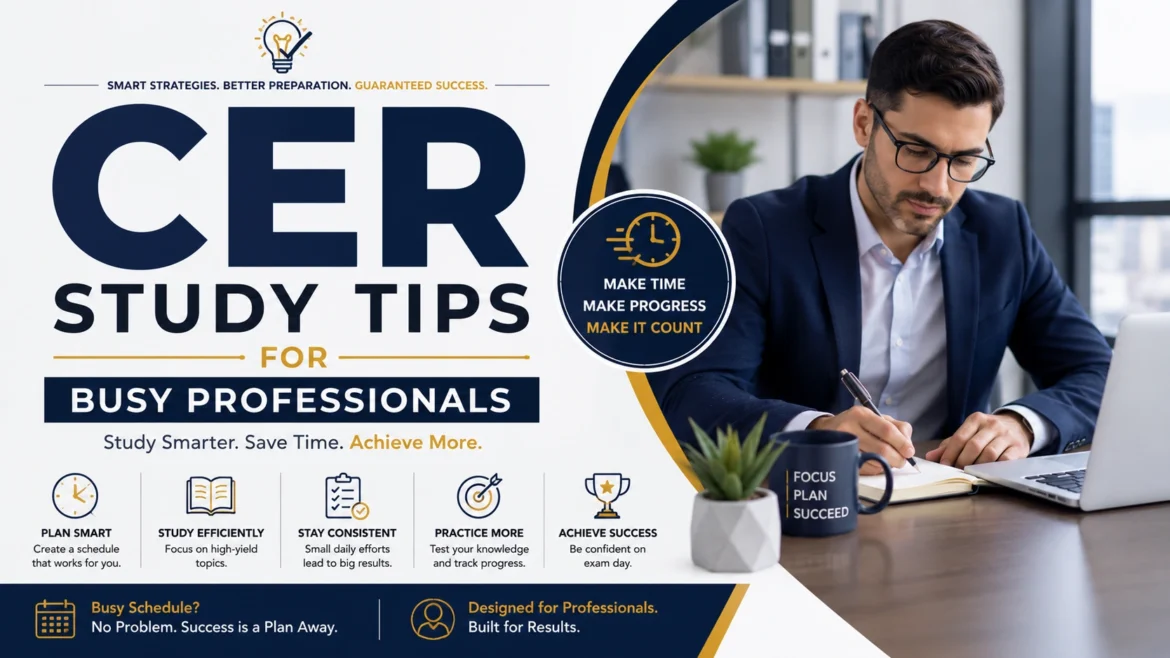

Some candidates believe they need long uninterrupted study sessions every day to pass the exam successfully. However, many busy professionals improve certification readiness through shorter, organized, and more consistent study habits instead.
Strong CER preparation usually depends more on realistic planning, focused practice, and disciplined consistency than exhausting study marathons.
- How busy professionals can study efficiently
- Time-saving certification strategies
- How to balance work and exam preparation
- Common study mistakes to avoid
- How practice questions improve readiness
- Ways to reduce exam stress
Why Busy Professionals Often Struggle With Certification Preparation
Many professionals already manage demanding schedules before beginning certification preparation. Adding technical studying on top of work responsibilities can create stress, exhaustion, and inconsistent preparation habits if candidates are not careful.
Common challenges often include:
- Limited study time
- Work-related fatigue
- Inconsistent schedules
- Difficulty maintaining motivation
- Balancing personal responsibilities
Candidates who create realistic preparation routines often manage these challenges much more effectively over time.
Why Consistency Matters More Than Long Study Sessions
One of the biggest mistakes busy professionals make is believing they need several uninterrupted hours daily to prepare properly. In reality, shorter but consistent study sessions are often more effective for long-term retention and reduced stress.
Consistent preparation helps candidates:
- Retain technical information more effectively
- Reduce last-minute cramming
- Build confidence gradually
- Improve technical reasoning steadily
- Maintain better work-study balance
Even 30 to 60 minutes of focused study several times per week can create significant improvement when maintained consistently.
How to Create a Realistic CER Study Schedule
Strong study schedules should fit realistically around professional and personal responsibilities. Candidates who create flexible and achievable plans are often more successful than candidates using unrealistic study goals.
Effective study schedules often include:
- Weekly study blocks
- Timed practice sessions
- Technical topic review
- Short daily review periods
- Weekend practice exams when possible
Organized preparation usually reduces stress and helps candidates stay motivated throughout the certification process.
| Unrealistic Study Habit | More Effective Study Habit |
|---|---|
| Studying only occasionally | Maintaining weekly consistency |
| Long exhausting study marathons | Short focused review sessions |
| No preparation structure | Organized study planning |
| Ignoring timed practice | Practicing under realistic conditions |
Why Practice Questions Are Important for Working Professionals
Practice questions are especially valuable for busy professionals because they allow candidates to study actively and efficiently within limited time periods.
Structured CER Test Prep Questions help candidates strengthen technical understanding, improve pacing, and become more familiar with realistic certification exam wording before test day.
Practice questions help candidates:
- Improve confidence
- Strengthen technical reasoning
- Identify weaker topics quickly
- Improve exam pacing
- Reduce study inefficiency
Focus on Practical Understanding Instead of Memorization
Many certification exams include scenario-based questions designed to evaluate professional judgment and practical understanding rather than memorization alone.
Candidates who focus on practical application often improve:
- Operational reasoning
- Decision-making ability
- Technical interpretation skills
- Compliance understanding
- Professional confidence
Practical understanding also becomes extremely valuable within real workplace environments after certification is completed.
Why Time Management Improves CER Preparation
Time management becomes especially important for professionals balancing work responsibilities with certification preparation. Candidates who manage time effectively usually experience less stress and stronger long-term preparation consistency.
Strong time management strategies often include:
- Scheduling study periods in advance
- Setting realistic weekly goals
- Reducing unnecessary distractions
- Using shorter focused sessions
- Prioritizing weaker knowledge areas
Better organization often makes certification preparation feel much more manageable for busy professionals.
Why Busy Professionals Need Smarter Study Strategies
Many working professionals simply do not have the luxury of studying several hours every day. Because of this, efficient preparation methods become far more important than total study hours alone.
Candidates often improve preparation efficiency when they:
- Focus on high-priority concepts
- Use active learning techniques
- Review mistakes consistently
- Practice under timed conditions
- Maintain realistic study goals
Organized preparation usually produces much better long-term results than random or inconsistent studying.
How to Avoid Burnout During CER Preparation
One major challenge for working professionals is burnout. Candidates who attempt unrealistic study schedules often become mentally exhausted, lose motivation, and struggle to maintain long-term consistency.
Burnout prevention strategies often include:
- Using shorter focused study sessions
- Taking regular mental breaks
- Maintaining realistic weekly goals
- Balancing study with rest
- Tracking gradual progress over time
Certification preparation is usually more successful when candidates focus on steady improvement rather than perfection.
Why Practice Exams Help Busy Professionals Study Faster
Practice exams are one of the most efficient tools for busy professionals because they combine technical review, pacing improvement, and realistic exam preparation into one activity.
Practice exams help candidates:
- Improve technical reasoning
- Strengthen concentration
- Identify weak areas quickly
- Improve confidence under pressure
- Reduce uncertainty before exam day
Candidates who regularly complete realistic practice sessions often feel significantly more comfortable approaching the actual certification exam.
How a Structured CER Exam Guide Helps Professionals Prepare
Many professionals preparing independently feel unsure about where to begin or which topics deserve the most attention. Organized certification resources often make preparation feel far more manageable.
Candidates reviewing this step-by-step CER certification preparation guide often improve study organization and gain a clearer understanding of realistic exam expectations.
Structured exam guidance can help candidates:
- Build organized study plans
- Reduce unnecessary stress
- Improve preparation efficiency
- Understand exam structure better
- Focus on important concepts first
Learn From Common Certification Preparation Mistakes
Many professionals lose valuable preparation time because of avoidable study mistakes such as inconsistent review habits, weak pacing strategies, or relying too heavily on memorization alone.
Candidates exploring these frequent CER exam preparation errors often improve study efficiency and avoid unnecessary certification setbacks.
| Less Effective Approach | Better Professional Strategy |
|---|---|
| Last-minute cramming | Steady weekly preparation |
| Passive reading only | Active practice questions |
| Avoiding difficult topics | Targeted weak-area review |
| No timed practice | Realistic exam simulation |
How Working Professionals Can Study More Efficiently
Professionals with limited study time often benefit from focusing on high-efficiency learning methods rather than spending hours rereading the same material repeatedly.
Efficient preparation strategies often include:
- Reviewing practice questions daily
- Analyzing incorrect answers carefully
- Studying difficult concepts first
- Using timed study sessions
- Tracking weekly improvement goals
Focused preparation usually improves long-term retention and reduces unnecessary frustration during the certification process.
Why Confidence Matters for Busy Professionals
Many working professionals underestimate how much experience and workplace knowledge they already possess before beginning certification preparation. Confidence often improves gradually through practice and repeated exposure to realistic exam scenarios.
Confidence helps candidates:
- Reduce exam anxiety
- Improve concentration
- Maintain better pacing
- Make stronger technical decisions
- Avoid panic during difficult questions
Candidates who practice consistently often realize they are more prepared than they initially believed.
How Busy Professionals Can Stay Motivated During Preparation
Maintaining motivation can become difficult when professionals are balancing demanding work schedules, family responsibilities, and certification preparation simultaneously. Many candidates feel discouraged when progress seems slower than expected.
However, certification success usually comes from steady long-term consistency rather than rapid short-term improvement.
Professionals often stay motivated when they:
- Set realistic weekly goals
- Track gradual improvement
- Celebrate small milestones
- Focus on long-term career benefits
- Maintain organized preparation routines
Consistent progress often becomes easier once preparation turns into a regular habit instead of feeling like an overwhelming obligation.
Why Reviewing Mistakes Saves Time Later
Many busy professionals feel pressure to move through study material quickly, but skipping mistake analysis often creates repeated weaknesses that slow progress later.
Reviewing incorrect answers carefully helps candidates:
- Identify weak knowledge areas
- Strengthen technical reasoning
- Improve operational understanding
- Recognize repeated problem patterns
- Reduce avoidable exam mistakes
Candidates who analyze mistakes consistently often improve much faster than candidates focusing only on question quantity.
How to Improve CER Exam Confidence While Working Full-Time
Confidence often becomes a major challenge for working professionals preparing for certification exams after several years away from structured testing environments.
Confidence usually improves through:
- Realistic timed practice
- Steady weekly preparation
- Reviewing technical concepts repeatedly
- Practicing scenario-based reasoning
- Tracking gradual improvement over time
Many professionals become more comfortable with certification testing once they gain familiarity with exam-style questions and pacing expectations.
| Stress-Creating Habit | More Effective Study Habit |
|---|---|
| Studying inconsistently | Following a structured weekly routine |
| Ignoring practice exams | Practicing under realistic conditions |
| Overloading study sessions | Using shorter focused review periods |
| Avoiding weaker topics | Reviewing difficult concepts regularly |
Why Passing the CER Exam Requires Practical Understanding
Many certification questions are designed to evaluate how well candidates apply knowledge within realistic workplace situations. Practical understanding is usually far more valuable than memorization alone.
Candidates preparing for certification success often strengthen:
- Operational reasoning
- Professional judgment
- Technical interpretation skills
- Compliance understanding
- Scenario-based problem solving
Professionals exploring these effective CER exam passing strategies often improve preparation structure and certification confidence significantly.
How Working Professionals Can Reduce Certification Stress
Certification preparation can feel mentally exhausting when professionals attempt to manage unrealistic expectations alongside full-time work responsibilities. Reducing stress often requires better organization and more balanced preparation habits.
Professionals often reduce stress when they:
- Use realistic preparation schedules
- Focus on steady improvement
- Avoid last-minute cramming
- Practice consistently over time
- Maintain healthy work-study balance
Calm and organized candidates usually perform much more confidently during certification exams.
Why CER Certification Matters for Career Growth
Professional certifications continue to become more valuable across technical and operational industries. Employers often prefer certified professionals because certification demonstrates accountability, competency, and commitment to industry standards.
CER certification may help support:
- Career advancement opportunities
- Professional credibility
- Expanded workplace responsibilities
- Improved technical confidence
- Long-term professional development
Strong preparation habits developed during certification study often continue benefiting professionals throughout their careers.
Final Thoughts on CER Study Tips for Busy Professionals
Busy professionals can absolutely prepare successfully for the CER exam with realistic study schedules, consistent practice habits, and organized preparation strategies.
Candidates who focus on practical understanding, steady weekly progress, and realistic practice questions often improve both confidence and certification readiness significantly over time.
Certification preparation does not require perfection. It requires discipline, consistency, and smart preparation habits that fit realistically within professional and personal responsibilities.
Frequently Asked Questions About CER Study Tips
Can busy professionals still pass the CER exam successfully?
Yes, many working professionals pass the CER exam successfully by using consistent study habits, realistic schedules, and focused practice sessions.
How much time should professionals study weekly for the CER exam?
Study needs vary, but many candidates improve steadily through shorter consistent sessions several times per week rather than long cramming sessions.
Why are practice questions important for busy professionals?
Practice questions improve study efficiency by strengthening technical reasoning, identifying weak areas quickly, and improving exam familiarity.
How can professionals avoid burnout during certification preparation?
Realistic study schedules, regular breaks, steady weekly goals, and balanced preparation habits often help reduce burnout significantly.
What is the best study strategy for CER certification?
Strong strategies usually include consistent practice, realistic exam simulations, practical understanding, and organized long-term preparation habits.