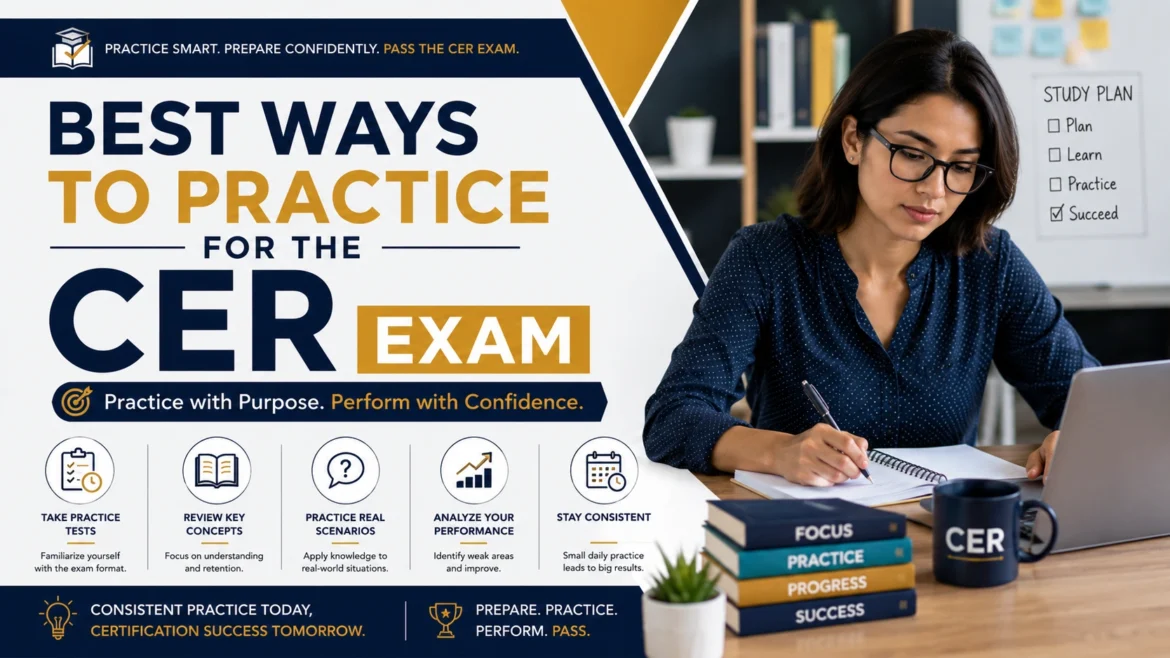

Strong CER preparation usually depends on realistic practice methods that improve technical understanding, professional judgment, and exam confidence together.
Candidates who practice strategically often feel significantly more prepared and less stressed when exam day finally arrives.
- Best CER exam practice methods
- How to improve technical understanding
- Why realistic practice exams matter
- Time management and pacing tips
- How to identify weak areas quickly
- Ways to improve certification confidence
Why Practice Matters More Than Passive Reading
Many certification candidates spend too much time rereading notes or memorizing technical definitions without actively applying concepts. While technical review is important, passive studying alone often creates false confidence because candidates are not practicing under realistic exam conditions.
Active practice helps candidates:
- Strengthen technical reasoning
- Improve operational understanding
- Recognize question patterns faster
- Reduce exam anxiety
- Improve pacing under pressure
Candidates who regularly practice realistic exam-style questions usually feel much more comfortable approaching the actual certification test.
Use Realistic CER Practice Questions Regularly
One of the best ways to improve certification readiness is using practice questions that closely reflect actual exam structure, wording, and difficulty.
Structured CER Practice Exam & Study Guides help candidates improve technical understanding, strengthen confidence, and become familiar with realistic certification testing environments before exam day.
Practice questions often help candidates:
- Identify weaker knowledge areas
- Improve technical interpretation skills
- Strengthen scenario-based reasoning
- Improve time management
- Reduce uncertainty during exams
Why Timed Practice Sessions Improve CER Scores
Many candidates understand technical concepts reasonably well during untimed studying but struggle once realistic time pressure is introduced. Timed practice sessions help candidates prepare mentally and strategically for actual testing conditions.
Timed practice helps candidates:
- Improve pacing naturally
- Strengthen concentration
- Reduce exam stress
- Improve decision-making speed
- Build confidence under pressure
Candidates who regularly simulate realistic testing environments often manage stress more effectively during the actual certification exam.
Focus on Understanding Instead of Memorization
Many CER exam questions evaluate practical judgment and applied reasoning rather than memorization alone. Candidates who focus only on memorizing technical facts often struggle with scenario-based questions requiring workplace interpretation and professional decision-making.
Strong preparation usually includes:
- Understanding operational procedures
- Applying technical reasoning logically
- Recognizing compliance concerns
- Interpreting workplace scenarios
- Strengthening professional judgment
Practical understanding often improves both exam performance and long-term workplace confidence after certification.
Why Reviewing Incorrect Answers Is So Important
Some candidates focus only on completing large numbers of practice questions without carefully reviewing why answers were incorrect. However, mistake analysis is often one of the fastest ways to improve certification readiness.
Reviewing mistakes helps candidates:
- Identify repeated weaknesses
- Strengthen technical understanding
- Improve professional reasoning
- Reduce avoidable exam errors
- Recognize question patterns more quickly
Candidates who consistently review incorrect answers often improve much faster than candidates focusing only on question volume.
| Weak Practice Habit | Better Practice Strategy |
|---|---|
| Passive reading only | Active question-solving practice |
| No timed practice | Simulating realistic exam pacing |
| Ignoring incorrect answers | Reviewing mistakes carefully |
| Memorizing without application | Practicing scenario-based reasoning |
How Consistent Practice Builds Confidence
Confidence often improves gradually through repeated exposure to realistic exam-style questions and professional scenarios. Many candidates initially feel uncertain, especially if they have not taken certification exams recently.
Consistent practice helps candidates:
- Reduce exam anxiety
- Improve technical familiarity
- Strengthen pacing skills
- Build professional confidence
- Improve overall exam readiness
Candidates who maintain steady preparation habits usually feel significantly more comfortable approaching certification testing over time.
How Structured Exam Guides Improve Practice Efficiency
Many certification candidates waste valuable preparation time because they study without a clear structure or organized plan. A well-organized study approach often makes practice sessions far more effective and easier to maintain consistently.
Candidates reviewing this complete CER certification preparation roadmap often gain a better understanding of exam expectations, technical focus areas, and practical study organization before beginning intensive preparation.
Structured preparation usually helps candidates:
- Improve study consistency
- Reduce unnecessary stress
- Focus on important exam topics
- Track preparation progress more easily
- Build confidence steadily over time
Learn From Common Certification Practice Mistakes
Many candidates unintentionally slow their progress because of avoidable preparation mistakes such as inconsistent studying, weak pacing habits, or relying only on passive reading instead of active practice.
Candidates exploring these avoidable CER certification study errors often improve preparation efficiency and reduce unnecessary exam-day problems significantly.
Common practice mistakes often include:
- Skipping timed practice sessions
- Ignoring weaker technical topics
- Not reviewing incorrect answers
- Using inconsistent study schedules
- Relying too heavily on memorization
Candidates who recognize these mistakes early usually improve certification readiness much faster.
Why Scenario-Based Practice Improves CER Scores
Many CER exam questions require candidates to apply technical understanding within realistic workplace situations. Candidates who practice scenario-based reasoning often feel more prepared handling operational and compliance-focused questions during the actual exam.
Scenario-based preparation helps candidates:
- Strengthen professional judgment
- Improve operational reasoning
- Recognize compliance concerns
- Apply technical knowledge logically
- Improve workplace decision-making confidence
Practical understanding often becomes just as valuable in professional environments as it is during certification testing.
How Busy Professionals Can Practice More Efficiently
Many CER candidates are already balancing work responsibilities alongside certification preparation. Because of this, study efficiency becomes extremely important.
Efficient practice habits often include:
- Using shorter focused review sessions
- Practicing questions consistently each week
- Reviewing difficult concepts first
- Tracking weaker knowledge areas
- Using realistic timed exams regularly
Candidates who focus on consistency instead of unrealistic study schedules usually maintain stronger long-term preparation habits.
| Less Effective Practice Habit | Stronger CER Practice Method |
|---|---|
| Passive note reading | Active problem-solving practice |
| Practicing only occasionally | Maintaining weekly consistency |
| Ignoring weak areas | Targeted technical review |
| No realistic timing practice | Simulating actual exam conditions |
Why Timed Practice Builds Certification Confidence
Many candidates know more information than they realize but struggle because time pressure affects concentration and decision-making during the exam.
Timed practice helps candidates:
- Improve pacing naturally
- Strengthen focus under pressure
- Reduce exam anxiety
- Increase technical decision-making speed
- Improve overall confidence
Candidates who regularly practice under realistic timing conditions often feel significantly calmer during actual certification testing.
How Consistency Improves CER Exam Performance
Consistency remains one of the strongest predictors of certification success. Candidates who practice regularly often improve technical understanding, operational reasoning, and confidence much more effectively than candidates relying on last-minute cramming.
Consistent practice often includes:
- Weekly review schedules
- Regular practice questions
- Scenario-based preparation
- Timed mock exams
- Continuous mistake analysis
Even shorter study sessions can create significant improvement when candidates remain disciplined and organized throughout the certification process.
How Consistent Practice Improves Passing Chances
Many certification candidates underestimate how important consistency is during exam preparation. Candidates who practice regularly often build stronger technical understanding, improve confidence gradually, and reduce stress before exam day.
Consistent practice often helps candidates:
- Retain technical information more effectively
- Strengthen operational reasoning
- Improve pacing under pressure
- Recognize question patterns faster
- Reduce avoidable mistakes
Candidates preparing for long-term certification success often improve significantly through these proven CER exam passing techniques and realistic preparation strategies.
Why Short Focused Study Sessions Often Work Better
Many professionals preparing for the CER exam have limited free time because of work responsibilities and personal obligations. Long exhausting study sessions are often difficult to maintain consistently over several months.
Short focused sessions often help candidates:
- Maintain better concentration
- Reduce mental fatigue
- Improve consistency
- Retain technical concepts more effectively
- Balance work and study responsibilities
Many working candidates improve preparation consistency through these efficient CER study methods for busy professionals designed around realistic schedules and long-term preparation habits.
How Practice Exams Improve Professional Confidence
Practice exams often help candidates become more comfortable with certification testing environments before the actual exam. Familiarity with pacing, technical wording, and scenario-based questions usually reduces uncertainty significantly.
Practice exams help candidates:
- Strengthen technical interpretation skills
- Improve pacing under realistic conditions
- Reduce exam anxiety
- Build decision-making confidence
- Improve concentration during long exams
Candidates who consistently complete realistic practice exams often feel much calmer and more prepared during actual certification testing.
| Weak Preparation Pattern | Better Practice Approach |
|---|---|
| Studying without structure | Following organized review plans |
| Ignoring realistic timing | Practicing under exam conditions |
| Memorizing technical facts only | Practicing scenario-based reasoning |
| Skipping mistake analysis | Reviewing incorrect answers carefully |
Why Practical Understanding Matters for CER Certification
Professional certification exams are usually designed to evaluate practical competency and workplace judgment rather than memorization alone. Candidates who understand how technical concepts apply within realistic operational situations often perform much more confidently.
Practical understanding helps candidates:
- Analyze workplace scenarios logically
- Recognize compliance concerns
- Apply operational procedures correctly
- Improve professional judgment
- Strengthen long-term workplace confidence
Strong operational understanding often remains valuable throughout a professional career long after certification is completed.
How to Reduce Stress During CER Preparation
Many candidates experience unnecessary stress because they attempt unrealistic preparation schedules or compare their progress to other professionals. Certification preparation becomes much more manageable when candidates focus on steady improvement instead of perfection.
Candidates often reduce stress by:
- Following realistic study schedules
- Practicing consistently over time
- Taking regular mental breaks
- Tracking gradual progress
- Using organized preparation methods
Calm candidates usually maintain better concentration, stronger pacing, and improved technical reasoning during exams.
Why CER Certification Supports Long-Term Career Growth
Professional certifications continue to become increasingly valuable across technical and compliance-focused industries. Employers often view certified professionals as individuals who are committed to professional standards, continuous learning, and operational competency.
CER certification may support:
- Professional credibility
- Career advancement opportunities
- Expanded workplace responsibilities
- Technical confidence
- Long-term professional growth
Certification preparation itself also strengthens analytical thinking and professional decision-making abilities that remain valuable throughout many careers.
Final Thoughts on the Best Ways to Practice for the CER Exam
The best CER exam practice strategies usually combine realistic practice questions, timed preparation, practical understanding, and consistent long-term study habits.
Candidates who actively review mistakes, strengthen weaker topics, and practice under realistic exam conditions often improve both confidence and certification readiness significantly over time.
Successful certification preparation is rarely about perfection. It is usually built through consistency, discipline, and practical learning methods that strengthen both exam performance and professional competency.
Frequently Asked Questions About CER Exam Practice
What is the best way to practice for the CER exam?
Strong preparation usually includes realistic practice questions, timed mock exams, scenario-based learning, and consistent weekly review sessions.
Why are practice exams important for CER certification?
Practice exams improve pacing, confidence, technical reasoning, and familiarity with realistic certification testing environments.
Should candidates focus on memorization or practical understanding?
Practical understanding is usually more valuable because many certification questions evaluate workplace reasoning and applied technical knowledge.
How often should candidates practice for the CER exam?
Consistent weekly practice sessions are often more effective than occasional long study sessions or last-minute cramming.
Can busy professionals prepare effectively for the CER exam?
Yes, many working professionals prepare successfully by using organized schedules, shorter focused study sessions, and realistic practice methods.